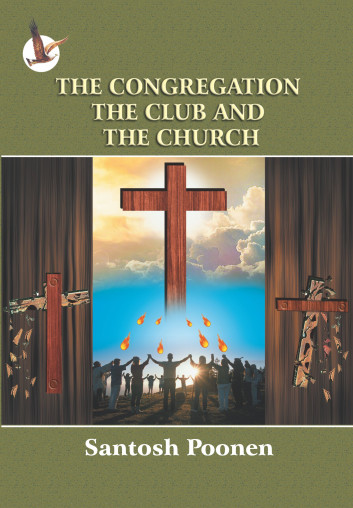
The Congregation, The Club and The Church

In order to help build God’s Church in your vicinity, you have to do things God’s way… the message above will help us understand the difference between a ‘church’ being a club, congregation or a church that the Lord is building. This is a prophetic message for our times.

The book that accompanies this message can be read for free, click on the book (below) for access. It can also be purchased at the CFC bookshop here. The other book that compliments this, is “God’s Work Done in God’s Way” just like Jesus and apostles. There’s a proven testimony by Apostle and Brother Zac Poonen of how this has already been done in our time!

There are many other wonderful free resources at the CFC site and here, that will truly bless you, as they have many around the world.

image description

God Does Not Want Our Offerings, But Our Body as a Living Sacrifice

“May we first learn to sit at His feet and listen, and nurture a pure and simple devotion unto Him… may He lead us in all our ways, never leaning on our own understand, but in all our ways acknowledging Him, so He can direct our paths…

In Hebrews 10:5, we read that “God doesn’t want our offerings.” I quote this verse to people who have suffered under preachers who have kept on telling them that God wants their offerings. What does it say here that God desires from us? – Our bodies. Under the old covenant, the emphasis was, “Pay your tithes to the Levites.” In the New Testament the emphasis is, “Give your bodies to God” (Rom.12:1). A church that is constantly asking its people to pay their tithes is an old-covenant church. A new-covenant church will emphasise presenting our bodies -our eyes, our hands, our tongues, etc.,- as a living sacrifice to God. It is not material offerings that God desires from us today, but our bodies.

Giving our bodies to God is the new-covenant equivalent of the old-covenant tithe – just like Christ dying on the cross is the equivalent of the old-covenant lamb sacrificed on the Passover day. Does this mean that we don’t have to give any money now for the work of God on earth? You may certainly give, but God wants only what you give cheerfully (2 Cor.9:7). In any case, He wants your body first of all. Those who give Him their bodies usually give Him everything else as well. But everything must be given cheerfully and joyfully.

When Jesus came into the world, He did not come to give tithes and material offerings to His Father (Hebrews 10:5). He came to give His body as a sacrifice. And He is the Mediator of the new covenant and taught us that what God wants from us, primarily, is our body.

Many give offerings of money and service to God. You may boast that you have distributed hundreds of tracts, or served as a missionary in some difficult area for many years, or prayed for a number of hours, or fasted for many days. These are all good offerings. But those offerings don’t have any value to God, if you still lust sexually with your eyes and still get angry. Then you haven’t given Him what He wants first of all – your body. Then God will say to you, “Forget about giving Me your sacrifices and your offerings. Give Me your eyes and your tongue first of all. I want your body.” Don’t substitute material offerings for your body. People who value the material offerings they have given to God are back in the old covenant. In the new covenant what God wants is your body. The book of Hebrews is one of the most important books in the Bible. If you want to live in the new covenant, study Hebrews.

Jesus never had a body when He was in heaven. When He came into this world the Father gave Him a body. What was He to do with that body? Was He to show His love for His Father by going to some difficult place like Africa as a missionary? Or was He to pray for 4 hours every day and fast twice a week? None of these. He says, “I have come (to earth), to do Your will O God – and not to make sacrifices” (Hebrews 10:7). This is what Jesus used His body for- and this is what we have to use our bodies for, as well. When we present our bodies to God, it is to do His will thereafter with every part of them- with our eyes, hands, tongues, passions, desires, etc., our only passion in life thereafter will be to do the will of God every day.


—————————————-

**Copyright – Zac Poonen. No changes whatsoever are to be made to the content of the article without written permission from the author: cfcindia.com / photo by Cottonbro at pixels

Don’t Despise Difficulty

One night, just before I went to bed, in my mind, I heard. “Don’t despise difficulty.”

In John 15:2 it says, “Every branch in Me that does NOT bear fruit, He takes away; and every branch that bears fruit, He prunes it…” Why does God do this? “… so that it (the branch-the Christian) may bear MORE fruit.
Vs.8 My Father is GLORIFIED by this, that you bear MUCH…fruit,.(not just a little, but MUCH fruit) and so prove to be My disciples.

To prune a tree, you must cut/remove specific branches or stems to BENEFIT the whole tree. The removal of dead, damaged diseased branches, HELP to PREVENT insect and decay organisms from entering the tree.

When God prunes me, ITS FOR MY BENEFIT! By the Holy Spirit He removes what is dead, damaged and diseased in my heart. When condescending words come from a co-worker, God can prune/cut off STEMS of pride, that are causing decay in your heart that says, how can you talk to me that way? I DESERVE RESPECT. IT’S FOR MY BENEFIT, when that big BILL comes. God can prune us to remove that disease of loving money, that UNREST you feel because your retirement fund has decreased.

God says, I’m pruning you, SO you CAN HAVE the BENEFIT of bearing MORE Fruit! Don’t despise the cuts, bear MUCH fruit! Fruit of the Holy Spirit (Gal. 5:22-23).

Much more love for one another (John 15:12) with people who are different than you, rejoicing ALWAYS, peace that surpasses understanding, an ABUNDANCE of patience DURING being tempted to be annoyed at someone, the law of kindness ALWAYS on your lips though you you’ve just been insulted, the goodness of God flowing out of your heart, faithfulness to God, the gentleness of Jesus to others, and dependence upon the Holy Spirit for self-control.

Do you want that? REALLY?

God is saying don’t despise the pruning, the cuts of difficulty. I’m doing great things in your life! And yes, you can enjoy a good meal, a nice trip and even good sleep, BUT that’s NOT the ABUNDANT life, God is calling us to! We SET ourselves up for discouragement, when we LIVE for ease, comfort and pleasure.
Jesus said, where your treasure is, there your heart will be also. Matt.6:19-21
We have to be careful NOT treasure our pleasure.

I also have to be careful what I call a BLESSING or a BENEFIT in my life.

I’m NOT COMPLETELY there yet, BUT I’m believing God WILL bring me to a place where I can ALWAYS see His pruning in my life, as an ABSOLUTE BENEFIT TO HIM! Not ONLY what benefits me. (2 Cor.5:9)

Just like we take our bags of fruit home from Safeway or farmers market. We enjoy eating the fruit. Can God do that too? When He walks out to the garden of my life, can HE partake of the Fruit of His Spirit? (Gal.5:22-23) Can He take each fruit, out of the bag and say Ah…humility? Another bite, Ah…love, ah…self-control? Another bite…ah patience, how good it is too eat of My children’s fruitful lives! If God does not prune me, I CANNOT give HIM that fruit! I cannot make Him go…Ah!

John 15:1 My Father is the vinedresser. He prunes, trains, and cultivates. If the fruit is NOT coming out of my branch, it’s possible I’m NOT abiding in the Vine, Jesus. Am I KEEPING His word? Am I dried up? Maybe you just got pruned. And you’re thinking, I got nothing man. PERFECT Vs. 5 Apart from Him, you CAN DO NOTHING! Realizing how INCAPABLE we are and how ABLE He is, will help us depend on Jesus, the Vine. His grace is sufficient (2 Cor.12: 9).

Before fruit appears/grows, it must go through a process of unseen nourishment from the vine.
So it is with fruit in my heart for God. Fruit will come as I get nourishment from the Vine/Jesus. That means I remain in His love and obey His word. Not copying and pasting on the fruit of the Spirit with some dead work, selfish motive. No, if I keep/obey His word, I can prove to God in MY HEART, I’m a DISCIPLE of Jesus. Not prove to others, BUT to God first, who sees and knows all, in the deep secrets of my thoughts and desires. To prove my devotion and allegiance to Him IN the difficulty. (John 15:8) Then the fruit can grow and be GENUINE.

If we look at Luke 14:25-33, we can see some ways our devotion and allegiances WILL be tested as a disciple of Jesus. My love for GOD should be MUCH greater in comparison to my love for others and for myself. So much so, that my love for others and for myself, LOOKS like hate. This is tested in the CLOSEST relationships. Father, mother, wife, children, siblings and even our own life (vs.26). All these relationships can have disagreements. And when you have a strong disagreement, you can have difficulty.

Jesus said in the very next verse, 27 “Whoever does not carry his own cross and come after Me cannot be My disciple.”
We face a choice to pick up our own INNER cross. We can decide to please others, please ourselves OR please Jesus. When we chose to please Jesus, it will cost us. It may cost us a “silent” treatment, disrespect, misunderstanding, others being angry with us and maybe even left alone or cut off. Yes, this can even happen in our OWN homes. (Luke 12:51-53).

In Phil. 2:1-11 We see the glory of Jesus, how He carried His cross. He humbled Himself His entire life, even to the point of death. Even in His own home, at least for a time, His brothers were not believing in Him ( John 7:5 ). They lived with Jesus and never saw Him sin even once! Yet they still mocked Him.
In Mark 3:21 says, “When His own people ( kinsmen-blood relatives ), heard of this, they went out to take custody of Him; for they were saying, “He has lost His senses.” In other words, Jesus’ own family called Him crazy! These are just a few examples of what we can face if we live by Jesus’ standards. Jesus Himself said in:
Matt.10: 34 “Do not think that I came to bring peace on the earth; I did not come to bring peace, but a sword. 35 For I came to set a man against his father, and a daughter against her mother, and a daughter-in-law against her mother-in-law; 36 and a man’s enemies will be the members of his household. 37 “He who loves father or mother more than Me is not worthy of Me; and he who loves son or daughter more than Me is not worthy of Me.38 And he who does not take his cross and follow after Me is not worthy of Me. 39 He who has found his life will lose it, and he who has lost his life for My sake will find it.

Maybe it’s Jesus’ standard against the finances between you and your spouse. Maybe it’s Jesus’ standard in your wedding plans against your family’s standards for your wedding plans. Maybe it’s deciding what church to go to or continue to go to. Or even different opinions and thoughts about ministry in the church. Yes, even there we can find Jesus’ dividing sword of discipleship. If I can’t have a humble attitude and pick up my INNER cross IN my home, I certainly won’t be able to do it in God’s church.

God knows in these relationships we WILL be tested. We CAN carry our own cross, when we love Jesus MORE than our own families and our own life. And in so doing, we actually love them better. Whether others say so or not. If that happens because we’ve chosen to obey God, not man, He will honor us ( 1 Sam.2:30 ). And that is greater than ANY honor we can receive!

Jesus sums it up in Vs.33 “So then, none of you can be My disciple who does not give up all his own possessions.”
If we are holding onto these relationships at the cost of lowering Jesus’ standards to follow what they say, we cannot be His disciple.
Being a follower of Jesus, is not a matter of how many times we’ve read, studied or memorized the Bible. Not a matter of how many times we went to church, shared the word, gave a testimony, prayed or helped people. Yes, amen, we should do these things BUT it’s NOT what qualifies me to be a disciple of Jesus.

Though God may prune me in these relationships, I don’t have to fear
God DOESN’T prune us to be mean. John 15:4-10 says, He does this so we can remain in His love. And when we keep His word, that’s what happens. We remain in His love. He stays close to us and we to Him. And I NEVER lose out, though the pruning HURT.
We see in verse 11 Jesus asked, why have I said these things to you? To discourage you? No. I HAVE SAID THIS TO YOU, SO I CAN…. GIVE you MY JOY TO THE FULLEST!!!!

So, I’m believing God, that when I face difficulty and I’m getting pruned, I can ACTUALLY look forward to some Promises!
John 15: 8 When I bear fruit of the Holy Spirit, I WILL give Him glory. Verse 10 If I obey His word, I WILL abide in His love like Jesus did. And verse 11 When I do these things, I WILL get Jesus’ JOY…. to the FULLEST!
The Lord is so generous, He gives us His joy too when we are faithful to Him in difficulty.

If you are IN a tough spot now, remain in His love. Obey His word and believe God WILL fulfill His promises, even IN your difficulty!

——————————————————

**By Paul Moore © Copyright – Paul Moore. No changes whatsoever are to be made to the content of the article without written permission from the author. https://nccf.com/ 

Picture by Pixabay at pexels

John Wesley’s Tribute to His Mother, Susanna Wesley: A Son’s Admiration

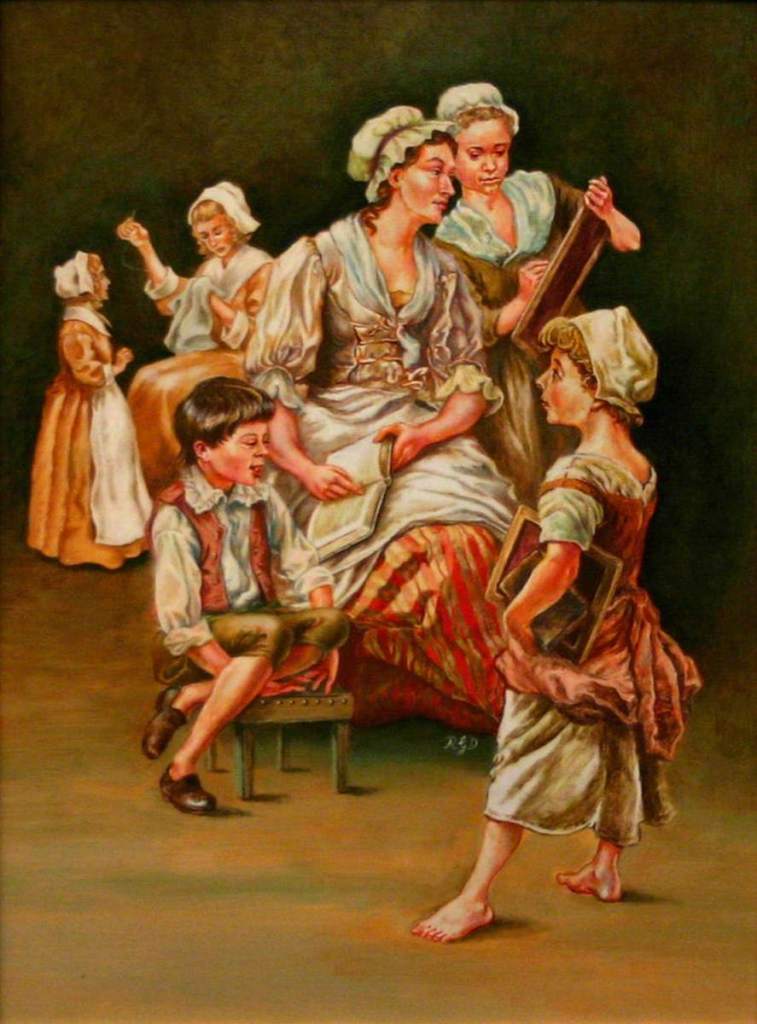
Artwork Susanna Wesley with Five Children by Richard Gilmore Douglas

AN ADMIRING SON

Susanna’s devotion to her faith and her family clearly shaped her son John Wesley’s character and had an impact on countless lives.

Few mums know what it’s like to raise 10 children like Susanna Wesley. Her son John, the founder of the Methodist movement, published a letter in which his mum shared her “principal rules” for parenting, covering things big and small.

Because our understandings of child development have changed greatly in the nearly 300 years since Susanna was raising her kids, we might not agree with all of her advice. But some still rings true today.

RELIGIOUS EDUCATION

Devotions – “The children of this family were taught, as soon as they could speak, the Lord’s prayer, which they were made to say at rising and bedtime constantly,” Susanna reminded her son.

Worship and Music – When the Wesley children were a little older, the day began with reading or singing a psalm, reading an Old Testament chapter, and saying private prayers — all before breakfast. At the end of the school day, they paired up to read a psalm and a New Testament chapter.

Sabbath – Sundays were special in the Wesley house. The children “were very early made to distinguish the sabbath from other days,” Susanna wrote. Even when the kids were very young, they were expected to participate in the family prayers, “which they used to do by signs before they would kneel or speak.”

EDUCATION

Focus – In the Wesley household, nine to noon and two to five were reserved for the children’s education, a top priority for Susanna. “It is almost incredible what a child may be taught in a quarter of a year, by a vigorous application,” she remembered.

No goofing off – Susanna expected the children’s full attention during the education hours. “Rising out of their places, or going out of the room, was not permitted unless for good cause, and running into the yard, garden or street, without leave, was always esteemed a capital offence.” I imagine Susanna smiling as she wrote that last line to her now grown son.

Reading – Each child was taught to read at age 5, both the boys and the girls. Susanna noted, “[P]utting children to learn sewing before they can read perfectly is the very reason why so few women can read fit to be heard, and never to be well understood.” She would not allow that for her daughters or sons.

ORDER AND DISCIPLINE

Routine – The Wesley house ran on a tight schedule. “The children were always put into a regular method of living,” she wrote. Times were assigned for naps, education, meals, and bedtime.

Self-regulation – Susanna was convinced that “self-will is the root of all sin and misery,” and worked to help her children develop self-control.

Positive reinforcement – Susanna believed, “That every signal [sic] act of obedience…should always be commended and frequently rewarded.” When the thought is there, but the execution lacking, Susanna adds that parents should then “sweetly” direct the child on “how to do better for the future.”

Discipline – When needed, Susanna strived to discipline appropriately. “Some [infractions] should be overlooked and taken no notice of, and others mildly reproved,” she wrote, “but no willful transgression ought ever to be forgiven children without chastisement, less or more, as the nature and circumstances of the offence require.”

Forgiveness – Susanna taught that a child should never be punished for the same offense twice, and “that if they amended they should never be upbraided with it afterwards.”

Peace – The child-filled Wesley household was not chaotic. “The family usually lived in as much quietness as if there had not been a child among them,” Susanna remembers.

SLEEP

Bedtime – After dinner at 6, the process of getting the children ready for bed began at 7 p.m. with the youngest child. All children were in bed by 8 p.m., whether they were ready for sleep or not. “[T]here was no such thing allowed of in our house as sitting by a child till it fell asleep,” she wrote.

Naps – As infants, the children napped on a schedule. “This was done to bring them to a regular course of sleeping,” Susanna reasoned.

MEALS AND DINING

Dining – Mealtime was family time. When the children were young, “At dinner their little table and chairs were set by ours,” Susanna recalls, near enough to be supervised. Children graduated to the dining room table, “As soon as they could handle a knife and fork.”

No snacking – “Drinking or eating between meals was never allowed,” Susanna shares, “unless in case of sickness which seldom happened.”

Choosing meals – The children were expected to eat what was served. “They were never suffered [permitted] to choose their meat, but always made to eat such things as were provided by the family,” Susanna wrote.

Medicine – “They were so constantly used to eat and drink what was given them,” she remembers, “that when any of them was ill there was no difficulty in making them take the most unpleasant medicine.”

MANNERS

Polite speech – Susanna expected her children to be polite. If they wanted something they were to ask, and were given “nothing they cried for, and instructed to speak handsomely for what they wanted.”

No lying – Susanna believed that children were tempted to lie when they feared punishment. “To prevent this,” she reasoned, “a law was made that whoever was charged with a fault, of which they were guilty, if they would ingenuously confess it, and promise to amend,” they would not be punished.

Respect for property – The Wesley children were taught to keep their hands off of another’s stuff, even “in the smallest matter, though it were but of the value of a farthing [1/4 of a penny], or a pin; which they might not take from the owner without, much less Money against his consent.”

John Wesley shared this advice from his mom in his published Journal as he reflected on her death. The entry is dated August 1st, 1742, the day of her funeral. He hoped it would help others caring for “a numerous family.”

*Susanna Wesley gave birth to 19 children (including two sets of twins). Unfortunately, nine died in infancy or soon after.

———

** By Joe Iovino works for UMC.org at United Methodist Communications. Contact him by email.

8 Reasons Why Obedience to God Is Important

8 Reasons Why Obedience to God Is Important

1. Jesus Calls Us to Obedience: If you love me, you will keep my commandments. (John 14:15, ESV)

2. Obedience Is an Act of Worship: And so, dear brothers and sisters, I plead with you to give your bodies to God because of all he has done for you. Let them be a living and holy sacrifice—the kind he will find acceptable. This is truly the way to worship him. (Romans 12:1, NLT)

3. God Rewards Obedience: Jesus replied, “But even more blessed are all who hear the word of God and put it into practice.” (Luke 11:28, NLT) But don’t just listen to God’s word. You must do what it says. Otherwise, you are only fooling yourselves. For if you listen to the word and don’t obey, it is like glancing at your face in a mirror. You see yourself, walk away, and forget what you look like. But if you look carefully into the perfect law that sets you free, and if you do what it says and don’t forget what you heard, then God will bless you for doing it. (James 1:22–25, NLT)

4. Obedience to God Proves Our Love: By this we know that we love the children of God, when we love God and obey his commandments. For this is the love of God, that we keep his commandments. (1 John 5:2–3, ESV) Love means doing what God has commanded us, and he has commanded us to love one another, just as you heard from the beginning. (2 John 6, NLT)

5. Obedience to God Demonstrates Our Faith: And we can be sure that we know him if we obey his commandments. If someone claims, “I know God,” but doesn’t obey God’s commandments, that person is a liar and is not living in the truth. But those who obey God’s word truly show how completely they love him. That is how we know we are living in him. Those who say they live in God should live their lives as Jesus did. (1 John 2:3–6, NLT)

6. Obedience Is Better Than Sacrifice: But Samuel replied, “What is more pleasing to the LORD: your burnt offerings and sacrifices or your obedience to his voice? Listen! Obedience is better than sacrifice, and submission is better than offering the fat of rams. Rebellion is as sinful as witchcraft, and stubbornness as bad as worshipping idols. So because you have rejected the command of the LORD, he has rejected you as king.” (1 Samuel 15:22–23, NLT)

7. Disobedience Leads to Sin and Death: For as by the one man’s [Adam’s] disobedience the many were made sinners, so by the one man’s [Christ’s] obedience the many will be made righteous. (Romans 5:19, ESV) For as in Adam all die, so also in Christ shall all be made alive. (1 Corinthians 15:22, ESV)

8. Through Obedience, We Experience the Blessings of Holy Living: Joyful are people of integrity, who follow the instructions of the LORD. Joyful are those who obey his laws and search for him with all their hearts. They do not compromise with evil, and they walk only in his paths. You have charged us to keep your commandments carefully. Oh, that my actions would consistently reflect your decrees! Then I will not be ashamed when I compare my life with your commands. As I learn your righteous regulations, I will thank you by living as I should! I will obey your decrees. Please don’t give up on me! (Psalm 119:1–8, NLT) This is what the LORD says—your Redeemer, the Holy One of Israel: “I am the LORD your God, who teaches you what is good for you and leads you along the paths you should follow. Oh, that you had listened to my commands! Then you would have had peace flowing like a gentle river and righteousness rolling over you like waves in the sea. Your descendants would have been like the sands along the seashore—too many to count! There would have been no need for your destruction, or for cutting off your family name.” (Isaiah 48:17–19, NLT)

Because we have these promises, dear friends, let us cleanse ourselves from everything that can defile our body or spirit. And let us work toward complete holiness because we fear God. (2 Corinthians 7:1, NLT)


**By Fairchild, Mary. “Why Is Obedience to God Important?” Learn Religions, Aug. 28, 2020, learnreligions.com/obedience-to-god-701962.