The New Rebellion: When the Ordinary Becomes Radical

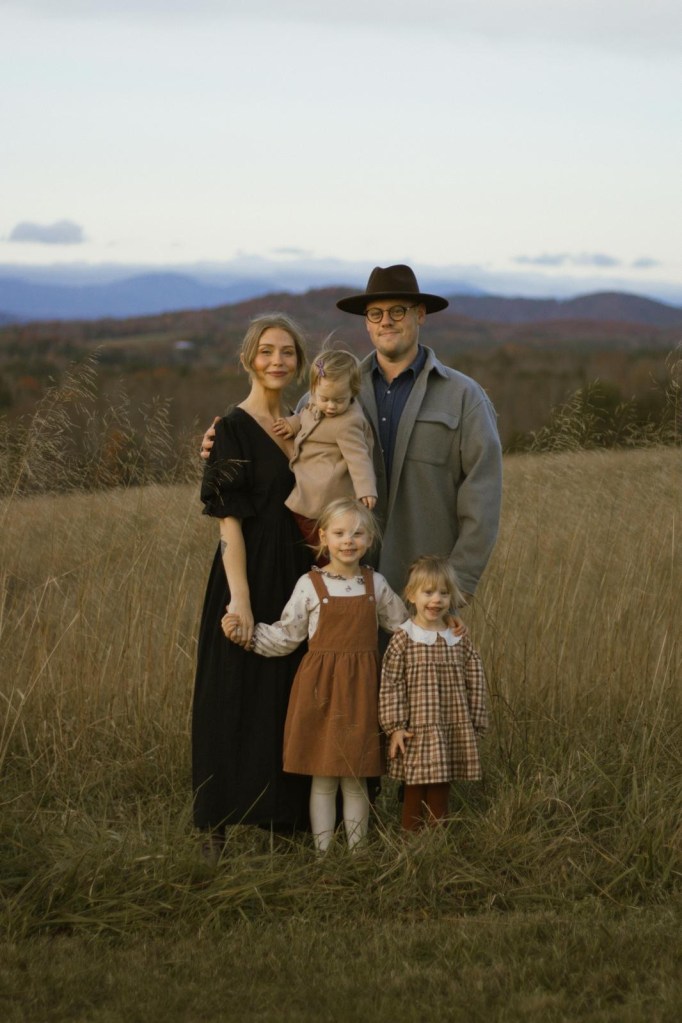
I have politically incorrect views. I live a politically incorrect life. I hold what many would now call a politically incorrect “career”: I am a wife, a mother, and a homemaker.

I am a born-again Christian. I stay at home to raise our four children, while my husband works to provide for our family. We live on one income. I make no apology for this—because I am fulfilled in my role.

In today’s world, that statement alone can invite criticism. It can provoke eye-rolls, assumptions, or quiet dismissal. There is a prevailing narrative that fulfillment must look a certain way, that success must be defined by career progression, financial independence, and public achievement. Anything outside of that can be seen as outdated, regressive—even oppressive.

And yet, here I stand.

I should also say—this was not always the path I expected to take. I was raised by a mother who strongly identified with feminism, and I was taught to strive, to compete, and to hold my own alongside the best in the workplace. Success, as I understood it then, was measured by status, recognition, and professional achievement.

And then, one day, everything changed.

The Lord intervened. I stopped, quite literally, in my tracks. What I had been pursuing no longer felt like the path I was meant to walk. Instead, I felt called toward something entirely different—something quieter, but no less significant. I chose to follow the life I believed God was leading me into.

And here I am.

In a culture that prides itself on openness and self-expression, it is striking how certain choices still fall outside what is readily accepted. There is a sense that “anything goes”—but often only within a set of unspoken boundaries. Step beyond them, and the tone can quickly shift from acceptance to scepticism.

Even something as simple as saying, “I identify as who the Lord made me to be,” can feel, at times, countercultural.

It is, in many ways, refreshing to live outside the expectations of the age. From an early age, many are shaped—by education, media, and social influence—to adopt the prevailing views of the time. To align with the collective is often easier than to question it. To choose differently can invite misunderstanding or quiet exclusion.

Conformity is often rewarded; divergence, less so.

And yet, here lies the paradox: what was once considered ordinary has now become, in some circles, unconventional. A family life ordered around faith, a mother at home raising her children, a father bearing primary responsibility for provision—these were once widely accepted norms. Today, they can be perceived as a form of resistance.

And in a sense, they are.

Because to choose this life today is not to drift with the current, but to step deliberately against it. It is to say: I will not simply adopt what is expected, but will pursue what I believe to be right.

For me, that conviction is rooted in faith—a desire to honour God and to live within what I understand to be His design for family and life. Not as a limitation, but as a framework given by a loving Father. One who sees the whole picture. One who, I trust, knows what leads to true flourishing.

That does not mean it is without challenge.

There are moments when the scrutiny feels tangible. When questions arise—sometimes well-meaning, sometimes not: “Don’t you want more?” “What about independence?” “Are you making the most of your potential?”

These questions persist—not always because they carry weight, but because they are so often repeated.

And yet, I return to this: fulfillment is not something that can be defined externally. It is not measured solely by income, status, or visibility. It is found in purpose, in conviction, and in a clear sense of why one has chosen the path they walk.

My days are not outwardly remarkable. They are filled with the ordinary rhythms of life: meals, laundry, school runs, conversations, discipline, prayer. But within that ordinary lies something deeply significant—the shaping of lives, the nurturing of character, the steady building of a home.

This is not a rejection of women who choose differently. Nor is it a claim that one path is right for everyone. Rather, it is a case for recognising that this path, too, holds value—and that choosing it should not require apology.

If empowerment is to mean anything, it must include the freedom to choose a life that may not align with prevailing trends, but is deeply aligned with personal conviction.

So yes, by today’s standards, I may be considered politically incorrect.

But perhaps the more important question is this: when did living with conviction become something to explain away?

And if choosing faith, family, and a life of intentional simplicity places me outside the norm—then I am content to stand there.

Because sometimes, what appears unconventional in the present is simply a rediscovery of what has long been meaningful.

Yours sincerely,

A Wife, Mother, and Homemaker

—————

***Photo Family Snipes

Offended, Entitled, and Ashamed of Nothing: The Collapse of Accountability

There’s a hard truth people don’t want to face: accountability has been abandoned, and in its place we’ve built a culture of excuses, contradictions, and selective outrage.

I once heard someone say they were angry with God because if they didn’t choose Him, they’d go to hell, so in their mind, that meant they were being forced. But that completely misses the point. Free will is exactly that, free. You can choose whatever path you want. But what people don’t want to accept is that choice and consequence are inseparable. You don’t get one without the other.

And that’s where everything starts to fall apart.

We’re living in a world where people insist that their actions are nobody else’s business, live how you want, do what you want, define your own truth. But that same mindset gets dangerously convenient when it’s used to justify things that are clearly destructive, taking what isn’t yours, coveting what belongs to someone else, tearing apart families out of jealousy, or making someone else’s life miserable because they have what you want. And worse still, acting out depraved desires while hiding behind the shield of “who are you to judge?”

That’s not freedom, that’s chaos dressed up as virtue.

The hypocrisy is staggering. A society that rejects objective standards turns around and tries to enforce its own ever-changing rules. People shout about tolerance, yet silence opposition. They demand acceptance, yet refuse accountability. It’s not about truth, it’s about control, comfort, and protecting personal desires from scrutiny.

And in a twisted way, they justify it, because when a society decides it can make its own rules and ignore any higher moral law, things unravel quickly. Yet the very same people who reject those standards are often the loudest when it comes to telling others what is right and wrong, so long as it fits their ideology. You see it in media glorifying depravity while silencing inconvenient truths, in education systems promoting ideology over fact, and in “cancel culture” punishing honesty while rewarding moral compromise.

And here we are. You see the breakdown everywhere. You see it in weakened leadership and confused identity, men so stripped of strength and conviction that in the face of real threat, they wouldn’t be able to stand and defend anything. History has already shown what happens when courage collapses and responsibility is abandoned.

You see it in public health, where obvious harm can’t be addressed honestly because it might offend someone. People are suffering under the weight of their own choices, yet no one is allowed to say it out loud. It’s like a doctor refusing to tell a patient they have a life-threatening illness because the truth might upset them, so instead, they’re encouraged to carry on until it’s too late.

And it doesn’t stop there.

There are systems that benefit from this silence. When people stay sick, someone profits. When illness is managed instead of solved, it creates a cycle, repeat customers, constant dependency, endless revenue. A healthy, disciplined individual doesn’t generate the same profit as someone trapped in a system of ongoing treatment. You see it in big corporations harming millions for profit, CEOs lying without consequence, and politicians betraying public trust while lining their own pockets.

The same pattern shows up in conflict. War, division, social fragmentation, these aren’t just tragic outcomes, they’re profitable ones. There are always individuals and institutions who gain from chaos, from weapons, from control, from exploiting vulnerable populations, from cheap or forced labour, from keeping entire groups locked in struggle while others accumulate wealth and power behind the scenes. Debt slavery, financial manipulation, and social media distractions all keep people dependent, distracted, and fighting each other.

And the easiest way to maintain that system?

Keep people distracted, keep them divided, keep them fighting each other. Because divided, they fall. United, they stand. So people argue, hate, label, cancel, turning on each other over every possible difference, while those with influence quietly push agendas, expand control, and profit on a global scale. The question becomes unavoidable, how much is enough? For someone driven by greed, selfishness, and corruption, the answer is simple. There is no such thing as enough.

At the root of it all is the same issue, people want autonomy without accountability. They want to be their own authority, their own moral compass, their own god. If there’s no higher standard, no ultimate judgment, then anything goes. You can justify anything. You can ignore the damage you cause. You can pretend your actions exist in isolation.

You can tell yourself you’re just an accident, here by chance, gone without consequence, and therefore free to do whatever you like. That nothing ultimately matters. That no one is truly answerable. But that belief doesn’t erase reality, it just delays facing it.

Because the truth is, people are already creating their own “religions,” systems of belief tailored to suit their lifestyles, their desires, their comforts. Standards that bend when convenient and disappear when challenged. Parents fail to discipline their children, societies excuse bad behavior, and minor selfish choices add up to systemic decay.

But what happens when everything flips? What happens when the very accountability people rejected is no longer avoidable? Because free will was never the absence of authority, it was the allowance of choice within it. And with that choice comes consequence. Not sometimes. Not selectively. Every time. Yet this is exactly what people resist.

They don’t want to take responsibility for their actions, their motives, their decisions, or the harm they cause. Instead, everything becomes someone else’s fault. And if accountability is even suggested, it’s treated as an attack.

So now we have a culture where grown men and women move through life as perpetual victims, fragile, easily offended, steeped in self-pity, expecting the world to soften itself around them. Everyone else must tiptoe, filter their words, suppress truth, and avoid discomfort at all costs. Because telling the truth might hurt someone’s feelings. And somehow, feelings have been elevated above reality. But reality doesn’t bend. Every action has weight. Every decision carries consequence. Whether acknowledged or ignored, it remains.

The truth is simple, even if it’s uncomfortable: free will was never meant to be consequence-free. You are free to choose, but you are not free from the results of those choices. Reject that, and everything breaks down, morally, socially, and spiritually. Look around. The world hasn’t just lost its way, it has chosen to go its own way.

All have gone their own way.

And now we are living with the consequences of that choice. And here’s the part many try to ignore, this doesn’t end at death. Because if God is real, and deep down, many know He is, then accountability doesn’t disappear when life does. It is fulfilled. The very standard people rejected, mocked, or tried to redefine is the one they will ultimately stand before. Not the version they created. Not the one shaped by culture or comfort. The real one.

And this idea that people are “forced” into choosing God falls apart under the slightest bit of honesty. If a man wanted a woman and kidnapped her, controlled her, and forced her to stay with him, forced her to say she loved him, would that be love? Of course not. That’s control. That’s coercion. That’s abuse. But if that same man approached her freely, gave her a choice, treated her with care, showed her who he was, pursued her properly, and she chose him of her own will, that’s entirely different. That’s real. That’s love.

Choice is what makes love genuine.

And that’s exactly the difference.

God does not force anyone. He gives the choice. He reveals, He calls, He gives opportunity, and people are free to accept or reject Him. But what people resent is not the lack of choice. It’s the existence of consequence.

They don’t want to be forced, but they also don’t want to be accountable. The One they said was unjust for holding them accountable, will be the very One who judges with perfect justice. And in that moment, there will be no excuses left, no shifting blame, no hiding behind “my truth,” as there is only one Truth, only one accountability, and only one reality. And only one God, who sent His Son, Jesus, so that you and I can have life, eternal and have it in abundance.

—————-

*** Photo by SHVETS production at Pexels

10 Wicked Women in the Bible: Lessons on Avoiding Destructive Traits

The Bible is rich with stories of women whose actions exemplified both righteousness and wickedness, offering lessons that resonate across time. While the virtuous women of Scripture are often celebrated, the wicked women serve as cautionary tales, revealing the destructive consequences of sin, selfishness, and rebellion against God’s will. These women’s stories highlight traits we should avoid in our own lives. In this article, we explore the 10 most wicked women in the Bible, examine their actions, and reflect on the lessons they teach us about the dangers of sin and the importance of living according to God’s ways.

1. Jezebel – The Queen of Idolatry and Deceit (1 Kings 16:31–2 Kings 9:37)

Jezebel, the wife of King Ahab, is one of the most notorious women in Scripture. She led Israel into idolatry, encouraging the worship of Baal and other false gods. She used manipulation and deceit to achieve her ends, even ordering the murder of innocent men, like the prophet Naboth, in order to seize his vineyard (1 Kings 21). Jezebel’s legacy is one of pride, wickedness, and opposition to God’s prophets, ultimately leading to her downfall.

Lesson: Jezebel’s story teaches us the dangers of idolatry, manipulation, and unrepentant pride. We should avoid using deceitful means to gain power or achieve our desires. True fulfillment comes through humility and obedience to God, not through manipulation or self-serving actions.

2. Delilah – The Betrayer (Judges 16:4-22)

Delilah’s story is infamous for her betrayal of Samson, the mighty judge of Israel. After being bribed by the Philistine rulers, she used her relationship with Samson to discover the secret of his strength—his uncut hair. Once she learned it, she betrayed him, leading to his capture and eventual death (Judges 16). Delilah’s love of money and desire for personal gain led her to destroy the man who trusted her.

Lesson: Delilah’s betrayal highlights the destructive power of greed and selfishness. We should be careful in relationships, ensuring that our motives are pure and rooted in trust and loyalty. Betrayal for personal gain can lead to irreversible harm.

3. Athaliah – The Power-Hungry Queen (2 Kings 11:1-20; 2 Chronicles 22:10-23:21)

Athaliah, the daughter of Jezebel, was a ruthless queen who sought to eliminate all potential heirs to the throne, including her own grandchildren, to secure her reign. After her son’s death, she slaughtered the royal family, only sparing her grandson Joash, who was hidden and later crowned king. Her reign was marked by idolatry and bloodshed, and she was eventually overthrown and killed.

Lesson: Athaliah’s thirst for power and her willingness to destroy others to maintain control serve as a stark warning against ambition at any cost. Seeking power through violence, manipulation, and destruction of others will only lead to downfall. God’s sovereignty and justice will prevail in the end.

4. Herodias – The Murderous Conspirator (Mark 6:17-29; Matthew 14:3-12)

Herodias, the wife of King Herod, is remembered for her role in the beheading of John the Baptist. When John publicly condemned her marriage to Herod (her uncle), Herodias held a grudge against him. She plotted with her daughter, Salome, to have John killed, demanding his head as a reward for Salome’s dance. Herodias’ desire for revenge led to a tragic loss of an innocent life.

Lesson: Herodias’ actions reveal the danger of harboring unforgiveness, bitterness, and the desire for revenge. Instead of seeking justice, her heart was filled with malice, leading to a senseless death. We should seek peace, forgiveness, and reconciliation rather than holding onto destructive anger.

5. The Woman of Tekoa – The Deceptive Schemer (2 Samuel 14:1-20)

The woman of Tekoa was sent by King David’s advisor, Joab, to convince David to reconcile with his estranged son Absalom. To achieve this, she used a fabricated story of her own family’s tragedy to manipulate David’s emotions. While she succeeded in her mission, she did so through deception and dishonesty, exploiting David’s compassion to sway his judgment.

Lesson: The woman of Tekoa’s story highlights the dangers of using deceit and manipulation to influence others. While we may be tempted to bend the truth for personal gain, God calls us to honesty and integrity, even in difficult situations.

6. Lot’s Wife – The Woman Who Looked Back (Genesis 19:15-26)

Lot’s wife is often remembered for one tragic action: she looked back at the burning city of Sodom when fleeing God’s destruction. Despite being warned not to look back, she did, and she was turned into a pillar of salt. Her longing for the comforts of her past life led to her demise.

Lesson: Lot’s wife represents the danger of holding on to past sins and worldly attachments. In moments of transition and growth, we must resist the temptation to return to familiar but destructive behaviors. Trusting God’s plan for the future is crucial to moving forward in faith.

7. Sapphira – The Liar (Acts 5:1-11)

Sapphira, along with her husband Ananias, lied to the apostles about the amount of money they had received from selling property, pretending to donate all of it while secretly keeping part for themselves. Their deception was discovered by the Holy Spirit, and they both fell dead as a result of their sin. Sapphira’s sin was not just lying, but attempting to deceive God and the community.

Lesson: Sapphira’s story teaches the destructive power of lying, especially when motivated by selfishness or greed. God sees all, and pretending to be something we are not can have severe consequences. Integrity and honesty are key to living in alignment with God’s will.

8. The Witch of Endor – The Practitioner of Sorcery (1 Samuel 28:3-25)

The Witch of Endor was a medium whom King Saul consulted when he was desperate to hear from the spirit of the deceased prophet Samuel. Despite the Lord’s commands against necromancy and sorcery, Saul sought her out for guidance. This act of disobedience and reliance on occult practices ultimately led to his downfall.

Lesson: The Witch of Endor represents the danger of seeking spiritual guidance outside of God’s will. Practices such as witchcraft, sorcery, and necromancy are forbidden because they turn us away from trusting in God and His sovereignty. We must be vigilant against seeking guidance from any source other than the Lord.

9. Hagar – The Bitter Outsider (Genesis 16:1-16)

Hagar, Sarah’s Egyptian maidservant, became the mother of Ishmael after Sarah, unable to have children, gave her to Abraham as a surrogate. Hagar’s bitterness towards Sarah and her prideful behavior caused tension and conflict in the household. Though she was a victim of her circumstances, her actions reflect an unwillingness to accept God’s timing.

Lesson: Hagar’s story teaches the importance of patience and trust in God’s plan. When we take matters into our own hands instead of waiting for God’s provision, it can lead to unnecessary conflict and heartache. God’s timing is always best.

10. Eve – The First Sinner (Genesis 3:1-24)

Eve, the first woman created by God, is infamous for her role in the Fall of humanity. She was deceived by the serpent into eating the forbidden fruit and then gave it to Adam. Her disobedience led to the expulsion of humanity from the Garden of Eden and the entrance of sin into the world.

Lesson: Eve’s actions highlight the consequences of disobedience and the temptation of sin. While we may face similar temptations in our lives, we must resist the urge to act outside of God’s commands. The story of Eve also reminds us of God’s grace and the hope for redemption through Christ.

Conclusion

The stories of these wicked women in the Bible serve as stark reminders of the destructive power of sin and the consequences of defying God’s will. Each of their actions led to harm, whether through pride, manipulation, deceit, revenge, jealousy, greed, disbelief or rebellion. However, their stories also offer us valuable lessons: to avoid pride, greed, deception, and unforgiveness, and to instead live in humility, honesty, patience, and obedience to God. By learning from their mistakes, we can strive to cultivate godly character and avoid the destructive traits that led to their downfall. May we look to these stories not just as warnings, but as opportunities to grow in wisdom and grace.

—————-

** Photo by Jelena Kostic at Pexels

Speaking the Truth in Love in a World That Hates the Light

In an age where feelings are exalted over facts and truth is treated like hate speech, speaking God’s Word can feel like standing alone in the storm. Yet Proverbs 1:7 (AMP) reminds us: “The fear of the Lord is the beginning of knowledge, but fools despise skillful and godly wisdom and instruction.” The wise welcome correction because it leads to growth. The foolish resist it because it confronts their comfort, pride, or sin. That resistance grows when people believe they are in control—smarter than God. Some mock His Word to justify rebellion, normalize sin, and persuade others that “everyone is doing it.” When the truth exposes their darkness, they often attack the messenger: “Why listen to that ‘foolish’ person? I’m more intelligent than them.” But Scripture cuts through the pride: “God chose the foolish things of the world to shame the wise… so that no one may boast before him.” (1 Corinthians 1:27–29)

They may become rude, dismissive, or even hostile—not because the truth is wrong, but because it demands change. And change requires humility, repentance, and letting go of false comfort.

Jesus explained the root of this rejection: “And this is the judgment: the light has come into the world, and people loved the darkness rather than the light because their deeds were evil.” (John 3:19) Darkness offers the illusion of safety. Many—even those who call themselves Christians—live with a cultural faith, not a transformed life. They may know church songs but not God’s Word, speak about Jesus but never obey Him, or share Bible verses online without living by them. When truth reveals this gap between appearance and reality, the reaction is often not repentance but hostility. Admitting the truth means admitting a lie has been lived. That’s painful. It shatters pride and forces people to confront uncomfortable realities about themselves and their choices.

Paul asked the Galatians, “Have I now become your enemy by telling you the truth?” (Galatians 4:16) Speaking truth will sometimes cost you relationships. When you reveal the difference between cultural Christianity and genuine faith, you become a threat. People do not want to hear that faith without obedience is dead (James 2:26), that repentance is essential (Luke 13:3), or that lukewarm faith is unacceptable to God (Revelation 3:16). It’s easier to discredit the messenger than to face the need for personal change.

Jesus warned His followers, “If the world hates you, know that it has hated me before it hated you.” (John 15:18) Paul also wrote, “Indeed, all who desire to live a godly life in Christ Jesus will be persecuted.” (2 Timothy 3:12) Living in the light will not make you popular. You may lose friends, be misunderstood, or be ridiculed. You might feel left out, pushed aside, or treated like the problem. But God has not called us to be liked—He has called us to be faithful.

Still, even when it hurts, we must shine the light. Not everyone will reject it—some will be drawn to it, convicted of their sin, and transformed by God’s grace. You may not see the change immediately, but your obedience plants seeds God can water later. Jesus said, “You are the light of the world. A city set on a hill cannot be hidden.” (Matthew 5:14) When you face rejection, remember that it is not truly you they reject—it is God. Your task is obedience; the results are His.

So let your light shine. Do not let fear, pride, or the enemy blow it out. Even if speaking the truth costs you everything, remember the words of the old song: “This little light of mine, I’m gonna let it shine…” Keep shining, because the light you carry is not your own—it is the Light of Christ. And no matter how loud the darkness shouts, His light will outshine every shadow.

————-

*** Photo by Jan Kopřiva at Pexels

Stop Blaming God for the Bad Things

When tragedy strikes or life takes a painful turn, it’s natural to look for someone to blame. For many, that blame is directed at God. “Why did He let this happen?” “Why didn’t He stop it?” “Why didn’t He answer my prayer?” These are real and raw questions that come from deep places of heartbreak. But one truth must be remembered: just because something happens doesn’t mean God caused it.

Free Will and Human Responsibility

From the very beginning, God gave humanity one of the greatest—and most dangerous—gifts: free will. We are not robots, but people with the ability to choose. And with that freedom comes the possibility of both great good and deep harm. Much of the world’s suffering isn’t authored by God—it is the result of human choices.

When someone chooses hatred, greed, violence, or selfishness, others are often caught in the fallout. God allows us to choose because real love, obedience, and faith can only exist where there is freedom. But with that gift comes great responsibility—and real consequences.

So Why Doesn’t God Intervene?

If God is good and powerful, why doesn’t He stop all evil and suffering? Why doesn’t He intervene in every tragedy?

Because to do so every time would mean overriding human free will. He would have to stop every harmful thought before it became action, every wrong word before it was spoken. We would no longer be free beings, but pre-programmed automatons. And real love cannot exist without real choice.

But there’s another, deeply hopeful reason God delays intervention: He is merciful and longsuffering. Scripture tells us, “The Lord is not slow in keeping His promise… He is patient with you, not wanting anyone to perish, but everyone to come to repentance” (2 Peter 3:9). God endures the evil and brokenness in the world not because He doesn’t care—but because He longs to give every soul a chance to turn to Him.

His delay is not absence; it’s grace.

When God Doesn’t Heal

Perhaps one of the most painful tests of faith is when we pray fervently for someone to be healed, and God chooses not to heal them—at least not on this side of eternity. It feels unfair. We wonder, “Why did He heal them and not my loved one?” “Did I not have enough faith?” “Did He not hear me?”

This is where the mystery of God’s sovereignty meets our limited understanding. Healing is one way God shows His power—but it’s not the only way. Sometimes, in His eternal wisdom, God allows a person to pass into eternity, even though it breaks our hearts.

We must remember that death is not the end for those who are in Christ. In God’s eyes, healing may come in the form of release from earthly suffering and entrance into eternal wholeness. To us, it looks like loss—but to God, it may be mercy. Isaiah 57:1 says, “The righteous perish, and no one takes it to heart; the devout are taken away, and no one understands that the righteous are taken away to be spared from evil.”

It also challenges the entitlement mentality that says, “Well, He did it for them, so He owes it to me.” But God is not a vending machine. He is not obligated to operate by our timelines or our logic. He is a loving Father who sees the whole picture—past, present, and future—and acts from a place of perfect wisdom.

Who Are We to Question the Potter?

In these moments of confusion, frustration, or even anger, it’s easy to question God’s decisions. But Scripture reminds us of our place—and God’s authority—in Romans 9:20–21:

“But who are you, a human being, to talk back to God? Shall what is formed say to the one who formed it, ‘Why did you make me like this?’ Does not the potter have the right to make out of the same lump of clay some pottery for special purposes and some for common use?”

We are the clay. He is the Potter. He sees the design, the purpose, the future we cannot see. There’s a holy humility in accepting that we won’t always understand, but we can always trust the One who shaped us.

And that’s the essence of faith—trusting even when we don’t see the full picture. God allows certain things not because He is cruel, but because He sees the full story when we only see a chapter. He knows what we do not. And in His sovereignty and wisdom, He allows things we don’t understand for purposes we may not yet see. We don’t have to understand—we are simply called to trust that He is good, He is just, and He is in control.

God Is Still at Work

Even when we don’t understand, Romans 8:28 assures us: “And we know that all things work together for good to those who love God, to those who are the called according to His purpose.” Not that all things are good, but that God can use even the worst circumstances to produce something redemptive.

He is the only One who can bring beauty from ashes, purpose from pain, and hope from heartache.

A Different Perspective

Blaming God may feel justified in the moment—but it often blinds us to what He’s doing behind the scenes. Instead of asking “Why didn’t God…?” we can begin to ask, “What might God want to do through this?” or “How can I trust Him more deeply in this season?”

Faith doesn’t mean we always get the answers we want. It means we trust the One who holds the answers—even when they’re hidden from us.

Conclusion

God is not the source of evil. He is not indifferent to our pain. He honors the free will He gave us—even when it leads to suffering. In His great patience, He gives space for repentance. In His wisdom, He sometimes says no when we ask for healing. And in His sovereignty, He allows what we don’t always understand—because He sees what we cannot.

Rather than blaming God for the brokenness in this world, let us turn to Him—the only One who can truly heal it. He is the Potter. We are the clay. And He can be trusted, even in the dark.

——————

** Photo by Jane Mir at Pexels