May the words of my mouth and the meditation of my heart be pleasing in your sight, LORD, my Rock and my Redeemer ~ Psalm 19:14
In the book of Proverbs we have a very stark statement as to what God hates. So let us take a look…
1. Haughty eyes: Haughty eyes deals with pride and God hates pride. The eyes are the windows into pride. The phrase, “That person looks down on me!” That’s the haughty eye and its full of pride. Pride is the original sin that goes all the way back to the Garden of Eden. Man wanted to be like God (notice the pride) more than he wanted to be with God. He looked down on God.
2. A lying tongue: A lying tongue is a reminder that all words count. All words have consequences and that all our words will be judged by God. This is why in Proverbs 18:21 we are warned: life and death are in the power of the tongue. When we lie, we trample on the greatness and dignity that God has placed in all humans.
3. Hands that shed innocent blood: Innocence does not imply sinlessness. But to shed innocent blood is to take the life of one who has done nothing worthy of death. God loves and wants us to protect the innocent.
4. A heart that devises wicked schemes: Throughout Scripture, God reminds us that He alone searches the heart. God knows what we think and he sees the plans and purposes that are conceived in the souls of all people.
5. Feet that are quick to rush into evil: To rush into evil is to demonstrate a great delight and enjoyment of evil and an eagerness to participate in it. God hates the enjoyment of evil. A lot of people like to witness evil and yet they would never think of doing it themselves. God says no.
6. A false witness who pours out lies: This deals with perjury. But when the Proverbs writes about a false witness, the principle is so much deeper than the mere avoidance of lying. This is talking about making right confession. The word confession is a word that literally means to speak truth that is revealed by God.
7. A person who stirs up conflict in the community: The climax of wickedness is the one who purposefully causes division. It is the kind of conflict that is done in secret and done by one who won’t appeal through proper channels and who does not submit to proper authority. It is someone who stirs up conflict for the sole purpose of stirring up conflict.
Now, if God hates these things in this passage (and He does!), then it stands to reason He loves just the opposite. In other words, if God hates haughty eyes that means He loves the eyes of humility. If God hates a lying tongue what does He love? A tongue of integrity. If God hates those who shed innocent blood, He loves those who defend the innocent. If He hates the heart that devises wicked schemes, how much more does He love the one who works towards virtue? If God hates feet that rush to evil, how much does He love feet that run towards goodness? If He hates a false witness, He must love a true witness! If He hates those who sow discord, how much more does He love those who sow unity and peace? At the end of the day, the Proverbs writer is asking us to consider: What kind of people are we striving to be? May we strive to be those who practice what God loves!
——————
***By Dr Dave Lescalleet at Pruit Cares Foundation
Sadly there are many false believers who will be expecting to go to Heaven and will be denied entrance. The best way to avoid being one is to make sure you have truly put your trust in Christ alone for salvation.
When you have repented and put your faith in Christ that will lead to a change of life. Follow God and educate yourself with his Word.
Many people follow false teachings from the Bible given by false preachers or they just refuse to obey instructions from God and follow their own minds.
There are many people who throw on the Christian name tag and think by just going to church they will be granted Heaven, which is false. You know there are people like that in your church and especially in the youth today.
You know there are people still having sex outside of marriage, still going to clubs, they still have a continuous willful potty mouth. Hell will be worse for these people than atheists. They are just Sunday Christians and they don’t care about Christ. Am I saying that a Christian is perfect? No. Can a Christian backslide? Yes, but there will be growth and maturity in a true believers life because it is God working in them. They won’t just remain in darkness if they are the Lord’s sheep because God will discipline them and also His sheep hear His voice.
Fake Christians quotes
Laurence J Peter – “Going to church doesn’t make you a Christian any more than going to the garage makes you a car.”
“Don’t let your lips and your lives preach two different messages.”
“Your most powerful testimony is how you treat others after the church service is over.”
“What a heartbreak it would be to live an “almost” Christian life, then “almost” get into heaven.”
Beware, there are many fake Christians
1. Matthew 15:8 These people honour me with their lips, but their hearts are far from me.
2. Isaiah 29:13 And so the Lord says, “These people say they are mine. They honor me with their lips, but their hearts are far from me. And their worship of me is nothing but man-made rules learned by rote.
3. James 1:26 If a person thinks that he is religious but can’t control his tongue, he is fooling himself. That person’s religion is worthless.
4 1 John 2:9 Those who say that they are in the light but hate other believers are still in the dark.
5. Titus 1:16 They claim to know God, but they deny him by what they do. They are detestable, disobedient, and unfit to do anything good.
Fake Christians don’t care about God’s Word
Fake Christians sin on purpose saying, “I’ll just repent later” and disobey God’s teachings. Even though we are all sinners and we still struggle with sin, Christians don’t live a lifestyle of willfully and deliberately sin.
6. 1 John 2:4 Whoever says, “I know him,” but does not do what he commands is a liar, and the truth is not in that person.
7. 1 John 3:6 Those who live in Christ don’t go on sinning. Those who go on sinning haven’t seen or known Christ.
8. 1 John 3:8-10 The person who practices sin belongs to the evil one, because the Devil has been sinning from the beginning. The reason that the Son of God was revealed was to destroy what the Devil has been doing. No one who has been born from God practices sin, because God’s seed abides in him. Indeed, he cannot go on sinning, because he has been born from God. This is how God’s children and the Devil’s children are distinguished. No person who fails to practice righteousness and to love his brother is from God.
9. 3 John 1:11 Dear friend, do not imitate what is evil but what is good. Anyone who does what is good is from God. Anyone who does what is evil has not seen God.
10. Luke 6:46 Why do you call me Lord but don’t do what I tell you?
Fake Christians think that there is another way to get into heaven besides Jesus.
11. John 14:6 Jesus said to him, “I am the way, and the truth, and the life. No one comes to the Father except through me.”
True Christians love Jesus and have new desires and affection for Him.
12. John 14:23-24 Jesus replied, “Anyone who loves me will obey my teaching. My Father will love them, and we will come to them and make our home with them. Whoever does not love me does not keep my words. And the word that you hear is not mine but the Father’s who sent me.”
13. 1 John 2:3 We know that we have come to know him if we keep his commands.
14. 2 Corinthians 5:17 Therefore, if anyone is in Christ, he is a new creation. The old has passed away; behold, the new has come.
Fake Christians are hypocrites
Even though the Bible says we are to lovingly, kindly, and gently go to our brothers and sisters alone to correct them of their sins, how can you do that, but you’re doing the same thing as them just as much or even more than them? People who do things for show such as give to the poor and other acts of kindness to be seen by others are also hypocrites.
15. Matthew 7:3-5 Why do you see the speck that is in your brother’s eye, but do not notice the log that is in your own eye? Or how can you say to your brother, ‘Let me take the speck out of your eye,’ when there is the log in your own eye? You hypocrite, first take the log out of your own eye, and then you will see clearly to take the speck out of your brother’s eye.
16. Matthew 6:1-2 Beware of practicing your righteousness before other people in order to be seen by them, for then you will have no reward from your Father who is in heaven. Thus, when you give to the needy, sound no trumpet before you, as the hypocrites do in the synagogues and in the streets, that they may be praised by others. Truly, I say to you, they have received their reward.
17. Matthew 12:34 You brood of vipers, how can you who are evil say anything good? For the mouth speaks what the heart is full of.
18. Matthew 7:21-23 “Not everyone who says to me, ‘Lord, Lord,’ will enter the kingdom of heaven, but the one who does the will of my Father who is in heaven. On that day many will say to me, ‘Lord, Lord, did we not prophesy in your name, and cast out demons in your name, and do many mighty works in your name?’ And then will I declare to them, ‘I never knew you; depart from me, you workers of lawlessness.’
19. 1 Corinthians 6:9-10 Or do you not know that the unrighteous will not inherit the kingdom of God? Do not be deceived: neither the sexually immoral, nor idolaters, nor adulterers, nor men who practice homosexuality, nor thieves, nor the greedy, nor drunkards, nor revilers, nor swindlers will inherit the kingdom of God.
20. Revelation 22:15 Outside are the dogs, those who practice magic arts, the sexually immoral, the murderers, the idolaters and everyone who loves and practices falsehood.
Fake Christians are false preachers and false prophets just like the cast of Preachers of LA.
21. 2 Corinthians 11:13-15 For such men are false apostles, deceitful workmen, disguising themselves as apostles of Christ. And no wonder, for even Satan disguises himself as an angel of light. So it is no surprise if his servants, also, disguise themselves as servants of righteousness. Their end will correspond to their deeds.
22. Jude 1:4 For certain people have crept in unnoticed who long ago were designated for this condemnation, ungodly people, who pervert the grace of our God into sensuality and deny our only Master and Lord, Jesus Christ.
23. 2 Peter 2:1 But there were false prophets also among the people, even as there shall be false teachers among you, who privily shall bring in damnable heresies, even denying the Lord that bought them, and bring upon themselves swift destruction.
24. Romans 16:18 For they that are such serve not our Lord Jesus Christ, but their own belly; and by good words and fair speeches deceive the hearts of the simple.
Reminders
25. 2 Timothy 4:3-4 For the time is coming when people will not endure sound teaching, but having itching ears they will accumulate for themselves teachers to suit their own passions, and will turn away from listening to the truth and wander off into myths.
One of the most common things that couples say to me is, “My wife and I just can’t seem to have a normal conversation anymore with each other. Our words seem so superficial and only about the facts of the day. We just never get to those heart-to-heart times of fellowship we used to have before we got married.” Have you ever thought or said these words? If you have, then this article is for you.
Why does conversation seem to turn in this superficial direction within a marriage? Once you understand why the communication has deteriorated between you, then you will see how to change it.
Why does communication deteriorate over time?
1. Holding resentment from past unresolved conflicts. This is one of the most common and obvious reasons why communication deteriorates in a relationship. If a prior conflict is not fully resolved, the heart becomes closed and the walls will go up and communication will shut down. This is why Solomon told his son, “A brother offended is harder to win than a strong city, and contentions are like the bars of a castle.” (Proverbs 18:19). If you have been fortifying your heart with bars, you have unresolved issues. If you want the superficiality to be removed then you must identify and deal with these conflicts.
2. Hardening your heart. When you refuse to resolve your conflicts, a hardened heart will always be the natural result. Why is this true? Paul equated hardness of heart with an unwillingness to repent of your sin. He warned the Romans that, “because of your“hardness and your impenitent heart you are treasuring up for yourself wrath in the day of wrath and revelation of the righteous judgment of God” (Romans 2:5). If you are hard-hearted today, there will not be any heart-to-heart fellowship between you. It is an impossibility!
3. Allowing pride to control you.When pride controls your heart, you will relate to each other in one of two ways. First, you can be verbally harsh, authoritarian, and speak to your spouse with a superior attitude. Or secondly, pride can also make you indifferent to your mate’s requests to talk, and cause you to be unwilling to confess your own faults. These attitudes will only result in the walls being fortified between you. Remember, “By pride comes nothing but strife” (Proverbs 13:10). Pride is the death-nail to heart-to-heart fellowship.
4. An unwillingness to talk. When one or both of you stops being willing to talk, your hearts only grow harder, and the walls are strengthened (Acts 7:57). This refusal to talk things through is another sign of the pride and hardness of your hearts. You are, in reality, moving further backwards and not forward in your relationship.
5. Dominating the conversation. If you dominate a conversation by the number of words you use, to attempt to overpower your mate’s point of view, this will only further drive you apart. You should never think that you “will be heard” by the number of words you use (Matthew 6:7). If you say the same thing over and over again but just in different ways, and you don’t allow your spouse to respond, nothing will get accomplished. This again only reveals more pride within your heart.
6. Trying to control and force. When one or both spouses attempt to dominate the conversation, this is a controlling and forcing technique that only assures there will not be a true heart-to-heart conversation. Trying to control a person or a conversation is not love! Controlling behavior is also another form of pride.
7. Not being a good listener.Listening is a vital part of good communication. But, do you want to be heard more than you want to listen? Do you interrupt your spouse and not allow them to complete their thought before you begin your rebuttal? Solomon declared this behavior as folly. “He who answers a matter before he hears it, it is folly and shame to him” (Proverbs 18:13). The word folly means stupid or to be without wisdom. This unwise practice will guarantee that there will be no heart-to-heart fellowship.
8. Lying and deceitfulness. When there is dishonesty between two people there will be no trust. Lying to one another is a rejection of your marital oneness with each other. Paul said, “Therefore, putting away lying, ‘Let each one of you speak truth with his neighbor,’ for we are members of one another” (Ephesians 4:25). If Paul taught this truth concerning Christians in general, how much more would it hinder your marital oneness (Genesis 2:24)? Lying and deceitfulness calls into question your entire relationship together.
9. Harsh and condemning words. Harsh words are like small knife wounds or razor blade cuts that slowly drain the life out of your love relationship. David said of his enemies who constantly pursued him, “Your tongue devises destruction, like a sharp razor, working deceitfully”(Psalms 52:2). When harsh and condemning words are allowed to thrive in a relationship, they will bring destruction to every marriage. Be assured, there will be no heart-to-heart conversation within this marriage!
10. You don’t want to reveal anything that might be used against you in the next conflict. If you are afraid to be honest about what you are thinking, feeling, or what you have done, there can be no real intimacy in your conversations. This kind of fear will shut down any real heart-to-heart discussion, because there is no trust. If you are afraid to open your heart to your spouse, it reveals that there are several basic needs missing in your marriage.
11. Not spending time together. Sometimes the distance grows between a couple not because they have a major communication problem, but simply because they just don’t spend much one-on-one time together. When you don’t take the time to date each other, pray with one another, or recreate together, the closeness and friendship between you will die. Before you were married, as you dated, you spent plenty of one-on-one time together, which is why the communication was so much better. Don’t allow all of the distractions of life to keep you from the one person you are to be one flesh with.
These are just a few of the hindrances to heart-to-heart communication. If you recognize yourself in any of the above issues, you must realize that this is the reason the communication has deteriorated in your marriage. I would suggest asking God to forgive you, and then turning to your spouse and doing the same. Then take the steps in the next few paragraphs.
How to change the way you communicate, and get back to heart-to-heart fellowship.
1. You need to confront the problem. Many times, when couples struggle and they sense the distance growing between them, they beat around the bush with their mate, and don’t specifically address the problem. This is a major mistake. When this happens the problem only gets worse. If your car was running roughly or wouldn’t start, you wouldn’t just hope that the engine trouble would resolve itself. You would take the car into the mechanic to get the problem resolved. If you chose not to do this, one morning you would go out to start your car, and it wouldn’t run. So, don’t let the lack of heart-to-heart fellowship in your marriage get any worse. Resolve to talk to your spouse about it today.
How should you bring up this problem with your mate? Choose a weekend day, when you and your mate are not tired, and there are no distractions. Find a time when you can be alone, with the children playing outside, or at a friend’s house. Ask your spouse to sit down to talk, and express that you believe that you are drifting apart. Express your love and desire to change things between you. Don’t blame your spouse, but express that both of you are at fault, and that both of you need to make some changes. Go through the following steps.
2. Reconcile past issues. If you regularly fight about specific issues with your spouse, or you have past issues that have never been resolved, make a list of these conflicts and begin a discussion about how you can resolve them. Without a truly reconciled relationship with your spouse, your communication will never be heart-to-heart. Unresolved conflicts are what caused you to drift away from each other, and resolving them is the first step back. To help, I have two worksheets that would be very helpful for you to begin the process. Go to www.covenantkeepers.org and click on “Articles” and then “Worksheets” and print “How to Resolve Conflicts” and “How to Solve Conflicts.” Work through these together with your spouse to begin the reconciliation process.
Jesus made it absolutely clear that resolving conflicts with anyone was one of His top priorities. He said, “If your brother sins against you, go and tell him his fault between you and him alone. If he hears you, you have gained your brother” (Matthew 18:15). In the Sermon on the Mount Jesus also said, “If you bring your gift to the altar, and there remember that your brother has something against you, leave your gift there before the altar, and go your way. First be reconciled to your brother, and then come and offer your gift” (Matthew 5:23-24). So, if you have resentment toward your mate, or you know your spouse is upset with you, you have the responsibility to go to them and try to reconcile the issue. Keep talking and praying until it is resolved. When you take this step, you are removing one of the greatest impediments to having a heart-to-heart relationship again.
3. Admit your communication failures. Humility concerning your faults and your communicative abilities, is absolutely essential to opening up a new and deeper fellowship with your spouse. God has explained in many places throughout the Scripture that if you want revival and awakening in your souls, you must humble yourself. God spoke through Isaiah the Prophet and said, “For thus says the High and Lofty One Who inhabits eternity, whose name is Holy: ‘I dwell in the high and holy place, with him who has a contrite and humble spirit, to revive the spirit of the humble, and to revive the heart of the contrite ones’” (Isaiah 57:15). Jesus spoke heart-to-heart with anyone who would listen to Him, and He was “gentle and lowly at heart” (Matthew 11:29). Humility is a fundamental key to this entire process.
Go back and look at the list of communication failures that I gave at the beginning of this article and consider if any of these are yours. Do you do any of these behaviors? If you do, turn from these today!
4. Be vulnerable. How does vulnerability affect your ability to communicate with your spouse? It reveals your willingness to be honest and open with your mate. Vulnerability allows you to admit your faults, ask forgiveness, and listen to your wife or husband’s thoughts, and speak heart-to-heart. This is why Jesus taught His disciples to, “First remove the plank from your own eye, and then you will see clearly to remove the speck from your brother’s eye” (Matthew 7:5). What is Jesus encouraging in this verse? He wanted His disciple’s to be honest with themselves about their own sins before they ever tried to tell others about their faults. Honesty with yourself is an absolute necessity if you want to become vulnerable with your mate.
King David revealed his own vulnerability throughout the Psalms. What an example for all of us to follow. He could talk about his failures and sins, his fears, his personal struggles, and his hopes (Psalm 51:3; Ps. 34:4; Ps. 119:81; Ps. 42:5). But the question is, will you be vulnerable like this with your mate? If you won’t, then don’t expect your spouse to be vulnerable with you. If you want heart-to-heart communication with your mate, then vulnerability is essential!
5. Vulnerability also requires that you walk in humility. The essence of vulnerability is humility. You know your own struggles and faults; therefore, you are not quick to judge your spouse for his or her faults. You can admit your needs before your mate. You can give and receive encouragement and correction from your spouse. Note how open Paul the Apostle was with the elders of the church of Ephesus. He said to them, “You know, from the first day that I came to Asia, in what manner I always lived among you, serving the Lord with all humility, with many tears and trials which happened to me by the plotting of the Jews” (Acts 20:18-19). Can you talk about your struggles with your spouse? If your husband or wife has some helpful encouragement or correction, will you listen to it and not get angry?
Humility also enables a mutual submissiveness with your mate that further enables this openness and vulnerability. Peter clearly commanded this kind of fellowship with others when he said, “Likewise you younger people, submit yourselves to your elders. Yes, all of you be submissive to one another, and be clothed with humility, for ‘God resists the proud, but gives grace to the humble’” (1 Peter 5:5). Humility is the key to this submissive attitude that can listen to the other. In addition, without this vulnerability and humility, you will forfeit the great grace God wants to bestow upon your marriage relationship.
6. Choose your words carefully. One of the most critical requirements for heart-to-heart fellowship with your spouse will be the words that you choose to use. As Solomon said, “A soft answer turns away wrath, but a harsh word stirs up anger” (Proverbs 15:1). The word soft in this verse means tender or gentle words. The word harsh means to speak offensive and hurtful words. So, which takes place with your spouse on a regular basis, tender and gentle words, or offensive and hurtful ones?
Only you have the ability to choose how you will speak with your mate. You are the only one who can change the words you speak. Don’t blame-shift and excuse your own responsibility by saying, “I wouldn’t talk the way I do, if he or she didn’t come off so harsh toward me.” Being honest with yourself is vital in changing this part of your communication. You have the choice as to how you will respond! God has made it clear what He wants, He said, “choose what pleases Me” (Isaiah 56:4). This is your responsibility!
You can say things several different ways if you choose. When your spouse fails to do what you have asked them to do, you can say, “This is the fifth time I’ve told you that this bothers me. What is your problem? Are you deaf, or are you just dumb?” Or, you can say, “Honey did you forget about this or that issue? This is really important to me.” Then explain the reason why this issue is so important to you. Which response would create a conflict, and which would help you get to a solution? The answer is obvious!
7. Become a better listener. In most marriages one person is more verbal that the other. The person who is more verbal usually dominates the conversations which hinders the less verbal person from taking. Consequently, the less verbal spouse begins to believe their mate does not value their thoughts and opinions. This causes the less verbal person to retreat and not share equally, which destroys the ability to have a heart-to-heart fellowship together. This is why James taught the church, “My beloved brethren, let every man be swift to hear, slow to speak, slow to wrath”(James 1:19).
How can you change this imbalance? It is just a choice. The more verbal spouse must learn to use less words, and the less verbal person needs to use more words. For couples that just can’t seem to do it, I recommend using a kitchen timer. Set it for one minute, and say whatever you need to say. Then reset it for your spouse, and allow them to talk without interruption. This ensures equal time. Eventually people learn to discipline themselves to give this equal time to each other. Remember, you can’t have heart-to-heart talks when only one person is allowed to talk.
8. It takes two to tango. The tango is the most intimate dance that two people can enjoy. Each must move and step in a precise manner, or the couple will step all over each other, or fall to the floor. My point is that communication is like the tango. Both partners must participate and work together to enable heart-to-heart fellowship. It can’t be done alone. You need a willing heart, and your spouse also must be willing. You both must deal with your own personal faults, and you both must choose to be vulnerable with one another. Each of you must listen and give equal time to the other to respond.
Therefore, I encourage you to respond to the Lord in your personal life, and allow Him to work within you to change the way you communicate. Focus on getting to the place of heart-to-heart communication with each other. It will take work, but the work will bring the rewarding relationship you desire.
All of the steps I have just outlined in this article must be obeyed by both partners. It can’t be done by just one spouse alone. One of you must choose to start to speak heart-to-heart with the other. Trust that God will soften your spouse to respond. Remember, not even God Himself with all His power and authority, can by Himself fix the relationship with mankind. Ultimately, reconciliation requires men to respond to Him in repentance. This is why Jesus commanded those who heard Him to, “Repent and believe in the Gospel” (Mark 1:15). So, I am asking you to repent of your side of the problem as it relates to communication, and humble yourself before God and your spouse. You take the step to start the conversation. You won’t regret it!
“Two can accomplish more than twice as much as one, for the results can be much better. If one falls, the other pulls him up; but if a man falls when he is alone, he’s in trouble…..And one standing alone can be attacked and defeated, but two can stand back-to-back and conquer; three is even better, for a triple-braided cord is not easily broken” (Eccl. 4:9-12-TLB).
You may remember the story from Aesop’s fables, where an old farmer taught an object lesson on unity to his three children, who were constantly quarreling among themselves. Taking a number of weak sticks, he showed them how the sticks could quite easily be broken individually, but when tied together in a bundle were almost impossible to break. Even the children of this world realise that there is strength in unity and fellowship. “The locusts”, the Bible says, “though small are unusually wise, for though they have no leader, they stay together in swarms (Prov. 30:27-TLB). Therein lies their safety and their power. In the church of Jesus Christ, we need to relearn this lesson.
The unity that the New Testament speaks of, is the unity of the members of Christ’s Body with one another, under the Headship of Christ – an organic unity and not an organisational one. It excludes those who are outside of the Body of Christ, even if they have the label `Christian’. There can be no union between the living and the dead. Those made alive in Christ through the new birth can find their spiritual unity only with others who have been similarly regenerated by God. Christian unity is forged by the Holy Spirit Who alone makes us members of Christ’s Body. The Bible exhorts us to “strive earnestly to guard the harmony and oneness produced by the Spirit” (Eph. 4:3-Amplified). Any unity formed by man is worthless.
Satan is a cunning foe and he realises that he cannot overcome a united Christian fellowship that lives under the authority of Christ and His Word. His strategy for warfare, is therefore, to begin by sowing discord, suspicion and misunderstanding among the members of a fellowship, so that he can paralyze them individually. Jesus said that the powers of Hell would not be able to overcome His church.
(Matt. 16:18). It is the church, the Body of Christ, that is promised victory in the battle against Satan. A believer standing in isolation from other believers may find himself defeated. Satan attacked Christ constantly during Christ’s life on earth, but was unable to prevail. Finally at the cross, Satan’s power over man was taken away from him by Christ (Heb. 2:14; Col. 2:15).
Today, Satan cannot attack the Risen Christ. His attacks are therefore directed at Christ’s Body, the church. Victory over Satan is possible only as we stand united against him, as a Body under the Headship of our Lord. In a fellowship of Christians, even if one member is not fulfilling his function, the power of the Body is, to that extent, weakened. Satan knowing this, seeks continually to isolate individual members of a group, or to divide the group (or church) into cliques. Either way, he succeeds in his aim. This is why we must be constantly on our guard against the wiles of Satan, lest he weaken the links between us and other members of the Body of Christ.
Jesus made many promises in relation to individual believers praying to God. But in Matthew 18:18,19, we have a promise made to a section of Christ’s Body praying in unison: “Whatever you bind on earth”, Jesus said, “is bound in heaven, and whatever you free on earth will be freed in heaven. I also tell you this – if two of you agree down here on earth concerning anything you ask for, my Father in heaven will do it for you” (TLB). The word translated “agree” in verse 19, is the Greek word “sumphoneo”, from which our English word “symphony” is derived. Jesus was referring in these verses to a unity among even two of His children that would be like a musical symphony. This implies more than just saying “Amen” at the end of another’s prayer. Symphony implies a deep harmony of spirit between those who are praying together.
When the fellowship of even a small group of Christians is like the symphony produced by a well-conducted orchestra, then (Jesus said) their prayers will have such authority that anything they asked for would be granted. Such a group of Christians would have authority to bind Satan’s power and to liberate Satan’s captives. The reason why such a fellowship could exercise such authority was explained by Jesus: “For”, He said, “wherever two or three are gathered together into My Name, there I AM in the midst of them” (verse 20-Amplified). Christ the Head is present with all His authority in the midst of such a fellowship, and therefore the powers of Hell can never stand against it. One reason why the church described in the “Acts of the Apostles” knew the reality of this authority was because they had this unity in their fellowship. “All of these (the 11 apostles) with their minds in full agreement devoted themselves steadfastly to prayer….. “And all who believed were united and together…..and day after day they regularly assembled in the temple with united purpose…… “And they (the apostles and other believers)… lifted their voices together with one united mind to God… (Acts 1:14; 2:44,46; 4:24-Amplified). Because they were integrated into one Body under the authority of Christ, they could exercise the Lord’s authority in prayer. They were not highly educated, they had no social influence and no financial backing, yet they turned the then-known world upside down for Christ. When Peter was locked up in prison, all of Herod’s forces could not stand against the power of that early church on its knees before God (Acts 12:5-11). Satan’s kingdom was shaken to its foundations by that church as it went forth as one Body, registering the victory and authority of Christ in human lives all over the Roman Empire (See Acts 19:11-20 for one example of this).
Today Satan ridicules the efforts of a disunited church trying to oust him from his strongholds by gimmicks, gadgets, conferences, theological knowledge, eloquence and trained choirs. None of these are of any avail against Satan. The church needs to know again the reality of being one Body united under the Headship of Christ. A fellowship of Christians properly related to each other, growing in love for one another and living in obedience to Christ and His Word is the greatest threat to the kingdom of the Devil on earth. Satan dreads nothing else as much as that.
Let us make it our prayer that the Lord will help us to live each day in the light of the glorious truth of our being one Body in Christ. As more and more Christians throughout the world begin to understand and to live by this truth, we shall assuredly see the church, though small in number, restored to her pristine glory, an instrument in God’s Hands to rout the forces of darkness and a channel of blessing to a needy world.
——-
** Copyright – Zac Poonen. No changes whatsoever are to be made to the content of the article without written permission from the author at CFC India.com / Photo by Aigars Neļķefrom Pexels
Sin. It’s something most of us would rather not think about. For the unsaved person, sin is something that separates them from God, due to his perfect holiness. Yet for the Christian, their sin has been paid for. When God looks at them, he doesn’t see their sin, but instead righteousness.
How can that be? The answer is Jesus.
Jesus took the place of us on the cross. He paid the price of our sins with his very life and his holiness was accounted to us (2 Corinthians 5:21). God made it possible for us to be with him through the blood of his holy Son. Instead of condemnation, we receive grace. Instead of rightful punishment for our sins, God sees us as his sons and daughters. Indeed, this is the miracle of the Christian faith for all who believe.
But this brings up an important question. If our sin is already paid for, why should we stop sinning? In fact, doesn’t the vastness of our sin just make his grace more beautiful? Shall we sin that grace may abound?
Shall We Continue in Sin?
Paul demolished this dangerous line of thought in Romans 6. Christ died to free us from sin, not enable us to sin. When Jesus died, he was releasing us from our bondage to sin, because that is what sin is — slavery. Sin is what separates us from God. It’s damaging, and for the unredeemed, it is damning (Romans 6:23).
“For we know that our old self was crucified with him so that the body ruled by sin might be done away with, that we should no longer be slaves to sin — because anyone who has died has been set free from sin.” – Romans 6:6-7
So, shall we then continue in sin that grace may abound? Paul replies with a resounding “God forbid” (Romans 6:2). To desire to continue in sin shows a misunderstanding of this abundant grace and a contempt for Jesus’ sacrifice. Either we believe what God says is true or we don’t. Either we take him at his word when he equates sin to death, or we do not believe him at all (Ephesians 2:1).
What is the point of the Christian faith if we get to pick and choose what we want to believe? Do we think God is that small, insignificant or somehow uninformed? Do we trifle with the very thing that God sent his Son to save us for? Do we misuse the grace that he gifted us with in his death and resurrection? Surely not.
Sin and Grace
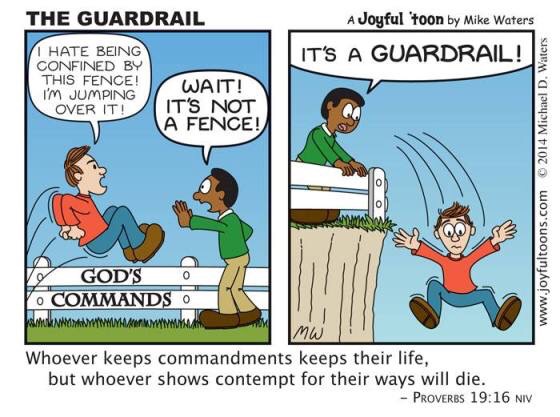
Grace is a gift. Forgiveness of sins and his salvation are gifts. Grace is not, however, a license to sin. Throughout the Bible, fathers of our faith are seen distressed, tormented by their sin.
Consider David after his adultery with Bathsheba or Peter after denying Christ (Psalms 51:17 and Matthew 26:75). They did not discount their sin as simply something atoned for. Just because the Christian’s sin is paid for by Jesus, sin is still damaging to the believer and their relationship with God.
When David tried to ignore his sin, his “bones wasted away through my groaning all day long” (Psalms 32:3). He did, however, find freedom in confession.
“Then I acknowledged my sin to you and did not cover up my iniquity. I said, ‘I will confess my transgressions to the LORD’ – and you forgave the guilt of my sin.” – Psalms 32:5
A Christian who pursues sin despite claiming Christ as their Savior is living outside the blessing and fullness of the relationship that comes with an obedient life. We cannot equate grace with freedom to sin. Instead, we should be thankful that grace provides freedom from sin and its eternal consequences.
Doesn’t that kind of grace make you want to obey the one who set you free?
What Is Sanctification?
“If you love me, you will obey my commandments. I will ask the Father, and he will give you another helper who will be with you forever. That helper is the Spirit of Truth. The world cannot accept him, because it doesn’t see or know him. You know him, because he lives with you and will be in you.” – John 14:5-17
The Christian’s spiritual journey doesn’t begin and end at a one-time prayer of confession. When we truly see our need for God, his grace and Christ’s sacrifice for us, we will want to obey him. Why? Because we will overflow with love and gratitude that the God of all creation cares enough to save us from ourselves. And if we love him, we trust him when he calls us to higher things. This pursuit toward Christ, and refining of our faith, is sanctification. Sanctification is progressing toward Christlikeness. A Christian cannot pursue both Christlikeness and sin.
So Christians, remember his abounding grace toward you. Turn from sin and embrace your new life as a vessel of light. You are dead to sin, alive in Christ.
Now go live it.
———
***By Lizzie Hoover at Grand Canyon University: gcu.edu / Photo by Mike Waters at Joyful Toons








 The Sisterhood Hub