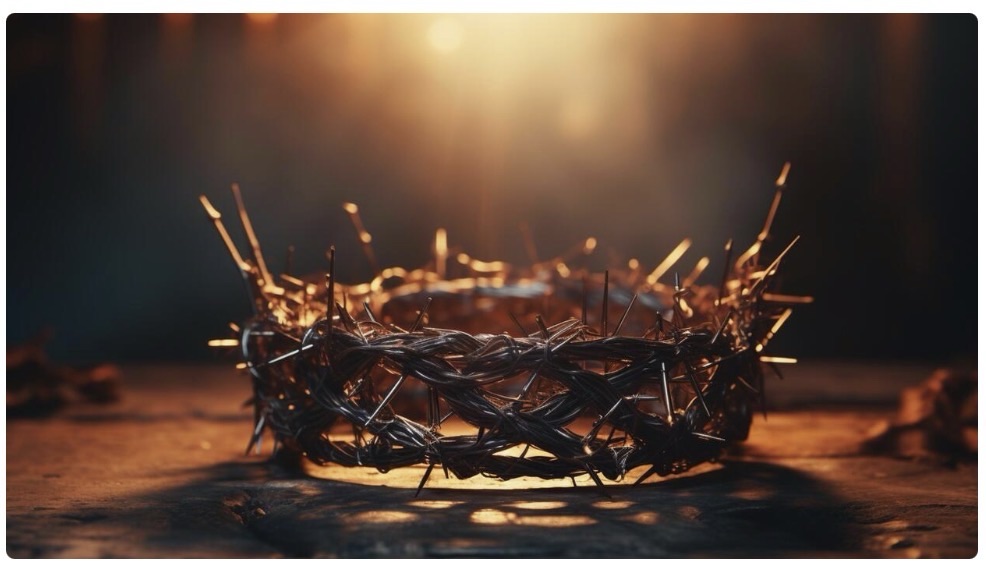
Why Judas Was Lost — And Religion Didn’t Save Him

Matthew 27:1–7 (ESV): When morning came, all the chief priests and the elders of the people took counsel against Jesus to put him to death. And they bound him and led him away and delivered him over to Pilate the governor.

Then when Judas, his betrayer, saw that Jesus was condemned, he changed his mind and brought back the thirty pieces of silver to the chief priests and the elders, saying, “I have sinned by betraying innocent blood.” They said, “What is that to us? See to it yourself.”

And throwing down the pieces of silver into the temple, he departed, and he went and hanged himself.

But the chief priests, taking the pieces of silver, said, “It is not lawful to put them into the treasury, since it is blood money.” So they took counsel and bought with them the potter’s field as a burial place for strangers.

This moment in Scripture is one of the most sobering in the entire Gospel story. It’s easy to rush past it — to get to the crucifixion, the resurrection, the victory. But if we skip over this, we miss something crucial: a warning wrapped in tragedy.

This isn’t just a story about ancient villains. It’s a spotlight on the human heart — our hearts. On what happens when someone is close to Jesus in proximity, but far from Him in surrender. It’s not about how wicked “they” were — it’s about how easily we can walk the same path without even realizing it.

This is not an attack on sincere believers walking humbly with Jesus. But it is a wake-up call for anyone trusting in church involvement, ministry roles, emotional worship experiences, Bible knowledge, or spiritual performance — instead of in Jesus Himself.

Judas’s downfall didn’t begin with the silver. It began when he let religion take the place of repentance. And when the weight of his sin finally hit him, he ran to the wrong people — religious leaders who had no grace to give. They were full of rules, titles, and temple rituals, but hollowed out of mercy, compassion, and truth.

And that’s where this story becomes our warning. Judas went to religion, and it couldn’t save him. Judas chose guilt over grace.

Judas: A Man Who Walked with Jesus—But Lost His Way

Judas wasn’t some random outsider. He was one of Jesus’ own twelve disciples. He walked with Jesus daily, witnessed His miracles firsthand, ate at His table, and heard His teachings. Yet, despite all this closeness, Judas made a devastating choice.

What went wrong? Judas let earthly things—money, greed, and material gain—take priority over the spiritual truth he had seen. Instead of clinging to Jesus, the source of true life and forgiveness, he sold out the Savior for thirty pieces of silver. His heart turned away from grace and toward greed, but religion without real repentance couldn’t save him.

This betrayal reminds us that Christians can “sell out” their faith—not only for money but also for power, popularity, comfort, personal ambition, or by compromising God’s design for relationships.

Judas Went to the Wrong People

Judas betrayed Jesus and was filled with guilt—he knew what he did was wrong. But here’s the shocker: he didn’t run to Jesus, the only One who could truly forgive and heal him.

No. Judas ran to the chief priests and elders—sinners like us, mere men with titles but no power to forgive sins. These were the very people Judas was not meant to confess to, yet he went to them instead. Men steeped in religion, but rotten inside. Men who were complicit in condemning an innocent man. Men whose hearts were cold to mercy, justice, and truth. Religion without Jesus had hardened their hearts and kept them from true repentance.

Instead of repentance or sorrow, they cared only about their laws and their money. When Judas threw down the blood money, these priests refused to put it into the temple treasury because it was “unclean.” So what did they do? They took that money stained with innocent blood and bought a burial field for foreigners—as if buying a field could cover their guilt, their sin, their wickedness. As if putting money in the offering box or doing philanthropy deeds can do the same!

They thought a real estate transaction would redeem them. But no amount of money or good deed can wash away the stain of hypocrisy, envy, hatred, and betrayal. Their actions expose the brutal reality of religion without Jesus: cold legalism that cares more about rules and appearances than mercy, grace, and true repentance.

The disconnect is astounding—here were men steeped in religion yet utterly disconnected from true repentance and mercy. They were guilty of: envy, hatred, lying, hypocrisy and legalism that valued money over justice, yet they called themselves God’s representatives.

This is the cold reality of religion without Jesus: ritual replaces relationship, rules replace repentance, and good deeds become a mask for rebellion and wickedness.

Peter’s Path: Failure Met by Forgiveness

Peter was another man who walked closely with Jesus but made a very different choice. Like Judas, Peter was one of the twelve disciples, witnessing Jesus’ miracles and hearing His teachings firsthand. Yet when the pressure came, Peter denied Jesus—not once, but three times.

But here’s the crucial difference: Peter didn’t remain in his failure. He genuinely repented, was restored by Jesus, and went on to live a life marked by bold faith and transformation.

Peter’s story brings hope: no failure is final when met with sincere repentance. Grace and restoration are available to anyone who turns back to Jesus wholeheartedly.

(See Matthew 26:69–75; John 21:15–19; Luke 22:31–32; Acts 2:14–41)

Two Paths Lie Before You

You’ve failed. So have I. We’ve all sold Jesus out for something—pleasure, control, popularity, pride, money, lust, whatever.

The question isn’t whether you’ve sinned. The question is, what are you going to do about it?

You have two choices:

JUDAS

Regret

Isolation

Death

Religion

Shame

PETER

Repentance

Restoration

Life

Relationship

Grace

One ran to religion and died. The other ran to Jesus and lived.

This is not a game. Your soul is at stake.

Application for Us Today

Many people believe they’ve gone too far—betrayed too deeply, denied too loudly, messed up too many times. Judas’s path shows us what happens when we believe our sin is stronger than God’s grace.

But Peter’s story tells another truth:

Jesus is greater than our greatest failure.

He doesn’t just forgive. He redeems, restores, and reuses the broken. In fact, it’s those very cracks that let His glory shine through.

Final Encouragement

“Let God be true and every man a liar.” Peter is living proof of that. Men may fail—but God never does. Jesus knew Peter would fall and planned to restore him before it even happened (Luke 22:31–32).

That same grace is available today. Judas’s story warns us of despair, but Peter’s shows us the way back: through Christ alone.

The Bottom Line

If you think your church attendance, good behavior, ministry work, or religious “track record” can replace a real, repentant walk with Jesus—think again. Don’t rely on religion to save your soul. Only a genuine relationship with Jesus, marked by repentance and surrender, brings true forgiveness and restoration.

Run to Jesus — not to man-made religion, lifeless ritual, or guilt-driven striving. Only Jesus can forgive sin and restore your soul.

Don’t make Judas’s mistake. Don’t settle for empty religion that kills your spirit.

Choose life. Choose Jesus.

If you’re not sure where you stand with God or want to understand how to receive His forgiveness and eternal life, you can read this article here:

Responding to God’s Call: Salvation, Repentance, and Eternal Life

——————-

*** Photo by Nikolett Emmert by Pexels

So You Have a Past… Who Doesn’t?

What the Bible Says About New Beginnings in Christ

Let’s be honest—no one makes it through life without baggage. Every one of us has a past. Some of us carry the weight of wrong decisions, broken relationships, deep regrets, or seasons we’d rather forget. Maybe your past is marked by addiction, failure, shame, or simply drifting far from God. Whatever your story looks like, you’re not alone—and more importantly, your story isn’t over.

Here’s the good news: God specializes in new beginnings.

The Bible isn’t a book of perfect people; it’s the story of a perfect God who redeems imperfect people. Abraham lied. Moses murdered. David committed adultery. Peter denied Jesus. Paul persecuted Christians. And yet every one of them was transformed by the grace of God and used for His glory.

That same grace is available to you. Jesus didn’t come to condemn your past—He came to redeem your life and offer you a brand-new start. The message of the Gospel is not “try harder” or “be better,” but “come to Me, all you who are heavy laden and I will give you rest.”

You Are a New Creation

The Apostle Paul sums it up beautifully in 2 Corinthians 5:17:

“Therefore, if anyone is in Christ, he is a new creation. The old has passed away; behold, the new has come.”

Let that sink in: you are a new creation. That means the old labels no longer apply. Your past doesn’t get to define your identity. In Christ, your story gets rewritten. God doesn’t just clean you up—He completely transforms you from the inside out.

For many, this moment of transformation is sudden and undeniable. One minute you’re consumed by the world—chasing image, pleasure, and temporary fixes—and the next, you’re face-to-face with the overwhelming love of Christ. That’s what happened to me. I spent years looking for truth in all the wrong places: from New Age counterfeit spirituality to a life built around image, status, and self.

But in the middle of my brokenness, Jesus met me with a love I didn’t even know I needed. The moment I called out to Him, everything changed. It was as if the weight I had carried for years finally lifted.

A New Heart and a New Spirit

God promises not just a new beginning, but a whole new nature:

“I will give you a new heart and put a new spirit in you; I will remove from you your heart of stone and give you a heart of flesh.” (Ezekiel 36:26)

This isn’t about behavior modification—it’s about heart transformation. During my time in the New Age, I believed I could heal and improve myself through things like positive thinking, life coaching, and spiritual techniques. But none of it brought true freedom or lasting peace. What I needed wasn’t another method or mindset shift—it was the truth found in Jesus Christ. When I opened the Bible, I discovered that Christianity isn’t about climbing a ladder to reach God—it’s about a loving God who came down to rescue us through Jesus. He didn’t just tidy up my broken life—He made me completely new.

Your Past Is Not Too Great for God’s Grace

One of the enemy’s favorite tactics is shame. He whispers, “You’ll never change. You’re too far gone. God could never use someone like you.” But the cross silences that lie. The blood of Jesus covers every sin, every failure, every regret.

Isaiah 1:18 says:

“Though your sins are like scarlet, they shall be as white as snow; though they are red as crimson, they shall be like wool.”

No matter how deep the pit, God’s arm is not too short to save. I’ve lived that truth. I went from spiritual deception and emotional darkness—even suicidal thoughts—to complete restoration in Christ. And it wasn’t because I fixed myself. It was because He rescued me. His love met me in the most hopeless moment of my life.

God Is Doing a New Thing

God doesn’t just rescue us from our past—He invites us into a future:

“Forget the former things; do not dwell on the past. See, I am doing a new thing! Now it springs up; do you not perceive it?” (Isaiah 43:18–19)

When you surrender your life to Jesus, you’re not just forgiven—you’re empowered. God fills you with His Holy Spirit to walk in freedom, purpose, and peace. That’s not just theory—it’s reality. I’ve seen God rewrite my story in ways I could never have imagined, and I now have a mission to share that hope with others.

Walking in the Newness of Life

Romans 6:4 says:

“Just as Christ was raised from the dead through the glory of the Father, we too may live a new life.”

This new life is marked by daily surrender and daily grace. It’s not about perfection—it’s about progress, walking hand-in-hand with a God who loves you too much to leave you as you are. He gives you a new identity, a new heart, and a new reason to live.

Conclusion: God’s Not Done With You

So you have a past? Who doesn’t? But in Jesus, you also have a future. The past may explain you, but it doesn’t define you—not anymore.

When Jesus says, “Behold, I make all things new” (Revelation 21:5), He means it. I’ve lived it. And if He can do it for me, He can absolutely do it for you.

————-

** Photo by Pixabay at Pexels

The Magnificence of Christ Our Savior and Soon-Coming King

The Magnificence of Christ Our Savior and Soon-Coming King

The story of Jesus Christ is the centerpiece of human history. His birth, life, death, resurrection, and promised return encapsulate the glory of God’s redemptive plan. Jesus, whose name means “The Lord saves,” is also called Emmanuel, meaning “God with us” (Matthew 1:21-23). His magnificence is proclaimed not only by heavenly hosts but also by humble shepherds, learned Magi, devout prophets, and even the unborn John the Baptist, pointing to His divine mission to save humanity from sin and reconcile us to God.

The Prophecies of the Messiah

Long before His earthly arrival, the coming of the Messiah was foretold by the prophets. These prophecies reveal the grandeur of His identity and mission:

  1. His Virgin Birth:
    Isaiah prophesied that the Messiah would be born of a virgin, signifying a divine and miraculous conception:
    “The virgin will conceive and give birth to a son, and will call him Emmanuel” (Isaiah 7:14).
  2. His Identity and Mission:
    Isaiah described the Messiah as both a mighty ruler and a source of eternal peace:
    “For to us a child is born, to us a son is given, and the government will be on his shoulders. And he will be called Wonderful Counselor, Mighty God, Everlasting Father, Prince of Peace” (Isaiah 9:6).
  3. His Eternal Kingship:
    The prophet Daniel foretold that the Messiah’s kingdom would never end:
    “His dominion is an everlasting dominion that will not pass away, and his kingdom is one that will never be destroyed” (Daniel 7:14).
  4. The Place of His Birth:
    Micah foretold that the Messiah would be born in Bethlehem:
    “But you, Bethlehem Ephrathah, though you are small among the clans of Judah, out of you will come for me one who will be ruler over Israel, whose origins are from of old, from ancient times” (Micah 5:2).

The Announcements of His Birth

The fulfillment of these prophecies was marked by divine announcements and extraordinary events.

To Mary

The angel Gabriel appeared to Mary, a humble young woman in Nazareth, and declared:
“Do not be afraid, Mary; you have found favor with God. You will conceive and give birth to a son, and you are to call him Jesus. He will be great and will be called the Son of the Most High. The Lord God will give him the throne of his father David, and he will reign over Jacob’s descendants forever; his kingdom will never end” (Luke 1:30-33).

Mary, in awe, humbly accepted God’s will, saying:
“I am the Lord’s servant. May your word to me be fulfilled” (Luke 1:38).

To Joseph

Joseph, initially troubled upon learning of Mary’s pregnancy, was reassured by an angel in a dream:
“Joseph son of David, do not be afraid to take Mary home as your wife, because what is conceived in her is from the Holy Spirit. She will give birth to a son, and you are to give him the name Jesus, because he will save his people from their sins” (Matthew 1:20-21).

The Joy of Elizabeth and Unborn John

After receiving the angel Gabriel’s announcement, Mary went to visit her relative Elizabeth, who was miraculously pregnant with John the Baptist in her old age. As soon as Mary greeted Elizabeth, an extraordinary event occurred:

“When Elizabeth heard Mary’s greeting, the baby leaped in her womb, and Elizabeth was filled with the Holy Spirit. In a loud voice, she exclaimed: ‘Blessed are you among women, and blessed is the child you will bear! But why am I so favored, that the mother of my Lord should come to me? As soon as the sound of your greeting reached my ears, the baby in my womb leaped for joy’” (Luke 1:41-44).

This moment underscores Jesus’s divine nature even as an unborn child. John, filled with the Holy Spirit even in the womb, recognized and rejoiced in the presence of the Savior.

The Birth of the Savior

The birth of Jesus was marked by simplicity and splendor. Born in Bethlehem, He was laid in a manger because there was no room for them in the inn. This humble setting did not diminish His magnificence but instead highlighted His mission to bring salvation to all people, from the lowliest to the greatest.

The Celebration of His Birth

The Shepherds – The First Witnesses

On the night of Jesus’s birth, shepherds in the fields outside Bethlehem became the first to hear the good news. An angel of the Lord appeared to them, proclaiming:
“Do not be afraid. I bring you good news that will cause great joy for all the people. Today in the town of David a Savior has been born to you; he is the Messiah, the Lord. This will be a sign to you: You will find a baby wrapped in cloths and lying in a manger” (Luke 2:10-12).

Suddenly, a multitude of heavenly hosts praised God, saying:
“Glory to God in the highest heaven, and on earth peace to those on whom his favor rests” (Luke 2:14).

The shepherds, filled with wonder, hurried to Bethlehem. Finding Mary, Joseph, and the baby as the angel described, they became the first earthly witnesses to proclaim His arrival:
“When they had seen him, they spread the word concerning what had been told them about this child, and all who heard it were amazed” (Luke 2:17-18).

The Magi – Honored Guests from the East

Some time later, wise men (Magi) from the East arrived in Jerusalem, guided by a miraculous star. They asked:
“Where is the one who has been born king of the Jews? We saw his star when it rose and have come to worship him” (Matthew 2:2).

Herod, troubled by their inquiry, sought to use the Magi to locate Jesus for sinister purposes. But the star led the Magi to Bethlehem, where they found Jesus. They worshiped Him and offered gifts of gold, frankincense, and myrrh—symbols of His kingship, divinity, and sacrificial death (Matthew 2:11).

Warned in a dream not to return to Herod, the Magi departed another way, protecting the child from harm.

Simeon and Anna’s Testimonies

When Mary and Joseph brought Jesus to the temple for consecration, Simeon, a devout man awaiting the Messiah, took the child in his arms and praised God:
“Sovereign Lord, as you have promised, you may now dismiss your servant in peace. For my eyes have seen your salvation, which you have prepared in the sight of all nations: a light for revelation to the Gentiles, and the glory of your people Israel” (Luke 2:29-32).

The prophetess Anna, who worshiped in the temple day and night, also recognized Jesus as the Redeemer. She gave thanks to God and spoke about Him to all who were awaiting the redemption of Jerusalem (Luke 2:36-38).

Jesus: The Savior and Soon-Coming King

The magnificence of Jesus extends far beyond His birth. He lived a sinless life, taught with divine authority, performed miracles, and ultimately gave His life as a ransom for many (Mark 10:45). Through His death and resurrection, He conquered sin and death, offering eternal life to all who believe in Him:
“For God so loved the world that he gave his one and only Son, that whoever believes in him shall not perish but have eternal life” (John 3:16).

As we celebrate His birth, we also look forward to His glorious return, when He will reign as King of Kings and Lord of Lords:
“Look, he is coming with the clouds, and every eye will see him” (Revelation 1:7).

Conclusion

The birth of Jesus Christ is a cause for joy and celebration. His arrival fulfilled ancient prophecies, was heralded by angels, acknowledged by shepherds, worshiped by wise men, and even celebrated by John the Baptist in the womb. He is Emmanuel, God with us, who came to save His people from their sins and bring light to the world.

As we await His return, let us proclaim with the heavenly hosts:
“Glory to God in the highest heaven, and on earth peace to those on whom his favor rests” (Luke 2:14).

———————

**Photo by Krivec Ales at Pexels

Why It Is Important to Reflect on the True Meaning of Christmas

In a world where consumerism, materialism, and gluttony are pervasive, it seems that every day is treated as an opportunity to indulge, and holidays like Christmas have become occasions of excess rather than moments of gratitude. Yet, in the hustle of buying the latest gadgets, preparing lavish meals, and creating elaborate decorations, the deeper meaning of these celebrations risks being overshadowed. As Christians, we are reminded that Christmas is not just another day of festivity or an excuse for indulgence—it is a sacred time to give thanks and reflect on the greatest gift humanity has ever received: Jesus Christ.

The Reason for the Season

The world may often overlook the significance of Christmas, reducing it to commercial exchanges, but for believers, Christmas is a time to honor the birth of Jesus, God’s ultimate gift to the world. This is not just a day to exchange gifts, but a time to remember the immense love that God showed by sending His only son to save a broken world. John 3:16 states: “For God so loved the world that He gave His only begotten Son, that whoever believes in Him should not perish but have everlasting life.” This verse beautifully encapsulates the core of what Christmas represents—God’s gift of salvation, freely given to all who would receive it.

The Problem of Consumerism and Gluttony

It is no secret that, particularly during the holiday season, we see an increase in spending, overindulgence, and sometimes even stress as people attempt to create a “perfect” Christmas. From overspending on presents to overloading on food, the season can easily become a frenzy of excess, often leaving people feeling more drained than fulfilled. Instead of bringing joy and peace, it often creates anxiety, debt, and dissatisfaction.

What was meant to be a time of reflection and gratitude has, for many, morphed into a pressure-cooker of social expectations. This is in stark contrast to the simple, yet profound, reason for Christmas: the birth of Christ, who came to give us eternal life, not fleeting material possessions.

A Call to Give Thanks and Return to the Heart of Christmas

Christmas should remind us of the importance of gratitude, not just for earthly blessings but for the eternal gift of salvation through Jesus. Romans 6:23 says, “For the wages of sin is death, but the gift of God is eternal life through Jesus Christ our Lord.” This gift is freely offered to all of us. It is not something we can buy, nor something we deserve, but a testament to God’s infinite love for us.

Instead of focusing on the material aspects of the season, we are invited to reflect on Jesus’s life, His teachings, and most importantly, His sacrifice. As Christians, we are called to celebrate Christmas by remembering why Jesus came to this earth—to pay the price for our sins and offer us the gift of eternal life. This is the heart of the holiday, the reason behind all the joy, lights, and music. Without Christ, there would be no Christmas.

The Greatest Gift of All

The poem “The Greatest Gift” beautifully highlights the core message of the gospel: God’s love for us was so great that He sent His son to die in our place, offering us salvation and eternal life. This is the greatest gift the world has ever known—far more valuable than any material possession we might receive during the holiday season. It is a gift that cannot be earned, only accepted, through faith in Christ.

To receive this gift, we are invited to trust Jesus as our Savior and call upon His name. Through repentance and belief, we are born again, and our sins are forgiven, as Jesus already paid the price on the cross. This is the good news we celebrate during Christmas—a reminder that no matter how flawed or unworthy we may feel, God’s love for us is boundless.

Bringing the Focus Back to Christ

As the holiday season approaches, let us challenge ourselves to return to the true meaning of Christmas. Yes, it is a time for gathering with loved ones, enjoying good food, and exchanging gifts—but most importantly, it is a time to reflect on the immeasurable love of God shown through the birth of Jesus. Rather than getting lost in the distractions of consumerism and excess, we can choose to celebrate Christmas with a heart of gratitude, worship, and remembrance of God’s eternal gift.

In a world that constantly encourages us to seek more, Christmas reminds us that we have already been given the greatest gift—Jesus. Let us remember that Jesus is the reason for the season, and let that truth shape how we celebrate.

John 3:16: “For God so loved the world that He gave His only begotten Son, that whoever believes in Him should not perish but have everlasting life.”

——————

*** Photo by George Dolgikh by Pexels

Victor Marx “A Warrior for Christ” From Victim to Victory

Video – Victor Mark’s testimony is one of the redemptive power of God

Nothing is impossible for God! He is the restorer and healer of all things, if you give it to Him.

Victor Marx is a remarkable figure who has dedicated his life to humanitarian efforts and helping those trapped in devastating circumstances, including victims of human trafficking. Overcoming his own traumatic childhood of serious abuse and neglect, he transformed his pain into a mission to bring hope and restoration to others.

Through his organisation, All Things Possible Ministries, Victor works in high-risk areas, including war zones and regions plagued by human trafficking, to rescue and rehabilitate those in need. His ministry has impacted tens of thousands of lives, including children and survivors of abuse, as well as prisoners through his outreach programmes. His work exemplifies courage, faith, and perseverance.

Victor Marx is also a devoted family man with over 34 years of marriage, five children, and five grandchildren. He shares his wisdom and experiences to inspire others, blending his military discipline, faith, and compassionate outlook to build successful relationships and empower individuals to thrive despite life’s challenges.

Notable Quotes by Victor Marx:

“Kids who are born in the fire , will not be burned by the heat of life”

“Forgiveness is giving up your right to hurt someone back for hurting you.”

“Forgiving: gaining real estate in your heart to both give and receive love”

Support

To support Victor Marx’s ministry and his mission to bring hope, freedom, and restoration to those in desperate need, consider contributing to All Things Possible Ministries: Support

Outstanding interviews with Victor Marx at the Shaun Ryan show

Part 1 – How Victor became the Guinness book of records fastest gun disarmer in the world

Part 2 – Overcoming childhood terror

Part 3 – How big tech and AI influence child predators

Helpful Posts:

Trusting God to Heal the Scars of Sexual Abuse

8 Steps to Forgiveness and Learning How to Forgive

Who I am in Christ

———————

*** By Lori McPherson / Photo: Outreach magazine / YouTube Video Victor Marx / Victor Marx book: The Dangerous Gentlemen