10 Ways to Revere God’s Holiness

Revering God’s holiness is essential to our faith. It means recognising His absolute purity, majesty, and separateness from sin and responding with deep respect, love, and obedience. The Bible repeatedly calls us to honour God’s holiness, as seen in 1 Peter 1:15-16, which says:

“But just as He who called you is holy, so be holy in all you do; for it is written: ‘Be holy, because I am holy.’”

But how do we practically revere God’s holiness in our daily lives? Here are some ways we can do this:

1. Worship Him in Spirit and Truth

True worship comes from the heart. Jesus said in John 4:24, “God is spirit, and His worshippers must worship in the Spirit and in truth.” Revering God’s holiness means approaching Him with sincerity, humility, and devotion. Worship should not be mechanical or ritualistic but should flow from an understanding of His greatness.

  • Approach God with sincerity, humility, and a heart devoted to Him (John 4:24).
  • Praise and adore Him through prayer, song, and thanksgiving.

2. Live in Obedience to His Word

Reverence for God is demonstrated through obedience. John 14:15 says, “If you love Me, keep My commands.” Obeying His Word means aligning our lives with His teachings, striving to live a life set apart from sin, and seeking to reflect His righteousness in our actions.

  • Follow His commandments and teachings (John 14:15).
  • Strive to live a holy life, set apart from sin (1 Peter 1:15-16).

3. Approach Him with Reverence in Prayer

Prayer is an intimate conversation with God, but it must also be approached with awe and reverence. Jesus taught us to begin our prayers by acknowledging God’s holiness: “Our Father in heaven, hallowed be Your name” (Matthew 6:9).

  • Pray with awe and respect, acknowledging His greatness (Matthew 6:9).
  • Seek His will rather than simply presenting our own desires.

4. Honour His Name

God’s name is sacred, and we must be careful in how we use it. Exodus 20:7 commands, “You shall not take the name of the LORD your God in vain.” Using His name with reverence means avoiding careless speech and ensuring that our words reflect our deep respect for Him.

  • Speak of God with reverence, avoiding casual or disrespectful use of His name (Exodus 20:7).
  • Let our words reflect His holiness in all situations.

5. Study and Meditate on His Word

Spending time in Scripture helps us understand who God is and deepens our reverence for Him. Psalm 119:11 says, “I have hidden Your word in my heart that I might not sin against You.” By regularly reading, studying, and meditating on the Bible, we develop a greater appreciation for His holiness and guidance in our lives.

  • Spend time reading and meditating on Scripture to know Him better (Psalm 119:11).
  • Apply biblical truths to our daily lives.

6. Repent and Seek Purity

Holiness and sin cannot coexist. 1 John 1:9 assures us that “If we confess our sins, He is faithful and just and will forgive us our sins and purify us from all unrighteousness.” A heart that truly reveres God seeks purity, repents of sin, and desires to be transformed by the Holy Spirit.

  • Confess and turn away from sin, striving for purity of heart (1 John 1:9).
  • Ask the Holy Spirit to transform us into Christ’s image.

7. Fear the Lord in a Healthy Way

The Bible speaks of the “fear of the Lord” as the beginning of wisdom (Proverbs 9:10). This fear is not terror but deep respect, recognising God’s power, authority, and justice. A healthy fear of God leads us to honour Him, avoid sin, and seek His will in all we do.

  • Have a deep respect for God’s authority, justice, and power (Proverbs 9:10).
  • Recognise that He is both loving and just.

8. Set Apart Time for God

Honouring God’s holiness means prioritising time with Him. Observing a time of rest and worship, such as the Sabbath (Exodus 20:8-10), helps us focus on Him without distractions. Personal moments of prayer, reflection, and communion with God also strengthen our reverence for Him.

  • Dedicate time for personal worship, reflection, and communion with Him.
  • Observe a Sabbath rest to focus on God’s presence (Exodus 20:8-10).

9. Honour Him in Our Daily Conduct

Revering God’s holiness should be evident in our actions, not just our words. Colossians 3:12 encourages us to “clothe yourselves with compassion, kindness, humility, gentleness and patience.” Our daily conduct should reflect Christ’s love, demonstrating to the world that we serve a holy God.

  • Show love, kindness, and humility as a reflection of His holiness (Colossians 3:12).
  • Let our actions and choices align with His righteousness.

10. Lead Others to Know His Holiness

A life that truly reveres God naturally points others to Him. Sharing the Gospel, encouraging faith in others, and fostering a culture of reverence in our homes and communities are ways to honour His holiness. We should strive to be examples of godly living, inspiring others to seek and worship Him.

  • Share the Gospel and help others grow in their faith.
  • Encourage a culture of reverence in our homes, churches, and communities.

Conclusion

Revering God’s holiness is not just about external actions but about cultivating a heart that genuinely honours Him. Worship, obedience, prayer, repentance, and daily living all play a part in demonstrating our reverence. As we grow in our understanding of His holiness, we draw closer to Him and reflect His glory to the world.

May God give us the grace to truly honour and revere His holiness in all we do!

——————

** Photo by Alex Andrews at Pexels

From Despair to Hope: A Lifeline for the Suicidal and Broken

“Come to me, all you who are weary and burdened, and I will give you rest…” ~ Matthew 11:28

In a world burdened by struggles, confusion, and despair, many find themselves in battles that feel overwhelming and unwinnable. Suicidal thoughts, depression, and feelings of worthlessness are weapons used by the enemy to isolate and weaken us. I know because I have been there. The Bible reminds us in Ephesians 6:12 that our struggle is not merely against flesh and blood, but against the spiritual forces of darkness.

People are being tormented by the enemy, Satan, through various means, including addictions, mental illness, and painful life circumstances. The enemy whispers lies of hopelessness, worthlessness, and fear into the hearts of the vulnerable. Yet even in these dark times, there is hope—hope found in the unfailing love of our Creator and the healing power of Jesus Christ.

Understanding the Struggle

Suicidal thoughts are often rooted in deep pain caused by life’s challenges—loss, trauma, addiction, or mental illness. Drugs and alcohol, while often used to numb the pain, can open doors to spiritual oppression, intensifying feelings of despair. Mental health conditions may leave individuals feeling trapped, and overwhelming life circumstances can make escape seem impossible.

It is vital to understand that these struggles are not signs of weakness or failure. Instead, they are symptoms of a larger spiritual and emotional battle. Suicidal thoughts are not who you are; they are part of the fight you are facing.

Hope in the Midst of Despair

Every life matters, and we are deeply loved by our Heavenly Father. God’s Word assures us of His love:

“The Lord is close to the brokenhearted and saves those who are crushed in spirit” (Psalm 34:18).

“For I know the plans I have for you,” declares the Lord, “plans to prosper you and not to harm you, plans to give you hope and a future” (Jeremiah 29:11).

God created each of us with purpose and value. He cares for us deeply, from the womb to the tomb, and longs to bring healing and restoration to our lives—mind, body, and soul.

The Gift of Salvation

When Jesus came to earth, He brought hope and freedom. He came to save us from sin and its consequences, offering eternal life to all who believe in Him. Sin, which separates us from God, takes many forms—sexual immorality, addictions, lying, unforgiveness, and more. While these sins weigh us down, Jesus offers forgiveness and redemption.

Through His death on the cross and resurrection, Jesus conquered sin and death. His sacrifice allows us to be restored to God, no matter how broken we feel. Romans 10:9 says, “If you declare with your mouth, ‘Jesus is Lord,’ and believe in your heart that God raised Him from the dead, you will be saved.” This invitation is for everyone, regardless of background or past mistakes.

Breaking the Chains of Hopelessness

The enemy thrives on lies, isolating us with thoughts of worthlessness and despair. To break free, we must replace these lies with God’s truth:

• Lie: “I am worthless.”

Truth: “You are fearfully and wonderfully made” (Psalm 139:14).

• Lie: “No one cares about me.”

Truth: “Cast all your anxiety on Him because He cares for you” (1 Peter 5:7).

• Lie: “There’s no hope for me.”

Truth: “For nothing will be impossible with God” (Luke 1:37).

Practical and Spiritual Steps Toward Healing

1. Seek God’s Deliverance and Healing

• Turn to Him in Prayer: Confess your struggles to God and ask Him to heal your heart and mind.

• Pray for Freedom from Oppression: Whether your struggles stem from addictions or spiritual attacks, ask God to break the chains.

• Invite the Holy Spirit to Fill You: The Holy Spirit strengthens and comforts us in ways no one else can.

2. Surround Yourself with a Supportive Community

Isolation is one of the enemy’s most powerful tools. Connect with a local church, prayer group, or supportive friends who can encourage you and walk alongside you in your healing journey.

3. Spend Time in God’s Word

The Bible is full of promises and encouragement for those who are hurting. Meditate on passages like these:

• “Come to me, all you who are weary and burdened, and I will give you rest” (Matthew 11:28).

• “I can do all things through Christ who strengthens me” (Philippians 4:13).

4. Seek Professional Help

• Mental Health Support: Therapy and medical care are essential tools in addressing depression and mental illness. God often works through professionals to bring healing.

• Faith-Based Recovery: If addiction plays a role in your struggles, consider joining a recovery group that focuses on both spiritual and practical growth.

Take One Day at a Time

Healing is a journey, not an instant transformation. Focus on trusting God each day and allowing Him to guide you step by step.

Finding Purpose in Pain

God can take the most painful experiences and use them for good. Your journey, as difficult as it may be, can become a testimony of hope for others. When you allow God to bring healing, your story can inspire and encourage those who feel lost and alone.

An Invitation to New Life

If you’re battling suicidal thoughts, Jesus invites you to come to Him as you are. He loves you unconditionally and offers rest for your weary soul. Lay your burdens at His feet, and trust that He will provide peace and strength to overcome.

As Romans 8:38-39 says, “For I am convinced that neither death nor life, neither angels nor demons, neither the present nor the future, nor any powers… will be able to separate us from the love of God that is in Christ Jesus our Lord.”

You Are Not Alone

If you are struggling with suicidal thoughts, please know that you are not alone. God sees your pain and loves you deeply. Reach out to a trusted person, counselor, or crisis hotline for immediate help. Healing and restoration are possible through Him.

No matter how dark life may feel right now, God has a purpose and a plan for you. He stands ready to embrace you with open arms and lead you into a future filled with hope and healing. Choose life today. Choose Jesus.

A list of organizations that provide support in the USA and UK:

Christian Organizations Offering Support and Resources (USA) 🇺🇸

  1. Focus on the Family
    www.focusonthefamily.com
    Offers counseling, resources, and guidance for individuals and families facing challenges.
  2. Celebrate Recovery
    www.celebraterecovery.com
    A Christ-centered 12-step recovery program for those struggling with addiction, pain, or trauma.
  3. National Association for Christian Recovery (NACR)
    www.nacr.org
    Provides resources for those in recovery and seeking healing through faith.
  4. The Hope Line
    www.thehopeline.com
    Offers free Christian counseling and support for those struggling with depression, anxiety, or suicidal thoughts.
  5. American Association of Christian Counselors (AACC)
    www.aacc.net
    Helps connect individuals with licensed Christian counselors for mental health and spiritual support.
  6. Billy Graham Evangelistic Association (BGEA) Prayer Line
    www.billygraham.org | Call: 1-877-247-2426
    Offers prayer and spiritual guidance for anyone in need.
  7. Teen Challenge USA
    www.teenchallengeusa.org
    Faith-based recovery programs for teens and adults struggling with life-controlling issues.
  8. Faithful Counseling
    www.faithfulcounseling.com
    A platform for online therapy with licensed Christian counselors.
  9. GriefShare
    www.griefshare.org
    A support group and resource network for those grieving the loss of a loved one.

Christian Organizations Offering Support and Resources (UK) 🇬🇧

  1. Premier Lifeline (Christian Helpline)
    www.premierlifeline.org.uk | Call: 0300 111 0101
    A confidential Christian helpline offering support and prayer.
  2. Mind and Soul Foundation
    www.mindandsoulfoundation.org
    Provides resources and support at the intersection of faith and mental health.
  3. Christian Counseling UK
    www.counsellinguk.org
    Connects individuals with Christian counselors across the UK.
  4. Hope UK
    www.hopeuk.org
    A Christian organization providing education and support around addiction and substance abuse.
  5. The Samaritans (Christian Volunteers Available)
    www.samaritans.org | Call: 116 123
    Offers 24/7 support for anyone in emotional distress, with Christian volunteers available upon request.
  6. CAP (Christians Against Poverty)
    www.capuk.org
    Provides free debt counseling and support for those in financial difficulty.
  7. Youth for Christ (YFC UK)
    www.yfc.co.uk
    Offers resources and support for young people, with a focus on faith and hope.
  8. Christian Helplines Association (CHA)
    www.christianhelplines.org.uk
    A network of Christian helplines offering prayer and emotional support.
  9. Alcoholics Victorious UK
    www.alcoholicsvictorious.co.uk
    A Christian-based support network for individuals overcoming addiction.
  10. Churches Together in England (CTE)
    www.cte.org.uk
    A nationwide resource to help connect individuals with local churches and support groups.

—————

** Lori McPherson’s Testimony / By Photo by Marcos Fernandes de Matos at Pexels

The Magnificence of Christ Our Savior and Soon-Coming King

The Magnificence of Christ Our Savior and Soon-Coming King

The story of Jesus Christ is the centerpiece of human history. His birth, life, death, resurrection, and promised return encapsulate the glory of God’s redemptive plan. Jesus, whose name means “The Lord saves,” is also called Emmanuel, meaning “God with us” (Matthew 1:21-23). His magnificence is proclaimed not only by heavenly hosts but also by humble shepherds, learned Magi, devout prophets, and even the unborn John the Baptist, pointing to His divine mission to save humanity from sin and reconcile us to God.

The Prophecies of the Messiah

Long before His earthly arrival, the coming of the Messiah was foretold by the prophets. These prophecies reveal the grandeur of His identity and mission:

  1. His Virgin Birth:
    Isaiah prophesied that the Messiah would be born of a virgin, signifying a divine and miraculous conception:
    “The virgin will conceive and give birth to a son, and will call him Emmanuel” (Isaiah 7:14).
  2. His Identity and Mission:
    Isaiah described the Messiah as both a mighty ruler and a source of eternal peace:
    “For to us a child is born, to us a son is given, and the government will be on his shoulders. And he will be called Wonderful Counselor, Mighty God, Everlasting Father, Prince of Peace” (Isaiah 9:6).
  3. His Eternal Kingship:
    The prophet Daniel foretold that the Messiah’s kingdom would never end:
    “His dominion is an everlasting dominion that will not pass away, and his kingdom is one that will never be destroyed” (Daniel 7:14).
  4. The Place of His Birth:
    Micah foretold that the Messiah would be born in Bethlehem:
    “But you, Bethlehem Ephrathah, though you are small among the clans of Judah, out of you will come for me one who will be ruler over Israel, whose origins are from of old, from ancient times” (Micah 5:2).

The Announcements of His Birth

The fulfillment of these prophecies was marked by divine announcements and extraordinary events.

To Mary

The angel Gabriel appeared to Mary, a humble young woman in Nazareth, and declared:
“Do not be afraid, Mary; you have found favor with God. You will conceive and give birth to a son, and you are to call him Jesus. He will be great and will be called the Son of the Most High. The Lord God will give him the throne of his father David, and he will reign over Jacob’s descendants forever; his kingdom will never end” (Luke 1:30-33).

Mary, in awe, humbly accepted God’s will, saying:
“I am the Lord’s servant. May your word to me be fulfilled” (Luke 1:38).

To Joseph

Joseph, initially troubled upon learning of Mary’s pregnancy, was reassured by an angel in a dream:
“Joseph son of David, do not be afraid to take Mary home as your wife, because what is conceived in her is from the Holy Spirit. She will give birth to a son, and you are to give him the name Jesus, because he will save his people from their sins” (Matthew 1:20-21).

The Joy of Elizabeth and Unborn John

After receiving the angel Gabriel’s announcement, Mary went to visit her relative Elizabeth, who was miraculously pregnant with John the Baptist in her old age. As soon as Mary greeted Elizabeth, an extraordinary event occurred:

“When Elizabeth heard Mary’s greeting, the baby leaped in her womb, and Elizabeth was filled with the Holy Spirit. In a loud voice, she exclaimed: ‘Blessed are you among women, and blessed is the child you will bear! But why am I so favored, that the mother of my Lord should come to me? As soon as the sound of your greeting reached my ears, the baby in my womb leaped for joy’” (Luke 1:41-44).

This moment underscores Jesus’s divine nature even as an unborn child. John, filled with the Holy Spirit even in the womb, recognized and rejoiced in the presence of the Savior.

The Birth of the Savior

The birth of Jesus was marked by simplicity and splendor. Born in Bethlehem, He was laid in a manger because there was no room for them in the inn. This humble setting did not diminish His magnificence but instead highlighted His mission to bring salvation to all people, from the lowliest to the greatest.

The Celebration of His Birth

The Shepherds – The First Witnesses

On the night of Jesus’s birth, shepherds in the fields outside Bethlehem became the first to hear the good news. An angel of the Lord appeared to them, proclaiming:
“Do not be afraid. I bring you good news that will cause great joy for all the people. Today in the town of David a Savior has been born to you; he is the Messiah, the Lord. This will be a sign to you: You will find a baby wrapped in cloths and lying in a manger” (Luke 2:10-12).

Suddenly, a multitude of heavenly hosts praised God, saying:
“Glory to God in the highest heaven, and on earth peace to those on whom his favor rests” (Luke 2:14).

The shepherds, filled with wonder, hurried to Bethlehem. Finding Mary, Joseph, and the baby as the angel described, they became the first earthly witnesses to proclaim His arrival:
“When they had seen him, they spread the word concerning what had been told them about this child, and all who heard it were amazed” (Luke 2:17-18).

The Magi – Honored Guests from the East

Some time later, wise men (Magi) from the East arrived in Jerusalem, guided by a miraculous star. They asked:
“Where is the one who has been born king of the Jews? We saw his star when it rose and have come to worship him” (Matthew 2:2).

Herod, troubled by their inquiry, sought to use the Magi to locate Jesus for sinister purposes. But the star led the Magi to Bethlehem, where they found Jesus. They worshiped Him and offered gifts of gold, frankincense, and myrrh—symbols of His kingship, divinity, and sacrificial death (Matthew 2:11).

Warned in a dream not to return to Herod, the Magi departed another way, protecting the child from harm.

Simeon and Anna’s Testimonies

When Mary and Joseph brought Jesus to the temple for consecration, Simeon, a devout man awaiting the Messiah, took the child in his arms and praised God:
“Sovereign Lord, as you have promised, you may now dismiss your servant in peace. For my eyes have seen your salvation, which you have prepared in the sight of all nations: a light for revelation to the Gentiles, and the glory of your people Israel” (Luke 2:29-32).

The prophetess Anna, who worshiped in the temple day and night, also recognized Jesus as the Redeemer. She gave thanks to God and spoke about Him to all who were awaiting the redemption of Jerusalem (Luke 2:36-38).

Jesus: The Savior and Soon-Coming King

The magnificence of Jesus extends far beyond His birth. He lived a sinless life, taught with divine authority, performed miracles, and ultimately gave His life as a ransom for many (Mark 10:45). Through His death and resurrection, He conquered sin and death, offering eternal life to all who believe in Him:
“For God so loved the world that he gave his one and only Son, that whoever believes in him shall not perish but have eternal life” (John 3:16).

As we celebrate His birth, we also look forward to His glorious return, when He will reign as King of Kings and Lord of Lords:
“Look, he is coming with the clouds, and every eye will see him” (Revelation 1:7).

Conclusion

The birth of Jesus Christ is a cause for joy and celebration. His arrival fulfilled ancient prophecies, was heralded by angels, acknowledged by shepherds, worshiped by wise men, and even celebrated by John the Baptist in the womb. He is Emmanuel, God with us, who came to save His people from their sins and bring light to the world.

As we await His return, let us proclaim with the heavenly hosts:
“Glory to God in the highest heaven, and on earth peace to those on whom his favor rests” (Luke 2:14).

———————

**Photo by Krivec Ales at Pexels

The Story of The Birdcage

“For our struggle is not against flesh and blood [contending only with physical opponents], but against the rulers, against the powers, against the world forces of this [present] darkness, against the spiritual forces of wickedness in the heavenly (supernatural) places.” ~ Ephesians 6:12

In the 1800s, an old Baptist pastor was preparing his Sunday sermon on a Saturday afternoon. After several hours of study, he grew tired and went for a walk to stretch his legs. While wandering through town, he saw a young boy carrying a birdcage in one hand and a stick in the other. Inside the cage were a dozen little field birds. The boy was jabbing the birds through the bars with the stick. The birds shrieked, feathers flew, and the boy laughed.

The pastor approached the boy and asked, “Son, why are you tormenting those birds?”

The boy replied, “Sir, I love to hear them shriek. I love to see their feathers fly. It is so much fun.”

“What will you do when you are finished having your fun?” the pastor asked.

The boy smiled broadly. “Oh sir, that’s the best part. I will bring them home, take them out of the cage one by one, pluck their feathers, and feed them to my cat.”

The pastor’s heart was broken. “Son, let me have those birds,” he said.

“No, these are my birds. I caught them myself. You can get your own birds. You can catch some in the field.”

“But I want those birds.”

“Why? They don’t even sing. They aren’t canaries, you know. They are just ordinary field birds.”

“Please, son. I’ll buy them from you. How much do you want?”

The pastor took out his wallet and opened it up. The boy saw an opportunity. “How much money do you have, sir?”

The pastor counted two hundred dollars, which was a significant amount of money in those days. “What a coincidence,” the boy said. “They cost exactly two hundred dollars, cage included.”

Knowing he was being taken advantage of, the pastor handed over all his money. The next day, he recounted this story to his congregation. He said, “I took that cage out into the field, opened the door, and backed away. One by one, the birds hopped to the open door. One by one, they spread their wings and began to fly. As they flew to freedom, they sang the same song: ‘Redeemed, Redeemed, Redeemed.’”

The Message of Redemption

You might wonder, what does this story have to do with us? The tale of the birdcage mirrors our relationship with God. Just as the birds were tormented by the boy, we too can feel trapped, harassed, and tormented by the enemy—Satan, who delights in our suffering and captivity to sin, addiction, and depression. The enemy Satan uses people who are willing to do his bidding. The Lord said he was a liar and murderer from the beginning, who comes to kill, steal, and destroy everything good in people’s lives. People are being tormented by the enemy and are hurting by present methods used to oppress the people. Satan torments with feelings of hopelessness, worthlessness, fear, depression, and suicidal thoughts.

The old Baptist pastor symbolizes God, who intervenes to set us free. Just as the pastor bought the birds at a great cost, God paid the ultimate price for our freedom through Jesus Christ. Jesus came to set the captives free and to break the chains that bind us, whether they are chains of sin, addiction, or despair.

When the pastor let the birds go, they flew away one by one, just like how God sets us free from being trapped by the things of this world and sin. The birds’ joyful song of “Redeemed, Redeemed, Redeemed” illustrates the happiness and freedom we feel when we accept God’s rescue—His redemption through Jesus Christ. This story beautifully shows how God’s love and grace change us, freeing us from sin’s chains so we can live freely and praise Him.

Understanding Our Condition

All of us have done wrong and fallen short of God’s standards. Sin is not just about major wrongdoings but also includes knowing what is right and failing to do it. It encompasses acts like lying, stealing, unforgiveness, hatred, jealousy, anger, sexual immorality, idolatry, addictions, pornography, drugs, and wanting to live separately from God. These wrongdoings separate us from a holy and righteous God.

God judges the heart, including our thoughts, words, deeds, and motives. While people can pretend to have a holy exterior and act pious, God sees through our facades and knows our true nature. It’s not about religion, where you have to do things to be accepted by God. It’s about a relationship with God who is near and accessible. Our good works cannot save us; they are like filthy rags in comparison to God’s purity, you cannot buy salvation. The Bible states that the wages of sin is death—eternal separation from God in hell, a fate none of us would wish upon anyone.

The Sacrifice of Jesus

Jesus Christ paid the price for our sins on the cross so we can be restored to God, our heavenly Father. There needed to be a sacrifice, and God so loved the world that He gave His only begotten Son, Jesus, who was sinless, to take our place. It’s like a mother giving away her newborn baby or you giving away your only child to pay someone else’s debt, someone who couldn’t care less about you or love you back. God was willing to do that for you and me.

Jesus Christ was crucified, with nails driven through His hands and feet and a crown of thorns pressed onto His head. He was whipped until His skin was torn off, becoming unrecognizable. As He hung on that cross, He did it for your sins. He took our sins upon Himself, including the very sins that have destroyed our lives. He was destroyed for those sins on that cross. He bled and died for our sins, which were buried with Him in the grave. Three days later, Jesus Christ was raised from the dead. Jesus is alive!

The Call to Salvation

This message is for everyone. Regardless of your wealth, status, sexual orientation or religious background, Jesus invites you to turn from sin and accept His gift of salvation. No amount of money, social standing, or religious observance can save you. It’s not about comparing yourself to others; the only comparison that matters is with God, and we all fall short, we all have sinned. God doesn’t want our religion; He wants a relationship with us. We are created with a God-shaped vacuum that nothing else can fill. He said, “I am the light of the world. Whoever follows me will never walk in darkness but will have the light of life.”

A Prayer of Salvation

If you feel the call in your heart, don’t wait. Embrace this good news today and pray:

Remember, it’s not the prayer that saves you; it’s the heartfelt belief and confession, turning away from sin, and choosing to trust in Jesus for a righteous life. Now is the time for salvation. Turn from darkness to light, from sin to salvation, and follow Jesus.


What Next?

Download the free guide on the 7 Things To Do After Getting Saved:


Photo by Kai-Chieh Chan at Pexels

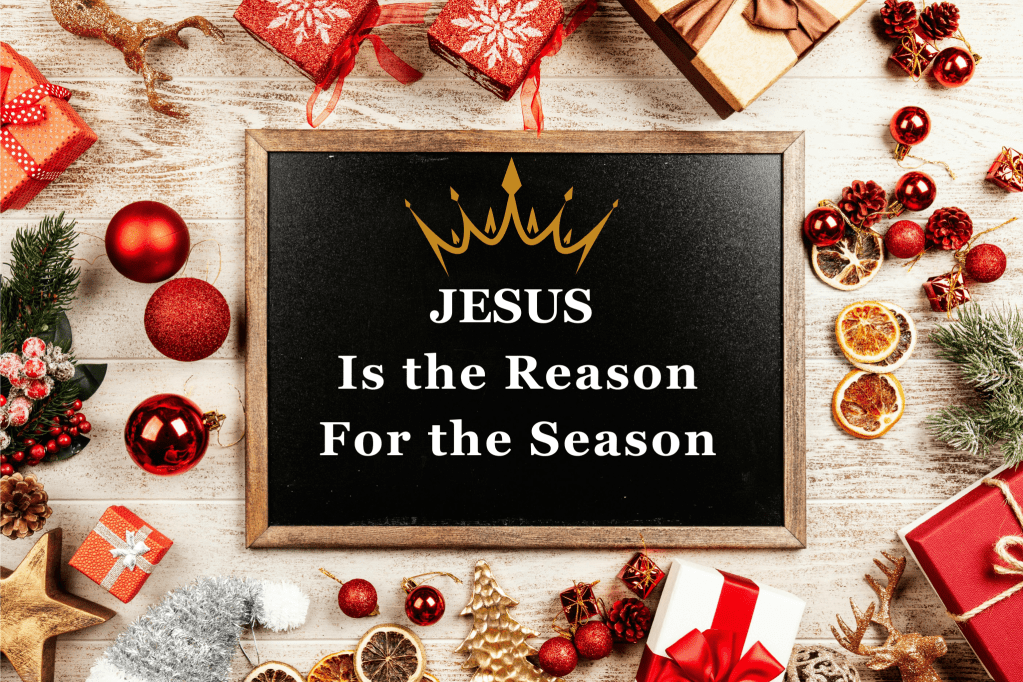
Why It Is Important to Reflect on the True Meaning of Christmas

In a world where consumerism, materialism, and gluttony are pervasive, it seems that every day is treated as an opportunity to indulge, and holidays like Christmas have become occasions of excess rather than moments of gratitude. Yet, in the hustle of buying the latest gadgets, preparing lavish meals, and creating elaborate decorations, the deeper meaning of these celebrations risks being overshadowed. As Christians, we are reminded that Christmas is not just another day of festivity or an excuse for indulgence—it is a sacred time to give thanks and reflect on the greatest gift humanity has ever received: Jesus Christ.

The Reason for the Season

The world may often overlook the significance of Christmas, reducing it to commercial exchanges, but for believers, Christmas is a time to honor the birth of Jesus, God’s ultimate gift to the world. This is not just a day to exchange gifts, but a time to remember the immense love that God showed by sending His only son to save a broken world. John 3:16 states: “For God so loved the world that He gave His only begotten Son, that whoever believes in Him should not perish but have everlasting life.” This verse beautifully encapsulates the core of what Christmas represents—God’s gift of salvation, freely given to all who would receive it.

The Problem of Consumerism and Gluttony

It is no secret that, particularly during the holiday season, we see an increase in spending, overindulgence, and sometimes even stress as people attempt to create a “perfect” Christmas. From overspending on presents to overloading on food, the season can easily become a frenzy of excess, often leaving people feeling more drained than fulfilled. Instead of bringing joy and peace, it often creates anxiety, debt, and dissatisfaction.

What was meant to be a time of reflection and gratitude has, for many, morphed into a pressure-cooker of social expectations. This is in stark contrast to the simple, yet profound, reason for Christmas: the birth of Christ, who came to give us eternal life, not fleeting material possessions.

A Call to Give Thanks and Return to the Heart of Christmas

Christmas should remind us of the importance of gratitude, not just for earthly blessings but for the eternal gift of salvation through Jesus. Romans 6:23 says, “For the wages of sin is death, but the gift of God is eternal life through Jesus Christ our Lord.” This gift is freely offered to all of us. It is not something we can buy, nor something we deserve, but a testament to God’s infinite love for us.

Instead of focusing on the material aspects of the season, we are invited to reflect on Jesus’s life, His teachings, and most importantly, His sacrifice. As Christians, we are called to celebrate Christmas by remembering why Jesus came to this earth—to pay the price for our sins and offer us the gift of eternal life. This is the heart of the holiday, the reason behind all the joy, lights, and music. Without Christ, there would be no Christmas.

The Greatest Gift of All

The poem “The Greatest Gift” beautifully highlights the core message of the gospel: God’s love for us was so great that He sent His son to die in our place, offering us salvation and eternal life. This is the greatest gift the world has ever known—far more valuable than any material possession we might receive during the holiday season. It is a gift that cannot be earned, only accepted, through faith in Christ.

To receive this gift, we are invited to trust Jesus as our Savior and call upon His name. Through repentance and belief, we are born again, and our sins are forgiven, as Jesus already paid the price on the cross. This is the good news we celebrate during Christmas—a reminder that no matter how flawed or unworthy we may feel, God’s love for us is boundless.

Bringing the Focus Back to Christ

As the holiday season approaches, let us challenge ourselves to return to the true meaning of Christmas. Yes, it is a time for gathering with loved ones, enjoying good food, and exchanging gifts—but most importantly, it is a time to reflect on the immeasurable love of God shown through the birth of Jesus. Rather than getting lost in the distractions of consumerism and excess, we can choose to celebrate Christmas with a heart of gratitude, worship, and remembrance of God’s eternal gift.

In a world that constantly encourages us to seek more, Christmas reminds us that we have already been given the greatest gift—Jesus. Let us remember that Jesus is the reason for the season, and let that truth shape how we celebrate.

John 3:16: “For God so loved the world that He gave His only begotten Son, that whoever believes in Him should not perish but have everlasting life.”

——————

*** Photo by George Dolgikh by Pexels