What the Bible Says About New Beginnings in Christ
Let’s be honest—no one makes it through life without baggage. Every one of us has a past. Some of us carry the weight of wrong decisions, broken relationships, deep regrets, or seasons we’d rather forget. Maybe your past is marked by addiction, failure, shame, or simply drifting far from God. Whatever your story looks like, you’re not alone—and more importantly, your story isn’t over.
Here’s the good news: God specializes in new beginnings.
The Bible isn’t a book of perfect people; it’s the story of a perfect God who redeems imperfect people. Abraham lied. Moses murdered. David committed adultery. Peter denied Jesus. Paul persecuted Christians. And yet every one of them was transformed by the grace of God and used for His glory.
That same grace is available to you. Jesus didn’t come to condemn your past—He came to redeem your life and offer you a brand-new start. The message of the Gospel is not “try harder” or “be better,” but “come to Me, all you who are heavy laden and I will give you rest.”
You Are a New Creation
The Apostle Paul sums it up beautifully in 2 Corinthians 5:17:
“Therefore, if anyone is in Christ, he is a new creation. The old has passed away; behold, the new has come.”
Let that sink in: you are a new creation. That means the old labels no longer apply. Your past doesn’t get to define your identity. In Christ, your story gets rewritten. God doesn’t just clean you up—He completely transforms you from the inside out.
For many, this moment of transformation is sudden and undeniable. One minute you’re consumed by the world—chasing image, pleasure, and temporary fixes—and the next, you’re face-to-face with the overwhelming love of Christ. That’s what happened to me. I spent years looking for truth in all the wrong places: from New Age counterfeit spirituality to a life built around image, status, and self.
But in the middle of my brokenness, Jesus met me with a love I didn’t even know I needed. The moment I called out to Him, everything changed. It was as if the weight I had carried for years finally lifted.
A New Heart and a New Spirit
God promises not just a new beginning, but a whole new nature:
“I will give you a new heart and put a new spirit in you; I will remove from you your heart of stone and give you a heart of flesh.” (Ezekiel 36:26)
This isn’t about behavior modification—it’s about heart transformation. During my time in the New Age, I believed I could heal and improve myself through things like positive thinking, life coaching, and spiritual techniques. But none of it brought true freedom or lasting peace. What I needed wasn’t another method or mindset shift—it was the truth found in Jesus Christ. When I opened the Bible, I discovered that Christianity isn’t about climbing a ladder to reach God—it’s about a loving God who came down to rescue us through Jesus. He didn’t just tidy up my broken life—He made me completely new.
Your Past Is Not Too Great for God’s Grace
One of the enemy’s favorite tactics is shame. He whispers, “You’ll never change. You’re too far gone. God could never use someone like you.” But the cross silences that lie. The blood of Jesus covers every sin, every failure, every regret.
Isaiah 1:18 says:
“Though your sins are like scarlet, they shall be as white as snow; though they are red as crimson, they shall be like wool.”
No matter how deep the pit, God’s arm is not too short to save. I’ve lived that truth. I went from spiritual deception and emotional darkness—even suicidal thoughts—to complete restoration in Christ. And it wasn’t because I fixed myself. It was because He rescued me. His love met me in the most hopeless moment of my life.
God Is Doing a New Thing
God doesn’t just rescue us from our past—He invites us into a future:
“Forget the former things; do not dwell on the past. See, I am doing a new thing! Now it springs up; do you not perceive it?” (Isaiah 43:18–19)
When you surrender your life to Jesus, you’re not just forgiven—you’re empowered. God fills you with His Holy Spirit to walk in freedom, purpose, and peace. That’s not just theory—it’s reality. I’ve seen God rewrite my story in ways I could never have imagined, and I now have a mission to share that hope with others.
Walking in the Newness of Life
Romans 6:4 says:
“Just as Christ was raised from the dead through the glory of the Father, we too may live a new life.”
This new life is marked by daily surrender and daily grace. It’s not about perfection—it’s about progress, walking hand-in-hand with a God who loves you too much to leave you as you are. He gives you a new identity, a new heart, and a new reason to live.
Conclusion: God’s Not Done With You
So you have a past? Who doesn’t? But in Jesus, you also have a future. The past may explain you, but it doesn’t define you—not anymore.
When Jesus says, “Behold, I make all things new” (Revelation 21:5), He means it. I’ve lived it. And if He can do it for me, He can absolutely do it for you.
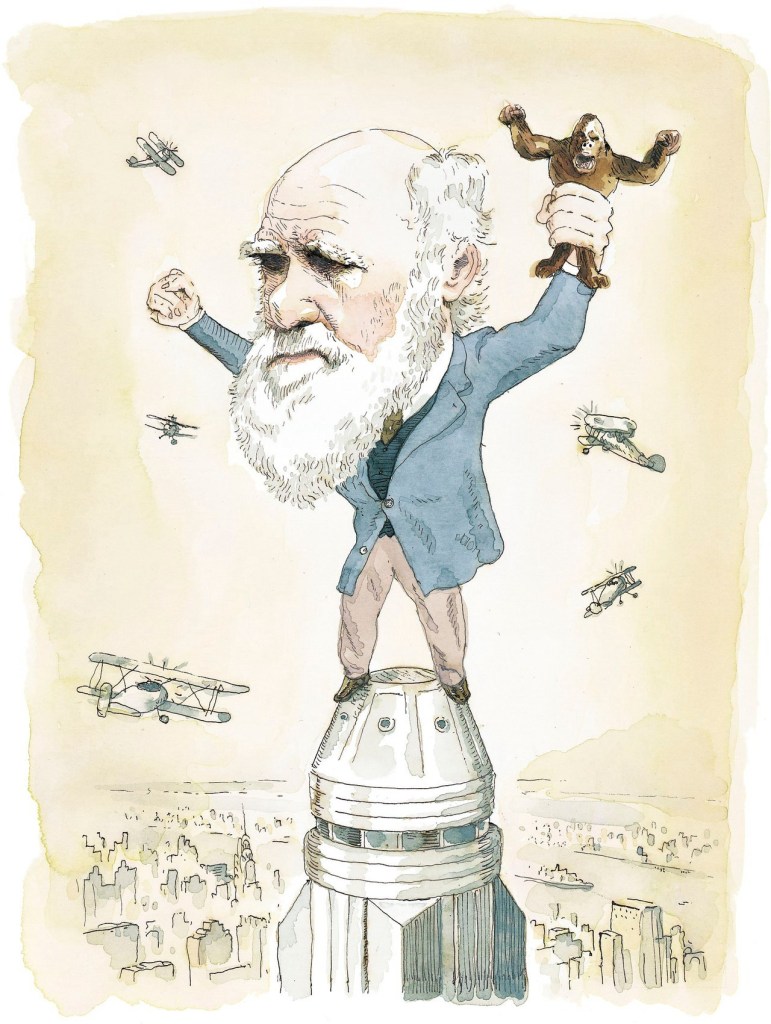
Charles Darwin was given life, intelligence, and opportunity by God—but instead of using his gifts for God’s glory, he used them to oppose the very One who created him. With the brain God gave him, he had the audacity to try to outwit and contradict Almighty God, leading millions into deception. His theory of evolution has caused untold damage, weakening faith, sowing doubt, and giving many an excuse to reject their Creator.
This is a pattern we see throughout history. Margaret Sanger, the founder of Planned Parenthood, promoted wicked ideologies that have led to the deaths of countless unborn children. Like Darwin, she was used by Satan because her heart was not surrendered to God. This is what happens when people reject truth—they open themselves up to be tools for darkness.
The Bible warns in Romans 1:21-22, “For although they knew God, they did not honor Him as God or give thanks to Him, but they became futile in their thinking, and their foolish hearts were darkened. Claiming to be wise, they became fools.”
Darwin, like many others, thought he was pursuing wisdom, but in reality, he was being led astray. Human wisdom that rejects God is foolishness. And the devil knows exactly how to use people who are full of pride and rebellion.
Jesus said in John 8:44, “You are of your father the devil, and your will is to do your father’s desires. He was a murderer from the beginning, and does not stand in the truth, because there is no truth in him.”
Darwin may have thought he was simply following science, but in reality, he was being used to promote a lie that leads people away from God. This is exactly how Satan operates—he fills people with pride and deception so they will spread his rebellion to others.
Darwin’s Spiritual Decline: A Warning for Us All
Darwin started with some belief in God. He was raised in a Christian household and, as a young man, intended to become a clergyman in the Church of England. In fact, he studied theology at Christ’s College, Cambridge, and for a time, he accepted the argument for the design of nature as evidence of God’s existence.
However, as he developed his theory of evolution through natural selection, his religious beliefs began to change. The death of his beloved daughter Annie in 1851 also deeply affected him, contributing to his gradual loss of faith. But over time, instead of seeking God, he allowed doubt and personal pain to harden his heart. Instead of turning to God in his grief, he turned away.
Many people do the same today. They experience suffering and, rather than seeking God for answers, they blame Him and reject Him. But this is dangerous because when someone refuses to humble themselves before God, their heart grows cold, and Satan gains control over them.
The Deception of Religion Without Relationship
Many people, like Charles Darwin, grow up with the outward forms of religion but never experience the transformative power of a relationship with God. The Bible warns about this kind of empty religion in 2 Timothy 3:5, which says:
“Having a form of godliness but denying its power. Have nothing to do with such people.”
This verse describes a religion without power—a “form” that looks like faith but lacks the true transformation that comes from knowing God personally. Darwin, though raised in a Christian home, may have been familiar with Christian teachings and rituals, but he did not know God in the way the Bible describes.
Many today find themselves in similar positions. They attend church, know the Bible stories, and even follow certain Christian customs—but they have never experienced the power of God in their lives. They may think that religious activity can please God, but true Christianity is not about following rituals—it’s about knowing God personally. It’s about God reaching out to us and us responding to Him.
Christianity is unique in that it’s not about our efforts to reach God through rituals or sacrifices. God came to us in the person of Jesus Christ. He lived among us, died for us, and rose again to offer us forgiveness and eternal life. This is not a religion of human effort, but of divine grace. God does not want mere religious rituals—He wants our hearts, a living relationship with us. Jesus wants to know you personally.
In John 17:3, Jesus Himself says:
“This is eternal life, that they know you, the only true God, and Jesus Christ whom you have sent.”
This knowledge is not intellectual—it’s personal, a deep connection with God.
The Deception of Satan: How He Uses “Wisdom” to Lead People Astray
Satan doesn’t just work through obvious evil—he often works through what looks like intelligence and enlightenment. The Bible tells us:
“Satan disguises himself as an angel of light.” (2 Corinthians 11:14)
This means the devil doesn’t always tempt people with open wickedness; sometimes, he deceives them by making lies look like truth. Darwin’s theory, at first glance, seems scientific, but its real goal is to remove God from the picture.
This is Satan’s oldest trick! When he tempted Eve in the Garden of Eden, how did he do it?
“Did God really say…?” (Genesis 3:1)
He planted doubt in Eve’s mind, just as he does today with evolution, humanism, and self-reliance. Satan whispers: “Did God really create everything? Did He really make you? Or did you just evolve? Are you really accountable to a Creator?”
And just like Eve, millions have fallen for this deception. But Jesus said:
“You will know the truth, and the truth will set you free.” (John 8:32)
The truth is, God created everything, and all who reject Him will one day have to stand before Him in judgment.
How Evolution Attacks the Gospel Directly
Many think evolution is just a scientific theory, but it’s actually a direct attack on the gospel of Jesus Christ. Here’s why:
1. If evolution is true, then death existed before sin.
• The Bible teaches that death came as a result of sin (Romans 5:12).
• Evolution, however, claims that death was always part of nature.
• This means if evolution were true, there was no need for Jesus to die for sin—which completely destroys the message of the cross!
2. If humans are just evolved animals, then we have no real moral accountability.
• Without a Creator, people can justify any sin—abortion, sexual immorality, greed, pride—because there’s no “higher standard” to answer to.
• This is why society is in moral collapse—because when people reject God as Creator, they also reject His commandments.
3. It makes people put their faith in “science” instead of in God.
• Evolution is often presented as an undeniable fact, making people trust human theories over divine revelation.
• This is why many lose their faith—because they’re taught that the Bible is just a myth, while evolution is “proven.”
But God’s Word is the final truth, not human theories:
“Let God be true, and every man a liar.” (Romans 3:4)
The entire gospel message depends on the fact that God created us, we sinned, and Christ came to redeem us. Evolution tries to erase this truth, making it one of the most dangerous deceptions of our time.
Darwin’s Influence on Racism and Eugenics
Another devastating effect of Darwin’s ideas is how they contributed to racism and eugenics (the idea of “improving” humanity by eliminating “weaker” groups).
• Darwin’s book The Descent of Man suggested that some races were more evolved than others.
• His cousin, Francis Galton, took these ideas further and founded eugenics, which influenced Nazi ideology and racial supremacy movements.
• Margaret Sanger, the founder of Planned Parenthood, also supported eugenics, believing that certain people were “unfit” to reproduce.
Many don’t realize that Darwin’s ideas fueled some of the worst atrocities in history. The belief in “survival of the fittest” led to the dehumanization of entire groups, including Africans, Jews, and the disabled.
But the Bible says the opposite!
• “From one man, He made all the nations.” (Acts 17:26)
• “God created mankind in His own image.” (Genesis 1:27)
All humans, no matter their race or background, are made in God’s image and have equal worth. But when people reject this truth, they justify evil in ways they never would if they truly believed in the Creator.
The Real Issue: Sin and Rebellion
Darwin’s problem was not intellectual—it was spiritual. The Bible says in Psalm 14:1, “The fool says in his heart, ‘There is no God.’” Rejecting God is not a matter of intelligence but of the heart. People deny God not because they lack evidence but because they love sin and do not want to submit to Him.
Matthew 7:21-23:
“Not everyone who says to me, ‘Lord, Lord,’ will enter the kingdom of heaven, but the one who does the will of my Father who is in heaven. On that day many will say to me, ‘Lord, Lord, did we not prophesy in your name, and cast out demons in your name, and do many mighty works in your name?’ And then will I declare to them, ‘I never knew you; depart from me, you workers of lawlessness.’”
This is the truth: God does not want religious rituals, empty words, or intellectual knowledge. He wants a relationship. It’s not enough to know about God; we must know Him personally. This relationship begins with repentance—turning away from our sin and rebellion—and putting our faith in Jesus Christ, who is the only way to salvation.
True repentance involves acknowledging our sin, realizing that we cannot save ourselves, and surrendering our lives to Jesus as Lord and Savior. Jesus, through His death on the cross, took the punishment for our sin, and through His resurrection, He conquered death, offering us new life. This is the gospel—the good news that Jesus offers forgiveness to all who trust in Him.
The Call to True Faith
If you’ve never put your faith in Jesus, now is the time to make that decision. Repent of your sins, turn to Jesus, and trust in His work on the cross to save you. Jesus is not just a historical figure or a good teacher—He is the Savior, the Son of God, and He offers eternal life to anyone who believes in Him.
Romans 10:9-10 says,
“If you declare with your mouth, ‘Jesus is Lord,’ and believe in your heart that God raised Him from the dead, you will be saved. For it is with your heart that you believe and are justified, and it is with your mouth that you profess your faith and are saved.”
Jesus is the way, the truth, and the life (John 14:6). The only way to escape the penalty of sin, which is eternal separation from God, is through faith in Him. He offers forgiveness, eternal life, and a relationship with the Creator of the universe. It is not about religion; it is about knowing the living God.
Conclusion
Charles Darwin, though gifted with intellect, used his mind to oppose the very Creator who gave it to him. Like many others throughout history, his rejection of God led to devastating consequences—not just for himself, but for countless others. The lie of evolution has permeated society, encouraging people to live without acknowledging their Creator. But the gospel stands as the truth: Jesus Christ is the Creator, the Savior, and the only way to eternal life.
Don’t be deceived by empty religion or false ideologies. Repent and believe in the gospel of Jesus Christ. The world is full of lies, but Jesus is the truth. He calls all who are lost to come to Him and be saved.
“For God so loved the world, that He gave His only Son, that whoever believes in Him should not perish but have eternal life.” (John 3:16)
For centuries, societies have divided humanity into different “races” based on skin color, facial features, and other physical traits. However, both science and the Bible confirm that there is only one human race, and that racial divisions are artificial constructs created by societies, not biological realities.
The concept of race, as it is understood today, is a relatively modern idea. Ancient cultures primarily identified people by nation, language, or tribe, not by skin color or physical characteristics. The division of humanity into racial categories arose in later centuries, particularly during the Age of Exploration, the Transatlantic Slave Trade, and European colonialism, as a way to justify social hierarchies and inequalities. These divisions were not based on biblical teaching or scientific reality but were constructed to classify, separate, and control people groups for economic and political gain.
In this article, we will explore the biblical, scientific, and historical evidence that supports the truth: all humans are part of the same family, with differences being only ethnic and cultural—not racial.
1. The Biblical Perspective: One Blood, One Race
A. All Humans Descend from Adam and Eve
The Bible teaches that all people, regardless of their ethnic background, originate from one man and one woman—Adam and Eve. This means that all humans are part of a single, unified family, and there is no scriptural foundation for racial divisions.
Genesis 1:26-27 (God Creates Humanity in His Image)
“Then God said, ‘Let Us make man in Our image, according to Our likeness; let them have dominion over the fish of the sea, over the birds of the air, and over the cattle, over all the earth and over every creeping thing that creeps on the earth.’ So God created man in His own image; in the image of God He created him; male and female He created them.”
This passage is foundational for understanding human unity. Every human being bears God’s image, meaning that no ethnic group is superior or inferior. When we are told that humans are created in the image of God, it establishes that all people have inherent dignity and worth, regardless of skin color or other physical traits. This truth was radical in ancient times, as many societies at that time viewed their own people as superior to others based on ethnicity or physical characteristics. But the Bible’s declaration that all humans reflect God’s image shatters such ideas of superiority or inferiority.
Genesis 3:20 (Eve, the Mother of All Living)
“And Adam called his wife’s name Eve, because she was the mother of all living.”
This verse reinforces the concept of one human family. All of humanity, regardless of ethnic background or physical differences, can trace its origins to Adam and Eve. There is no basis in the Bible for seeing different ethnic groups as separate “races” with inherent differences. Rather, they are branches of one family tree.
B. The Table of Nations and the Spread of Ethnic Groups
After Noah’s flood, humanity repopulated through Noah’s three sons: Shem, Ham, and Japheth (Genesis 10). These descendants spread across the earth, and it is often said that the groups of people who came from these sons are the ancestors of modern nations. Some traditions suggest:
Shem’s descendants became the Middle Eastern and Semitic peoples (Jews, Arabs, Assyrians).
Ham’s descendants spread to parts of Africa and the Middle East.
Japheth’s descendants migrated to Europe and parts of Asia.
But it’s important to note that the Bible never says that these sons became different races—only that they populated different regions and developed unique cultures and languages. The differences we see today are the result of geographic migration, adaptation to climates, and cultural development—not separate racial origins. As people moved to different parts of the world, they adapted to their environments, which led to variations like skin color, hair texture, and other physical traits. These are ethnic distinctions—not separate races.
C. Acts 17:26 – One Blood, All Nations
Acts 17:26
“And He has made from one blood every nation of men to dwell on all the face of the earth, and has determined their preappointed times and the boundaries of their dwellings.”
In this passage, Paul is addressing the Athenians and emphasizing that God created one common ancestor for all human beings, and from that one blood came all the nations of the earth. The term “one blood” is incredibly significant—all humans share the same basic genetic makeup, regardless of their geographic location or ethnic group. There is no biblical support for the notion of multiple races. Instead, humanity is unified by a common origin and ancestry.
D. The Curse of Ham: A Misused Doctrine
One of the most harmful misinterpretations of the Bible concerning race involves the curse of Ham. Some have claimed that the curse placed on Ham’s son, Canaan, means that the descendants of Ham, particularly African people, are cursed with dark skin. This interpretation is wrong and has been used to justify slavery and racism, but the Bible does not say this.
Genesis 9:25-27
“Then he said: ‘Cursed be Canaan; a servant of servants He shall be to his brethren.’ And he said: ‘Blessed be the Lord, the God of Shem, and may Canaan be his servant. May God enlarge Japheth, and may he dwell in the tents of Shem; and may Canaan be his servant.’”
The curse was on Canaan, not on all of Ham’s descendants.
There is no mention of skin color or race in this passage. The curse refers to the subjugation of the Canaanite people (not a specific “race”) and was fulfilled in historical events, such as the Israelites conquering the Canaanite lands.
Misinterpreting this curse as relating to race has caused much harm throughout history, especially in justifying slavery and apartheid. The Bible never links skin color with sin or curse, and using it to justify racism is both biblically and historically inaccurate.
2. The Scientific Perspective: Genetics Proves One Human Race
A. The Human Genome Project: 99.9% Identical DNA
One of the most profound scientific studies, the Human Genome Project, concluded that all humans share 99.9% of their DNA. The differences we observe—skin color, facial features, and other genetic variations—are part of that small 0.1%. These minor differences do not justify separating humans into different “races.”
Dr. J. Craig Venter (Human Genome Project Scientist)
“Race has no genetic or scientific basis.”
This statement reflects the findings of the project. Genetic research shows that race is a social construct with no basis in our biology. Human genetic variation exists, but it does not divide neatly into the categories that traditional concepts of race have proposed.
Why Do People Look Different?
The physical differences we see today, such as skin color, are the result of adaptation to environmental factors over time, not the result of fundamentally different races.
People in hot, sunny climates (such as in Africa and parts of Southeast Asia) developed darker skin to protect themselves from the harmful effects of UV radiation.
People in colder, less sunny regions (like Europe and northern Asia) developed lighter skin to better absorb sunlight for Vitamin D synthesis.
These adaptations occurred over many generations and in response to environmental pressures, not because different “races” were created. The differences are ethnic and environmental rather than racial.
B. Anthropology: No Biological Race Categories
Scientists agree that humans are all one species, Homo sapiens, with variations in traits that result from both genetic adaptation and cultural evolution. Modern anthropology no longer classifies humans into “races” but instead focuses on ethnic and cultural diversity, acknowledging that the idea of race is a social construct, not a biological reality.
Dr. John H. Relethford (Biological Anthropologist)
“The idea of race is a cultural, not a biological, reality.”
This means that while there are ethnic groups with distinct cultural, linguistic, and physical traits, these groups do not correspond to separate biological races. Humans share a common ancestry, and what we identify as different “races” are merely groups of people with different ethnic backgrounds and adaptations.
3. The Historical Perspective: The Invention of Race
A. Ancient Civilizations Saw Ethnic Differences, Not Races
In ancient times, people identified themselves by nation, tribe, and language, not by physical characteristics like skin color. For instance, the Hebrews (in the Bible) referred to their neighbors by their nationality (Egyptians, Canaanites, etc.), and these distinctions were based on cultural identity, not race. The concept of “race” did not exist in the ancient world in the way we think of it today.
B. The Creation of Racial Categories
1, The Age of Exploration (1400s–1700s): As European explorers began to travel and make contact with different parts of the world, they started classifying people based on observable physical differences, such as skin color, hair texture, and facial features. This process led to the creation of the idea of “races”—distinct categories of people based on these differences. The colonization of Africa, the Americas, and parts of Asia further solidified these classifications as European colonizers often justified their domination over indigenous peoples through the supposed inferiority of non-European “races.”
2.The Scientific Racism Movement (1700s–1800s): During the 18th and 19th centuries, scientists like Carl Linnaeus and Georges-Louis Leclerc, Comte de Buffon began to attempt categorizing humans into different “races.” Linnaeus, for example, divided humans into four races based on geographic location and physical traits: Europeans (white), Asians (yellow), Africans (black), and Native Americans (red). This artificial classification system laid the groundwork for later racist ideologies, including the belief in the inherent superiority of white Europeans and the inferiority of other races.
3. The 20th Century and the Rise of Modern Genetics: As science advanced, especially in the fields of genetics and anthropology, it became increasingly clear that the concept of race had no biological basis. By the mid-20th century, the Human Genome Project revealed that all humans are overwhelmingly similar in their genetic makeup, debunking the notion of separate biological races. Modern anthropologists and geneticists now emphasize cultural, linguistic, and ethnic differences rather than racial distinctions.
4. The Abolition of Racial Classifications in Scientific Communities: By the late 20th century, many geneticists, biologists, and anthropologists rejected the concept of race as a scientific term, recognizing it as a social construct that perpetuates harmful stereotypes, inequality, and division among people.
4. Common Objections & Misconceptions: Addressing the Challenges to the Unity of Humanity
While the idea of one human race is increasingly recognized, misconceptions and objections persist. Here, we address some common arguments against the unity of humanity and explain why they are not biblically or scientifically accurate.
A. “The Bible talks about different races, so race must exist.”
One of the most common misconceptions is the belief that the Bible talks about separate races. As we have explored, the Bible uses terms like “nations,” “tribes,” “peoples,” and “languages” to describe the diversity of humanity, but never divides people into races. In fact, the New Testament makes it clear that God’s ultimate plan is to unite all people, regardless of ethnicity. In Revelation 7:9, we see a vision of the eternal kingdom where people from every tribe, tongue, and nation are worshiping together before the throne of God. This speaks to the unity of humanity, not its division into races.
Revelation 7:9
“After these things I looked, and behold, a great multitude which no one could number, of all nations, tribes, peoples, and tongues, standing before the throne and before the Lamb, clothed with white robes, with palm branches in their hands.”
This verse supports the idea that people from all ethnicities and backgrounds will be united in Christ, worshiping together as one people, transcending any earthly divisions. The biblical message is one of unity and reconciliation.
B. “If we’re all one race, why do people look different?”
This is a valid question, and the answer lies in genetics and environmental adaptation. As humans migrated from the Garden of Eden to different parts of the world, they faced varying climates, diets, and environmental factors. Over time, these factors led to differences in skin color, hair texture, body shape, and other physical traits as a result of natural selection. However, these differences do not constitute separate races—they are ethnic distinctions within the same human species.
For example, melanin is the pigment responsible for skin color. Populations that lived in areas with high UV radiation, like near the equator, developed darker skin to protect themselves from sun damage. Conversely, populations in areas with low UV radiation, like northern Europe, developed lighter skin to better absorb sunlight and produce vitamin D. These are adaptations to environment, not evidence of separate human races.
C. “But the curse of Canaan proves that some people are inferior.”
As already discussed, the curse of Ham has been misinterpreted for centuries. The curse was not on Ham or his descendants as a whole, but specifically on Canaan, the son of Ham. Furthermore, there is no mention of skin color or race in this passage. This curse was fulfilled in the conquest of the Canaanite people by the Israelites in the Old Testament and has no theological connection to modern racial distinctions.
Genesis 9:25-27
“Cursed be Canaan; a servant of servants He shall be to his brethren. And he said: ‘Blessed be the Lord, the God of Shem, and may Canaan be his servant. May God enlarge Japheth, and may he dwell in the tents of Shem; and may Canaan be his servant.'”
The Bible never associates the curse with any particular physical characteristic, and certainly not with skin color. Using this curse to justify racial prejudice or inferiority is a profound misinterpretation of Scripture.
5. Conclusion: The Unity of Humanity in God’s Eyes
The concept of race as we know it today is a relatively recent invention and has no basis in Scripture or biology. Both the Bible and modern science affirm that all humans are part of the same species, created in the image of God, with only cultural, ethnic, and environmental differences. From a biblical perspective, God created one humanity, and He desires the reconciliation of all people, regardless of their background or ethnicity. Racial distinctions—whether based on skin color, facial features, or other superficial traits—are artificial and should not be used to divide humanity.
In God’s kingdom, there is no room for racial superiority or inferiority, as all nations, tribes, and tongues will stand before Him in worship, united as one people. Our differences, rather than separating us, should be celebrated as part of God’s beautiful, diverse creation. It is our shared humanity, created by God, that binds us together and makes us one race: the human race.
6. Further Reading & References
Here are some resources for further study on the unity of humanity, the concept of race, and the biblical and scientific perspectives on human diversity:
Books:
“One Blood: Parting Words to the Church on Race, Culture, and the Church” by Ken Ham
“Is God a Racist?: The Bible and the Problem of Race” by William P. Brown
“The Human Story: Our Evolution from Prehistoric Ancestors to Today” by Peter J. Ucko and Robert L. C. S. Smith
Articles:
“The Myth of Race” by Dr. C. R. Wright – A detailed scientific exploration of race and ethnicity.
“Race and the Bible” by Dr. Tony Evans – A biblical perspective on human unity.
Websites:
Answers in Genesis (answersingenesis.org) – Offers in-depth articles and resources on race and the Bible.
The Genetic Literacy Project (geneticliteracyproject.org) – Covers the science of genetics and debunks racial myths.
Bible Passages to Study:
Genesis 1:26-27 – Humans are made in God’s image.
Genesis 9:25-27 – The curse of Canaan and its misinterpretation.
Acts 17:26 – We are all from one blood.
Revelation 7:9 – Every tribe, tongue, and nation worshiping together.
In a world increasingly shaped by confusion and conflicting ideologies about our identity, it’s essential to return to the truth of Scripture to rediscover who we truly are. The profound and foundational truth that we are made in God’s image is not only the key to understanding our purpose but also the antidote to the confusion and despair that many face today. At the same time, we see a striking contradiction in society. On one hand, there is a growing emphasis on mental health and well-being, particularly for children and young people—a focus that is undeniably valuable. Yet, on the other hand, these same individuals are often taught that they are merely the accidental products of random, unguided processes. This disparity raises urgent questions about where our true value and sense of purpose come from.
This prevailing worldview, commonly seen in schools and even showcased in places like the Natural History Museum, suggests that humans originated from a “molecule-to-man” evolutionary process through natural selection. Under this framework, human beings are stripped of intrinsic value or ultimate purpose. If we are merely “rearranged atoms,” no different than the chairs we sit on, why should we consider ourselves more valuable than those objects? One bleak perspective even puts it this way: “It’s a fluke that you were born, all is futile while you live, and you’ll be fertilizer when you die.”
Environmental concerns, often valid, further deepen this narrative by portraying humanity as the planet’s primary problem. Influential figures like David Attenborough have even referred to mankind as a “plague on the planet.” These ideas contribute to widespread struggles among young people—challenges with identity, worth, and purpose—often leading them to cling desperately to fleeting causes.
The Bible’s Antidote: Our True Identity
Amid this cultural confusion, we find hope and clarity in the Bible. Genesis 1:26-27 teaches us a radically different truth about who we are. Humanity is made in the image of God. This phrase appears three times in just two verses, emphasizing its importance. “Then God said, “Let us make mankind in our image, in our likeness, so that they may rule over the fish in the sea and the birds in the sky, over the livestock and all the wild animals, and over all the creatures that move along the ground.” 27 So God created mankind in His own image, in the image of God He created them; male and female He created them.”
Humanity’s Unique Role in Creation
It is essential to note that only humans are described as being made in God’s image. While other living things are described as being made “according to their kind” (Genesis 1:24-25), humanity is set apart. Though we share similarities with animals, such as being made of the same physical elements and consuming similar foods, the differences are vast and profound:
• Communication: Human communication is far more complex.
• Innovation: Unlike spiders that spin the same web design repeatedly, humans innovate endlessly.
• Self-awareness: Humans ponder their purpose, study the world, and plan for the future.
• Appreciation of beauty: Our ability to create and appreciate art reflects the Creator Himself.
The Bible clearly teaches that the image of God was present from humanity’s beginning. This is not a trait added partway through a slow evolutionary process. Genesis 5:3 confirms that Adam passed this image onto his descendants, meaning all humans are bearers of God’s image. Furthermore, Genesis 1:31 declares that creation was not just “good” but “very good” only after humanity was created. Humanity is the pinnacle of God’s creation, the culmination of His work, as Psalm 8 poetically reflects: “You made man a little lower than the angels and crowned him with glory and honor.”
What Does It Mean to Be Made in God’s Image?
The phrase “image of God” comes from the Hebrew word “tselem,” meaning a replica or representative. In the ancient Near East, kings would place statues of themselves in far-flung regions of their empires to symbolize their authority. Similarly, humanity represents God’s authority and presence in the world.
Here are five “R’s” that summarize what it means to be made in God’s image:
1. Representing God
We are God’s representatives on Earth, symbolizing His dominion and authority. This is why the second commandment forbids creating images of God for worship; humanity itself is His intended representation.
2. Resembling God
The phrase “in His likeness” (Hebrew: “demuth”) expands the idea of resemblance. We resemble God in personal, moral, and rational ways:
• We are personal beings, capable of relationships.
• We are moral beings, understanding right and wrong.
• We think, reason, feel, and act with purpose, as God does.
While we are not divine—we are neither eternal nor self-sufficient like God—we reflect aspects of His character, much like the moon reflects the light of the sun.
3. Ruling for God
Genesis 1:26 continues: “…so that they may rule over the fish in the sea, the birds in the sky, and over all the earth.” The word for “rule” (Hebrew: “rāḏâ”) implies dominion and stewardship. Humans are entrusted with managing creation for its benefit, a role that remains positive despite the fall.
This stewardship involves cultivating and managing the earth to promote flourishing. Genesis 2 expands on this role, depicting Adam placed in the Garden to “work it and take care of it” (Genesis 2:15). Contrary to popular claims that nature would thrive without humans, evidence shows that human management often increases biodiversity and ecological health. For instance, even secular conservationists recognize that rewilding efforts (leaving land untouched) can reduce biodiversity. Carefully managed areas, such as gardens or cultivated lands, often support more diverse ecosystems than those left wild.
4. Reflecting God
As God’s image bearers, we are called to reflect His attributes—His love, righteousness, and justice. This reflection glorifies Him and points others to His character.
A Unique Design and Purpose
Humanity’s role as God’s image bearers underscores our unique purpose. Adam’s naming of the animals (Genesis 2:19-20) highlights this distinction; no animal was found to be a suitable helper for Adam because none shared God’s image.
When God declared it was “not good” for man to be alone (Genesis 2:18), He created woman as a complementary partner, further emphasizing the relational nature of humanity—a reflection of the relational nature of God Himself.
This foundational truth—that humanity is made in the image of God—contradicts the despairing messages of our culture. It affirms our value, dignity, and purpose, reminding us that we are more than atoms or accidents. We are God’s representatives, rulers, and reflections, created to glorify Him and enjoy His creation.
5. Made for Relationship
In addition to representing, resembling, and ruling for God, humanity was created for relationship. Genesis 1:27 emphasizes this: “male and female He created them.” Relationships are central to the human experience because they reflect the very nature of God Himself.
In Genesis 1:26, God says, “Let us make mankind in our image, in our likeness.” The plural pronouns point to the truth of the Trinity—God as one being in three persons: Father, Son, and Holy Spirit. This perfect, eternal relationship of love within the Trinity has profound implications. It reveals that love is intrinsic to God’s nature. Even before creating humanity, God existed in a communion of love. Unlike a solitary deity, a trinitarian God is inherently relational, making Him a God of love.
God’s design for us is rooted in this relational nature. He created us to participate in this love and to relate to Him in worship. In Genesis, God speaks to Adam and Eve, commands them, and walks with them in the garden. Humanity alone, among all creation, is given the capacity to communicate with God and with one another in meaningful ways.
Reflecting God in Human Relationships
God’s design extends to human relationships, starting with marriage. The union of man and woman reflects God’s relational nature and serves as a foundation for families. The psalmist speaks of God placing the lonely in families, emphasizing that all relationships—friendships, families, and communities—find their root in our shared identity as image-bearers of God.
However, society often promotes individualism and isolation, countering God’s intention for relationships. The idea of self-sufficiency, where everything is tailored for individual consumption, may seem appealing, but it directly opposes the biblical truth that we are created for connection.
The Marring of the Image
Although we are made in the image of God, that image has been marred by sin. Genesis 3 describes the fall of humanity through Adam and Eve’s disobedience. Though we retain God’s image, it has been distorted. Like graffiti defacing a masterpiece, sin obscures our ability to fully reflect God’s glory and carry out our God-given roles.
The Nature of the Fall
Satan’s temptation to Eve was rooted in pride and dissatisfaction. He suggested that she could “be like God,” ignoring the truth that humanity was already made in His image. Adam, failing to exercise his headship, joined in disobedience. As a result, sin entered the world, bringing suffering, pain, and death.
This is not how God created the world to be. Death and suffering are direct results of human sin, not inherent aspects of God’s creation. To argue otherwise undermines God’s goodness and the hope of redemption. The consequences of the fall are evident: fractured relationships, environmental exploitation, and a culture that either devalues humanity or elevates it to a godlike status.
Modern Rebellion Against God’s Design
Today, the rejection of God’s image leads to a host of societal issues. When we deny the intrinsic value of life, practices like abortion and euthanasia become normalized. The redefinition of marriage and gender further undermines God’s design, leaving people searching for identity and purpose in fleeting things like possessions, fame, or personal achievements. But these pursuits are inadequate. When our worth is tied to impermanent things, failure leaves us devastated. We begin to see others as objects, either competitors or tools for our benefit. This rejection of God’s image results in a society that dehumanizes itself.
The Mending of the Image
Thankfully, the story doesn’t end with the marring of the image. Through Jesus Christ, God has provided a way to restore what was broken.
Christ: The Perfect Image of God
Colossians 1:15 declares, “The Son is the image of the invisible God.” Unlike humanity, Christ is not merely made in the image of God—He is the image of God. As the Creator, Jesus demonstrates dominion over creation, calming storms, multiplying food, and even commanding fish to fulfill His purposes. He is the ultimate human, fully reflecting God’s glory while living in perfect obedience.
Yet, Christ did more than provide an example. He lived the life we were meant to live and bore the punishment for our sins. On the cross, He was marred for our transgressions so that we could be mended. Through His death and resurrection, He made reconciliation with God possible, restoring us to our original purpose as image-bearers.
Becoming Like Christ
When we repent and trust in Christ, God begins a process of transformation. Romans 8:29 explains that we are “predestined to be conformed to the image of His Son.” This transformation is not about adding religion to our lives but about aligning with the purpose for which we were created: to glorify God and enjoy Him forever.
This restoration affects every aspect of our lives. It shapes how we relate to others, how we steward creation, and how we pursue work and creativity. No longer striving for self-glory, we live to reflect God’s love, peace, and justice.
The Fulfillment of Restoration
One day, God will complete this work of restoration. Revelation promises a new creation where His people will dwell with Him forever, fully restored to His image. Until that day, we live with the hope and assurance that we are precious to God, not because of anything we achieve, but because of what Christ has done.
If you have not yet repented and turned to Christ, now is the time. Only through Him can we be restored to our true purpose and identity. May we all live as God intended, for His glory and the good of His creation.
In light of the United States Supreme Court’s decision on June 24, 2022, to overturn federal abortion legislation, it is critical we subjectively discern from a Biblical perspective how a Christian should respond to the abortion debate.
The landmark decision of Roe vs. Wade (410 U.S. 113) by the U.S. Supreme Court on January 22, 1973, ruled that the U.S. Constitution protects a pregnant woman’s right to have an abortion without government restriction, if she so chooses.
Therefore, abortion has been legal in the United States for the past 49 years, resulting in the death of an estimated 63,459,781 babies since the court decision passed, which likely does not capture all undocumented abortions performed as well.
Keep in mind, the topic of abortion is incredibly divisive in political and religious communities because it magnifies whose life we are ultimately protecting under judicial law: Mother (pro-choice) or Baby (pro-life).
“Abortion is the most serious ethical issue that the United States has ever faced.”
— R.C. Sproul
Pro-choice proponents, which refer to themselves as pro-reproductive rights, believe a woman has the right to choose for herself what she does to her body, which includes whether she wants to have children at all and when. They believe timing of the pregnancy is of little to no consequence, because a woman should have the right to terminate her abortion at any time as the law allows.
Conversely, pro-life supporters within the religious, scientific, and medical fields, such as the American College of Pediatricians, believe life begins at conception-fertilization. Therefore, one can conclude that aborting a single-celled embryo is equivalent to ending the life of a human being and should be disallowed.
However, where the debate becomes difficult to discern hinges on the extremes. What if the mother’s life is at risk if she carries the baby full term? What if doctors predict the baby will be born with disabilities or handicaps? What if the pregnancy is the result of rape or incest?
All are valid questions and difficult to discern, which is why we must reconcile what God’s Word says regarding the abortion debate if we profess ourselves as followers of Jesus Christ.
TRUTH:
Christianity’s response to the abortion debate is simple. For if we identify as “born-again” (John 3:3), we are held accountable by the absolute truth of God’s Word to trust and obey what it teaches entirely. Therefore, whatever the Bible teaches regarding the sanctity of human life SHOULD BE what every Christian adopts as their personal doctrine of ethics and morality.
“All Scripture is breathed out by God and profitable for teaching, for reproof, for correction, and for training in righteousness, that the man of God may be complete, equipped for every good work” (2 Timothy 3:16–17).
The challenge is pro-choice proponents do not adhere to the same foundation of truth, therefore using the Bible to defend a position which refuses a woman’s right to access and choose an abortion is considered, in their opinion, an infringement on basic human rights.
Again, extreme instances (rape, incest, at-risk pregnancy, etc.) are typically used to challenge and refute the Biblical argument that unequivocally, abortion is murder and should not be allowed. Their argument is that the pregnancy was either nonvolitional due to a crime committed or has the potential to catastrophically impact the mother or baby’s life, hence abortion is a reasonable and justifiable alternative.
What is sad is the pro-choice camp has successfully used religious imposition and extreme arguments to gain support for their abortion agenda from the faith community, hence why so many self-proclaimed Christians (and even church denominations) waffle on the issue under the following premises.
“I personally would not have an abortion, but I cannot impose my religious beliefs on someone else.”
“I personally would not have an abortion, but I believe it is okay under extreme circumstances.”
Unfortunately, many Christians fail to comprehend that if abortion is allowed under ANY circumstance, what the Bible says in correlation to the issue is irrelevant, therefore calling into question EVERYTHING the Bible teaches universally. In other words, if you can refute one point of Scripture you can refute it all, which is why Jesus repeatedly emphasized the validity of Scripture as the absolute truth of God.
“Sanctify them in the truth; your word is truth” (John 17:17).
“Do not think that I have come to abolish the Law or the Prophets; I have not come to abolish them but to fulfill them. For truly, I say to you, until heaven and earth pass away, not an iota, not a dot, will pass from the Law until all is accomplished” (Matthew 5:17–18).
Jesus did not provide opportunity for doubting Scripture’s inerrancy. Therefore, we cannot hold to what the Bible says about abortion yet have an escape clause attached to it, even in extreme circumstances.
CONSEQUENCES:
What we cannot miss from the Biblical position is that abortion is equated to murder, which no born-again Christian should endorse. For God is the sole creator of mankind and each life is precious to Him because He foreknew us before He created us.
“Before I formed you in the womb I knew you, and before you were born I consecrated you; I appointed you a prophet to the nations” (Jeremiah 1:5).
Consequently, to understand the Bible’s position more clearly, we must first consider the grave consequences attributed to committing murder from God’s perspective.
“You shall not murder” (Exodus 20:13).
“Whoever takes a human life shall surely be put to death” (Leviticus 24:17).
“Whoever sheds the blood of man, by man shall his blood be shed, for God made man in his own image” (Genesis 9:6).
Simply stated, God does not want mankind to make foolish choices which require equivalent retribution (i.e. eye for an eye, tooth for a tooth). Therefore, the wise decision for us to live by would be to avoid committing murder in any form or fashion (abortion included).
However, the greater issue at hand is how abortion allows consequences of action to be minimized. Case in point, pregnancy is the result of unprotected sex. Therefore, to avoid getting pregnant, choose abstinence since the decision to have sex in most cases is a personal choice and not the result of rape or incest.
“For this is the will of God, your sanctification: that you abstain from sexual immorality; that each one of you know how to control his own body in holiness and honor, not in the passion of lust like the Gentiles who do not know God” (1 Thessalonians 4:3–5).
Unfortunately, abortion has literally been used as a means to an end to avoid consequences because it allows a couple to enjoy the pleasures of sex with no strings attached. It provides an escape opportunity to avoid accountability (extreme cases excluded), which only exacerbates the problem further rather than forcing people to take personal responsibility instead.
“It isn’t sex by itself that makes abortion. It is sex plus covetousness: desiring things that God does not will for us to have because we are not willing to find our satisfaction in him. Illicit sex and unencumbered freedom without children: for these we covet, and abortion is the result.”
— John Piper
The same justification holds true from pro-choice advocates under the justification that perhaps a woman is unable to rear the child properly. In other words, it would do more harm than good to birth a child into an unfavorable environment, therefore avoid it altogether.
What we must understand about the pro-choice position is their argument is all about ACCESS. In other words, don’t infringe upon a woman’s freedom or “basic human right” to ACCESS an abortion. Because according to them, if Roe vs. Wade is overturned, ACCESS to birth control, sex education, and reproductive health care suddenly disappear as well.
Unfortunately, that argument is nothing more than a scare tactic to make people believe ALL their freedoms and access to general health care will be stripped away if abortion is specifically banned. However, preventing a pregnancy through birth control methods is completely different than ending a pregnancy via abortion. Therefore, they should not be a package deal in the abortion debate.
EXTREME CIRCUMSTANCES:
Where the rubber meets the road for most Christians who struggle with banning ALL abortions is due to extreme circumstances. How can a woman or young girl be forced to carry a pregnancy full term if it was the result of rape or incest, or if the pregnancy poses a life-threatening risk?
Keep in mind, extreme circumstances account for a small % of abortions in the United States. For example, rape, incest, and life endangerment to the mother accounted for only 0.36% of all accounted abortions in the state of Florida during 2020 (out of a total of 74,868), yet these are the predominate reasons pro-choice advocates use to justify abortions.
Regardless of how small a percentage they are, though, extreme circumstances are an extremely difficult position to address and undoubtedly, a hyper-sensitive issue as well. However, Psalm 139:13-16 provides a clear answer regarding God’s sovereignty concerning the sanctity of life.
“For you formed my inward parts; you knitted me together in my mother’s womb. I praise you, for I am fearfully and wonderfully made. Wonderful are your works; my soul knows it very well. My frame was not hidden from you, when I was being made in secret, intricately woven in the depths of the earth. Your eyes saw my unformed substance; in your book were written, every one of them, the days that were formed for me, when as yet there was none of them” (Psalm 139:13–16).
What Psalm 139:13-16 affirms is that nothing we experience, good or bad, happens by accident without God knowing. More importantly, it affirms that God foreknew the choices we would make in our lives and the trials we’d face regarding pregnancy, whether the result of sins committed against us or potential life-threatening circumstances. However, Scripture’s response to both situations is clear.
“For I know the plans I have for you, declares the LORD, plans for welfare and not for evil, to give you a future and a hope” (Jeremiah 29:11).
“And we know that for those who love God all things work together for good, for those who are called according to his purpose” (Romans 8:28).
“This is my commandment, that you love one another as I have loved you. Greater love has no one than this, that someone lay down his life for his friends” (John 15:12–13).
“As for you, you meant evil against me, but God meant it for good, to bring it about that many people should be kept alive, as they are today” (Genesis 50:20).
In other words, God encourages us to trust Him completely, come what may. For we may not be able to see the future nor understand the reasons our lives come to various crossroads, but God knows what lies beyond the horizon if we’d simply trust His omniscient sovereignty amidst our trials, worry, and confusion.
“In their book, ‘Victims and Victors,’ David Reardon and associates draw on the accounts of 192 women who experienced pregnancy as the result of rape or incest. It turns out that when victims of violence speak for themselves, their opinion of abortion is nearly unanimous and the exact opposite of what most would predict: Nearly all the women interviewed said they regretted aborting their babies conceived via rape or incest. Of those giving an opinion, more than 90 percent said they would discourage other victims of sexual violence from having abortions. Not one who gave birth to a child expressed regret.”
— Randy Alcorn
Undoubtedly, no Christian wishes harm to come on another person. Therefore, we pray all people would come to salvation through Jesus Christ according to His Word so that all their choices are God-honoring.
Granted, it doesn’t make the abortion debate any easier to reconcile nor appease pro-choice advocates in any way, but knowing what Scripture says about abortion does provide adequate rationale from a Biblical perspective regarding why pro-life supporters believe the way we do.
BOTTOM-LINE:
If we’re honest with ourselves, in most situations, the crux of the abortion debate hinges upon whose interest we’re looking out for most.
As Christians, we are called to consider others more worthy than ourselves. Therefore, we must reconcile WHO we feel is more important in the abortion debate: The mother who has a choice or the innocent child who does not.
“There are six things that the LORD hates, seven that are an abomination to him: haughty eyes, a lying tongue, and hands that shed innocent blood, a heart that devises wicked plans, feet that make haste to run to evil, a false witness who breathes out lies, and one who sows discord among brothers. (Proverbs 6:16–19).
“So whoever knows the right thing to do and fails to do it, for him it is sin” (James 4:17).
Therefore, abortion is truly a debate about self-interest vs. self-sacrifice, and pro-life supporters feel compelled to speak on behalf of the unborn and protect their lives since they cannot defend themselves.
“Do nothing from selfish ambition or conceit, but in humility count others more significant than yourselves. Let each of you look not only to his own interests, but also to the interests of others. Have this mind among yourselves, which is yours in Christ Jesus” (Philippians 2:3–5).
It does not alleviate the difficulty of disallowing abortion under extreme circumstances, but it places the reality of the situation in plain sight if we consider, as John Piper explains, what happens during an abortion procedure.
“If we were made to watch a doctor pull off the little baby’s legs and arms one by one and place them on the table like a dentist removing cotton from your mouth – if all Americans were made to see what it really is, the pro-life goal of abortion being unthinkable (not just illegal) would be much nearer.”
— John Piper
Abortion is not an easy issue to address, especially for those who’ve had an abortion or are considering one in the future. However, Scripture affirms we can rest confidently in the assurance that God will make all things new to those who repent of their sins and reconcile their hearts to Him.
For He alone can heal the brokenhearted (Psalm 147:3), create beauty from ashes (Isaiah 61:3), and restore the years we have wasted away (Joel 2:25). Yes, He can even provide a way of escape in extreme circumstances so abortion is never an option we would ever consider or allow in the future.
We simply need to put our complete trust in His sovereignty forevermore because He knows what it is best for us and will never forsake us, no matter how far we’ve fallen away from His grace and mercy.
“Have mercy on me, O God, according to your steadfast love; according to your abundant mercy blot out my transgressions. Wash me thoroughly from my iniquity, and cleanse me from my sin! For I know my transgressions, and my sin is ever before me. Against you, you only, have I sinned and done what is evil in your sight, so that you may be justified in your words and blameless in your judgment” (Psalm 51:1–4).
“Create in me a clean heart, O God, and renew a right spirit within me. Cast me not away from your presence, and take not your Holy Spirit from me. Restore to me the joy of your salvation, and uphold me with a willing spirit” (Psalm 51:10–12).
GET INFORMED:
Please be informed and educated about abortion procedures and gain a better understanding of what they entail, visit: PRO LIFE CONNECT. This resource provides accurate, evidence based information designed to educate and inform people about the medical, emotional, and social aspects of abortion. Understanding the facts is a critical step in making informed decisions and engaging thoughtfully in the abortion debate.
BIBLE VERSES ADVOCATING FOR THE PRE-BORN
Psalm 139:13-16 “For You created my inmost being; You knit me together in my mother’s womb. I praise You because I am fearfully and wonderfully made; Your works are wonderful, I know that full well. My frame was not hidden from You when I was made in the secret place, when I was woven together in the depths of the earth. Your eyes saw my unformed body; all the days ordained for me were written in Your book before one of them came to be.”
Genesis 1:27 “So God created man in His own image, in the image of God he created him; male and female he created them.” Human beings are created in the image of God in their moral, spiritual, and intellectual nature.”
Job 33:4 “The Spirit of God has made me, and the breath of the Almighty gives me life.”
Psalm 119:73 “Your hands made me and formed me.”
Job 10 :11-12 “You clothed me with skin and flesh, and knit me together with bones and sinews. You have granted me life and steadfast love.”
Matthew 1:20 “But as he considered these things, behold, an angel of the Lord appeared to him in a dream, saying, ‘Joseph, son of David, do not fear to take Mary as your wife, for that which is conceived in her is from the Holy Spirit.’”
Psalm 100:3. “Know that the Lord is God. It is he who made us, and we are his; we are his people, the sheep of his pasture.”
Isaiah 44:24 “Thus says the Lord, your Redeemer, who formed you from the womb: ‘I am the Lord, who made all things, who alone stretched out the heavens, who spread out the earth by myself.’”
Isaiah 64:8 “But now, O Lord, you are our Father; we are the clay, and you are our potter; we are all the work of your hand.”
Psalm 127:3-5 “Behold, children are a heritage from the Lord, the fruit of the womb a reward. Like arrows in the hand of a warrior are the children of one’s youth. Blessed is the man who fills his quiver with them!”
Jeremiah 1:5 “Before I formed you in your mother’s body I chose you. Before you were born I set you apart to serve me. I appointed you to be a prophet to the nations.”
Luke 1:15 “He will be filled with the Holy Spirit, even from his mother’s womb.”
Luke 1:41, 44 “When Elizabeth heard the greeting of Mary, the baby leaped in her womb. [And she exclaimed], ‘when the sound of your greeting reached my ears, the baby in my womb leaped for joy.’”
Isaiah 49:1, 5 “The Lord called me from the womb… formed me from the womb to be his servant.”
Galatians 1:15 “But God set me apart from the time I was born. He showed me his grace by appointing me.”
Isaiah 45:9-11 “How terrible it will be for anyone who argues with his Maker! He is like a broken piece of pottery lying on the ground. Does clay say to a potter, ‘What are you making?’ Does a pot say, ‘You don’t have any skill’? How terrible it will be for anyone who says to his father, ‘Why did you give me life?’ How terrible for anyone who says to his mother, ‘Why have you brought me into the world?’ The Lord is the Holy One of Israel. He made them. He says to them, ‘Are you asking me about what will happen to my children? Are you telling me what I should do with what my hands have made?’”
Exodus 4:11 “The Lord said to him, ‘Who makes a man able to talk? Who makes him unable to hear or speak? Who makes him able to see? Who makes him blind? It is I, the Lord.’”
1 Corinthians 1:27 “But God chose what is foolish in the world to shame the wise; God chose what is weak in the world to shame the strong.”
Genesis 9:6 “Whoever sheds the blood of man, by man shall his blood be shed, for God made man in his own image.”
Exodus 20:13 “You shall not murder.’”
Exodus 23:7 “Do not kill the innocent and righteous.”
Proverbs 31:8 “Speak up for those who can’t speak for themselves. Speak up for the rights of all those who are poor.”
Proverbs 24: 11- 12 “Rescue those who are being taken away to death; hold back those who are stumbling to the slaughter. If you say, “Behold, we did not know this,” does not he who weighs the heart perceive it? Does not he who keeps watch over your soul know it, and will he not repay man according to his work?”
Psalm 41:1 “Blessed is the one who considers the poor! In the day of trouble the Lord delivers him.”
Psalm 10:12-15 “Lord, rise up! God, show your power! Don’t forget those who are helpless. Why do sinful people attack you with their words? Why do they say to themselves, ‘He won’t hold us accountable’? God, you see trouble and sadness. You take note of it. You do something about it. So those who are attacked place themselves in your care. You help children whose fathers have died. Take away the power of bad and sinful people. Hold them accountable for the evil things they do. Uncover all the evil they have done.”
Isaiah 58: 6-10 “Set free those who are held by chains without any reason. Untie the ropes that hold people as slaves. Set free those who are crushed. Break every evil chain. Share your food with hungry people. Provide homeless people with a place to stay. Give naked people clothes to wear. Provide for the needs of your own family. Then the light of my blessing will shine on you like the rising sun. I will heal you quickly. I will march out ahead of you. And my glory will follow behind you and guard you. That is because I always do what is right. You will call out to me for help. And I will answer you. You will cry out. And I will say, ‘Here I am.’ Get rid of the chains you use to hold others down. Stop pointing your finger at others as if they had done something wrong. Stop saying harmful things about them. Work hard to feed hungry people. Satisfy the needs of those who are crushed. Then my blessing will light up your darkness. And the night of your suffering will become as bright as the noonday sun.”
Matthew 25: 34-40 “Then the King will say to those on his right, ‘Come, you who are blessed by my Father, inherit the kingdom prepared for you from the foundation of the world. For I was hungry and you gave me food, I was thirsty and you gave me drink, I was a stranger and you welcomed me, I was naked and you clothed me, I was sick and you visited me, I was in prison and you came to me.’ Then the righteous will answer him, saying, ‘Lord, when did we see you hungry and feed you, or thirsty and give you drink? And when did we see you a stranger and welcome you, or naked and clothe you? And when did we see you sick or in prison and visit you?’ And the King will answer them, ‘Truly, I say to you, as you did it to one of the least of these my brothers, you did it to me.’”
Luke 4: 18-19 “The Spirit of the Lord is upon me, because he has anointed me to proclaim good news to the poor. He has sent me to proclaim liberty to the captives and recovery of sight to the blind, to set at liberty those who are oppressed, to proclaim the year of the Lord’s favor.”
Deuteronomy 30:19 I call heaven and earth to witness against you today, that I have set before you life and death, blessing and curse. Therefore choose life, that you and your offspring may live.”
—————
***By Daniel Ploof at Journey Into The Wilderness and the Advocacy team at Focus On The Family / Photo by lifenews.com




 The Sisterhood Hub