5 Ways to Pray for Israel and Gaza

Here’s how Christians can use the scriptures to pray for people on all sides of this conflict.

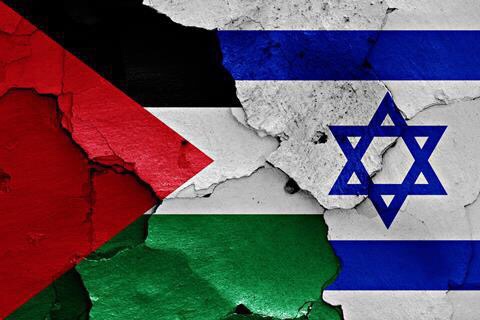
These are some of the darkest day in Jewish history since the end of the Holocaust. More Jews have been killed in a single day than any other period since the concentration camps.

It isn’t just the numbers that are shocking – 1,200 lives lost and rising. It’s the horrific details. Hamas terrorists stormed a music festival in southern Israel, firing indiscriminately. Reports of teenagers gunned down came amid the news that an elderly Holocaust survivor was among the hostages. And then, as if it were possible, everything got worse. I won’t repeat the details of the massacre at Kfar Aza, it’s too harrowing. But if you want to know, you can see here.

I’ve visited the region many times. Spoken to people on both sides of the divide. And every time, I’ve come away with the realisation that this conflict is far more complicated than I’d thought before.

But some things aren’t complicated, and that’s why Western governments have rightly flown the flag for Israel. This is not because they have no sympathy with the Palestinian cause, as some have mistakenly thought. Just as the civilized world were united in their condemnation of the Islamist hatred that led to 9/11, so the atrocities committed by Hamas have rightly been condemned.

As Christians, we are called to pray for everyone in these lands. The Bible says the God of Israel neither slumbers nor sleeps (Psalm 121). Here’s how we can use the scriptures to call on him:

1. Pray for the peace of Jerusalem

“Pray for the peace of Jerusalem. ‘May those who love you be secure. May there be peace within your walls and security within your citadels.’” (Psalm 122:6-7)

Jerusalem is the only city in scripture which God’s people are specifically instructed to pray for by name. There are historical reasons for this (the Bible was written almost entirely by Jewish people, who had and have a natural love for the holy city). But today, when we pray for Jerusalem, we are praying for those on allsides of the conflict. Jews, Christians and Muslims live in Jerusalem, with Palestinians and Israelis alike calling this city home. We are to pray there would be “peace within [its] walls”. That peacebuilding initiatives which bring Jews and Arabs together would flourish. Pray that the next generation will not be taught to hate the other, but to love.

2. Pray for the protection of innocent civilians

“A voice is heard in Ramah, weeping and great mourning, Rachel weeping for her children and refusing to be comforted, because they are no more.” (Matthew 2:18)

We have already seen heartbreaking images of innocent families in Gaza who have lost loved ones. The strip is densely populated, and Hamas use human shields, often basing themselves in mosques, schools and hospitals. We must therefore pray for Palestinians – whether Muslim or Christian – that their families will be protected from what is about to unfold. We must pray that even in their just anger, Israel’s army will make wise and godly decisions, so that innocent Palestinians will be allowed to live in safety. Pray that Israel would heed the Old Testament command: “The foreigner residing among you must be treated as your native-born. Love them as yourself” (Leviticus 19:34). Civilian Palestinians are not the enemy, and must be protected.

3. Pray that evil ideologies will be exposed and gospel truth will prevail

“For there is nothing covered that will not be revealed, nor hidden that will not be known. Therefore whatever you have spoken in the dark will be heard in the light, and what you have spoken in the ear in inner rooms will be proclaimed on the housetops.” (Luke 12:2-3) 

The evil ideology of Hamas (“Israel will exist until Islam obliterates it”) must be exposed and confronted.

But as the West has discovered during past conflicts, bombs don’t work when it comes to destroying ideologies. That’s why we must pray that the truth of the gospel will break into hard hearts.

On the road to Damascus, a violent man full of hate was overwhelmed by the love of God. The same God who saved Saul and turned him into Paul is able to reach today’s terrorists.

4. Pray for the Church

“For [Jesus] himself is our peace, who has made the two groups [Jew and Gentile] one and has destroyed the barrier, the dividing wall of hostility…His purpose was to create in himself one new humanity out of the two, thus making peace, and in one body to reconcile both of them to God through the cross, by which he put to death their hostility.” (Ephesians 2:14-16)

This scripture explains how Jesus’ death on the cross has ended the ethnic hostility between Jews and Gentiles. This is apparent today in churches where Israelis and Palestinians worship alongside one another in peace.

Whether predominantly Messianic, Arab, or mixed, these churches need our prayers. Pray for their leaders, that they would model the fruits of the Spirit (Galatians 5), especially love, peace and goodness. Pray that the unity of these churches would be protected. Pray that forgiveness would flow and justice would roll on like a river (Amos 5:24).

5. Pray for the Jewish community in the UK and around the world

“The Lord is a stronghold for the oppressed, a stronghold in times of trouble.” (Psalm 9:9)

In the aftermath of Hamas’ terror attack, a Jewish bakery in north London was smashed, and the word “free Palestine” strewn across it. Reports of anti-semitic incidents in the UK have trebled. Videos have circulated online of a Palestinian activist in Manchester saying, in response to the Hamas atrocities: “we are full of pride and joy for what has happened”.

Such events, not to mention similar scenes in Australia (chants of “gas the Jews”) and the US, mean our Jewish friends are deeply worried for their own safety. British Synagogues and Jewish schools have long had airport-style security on their doors, and tensions will be running high.

As Christians, we must be aware of our history. Many of our past leaders were anti-semitic, and their theology paved the way for the Holocaust. We must not commit the same crimes of our forbearers. We must not hesitate when it comes to standing up for our Jewish brothers and sisters. Pray that their places of worship and education will be protected. Pray that justice will prevail, and those guilty of religious hate crimes will be brought to swift justice.

And ultimately, as our hearts break for the people of Gaza and the people of Israel, you may wish to pray the last prayer we find in scripture. Revelation 21:20. “Come, Lord Jesus.”

———————

*** Sam Hailes is the editor of Premier Christianity, the UK’s leading Christian magazine / Alamy Stock Photo: Source Daniren

Popular Articles

A Clear Gospel Message

The Abortion Debate

Human Trafficking / Child Abuse

The True Gift

True or False Conversion

Once Saved Always Saved?

The Judge – Upholding what is right comes at a cost

What is a True Christian or Believer

Prayer Speaking to God

Forgiving Others as God has Forgiving you

Prayer for forgiving others

Living Right Today

The Judge – Upholding what is right comes at a cost

There’s a story about a judge whose own son was brought before him for a crime he had committed. The judge felt a deep grief that his son would violate the laws upon which he based his entire life. Tears welled in his eyes and he listened painfully as the evidence against his son was presented. The courtroom sat in silence wondering how the judge would rule. Would he just give him a reprimand in an act of mercy? Would he give him the minimum penalty for the offense? Much to their surprise, he handed down the maximum fine, upholding the law to its fullest degree. The son was in shock, for he knew that he couldn’t pay the fine and was anguished at the thought of imprisonment. He looked up at him in disbelief.

But then something happened that nobody expected. He stepped down from the bench, took off his judge’s robe, told his son how much he loved him and then paid, out of his own pocket, the fine he had just handed down. Not everyone understood what he had done. As a judge, he showed his commitment to honor the law to its fullest, but he then stepped down from that seat of honor and showed his love for his child. His son never understood the depth of his father’s commitment to the law until that moment, and, until that moment, he never knew the depth of his father’s love for him. He felt deep sorrow for the pain he had caused him and for those he had hurt by his act of crime. With his head bowed, and his tears flowing freely, he asked for his forgiveness, which he willingly and freely gave to him.

This story is actually an allegory for God’s relationship to us. Our crimes are our willful departure from the laws given us by God for the way we are to live. When we break those laws, God is grieved and pained. Inevitably there are natural consequences of our failings that hurt others, sometimes affecting lives for generations to come. This is why God’s laws say that the penalty for sin is death. His holy nature demands that He not just let us off the hook or go easy on us. So what did He do? He came down from heaven to us in Jesus Christ to help us to understand His laws, to show us the depth of His love for us and to pay the price of our sin with His own life. This never made sense to me until I understood how I fell short of God’s standards for life and how deeply that had hurt those who depended on me the most. But once I knew the love and forgiveness of God, I turned away in disgust from my deepest sins and understood, in a way I never had before, how to love and forgive others.


For the wages of sin is death, but the gift of God is eternal life in Christ Jesus our Lord. (Romans 6:23)

This is how God showed his love among us: He sent his one and only Son into the world that we might live through him. This is love: not that we loved God, but that he loved us and sent his Son as an atoning sacrifice for our sins. (1 John 4:9-10)

Be merciful, just as your Father is merciful. Do not judge, and you will not be judged. Do not condemn, and you will not be condemned. Forgive, and you will be forgiven. (Luke 6:36-37)

———————-

If you don’t know the love of Christ yet and how He came to save us from our sins and restore our relationship unto the Father, I say to you today: Jesus is the way, the truth and the life, no one comes unto the Father but by Him. If you haven’t welcomed Jesus into your heart and into your life, now is the time. Do it before it’s to late, for today is the day of salvation! Ask for the forgiveness of your sins (the wrong things you have done), repent (turn from them) and leave your old ways behind, and begin a new life trusting in Christ Jesus, our Lord and Saviour and soon coming King!

—————

*** By Snapshotsofgod.com

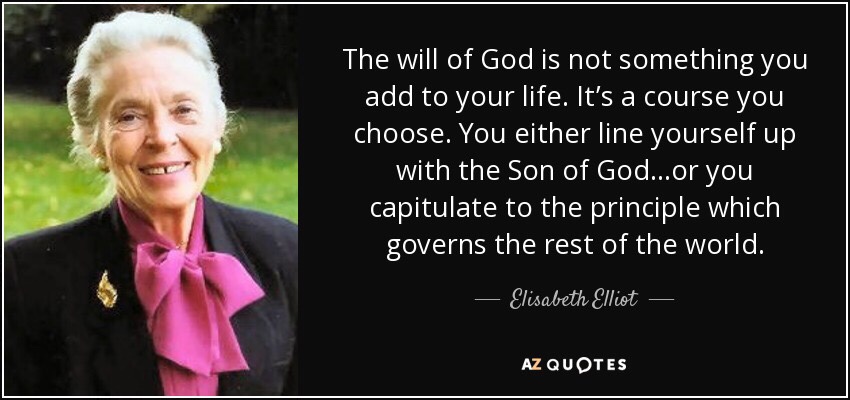
Elisabeth Elliot Testimony: The Missionary Who Lived With The Tribe That Killed Her Husband

She was born Elisabeth Howard in 1926 – one of six children – to missionary parents in Brussels, Belgium. Her parents moved to Philadelphia, USA, a few months after Elisabeth was born. She later described them as devout, disciplined Christians who built their family life around the Bible.

‘We grew up with the understanding that the scriptures were top priority… we had bible reading and prayer at the end of dinner every night as we sat around the table, and up until the age of, I suppose, seven or eight, each of us children was put to bed by one of our parents and prayed with, and sometimes we had the bible read to us again. so we heard the bible read aloud at least twice a day, sometimes three times a day.

‘And the other very very powerful influence in our lives, I’m sure was the fact that my father got up himself between 4:30 and 5:00 in the morning in order to have time alone with the Lord.

And when we came to breakfast, we knew that we had been prayed for… meaning my father was in his study for those hours before breakfast with his prayer lists and his notebooks and his bible and down on his knees praying for us.’

Elisabeth reckoned she herself came to faith at around the age of five. This was followed by a definite commitment to Christ when she was twelve: “I think I realised that if Jesus was my saviour, he also had to be my Lord, so I then committed my life and said, ‘Lord, I want you to do anything you want with me.’”

We can surmise from this that even at this tender age Elisabeth realised she had a calling to the mission field. She studied classical Greek at Wheaton college, Illinois, believing that it was the best tool to help her with her desire to translate the New Testament into a yet-unreached language.

It was at Wheaton where she met Jim Elliot. Before their marriage they both went individually to Ecuador to work with the Quechua Indians; the two married in 1953 in the city of Quito, Ecuador.

Before Elisabeth started her work, she listened to the words of Maruja, a woman of a neighbouring tribe who had been held captive for a year by the Huaorani, sometimes called the Aucas, or ‘savages’. She told Elisabeth that the tribe was fierce and they acted like savages, but that the women were likeable and kind. In 1955, only ten months before Jim was killed, Elisabeth gave birth to a daughter, Valerie.

Elisabeth said that she had a premonition that Jim’s mission might end in his death, explaining, “I often thought I was going to lose my husband.” In fact, just before he left for his fateful mission to the Aucas they had talked about what she would do if Jim should not return.

So as they said what turned out to be their last goodbyes in January 1956, her mind was a filled with thoughts as to whether that would be the last time she saw him alive.

Jim and four other Christian missionaries Nate Saint, Roger Youderian, Ed Mccully and Peter Fleming – were speared to death in the jungles of Ecuador. Their killers were Huaorani Indians, the same group that Elisabeth had been warned about earlier.

After Jim’s death, Elisabeth, together with Rachel saint, the sister of another of those killed, continued her work among the Quechua at a site which was several days by trail from Auca territory.

Despite what had happened to their men, Elisabeth and Rachel were still determined to reach the killers with the gospel. At the time, their only link with Auca culture came when they met Dayuma, a young woman who had fled the tribe some years before to live with white missionaries. Dayuma, who was by then a believing Christian, helped them with the Auca language.

In November 1957 came a breakthrough. Elisabeth heard that two more Auca women had left their tribe. She hurried to the neighbouring settlement where the women – Mintaka and Minkamu – were, and spent the next ten months with them, seeking to learn more of the Auca language and culture.

Eventually the two Auca women – together with Dayuma – decided to return to their native tribe, leaving Elisabeth and Rachel wondering what the fate of the three women might be when they arrived home.

However, after three weeks the women returned to the mission compound bringing along seven other Aucas, plus a invitation to the missionaries to visit the tribe!

‘As long as this is what the Lord requires of me, then all else is irrelevant’ Elisabeth Elliot

Elisabeth and Rachel lost no time in taking up this unprecedented offer. However, Elisabeth admitted that taking her three-year-old daughter, Valerie, along strapped to her back was ‘the biggest test of faith ever’.

As well as the usual dangers found in jungle terrain, she had to face the possibility that the Aucas might choose to kill her and carry off the youngster.

In a later interview she said that, although she appreciated the kind warnings of fellow Christians, she felt that ‘as long as this is what the Lord requires of me, then all else is irrelevant’.

The journey to the Auca village took two-and-a-half days by canoe and trail paths. Ironically, the party arrived on the afternoon of 8 October 1958, Jim’s birthday and the day which would have been the couple’s fifth wedding anniversary.

When the missionaries reached a clearing in the jungle, there stood a welcoming party of three Aucas.

Elisabeth described the reception as ‘friendly… it seemed like the most natural thing in the world’. For the next year the missionaries enjoyed a good relationship with the tribe as they ministered to them. the Aucas gave Elisabeth the tribal name ‘Gikari’, Huao for ‘Woodpecker.’

She later returned to the Quichua and worked with them until 1963, when she and Valerie returned to the USA. Rachel saint continued the work with the Aucas under the auspices of their sponsoring missionary society, the summer Institute of linguistics (sIl).

Over the years some anthropologists have criticised the missionaries’ work, viewing their intervention as the cause for the widely-recognised decline of Huaorani culture. In response Elisabeth Elliot said in an interview that there is absolutely no point in trying to reach tribes like the Huaorani unless you believe the New Testament message that people – however few and remote – are lost without the gospel of Jesus Christ.

And while no-one would claim the missionaries didn’t make mistakes along the way, the gospel they preached resulted in a marked decline in violence among tribe members, together with numerous conversions to Christianity and the growth of the local church.

Indeed, it has been argued by others that the effects of Christianity were very positive, as it served as a way for the Huaorani to escape the cycle of violence in their community, providing them with a motivation to abstain from killing. Ironically it was probably exposure to Western ‘civilisation’ – not the gospel – that had the most detrimental effect on the Huaorani people.

On her return to America, Elisabeth became a noted speaker and writer. Her book, ‘through gates of splendour’ is ranked among the most influential books that have shaped the thinking of evangelicals. The book became a bestseller, as did ‘shadow of the Almighty: the life and testimony of Jim Elliot.’

According to Kathryn long, professor of history at Wheaton college, ‘those books became the definitive inspirational mission stories for the second half of the 20th century. [Elisabeth Elliot] really had a sense of her audience as evangelicals, and she could tell this story in a way that keyed into [their] values.’

Elisabeth went on to write more than a dozen additional books and launched a raddio show, ‘gateway to Joy’, which ran until 2001. She almost always opened the programme with the phrase, “‘You are loved with an everlasting love,’ – that’s what the Bible says – ‘and underneath are the everlasting arms.’ this is your friend, Elisabeth Elliot…”

Two later books on missions, ‘no graven Image’ and ‘the savage my Kingsman’, raise important questions about mission work and reveal Elliot as a extraordinarily perceptive thinker and writer.

In 1969, Elisabeth married Addison Leitch, professor of theology at Gordon-Conwell theological seminary in south Hamilton, Massachusetts.

They were together until Leitch’s death in 1973. In 1974, Elliot became an adjunct professor on the faculty of Gordon Conwell theological seminary and for several years taught a popular course entitled ‘christian expression’.

Her third marriage to Lars Gren, a hospital chaplain, took place in 1977.

After their marriage the couple worked and travelled together.

‘Nothing can separate us from the love of Christ’ – Elisabeth Eliott

Elisabeth Elliot died in Magnolia, Massachusetts, on 15 June 2015, at the age of 88. Sadly in her last years she suffered from dementia. Her husband, Lars, said: “She accepted those things, [knowing] they were no surprise to god.

”It was something she would rather not have experienced, but she received it.”

Elisabeth’s only daughter, Valerie, who spent part of her childhood among the Aucas, married a pastor, Walter Shepard, in 1976. Since then Valerie has spent her time being a pastor’s wife, raising eight children, teaching the bible and speaking at conferences.

She described her mother as: “A speaker of the truth, a teacher of obedience, a woman of strength and dignity. She always loved and encouraged me. she was a woman of prayer.”

Perhaps Elisabeth Elliot’s whole philosophy of life and ministry can be summed up in the words she once wrote: “We have proved beyond any doubt that he [God] means what he says – his grace is sufficient – nothing can separate us from the love of Christ. We pray that if any, anywhere, are fearing that the cost of discipleship is too great, they may be given a glimpse of that treasure in heaven promised to all who forsake.”

———

** This article was taken from the October 2016 issue of Heroes Of The Faith by Dave Littlewood / Photos Elisabeth Elliot Foundation

A Ticket Without A Seat

An award winning animated movie by viral fox called ‘ticket without a seat’ based on the simple acts of kindness, thoughtfulness and compassion; and how one’s perception of life can change how you live it and thrive therein.