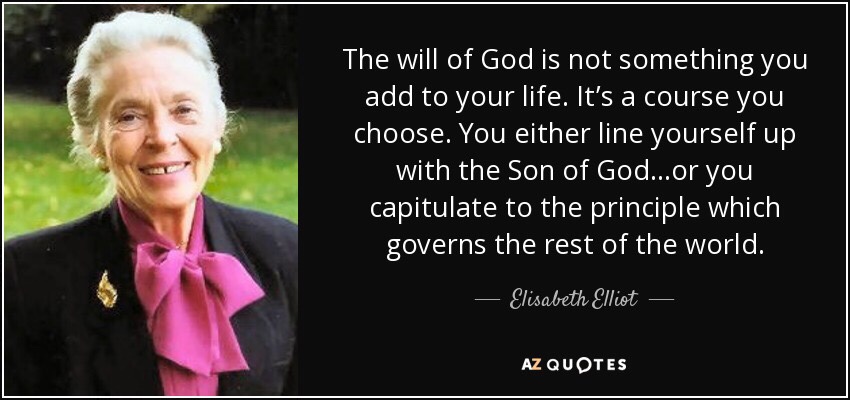
From Supermodel to Advocate: Kathy Ireland’s Pro-Life Journey

Kathy Ireland, once celebrated as a supermodel, has embarked on a profound journey of transformation, emerging as a passionate advocate for the pro-life cause. In an interview on the show Huckabee, she shared her personal evolution from being pro-choice to embracing a staunch pro-life stance.

Initially identifying as pro-choice while maintaining her Christian faith, Kathy’s perspective shifted as she immersed herself in medical literature and scientific research. She discovered the undeniable truth that human life begins at the moment of conception, equipped with its DNA, sex, blood type, and unique fingerprints.

The transcript from the show:

Interviewer: “We’re back with Kathy Ireland, author of the bestselling book ‘Real Solutions for Busy Moms and Dads.’ Kathy, what mom’s advice is all about?”

Interviewer: “But on a personal level, there’s another aspect of your life that I found fascinating, and you’re unafraid to talk about it. I think that’s so refreshing in the life of the celebrity who often says, ‘I don’t want to get into anything like this.’ You were once pro-choice but you became very clearly pro-life. What was the turning point for you? When did the switch click for you that said, ‘This is a human being?'”

Kathy Ireland: When I looked at some medical books and saw the scientific evidence ahead of me. As I mentioned, I was baby Christian for such a long time, even though I was a Christian, very pro-choice. I always have and I will continue to fight for women’s rights. And so, even though maybe I wouldn’t have one myself, who am I to impose my beliefs on someone else? It’s a woman’s body, it’s her choice.

After I really realized that I was on the fence, I dove into the medical books, I dove into the scientific research. What I learned is, at the moment of conception, a new life comes into being. The DNA, the genetic blueprint is there, the sex is determined, the blood type is determined, the unique set of fingerprints is there.

And I picked up the phone, I called Planned Parenthood. ‘Help me out here, give me your best arguments.’ And the best arguments were, ‘Well, if you get it early enough, it doesn’t even look like a baby.’

We’re clumps of cells and that unborn human being does not look like a baby the same way a baby does not look like a teenager; a teenager does not look like a senior. But that unborn human being looks exactly the way human beings are supposed to look at that stage of development.

Some people say, ‘Well if you get it at a certain state, it’s okay.’ According to the law of biogenesis, all life comes from pre-existing life and each species reproduces after its own kind. Therefore, human beings can only reproduce other human beings.

So, it doesn’t start out as one species and suddenly become a human being somewhere along the way. And some people say, ‘Well, it’s a woman’s body, it should be her choice.’ There’s a 50% chance the baby she’s carrying is a male child and he would have a penis. Women don’t have penises.”

So, it’s residing in her body, it is not a part of her body. And the bottom line is, I really believe if The Unborn is not a human being, have as many abortions as you want, whenever you want, no justification is necessary. If, on the other hand, The Unborn is a human being, no justification is adequate unless another human life is at risk, that being the mother’s.

But in that case, you’re not acting to kill, you’re acting to save a life. And I also believe that when an abortion takes place, there are at least two victims.

We cannot be condemning women. Women have been so hurt by this and they’re not given all the facts. And especially as Christians, we need to be so careful that we are not condemning her because by doing that we can turn her away from oh this person and their God and they’re being so unkind, I don’t want to have anything to do with their God. And not only that, they’ll tell 10 friends.

So, it’s an issue we need to deal with love but I believe we got to get politics out of it. We need to put this in the hands of science. Even if you don’t share our faith, an atheist can know that it’s wrong to take an innocent human life. That’s why I don’t mind imposing this on other people and the science on that is clear.

Interviewer: Kathy, your explanation is maybe the clearest, the most effective that I’ve heard, not just from a person who is a celebrity, from any person in politics or even from the pulpit. And I want to say thank you for the clarity with which you have brought about this topic.”

———————————-

**Interview at Huckabee © 2009 FOX News Network, LLC. / Photo by Today show

Topics of Interest:

Planned Parenthood Origins

Support for Crisis Pregnancies in USA & UK

GET INFORMED:

Please be informed and educated about abortion procedures and gain a better understanding of what they entail, visit: PRO LIFE CONNECT. This resource provides accurate, evidence based information designed to educate and inform people about the medical, emotional, and social aspects of abortion. Understanding the facts is a critical step in making informed decisions and engaging thoughtfully in the abortion debate.

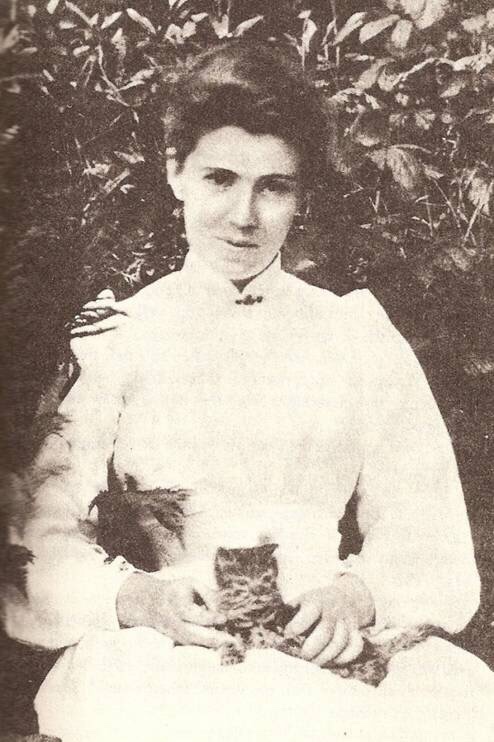
Missionary Amy Carmichael: Helped the Helpless

YouTube video of Amy Carmichael’s life – https://youtu.be/D0jqeVolVFk

“Please help me! Please don’t send me back!” screamed 7-year-old Preena as she jumped into Amy Carmichael’s lap, clinging to her neck. The little girl had just escaped from a Hindu temple in the middle of the night while her guardians were sleeping. She tiptoed quietly through an unlocked door and pushed open the heavy gate running as fast as she could.

Preena’s mother had given her to the temple priests in hopes of winning the favor of the gods. Amy did not know what was going on, but she knew this little-frightened girl needed her love and protection.

The Missionary: Amy Carmichael

Amy Carmichael

Amy Carmichael had come to India as a missionary to reach those who did not know Jesus. Amy was sure that God did not want her to marry and have children of her own. That decision had been settled many years before. But was He now asking her to settle down and become a mother to an unwanted Indian child?

Life in Ireland

Amy Carmichael grew up in a wealthy family in Ireland. Her father owned a flour mill business. She went to the best boarding schools and had many fine things.

But one day Amy’s life changed without warning. Her father’s business began to lose money and it closed. Mr. Carmichael worried so much about his business that he became ill and died.

The family could no longer afford expensive things. Amy had to drop out of school. She spent the next ten years helping her mother take care of her younger sisters and brothers.

Life-Changing Events

One cold, dreary day as the young Amy, her mother and brothers left the church, Amy saw something that changed her life. An old beggar woman came staggering out of the alley. Her clothes were torn and mud-soaked rags covered her feet. Amy felt sorry for the woman. She and her brother helped the old woman down the alley. When she saw other people from church pass by them, she was embarrassed to be seen with the woman and hid her face. As she continued to walk with the beggar, Amy noticed a fountain in the center of the road. She studied it closely. Then she heard a voice say, “Gold, silver, precious stones, wood, hay, and straw — the fire will test what sort of work each has done. If the foundation survives, he will receive the reward.” She turned to see who was speaking but saw no one. Amy knew that she appeared kind by helping the old woman, but she knew her heart was wrong. From that moment on, she decided to hold her head high. She was no longer embarrassed. When she got home, she searched the bible and found the words she had heard. Amy knelt by her bed and promised God that in the future she would only do things to please him.

Another time she and her mother stopped to have tea and biscuits in a restaurant. As they ate, Amy saw a dirty little beggar girl with her nose pressed against the window. The poor little girl, with no food, touched Amy so much that she made another promise. She promised that when she grew up she would give her money to the poor.

The Shawlies

Amy Carmichael became very excited about doing what God wanted her to do. On Saturday evenings, she would go with her pastor to the poor neighborhoods to hand out tracts and food to the poor people known as Shawlies. The Shawlies made so little money that they could not afford hats so they used their shawls to protect their heads from the cold. They were eager to learn about God. Amy’s heart went out to them. She moved into their neighborhood and slept in bug-infested beds to be closer to the people. She prayed about building a church for them to attend but didn’t know where she would get money for such a large job. She did not want to ask the rich people in her old church who didn’t seem to care about the Shawlies. Instead, she and the Shawlies asked God to provide it. God answered their prayers and a new church was built.

Time to Move On

Amy began to sense that God wanted her to tell people in other countries about him. There was one problem though. Amy had an illness that made her so sick she had to stay in bed days at a time. Despite her health, she knew she must obey God.

Life In India

Amy traveled the India countryside telling anyone who would listen about Christ.

One day Preena, a little Indian girl, was collecting water for the temple near where Amy was speaking. Preena stopped to listen as Amy told the ladies about her God who loved everybody the same. He did not put people in different classes as the Indian caste system did. Preena was very interested in what Amy was saying but knew she must not be seen listening to the stranger. She tucked Amy’s words into her memory and hurried back to the temple.

Indian girls were often unwanted and were given to the temple to serve as prostitutes. Because of this, when Preena arrived at Amy’s door, Amy knew she could not send her back. The little girl would be beaten, even killed, if she were returned. Amy could have been charged with kidnapping and thrown into prison. But it was a chance she was willing to take.

Over the 50 years she spent in India, Amy Carmichael took in hundreds of unwanted children. She became known as “Amma” or mother to them.

———————

Article by Christianity.com /

Elisabeth Elliot Testimony: The Missionary Who Lived With The Tribe That Killed Her Husband

She was born Elisabeth Howard in 1926 – one of six children – to missionary parents in Brussels, Belgium. Her parents moved to Philadelphia, USA, a few months after Elisabeth was born. She later described them as devout, disciplined Christians who built their family life around the Bible.

‘We grew up with the understanding that the scriptures were top priority… we had bible reading and prayer at the end of dinner every night as we sat around the table, and up until the age of, I suppose, seven or eight, each of us children was put to bed by one of our parents and prayed with, and sometimes we had the bible read to us again. so we heard the bible read aloud at least twice a day, sometimes three times a day.

‘And the other very very powerful influence in our lives, I’m sure was the fact that my father got up himself between 4:30 and 5:00 in the morning in order to have time alone with the Lord.

And when we came to breakfast, we knew that we had been prayed for… meaning my father was in his study for those hours before breakfast with his prayer lists and his notebooks and his bible and down on his knees praying for us.’

Elisabeth reckoned she herself came to faith at around the age of five. This was followed by a definite commitment to Christ when she was twelve: “I think I realised that if Jesus was my saviour, he also had to be my Lord, so I then committed my life and said, ‘Lord, I want you to do anything you want with me.’”

We can surmise from this that even at this tender age Elisabeth realised she had a calling to the mission field. She studied classical Greek at Wheaton college, Illinois, believing that it was the best tool to help her with her desire to translate the New Testament into a yet-unreached language.

It was at Wheaton where she met Jim Elliot. Before their marriage they both went individually to Ecuador to work with the Quechua Indians; the two married in 1953 in the city of Quito, Ecuador.

Before Elisabeth started her work, she listened to the words of Maruja, a woman of a neighbouring tribe who had been held captive for a year by the Huaorani, sometimes called the Aucas, or ‘savages’. She told Elisabeth that the tribe was fierce and they acted like savages, but that the women were likeable and kind. In 1955, only ten months before Jim was killed, Elisabeth gave birth to a daughter, Valerie.

Elisabeth said that she had a premonition that Jim’s mission might end in his death, explaining, “I often thought I was going to lose my husband.” In fact, just before he left for his fateful mission to the Aucas they had talked about what she would do if Jim should not return.

So as they said what turned out to be their last goodbyes in January 1956, her mind was a filled with thoughts as to whether that would be the last time she saw him alive.

Jim and four other Christian missionaries Nate Saint, Roger Youderian, Ed Mccully and Peter Fleming – were speared to death in the jungles of Ecuador. Their killers were Huaorani Indians, the same group that Elisabeth had been warned about earlier.

After Jim’s death, Elisabeth, together with Rachel saint, the sister of another of those killed, continued her work among the Quechua at a site which was several days by trail from Auca territory.

Despite what had happened to their men, Elisabeth and Rachel were still determined to reach the killers with the gospel. At the time, their only link with Auca culture came when they met Dayuma, a young woman who had fled the tribe some years before to live with white missionaries. Dayuma, who was by then a believing Christian, helped them with the Auca language.

In November 1957 came a breakthrough. Elisabeth heard that two more Auca women had left their tribe. She hurried to the neighbouring settlement where the women – Mintaka and Minkamu – were, and spent the next ten months with them, seeking to learn more of the Auca language and culture.

Eventually the two Auca women – together with Dayuma – decided to return to their native tribe, leaving Elisabeth and Rachel wondering what the fate of the three women might be when they arrived home.

However, after three weeks the women returned to the mission compound bringing along seven other Aucas, plus a invitation to the missionaries to visit the tribe!

‘As long as this is what the Lord requires of me, then all else is irrelevant’ Elisabeth Elliot

Elisabeth and Rachel lost no time in taking up this unprecedented offer. However, Elisabeth admitted that taking her three-year-old daughter, Valerie, along strapped to her back was ‘the biggest test of faith ever’.

As well as the usual dangers found in jungle terrain, she had to face the possibility that the Aucas might choose to kill her and carry off the youngster.

In a later interview she said that, although she appreciated the kind warnings of fellow Christians, she felt that ‘as long as this is what the Lord requires of me, then all else is irrelevant’.

The journey to the Auca village took two-and-a-half days by canoe and trail paths. Ironically, the party arrived on the afternoon of 8 October 1958, Jim’s birthday and the day which would have been the couple’s fifth wedding anniversary.

When the missionaries reached a clearing in the jungle, there stood a welcoming party of three Aucas.

Elisabeth described the reception as ‘friendly… it seemed like the most natural thing in the world’. For the next year the missionaries enjoyed a good relationship with the tribe as they ministered to them. the Aucas gave Elisabeth the tribal name ‘Gikari’, Huao for ‘Woodpecker.’

She later returned to the Quichua and worked with them until 1963, when she and Valerie returned to the USA. Rachel saint continued the work with the Aucas under the auspices of their sponsoring missionary society, the summer Institute of linguistics (sIl).

Over the years some anthropologists have criticised the missionaries’ work, viewing their intervention as the cause for the widely-recognised decline of Huaorani culture. In response Elisabeth Elliot said in an interview that there is absolutely no point in trying to reach tribes like the Huaorani unless you believe the New Testament message that people – however few and remote – are lost without the gospel of Jesus Christ.

And while no-one would claim the missionaries didn’t make mistakes along the way, the gospel they preached resulted in a marked decline in violence among tribe members, together with numerous conversions to Christianity and the growth of the local church.

Indeed, it has been argued by others that the effects of Christianity were very positive, as it served as a way for the Huaorani to escape the cycle of violence in their community, providing them with a motivation to abstain from killing. Ironically it was probably exposure to Western ‘civilisation’ – not the gospel – that had the most detrimental effect on the Huaorani people.

On her return to America, Elisabeth became a noted speaker and writer. Her book, ‘through gates of splendour’ is ranked among the most influential books that have shaped the thinking of evangelicals. The book became a bestseller, as did ‘shadow of the Almighty: the life and testimony of Jim Elliot.’

According to Kathryn long, professor of history at Wheaton college, ‘those books became the definitive inspirational mission stories for the second half of the 20th century. [Elisabeth Elliot] really had a sense of her audience as evangelicals, and she could tell this story in a way that keyed into [their] values.’

Elisabeth went on to write more than a dozen additional books and launched a raddio show, ‘gateway to Joy’, which ran until 2001. She almost always opened the programme with the phrase, “‘You are loved with an everlasting love,’ – that’s what the Bible says – ‘and underneath are the everlasting arms.’ this is your friend, Elisabeth Elliot…”

Two later books on missions, ‘no graven Image’ and ‘the savage my Kingsman’, raise important questions about mission work and reveal Elliot as a extraordinarily perceptive thinker and writer.

In 1969, Elisabeth married Addison Leitch, professor of theology at Gordon-Conwell theological seminary in south Hamilton, Massachusetts.

They were together until Leitch’s death in 1973. In 1974, Elliot became an adjunct professor on the faculty of Gordon Conwell theological seminary and for several years taught a popular course entitled ‘christian expression’.

Her third marriage to Lars Gren, a hospital chaplain, took place in 1977.

After their marriage the couple worked and travelled together.

‘Nothing can separate us from the love of Christ’ – Elisabeth Eliott

Elisabeth Elliot died in Magnolia, Massachusetts, on 15 June 2015, at the age of 88. Sadly in her last years she suffered from dementia. Her husband, Lars, said: “She accepted those things, [knowing] they were no surprise to god.

”It was something she would rather not have experienced, but she received it.”

Elisabeth’s only daughter, Valerie, who spent part of her childhood among the Aucas, married a pastor, Walter Shepard, in 1976. Since then Valerie has spent her time being a pastor’s wife, raising eight children, teaching the bible and speaking at conferences.

She described her mother as: “A speaker of the truth, a teacher of obedience, a woman of strength and dignity. She always loved and encouraged me. she was a woman of prayer.”

Perhaps Elisabeth Elliot’s whole philosophy of life and ministry can be summed up in the words she once wrote: “We have proved beyond any doubt that he [God] means what he says – his grace is sufficient – nothing can separate us from the love of Christ. We pray that if any, anywhere, are fearing that the cost of discipleship is too great, they may be given a glimpse of that treasure in heaven promised to all who forsake.”

———

** This article was taken from the October 2016 issue of Heroes Of The Faith by Dave Littlewood / Photos Elisabeth Elliot Foundation

Testimony of Gladys Aylward: A Small Woman with a Mighty God

This inspiring documentary presents the events of Gladys Aylward’s life. Gladys was a commoner from a poor family in London, barely five feet tall, who worked as a maid, in a kitchen and other odd jobs to make ends meet. She was considered ordinary in every way, as there was nothing to distinguish her amongst her peers, but it was this very woman the Lord picked up, this empty and open vessel, God filled and used for His honour and glory, to be a blessing to the Chinese people and spread the good news of the gospel, as it’s not our ability the Lord wants, but our willingness and AVAILabilty, “use me Lord, send me!”

Gladys was rejected from the CIM (Chinese Inland Missions) because she couldn’t keep up with the academic studies. The CIM was set up by none other than Hudson Taylor to train new missionaries. Gladys was sure the Lord had called her and was not deterred. She needn’t have worried for she was in good company with others that had gone before her; people like Peter, Andrew, James and John lowly fishermen whom Jesus chose to be His disciples, who also in their day would’ve been rejected from the Bible colleges! But it’s these unlearned people that the Lord picked up and used. People wondered how these so called simpletons, knew and did the things they did. It was obviously all God’s doing, He had quickened their spirits, given them wisdom, guidance and much grace. He opened the doors He wanted opened, and closed the doors He wanted shut, and showed them favour. He doesn’t call the qualified, He qualifies the called! So not one could ever touch His glory.

God’s ways are not our ways, and His thoughts are not our thoughts, as stated in 1 Corinthians 1:27-29, ‘But God chose the foolish things of this world to put the wise to shame. He chose the weak things of this world to put the powerful to shame. What the world thinks is worthless, useless, and nothing at all is what God has used to destroy what the world considers important. God did all this to keep anyone from bragging to Him.’ To help us remain humble in our endeavours may we never forget that, all good gifts are from above, given to us by our loving Father. What is it we have that the Lord didn’t give us? Let us pray that the Lord will keep us humble like the examples of Godly men and women who have gone before us, such as Gladys.

Gladys Aylward’s biography can be found on Amazon:

Popular Articles

A Clear Gospel Message

The Abortion Debate

Human Trafficking / Child Abuse

The True Gift

True or False Conversion

Once Saved Always Saved?

The Judge – Upholding what is right comes at a cost

What is a True Christian or Believer

Prayer Speaking to God

Forgiving Others as God has Forgiving you

Prayer for forgiving others

Living Right Today

Testimony of Former Iranian Prisoners Maryam Rostampour and Marziyeh Amirizadeh

Watch this inspiring interview with Maryam and Marziyeh at HTB Church, London. In 2009 in Iran, Maryam and Marziyeh were imprisoned and sentenced to death because of their Christian faith. Maryam and Marziyeh were born into Muslim families but converted to Christianity and began to share the Gospel with those around them. They were arrested in March 2009 after being accused of evangelism and apostasy. After 259 days in Tehran’s notorious Evin Prison they were released.

** Maryam and Marziyeh’s book called, ‘Captive In Iran‘ is available on Amazon Here