12 Wonderful Responsibilities God Has Given to Women

So God created man in his own image, in the image of God he created him; male and female he created them (Gen. 1:27).

Countless millions of women around the world faithfully strive to honor God in all their vocations in life. Here are twelve wonderful responsibilities God has given to women:

1. To Love, Believe, and Respect the Lord

Charm is deceitful, and beauty is vain,
but a woman who fears the Lord is to be praised.
Give her of the fruit of her hands,
and let her works praise her in the gates. (Prov. 31:30-31)

And the unmarried or betrothed woman is anxious about the things of the Lord, how to be holy in body and spirit. But the married woman is anxious about worldly things, how to please her husband. (1 Cor. 7:34)

2. To Support the Gospel Work of the Church

I commend to you our sister Phoebe, a servant of the church at Cenchreae, that you may welcome her in the Lord in a way worthy of the saints, and help her in whatever she may need from you, for she has been a patron of many and of myself as well. (Rom. 16:1-2)

Yes, I ask you also, true companion, help these women, who have labored side by side with me in the gospel together with Clement and the rest of my fellow workers, whose names are in the book of life. (Phil. 4:3)

3. To Be Diligent in Her Vocations

And every skillful woman spun with her hands, and they all brought what they had spun in blue and purple and scarlet yarns and fine twined linen. (Exod. 35:25)

She considers a field and buys it;
with the fruit of her hands she plants a vineyard. (Prov. 31:16)

She opens her hand to the poor
and reaches out her hands to the needy. (Prov. 31:20)

Now there was in Joppa a disciple named Tabitha, which, translated, means Dorcas. She was full of good works and acts of charity. (Acts 9:36)

One who heard us was a woman named Lydia, from the city of Thyatira, a seller of purple goods, who was a worshiper of God. The Lord opened her heart to pay attention to what was said by Paul. (Acts 16:14)

4. To Be a Wife

And the rib that the Lord God had taken from the man he made into a woman and brought her to the man. Then the man said,

“This at last is bone of my bones
    and flesh of my flesh;
she shall be called Woman,
    because she was taken out of Man.”

Therefore a man shall leave his father and his mother and hold fast to his wife, and they shall become one flesh. (Gen. 2:22-24)

He answered, “Have you not read that he who created them from the beginning made them male and female, and said, ‘Therefore a man shall leave his father and his mother and hold fast to his wife, and the two shall become one flesh’? So they are no longer two but one flesh. What therefore God has joined together, let not man separate.” (Matt. 19:4-6)

5. To Be a Mother

And Sarah said, “God has made laughter for me; everyone who hears will laugh over me.” And she said, “Who would have said to Abraham that Sarah would nurse children? Yet I have borne him a son in his old age.” (Gen. 21:6-7)

Let your father and mother be glad; let her who bore you rejoice. (Prov. 23:25)

Let a widow be enrolled if she is not less than sixty years of age, having been the wife of one husband, and having a reputation for good works: if she has brought up children, has shown hospitality, has washed the feet of the saints, has cared for the afflicted, and has devoted herself to every good work. (1 Tim. 5:9-10)

6. To Care for Her Household

The wisest of women builds her house, but folly with her own hands tears it down. (Prov. 14:1)

She rises while it is yet night
    and provides food for her household
    and portions for her maidens. (Prov. 31:15)

So I would have younger widows marry, bear children, manage their households, and give the adversary no occasion for slander. (1 Tim. 5:14)

7. To Be a Helper to Her Husband

Then the Lord God said, “It is not good that the man should be alone; I will make him a helper fit for him.” (Gen. 2:18)

Her children rise up and call her blessed;
her husband also, and he praises her:
“Many women have done excellently,
but you surpass them all.” (Prov. 31:28-29)

For man was not made from woman, but woman from man. Neither was man created for woman, but woman for man. (1 Cor. 11:8-9)

8. To Love and Respect Her Husband

However, let each one of you love his wife as himself, and let the wife see that she respects her husband. (Eph. 5:33)

Likewise, wives, be subject to your own husbands, so that even if some do not obey the word, they may be won without a word by the conduct of their wives, when they see your respectful and pure conduct. (1 Pet. 3:1-2)

So train the young women to love their husbands and children, to be self-controlled, pure, working at home, kind, and submissive to their own husbands, that the word of God may not be reviled. (Titus 2:4-5)

9. To Submit to Her Husband

But I want you to understand that the head of every man is Christ, the head of a wife is her husband, and the head of Christ is God. (1 Cor. 11:3)

Wives, submit to your own husbands, as to the Lord. For the husband is the head of the wife even as Christ is the head of the church, his body, and is himself its Savior. Now as the church submits to Christ, so also wives should submit in everything to their husbands. (Eph. 5:22-24)

10. To Be Respectable

“And now, my daughter, do not fear. I will do for you all that you ask, for all my fellow townsmen know that you are a worthy woman.” (Ruth 3:11)

Women should adorn themselves in respectable apparel, with modesty and self-control, not with braided hair and gold or pearls or costly attire, but with what is proper for women who profess godliness—with good works. (1 Tim. 2:9-10)

Their wives likewise must be dignified, not slanderers, but sober-minded, faithful in all things. (1 Tim. 3:11)

Let your adorning be the hidden person of the heart with the imperishable beauty of a gentle and quiet spirit, which in God’s sight is very precious. For this is how the holy women who hoped in God used to adorn themselves, by submitting to their own husbands, as Sarah obeyed Abraham, calling him lord. (1 Pet. 3:4-6)

11. To Learn Quietly in Church

The women should keep silent in the churches. For they are not permitted to speak, but should be in submission, as the Law also says. (1 Cor. 14:34)

Let a woman learn quietly with all submissiveness. I do not permit a woman to teach or to exercise authority over a man; rather, she is to remain quiet. For Adam was formed first, then Eve. (1 Tim. 2:11-13)

12. To Teach What Is Good

She opens her mouth with wisdom, and the teaching of kindness is on her tongue. (Prov. 31:26)

He began to speak boldly in the synagogue, but when Priscilla and Aquila heard him, they took him and explained to him the way of God more accurately. (Acts 18:26)

Older women likewise are to be reverent in behavior, not slanderers or slaves to much wine. They are to teach what is good, and so train the young women to love their husbands and children, to be self-controlled, pure, working at home, kind, and submissive to their own husbands, that the word of God may not be reviled. (Titus 2:3-5)

————

** By Beautiful Christian Life

Popular Articles

A Clear Gospel Message

The Abortion Debate

Human Trafficking / Child Abuse

Trusting God to Heal the Scars of Sexual Abuse

The True Gift

True or False Conversion

Once Saved Always Saved?

The Judge – Upholding what is right comes at a cost

What is a True Christian or Believer

Prayer Speaking to God

Forgiving Others as God has Forgiving you

Prayer for forgiving others

Living Right Today

Are the 5 Love Languages in a Marriage Biblical?

These five categories are how we all give and receive love, which can greatly affect relationships. When we understand the love language of another person, we can more effectively communicate our respect and affection.

A year into joining a church, my husband and I were sitting in a small couple’s group when the leader asked what our love languages were. Perplexed, we had no idea. The leader went on to explain the book, The 5 Love Languages: The Secret to Love That Lasts by Gary Chapman.

The 5 Love Languages became a New York Times #1 bestseller in the early 1990s and has remained popular for its timeless wisdom and practical help.

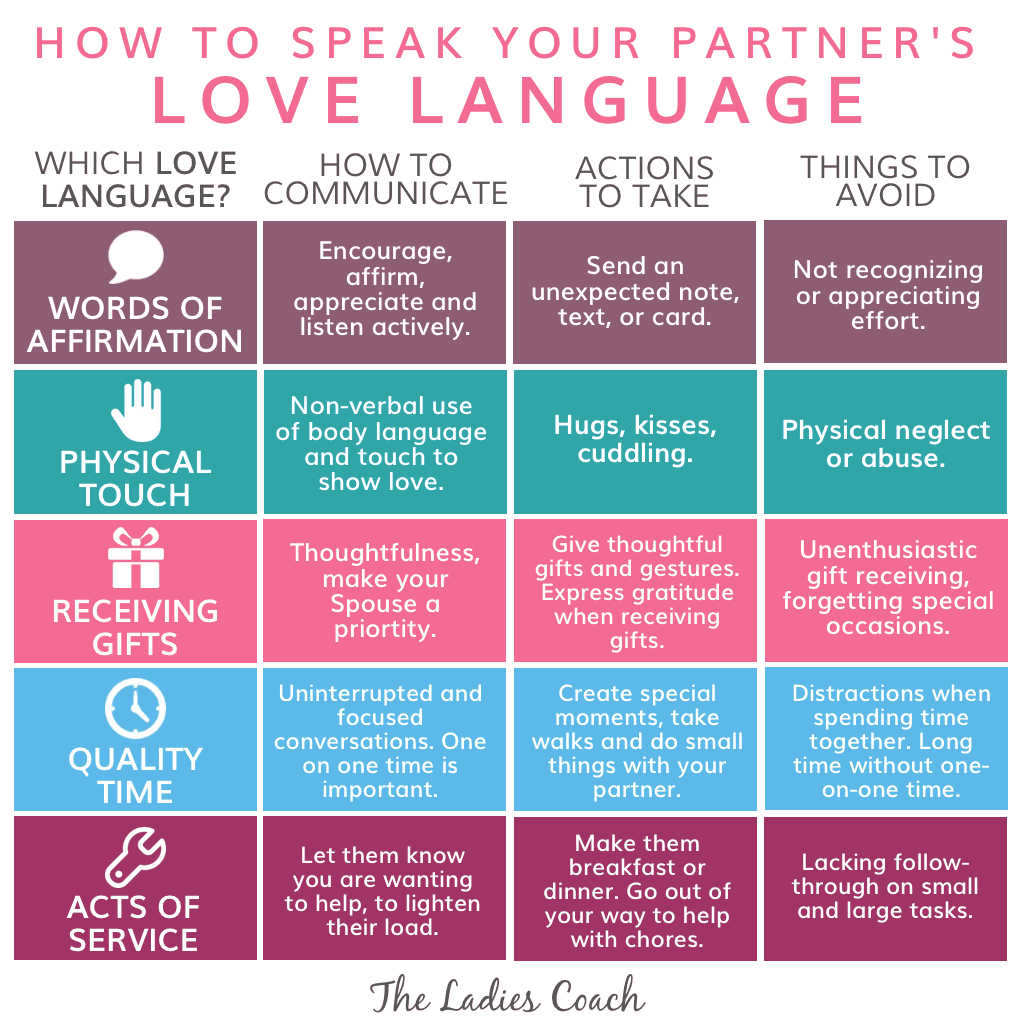
This book explores the ways people give and receive love. In the book, Chapman suggests that everyone receives love in at least one of five ways: Quality time, physical touch, words of affirmation, acts of service, and gifts.

The way we love our spouse is how we naturally express it but if our loved one does not receive love in the same way we do, he or she can feel unloved.

These five categories are how we all give and receive love, which can greatly affect relationships. When we understand the love language of another person, we can more effectively communicate our respect and affection to our spouse.

What Are the 5 Love Languages?

1. Words of affirmation. Some people are more attuned than others to hear both positive and negative words from those whose opinions they cherish.

While negative, critical words can tear them down, positive, encouraging words make them flourish. According to Chapman, people with this love language need to hear their partner say, “I love you.”

Even better is including the reasons behind the love through leaving them a voice message or a written note or talking to them directly with sincere words of kindness and affirmation.

2. Quality time. This language, says Chapman, is all about giving your partner your undivided attention. That means dropping everything to give them your full attention, in other words, no chores, no TV, no cell phone, etc.

Other ways to spend time together could include, going for a walk, preparing dinner together and talking while preparing and eating it, sharing plans for the future, making love, and/or creating something together.

Take time every day to do this to fill up their love tank.

3. Acts of service. When acts of service is a person’s primary language, he or she interprets help as a sign of someone’s love.

This language includes anything you do to ease the burden of responsibility, like picking kids up from school, vacuuming, running errands, going grocery shopping, or filling up the car with gas.

4. Receiving gifts. The person who loves this language thrives on the love, thoughtfulness, and effort behind the gift. In short, actions speak louder than words.

These people thrive on gift-giving, and when they are given a gift, it fills their love tank. A single rosebud, a candle, or a note can go a long way toward filling the love tank of someone who understands love as giving gifts.

The act of giving a gift tells your spouse you cared enough to think about him or her in advance and go out of your way to get something to make your partner smile

5. Physical touch. People who speak this love language thrive on any type of physical touch: Handholding, hugs, and snuggling. It is not about sex.

Those actions spell love to those with this primary language. Physical touch is the most direct way to communicate love. It is crucial for the health and well-being of every human being.

Are Love Languages Biblical?

What makes the love languages unique is that they are one of the few methods of extending love that is not self-serving because the giver isn’t looking for anything in return.

It simply means they’ve studied their partner and they want them to feel loved, but if you’re looking for the term love languages in the Bible, you’re not going to find it.

But the concepts are there, and Jesus did an incredible job demonstrating how we are to use them.

1. Acts of service: Jesus’ first love language. “Do you understand what I have done to you? You call me ‘Teacher’ and ‘Lord,’ and rightly so, because I am. So if I then, your Lord and Teacher, have washed your feet, you also ought to wash one another’s feet. For I’ve given you an example, that you should do just as I have done to you. . . If you know these things, blessed are you if you do them” (John 13:12-15,17).

2. Quality time. Jesus lived with his disciples for three years when he began his ministry. They traveled together, ate together, worshiped together. Do you get the picture?

They were together for daily life. Not only did he spend time with the 12 disciples, but he also often spent even more quality time with Peter, James, and John (Matthew 17:1-9).

The quality time was even broken down to one on one quality time with Peter. A look at Mark 9:30-31 shows that Jesus carefully guarded his time.

3. Words of affirmation. Jesus often spoke words of affirmation over individuals. We first see this when he spoke about his cousin, John the Baptist when he said that John was “more than a prophet,” and “among those born of women there has arisen no one greater.” These words are powerful because they are indirect words of affirmation.

Other examples of this love language happen in Matthew 12:49 when Jesus outstretches his hand toward his disciples and tells the crowd they are his family or in the book of Mark when Jesus tells a dinner party that the questionable woman “has done a beautiful thing” when she anointed his feet with her tears and expensive perfume.

He also said, “Wherever the gospel is proclaimed in the whole world, what she has done will be told in memory of her” (Mark 14:6-9).

4. Giving gifts. Perhaps this one was one of Jesus’ favorites. We see throughout the New Testament Jesus loved to give good things to his people.

  • Jesus gave the 4,000 the gift of food to eat in Matthew 15.
  • Jesus gave the 5,000 the gift of bread and fish in Luke 9.
  • Jesus gives sight to a blind man in John 9
  • Jesus gave the gift of healing and a new name to the woman who bled for years in Mark 5
  • He gave children to women who suffered from infertility like Hannah, Sarah, and even Samson’s mother. 

This list could go on and on. Jesus was a giver of gifts but the biggest gift he gave us was our salvation through his death on the cross. This was his ultimate love language and gift.

5. Physical touch. Jesus touched often and he made it a point, even though he never needed to touch anyone, to heal them or offer comfort as we see in Luke 7 when the centurion asked for healing for one of his servants.

We see in Mark 1:31, Jesus took Simon’s mother-in-law by the hand “and lifted her up and the fever left her.”

When the children came to Jesus, we see that “he took them in his arms and blessed them, laying hands on them.” (Mark 10:15-16).

What Does This Mean?

Jesus used all five love languages and undoubtedly, he was a master at matching them with people appropriately.

He is the creator of all things and he teaches us how to love well by example throughout the Old and New Testaments.

Most of us pick up Chapman’s book and think, “If I get this right for my spouse, maybe he will love me how I want to be loved.” But a word of caution, learning someone’s love language is sacrificial like Christ.

He never asked for anything in return, even as he poured out his life. He gave freely with no strings attached. We are to follow his example and love well.

————-

** By Heather Riggleman at Christianity Today / Website: http://www.heatherriggleman.com/

Popular Articles

A Clear Gospel Message

The Abortion Debate

Human Trafficking / Child Abuse

The True Gift

True or False Conversion

Once Saved Always Saved?

The Judge – Upholding what is right comes at a cost

What is a True Christian or Believer

Prayer Speaking to God

Forgiving Others as God has Forgiving you
Prayer for forgiving others

Living Right Today

Elisabeth Elliot Testimony: The Missionary Who Lived With The Tribe That Killed Her Husband

She was born Elisabeth Howard in 1926 – one of six children – to missionary parents in Brussels, Belgium. Her parents moved to Philadelphia, USA, a few months after Elisabeth was born. She later described them as devout, disciplined Christians who built their family life around the Bible.

‘We grew up with the understanding that the scriptures were top priority… we had bible reading and prayer at the end of dinner every night as we sat around the table, and up until the age of, I suppose, seven or eight, each of us children was put to bed by one of our parents and prayed with, and sometimes we had the bible read to us again. so we heard the bible read aloud at least twice a day, sometimes three times a day.

‘And the other very very powerful influence in our lives, I’m sure was the fact that my father got up himself between 4:30 and 5:00 in the morning in order to have time alone with the Lord.

And when we came to breakfast, we knew that we had been prayed for… meaning my father was in his study for those hours before breakfast with his prayer lists and his notebooks and his bible and down on his knees praying for us.’

Elisabeth reckoned she herself came to faith at around the age of five. This was followed by a definite commitment to Christ when she was twelve: “I think I realised that if Jesus was my saviour, he also had to be my Lord, so I then committed my life and said, ‘Lord, I want you to do anything you want with me.’”

We can surmise from this that even at this tender age Elisabeth realised she had a calling to the mission field. She studied classical Greek at Wheaton college, Illinois, believing that it was the best tool to help her with her desire to translate the New Testament into a yet-unreached language.

It was at Wheaton where she met Jim Elliot. Before their marriage they both went individually to Ecuador to work with the Quechua Indians; the two married in 1953 in the city of Quito, Ecuador.

Before Elisabeth started her work, she listened to the words of Maruja, a woman of a neighbouring tribe who had been held captive for a year by the Huaorani, sometimes called the Aucas, or ‘savages’. She told Elisabeth that the tribe was fierce and they acted like savages, but that the women were likeable and kind. In 1955, only ten months before Jim was killed, Elisabeth gave birth to a daughter, Valerie.

Elisabeth said that she had a premonition that Jim’s mission might end in his death, explaining, “I often thought I was going to lose my husband.” In fact, just before he left for his fateful mission to the Aucas they had talked about what she would do if Jim should not return.

So as they said what turned out to be their last goodbyes in January 1956, her mind was a filled with thoughts as to whether that would be the last time she saw him alive.

Jim and four other Christian missionaries Nate Saint, Roger Youderian, Ed Mccully and Peter Fleming – were speared to death in the jungles of Ecuador. Their killers were Huaorani Indians, the same group that Elisabeth had been warned about earlier.

After Jim’s death, Elisabeth, together with Rachel saint, the sister of another of those killed, continued her work among the Quechua at a site which was several days by trail from Auca territory.

Despite what had happened to their men, Elisabeth and Rachel were still determined to reach the killers with the gospel. At the time, their only link with Auca culture came when they met Dayuma, a young woman who had fled the tribe some years before to live with white missionaries. Dayuma, who was by then a believing Christian, helped them with the Auca language.

In November 1957 came a breakthrough. Elisabeth heard that two more Auca women had left their tribe. She hurried to the neighbouring settlement where the women – Mintaka and Minkamu – were, and spent the next ten months with them, seeking to learn more of the Auca language and culture.

Eventually the two Auca women – together with Dayuma – decided to return to their native tribe, leaving Elisabeth and Rachel wondering what the fate of the three women might be when they arrived home.

However, after three weeks the women returned to the mission compound bringing along seven other Aucas, plus a invitation to the missionaries to visit the tribe!

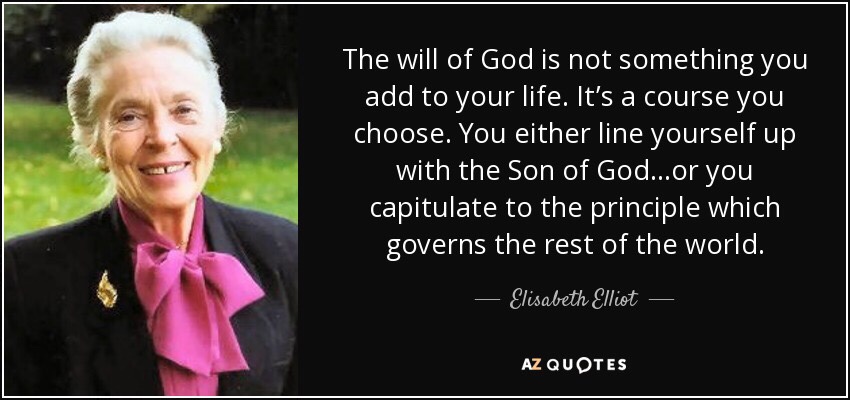
‘As long as this is what the Lord requires of me, then all else is irrelevant’ Elisabeth Elliot

Elisabeth and Rachel lost no time in taking up this unprecedented offer. However, Elisabeth admitted that taking her three-year-old daughter, Valerie, along strapped to her back was ‘the biggest test of faith ever’.

As well as the usual dangers found in jungle terrain, she had to face the possibility that the Aucas might choose to kill her and carry off the youngster.

In a later interview she said that, although she appreciated the kind warnings of fellow Christians, she felt that ‘as long as this is what the Lord requires of me, then all else is irrelevant’.

The journey to the Auca village took two-and-a-half days by canoe and trail paths. Ironically, the party arrived on the afternoon of 8 October 1958, Jim’s birthday and the day which would have been the couple’s fifth wedding anniversary.

When the missionaries reached a clearing in the jungle, there stood a welcoming party of three Aucas.

Elisabeth described the reception as ‘friendly… it seemed like the most natural thing in the world’. For the next year the missionaries enjoyed a good relationship with the tribe as they ministered to them. the Aucas gave Elisabeth the tribal name ‘Gikari’, Huao for ‘Woodpecker.’

She later returned to the Quichua and worked with them until 1963, when she and Valerie returned to the USA. Rachel saint continued the work with the Aucas under the auspices of their sponsoring missionary society, the summer Institute of linguistics (sIl).

Over the years some anthropologists have criticised the missionaries’ work, viewing their intervention as the cause for the widely-recognised decline of Huaorani culture. In response Elisabeth Elliot said in an interview that there is absolutely no point in trying to reach tribes like the Huaorani unless you believe the New Testament message that people – however few and remote – are lost without the gospel of Jesus Christ.

And while no-one would claim the missionaries didn’t make mistakes along the way, the gospel they preached resulted in a marked decline in violence among tribe members, together with numerous conversions to Christianity and the growth of the local church.

Indeed, it has been argued by others that the effects of Christianity were very positive, as it served as a way for the Huaorani to escape the cycle of violence in their community, providing them with a motivation to abstain from killing. Ironically it was probably exposure to Western ‘civilisation’ – not the gospel – that had the most detrimental effect on the Huaorani people.

On her return to America, Elisabeth became a noted speaker and writer. Her book, ‘through gates of splendour’ is ranked among the most influential books that have shaped the thinking of evangelicals. The book became a bestseller, as did ‘shadow of the Almighty: the life and testimony of Jim Elliot.’

According to Kathryn long, professor of history at Wheaton college, ‘those books became the definitive inspirational mission stories for the second half of the 20th century. [Elisabeth Elliot] really had a sense of her audience as evangelicals, and she could tell this story in a way that keyed into [their] values.’

Elisabeth went on to write more than a dozen additional books and launched a raddio show, ‘gateway to Joy’, which ran until 2001. She almost always opened the programme with the phrase, “‘You are loved with an everlasting love,’ – that’s what the Bible says – ‘and underneath are the everlasting arms.’ this is your friend, Elisabeth Elliot…”

Two later books on missions, ‘no graven Image’ and ‘the savage my Kingsman’, raise important questions about mission work and reveal Elliot as a extraordinarily perceptive thinker and writer.

In 1969, Elisabeth married Addison Leitch, professor of theology at Gordon-Conwell theological seminary in south Hamilton, Massachusetts.

They were together until Leitch’s death in 1973. In 1974, Elliot became an adjunct professor on the faculty of Gordon Conwell theological seminary and for several years taught a popular course entitled ‘christian expression’.

Her third marriage to Lars Gren, a hospital chaplain, took place in 1977.

After their marriage the couple worked and travelled together.

‘Nothing can separate us from the love of Christ’ – Elisabeth Eliott

Elisabeth Elliot died in Magnolia, Massachusetts, on 15 June 2015, at the age of 88. Sadly in her last years she suffered from dementia. Her husband, Lars, said: “She accepted those things, [knowing] they were no surprise to god.

”It was something she would rather not have experienced, but she received it.”

Elisabeth’s only daughter, Valerie, who spent part of her childhood among the Aucas, married a pastor, Walter Shepard, in 1976. Since then Valerie has spent her time being a pastor’s wife, raising eight children, teaching the bible and speaking at conferences.

She described her mother as: “A speaker of the truth, a teacher of obedience, a woman of strength and dignity. She always loved and encouraged me. she was a woman of prayer.”

Perhaps Elisabeth Elliot’s whole philosophy of life and ministry can be summed up in the words she once wrote: “We have proved beyond any doubt that he [God] means what he says – his grace is sufficient – nothing can separate us from the love of Christ. We pray that if any, anywhere, are fearing that the cost of discipleship is too great, they may be given a glimpse of that treasure in heaven promised to all who forsake.”

———

** This article was taken from the October 2016 issue of Heroes Of The Faith by Dave Littlewood / Photos Elisabeth Elliot Foundation

21 Characteristics Of True Love According To The Bible

If you want to know and understand what true love really is, here are 21 signs, qualities or characteristics of a genuine love according to the verses in the Holy Bible.

1. Love Is Patient.

True love can suffer without complaining or getting angry.

Always be humble and gentle. Be patient with each other, making allowance for each other’s faults because of your love.”Ephesians 4:2.

2. Love Is Kind.

True love has a gentle, caring and compassionate heart. It feels your sorrow; it feels your joy.

 3. Love Is Not Envious.

True love is content and thankful for its blessings and current possessions. It doesn’t envy other people.

 4. Love Is Humble.

True love is not proud and boastful. It is humble enough to admit its own mistakes and strive to correct them. It also forgives to get rid of hatred and enjoy peacefulness.

“Love is patient, love is kind. It does not envy, it does not boast, it is not proud.” – 1 Corinthians 13:4

5. Love Is Respectful.

True love respects and honors you as a person. It doesn’t put you into shame or humiliation.

6. Love Is Selfless.

True love is always thoughtful and concerned about the welfare of its beloved. It’s not selfish, inconsiderate, and greedy.

7. Love Is Calm.

True love always maintains the clarity of mind and softness of heart. Its heart is deep and its mind is not narrow.

8. Love Is Righteous.

True love always does the right thing. It disciplines itself to avoid wrongdoings.

“It does not dishonor others, it is not self-seeking, it is not easily angered, it keeps no record of wrongs.” – 1 Corinthians 13:5

9. Love Is Honest.

True love is truthful. It’s happy living an honest life. It doesn’t lie and hide in darkness.

“Love does not delight in evil but rejoices with the truth.” – 1 Corinthians 13:6

10. Love Protects.

True love always protects you and wants you to be safe.

11. Love Is Trusting.

True love trusts. It relies and depends on you. It recognizes your abilities, talents, skills and the good things in you.

12. Love Is Hopeful.

True love is optimistic. It includes you in its plans. It sees a bright future with you.

13. Love Is Persistent.

True love doesn’t easily give up.

“It always protects, always trusts, always hopes, always perseveres.” – 1 Corinthians 13:7

14. Love Banishes Fear.

True love eliminates fear, anxieties and insecurities that torment one’s heart, mind, and soul.

“There is no fear in love. But perfect love drives out fear, because fear has to do with punishment. The one who fears is not made perfect in love.” – 1 John 4:18

15. Love Loves Even Those Who Don’t Love It.

True love does good things even to those who hate it. It will love you even though you are treating it as your enemy.

“But to you who are listening I say: Love your enemies, do good to those who hate you, bless those who curse you, pray for those who mistreat you. If someone slaps you on one cheek, turn to them the other also. If someone takes your coat, do not withhold your shirt from them. Give to everyone who asks you, and if anyone takes what belongs to you, do not demand it back. Do to others as you would have them do to you. If you love those who love you, what credit is that to you? Even sinners love those who love them. And if you do good to those who are good to you, what credit is that to you? Even sinners do that.” – Luke 6:27-33

16. Love Comes From God.

True love brings you closer to God.

“Dear friends, let us love one another, for love comes from God. Everyone who loves has been born of God and knows God.” – 1 John 4:7

 17. Love Makes A Great Sacrifice.

True love does extraordinary things. It goes out of its comfort zone or sacrifices things important to it just to show its love.

“For God so loved the world that he gave his one and only Son, that whoever believes in him shall not perish but have eternal life.” – John 3:16

18. Love Loves through True Actions.

True love is not based on words or hypocritical deeds, but it is based on truthful actions. It doesn’t only believe or hope, but it does actions that will make the things it believes or hopes a reality.

Dear children, let us not love with words or speech but with actions and in truth.” – 1 John 3:18-19

“And now these three remain : faith, hope and love. But the greatest of these is love.” – 1 Corinthians 13:13

19. Love Loves Itself.

True love takes care of itself, not hurts itself. It develops itself to be stronger, healthier and more capable to continue loving.

“In this same way, husbands ought to love their wives as their own bodies. He who loves his wife loves himself.” – Ephesians 5:28

20. Love Binds A Person’s Good Virtues In Perfect Unity.

True love transforms you into a whole new and better person.

Therefore, as God’s chosen people, holy and dearly loved, clothe yourselves with compassion, kindness, humility, gentleness and patience. Bear with each other and forgive one another if any of you has a grievance against someone. Forgive as the Lord forgave you. And over all these virtues put on love, which binds them all together in perfect unity.” – Colossians 3:12-14

21. Love Gives You The Confidence To Face Even The End Of Time.

True love keeps you away from sins and cleanses your soul so that you may become confident even on the Day of Judgment.

“In this way, love is made complete among us so that we will have confidence on the day of judgment because in this world we are like him.” – 1 John 4:17

True love is indeed powerful and that’s why it’s not an easy thing to do. Giving pure love involves making great sacrifices and enduring a lot of pain. However, it rewards genuine happiness and fulfillment in life and beyond.

Perhaps we cannot make our love perfect on our first try. But love is not only a one-time act – it’s an act that we should practice consistently. Remember that practice makes perfect.

I hope this article serves as your guide, not only in identifying if someone is giving you real love, but most importantly in learning how to give it. Take note that true love is more about giving rather than receiving. So start building true love inside you.

Note: All Bible verses presented in this article are based on the New International Version (NIV).

———

**By Victorino Q. Abrugar at Inspiring Tips / Photo by Flora Westbrook at Pexels

Popular Articles

A Clear Gospel Message

The Abortion Debate

Human Trafficking / Child Abuse

Trusting God to Heal the Scars of Sexual Abuse

The True Gift

True or False Conversion

Once Saved Always Saved?

The Judge – Upholding what is right comes at a cost

What is a True Christian or Believer

Prayer Speaking to God

Forgiving Others as God has Forgiving you

Prayer for forgiving others

Living Right Today

The Marriage Box Myth

There is a marriage myth that few people know about before they marry. (We sure didn’t!) But spouses NEED to recognize it. That’s because the health of their marriages depend upon it. We’re talking about the Marriage Box Myth. It’s a myth we fell into and then climbed out of (and continue to climb “for as long as we both may live”).

To give you an idea of what we’re talking about here, regarding this myth, read the following:

THE MARRIAGE BOX MYTH

Most people get married believing a myth.
They believe that marriage is a beautiful box full of things they have longed for… companionship, intimacy, friendship, etc.

The truth is that marriage at the start is an empty box.
You must put something in before you can take anything out.

There is no love in marriage.
Love is in people. And people put love in marriage.
There is no romance in marriage. You have to infuse it into your marriage.

A couple must learn the art and form the habit of giving, loving, serving, praising, of keeping the box full.
If you take out more than you put in, the box will be empty.

(Written by Dr J Allan Peterson)

The Marriage Box Myth is True

Anyone who has been married beyond a month or two, KNOWS how very true this is! If we’re serious when we say our wedding vows to “love” each other for the rest of our lives, we need to be proactive in continuing to grow our love. It’s not a once for all time type of situation.

We didn’t know that when we first married. We should have. But we didn’t. Naively, we thought our love would just naturally grow more wonderful with passing time. However, that was a fantasy! The opposite happened. Our relationship grew to be ugly. That’s because we didn’t do what it takes to put love and romance into our “marriage box.” We just took and took and took and didn’t even notice that it was depleting our relationship of love. So that didn’t work out well for us at all!

We can only take a relationship for granted for so long before it goes into deficit mode of not having anything left in reserve. If we want love, we have to feed it, or it will starve to death. (At the very least it will become anemic.)

We found out the same thing to be true that Darlene Lopez wrote about in her “Marriage Box” article:

“Marriage truly is like an empty box. Many people get married for all the wrong reasons and have an abundant of expectations when they get married. I was one of them. I thought marriage was going to be filled with all sorts of companionship, sex, love, romance, intimacy, prayer, Bible studies, understanding, deep friendship and love. Boy, was I wrong! I found out that marriage truly is empty unless you are infusing into it daily.”

With that said, we want to ask you:

What are you doing to continue to grow your love relationship with each other?

Yes, we know that life gets busy. We fight that all the time (as does everyone)! But we still need to find the time to grow our love for each other. We cannot get so caught up in daily routines that we allow them to become our continual main focus.

“Marriage is a long journey, and any long journey requires occasionally getting off the road to eat, to fill up the car with gas, or simply to rest. Is your marriage slowly getting buried under the daily routine? What can you do differently to break out of the box and renew your love for each other?” (Gary Thomas)

Furthermore, we want to ask you: are you infusing love, or are you just taking what you can get? Here’s a truth to prayerfully consider:

“When we love another person the relationship isn’t just about us anymore. When we love someone we don’t starve them; we give to them. When we love someone, love becomes a verb that allows us to put stuff into the box. We give to the other person in a way that is meaningful to him or her and work with their schedule, not just ours. And we work with their tastes and preferences, not just ours.” (John, from his article, “What is Real True Love?”)

Further down in this blog John writes another truth:

“When we don’t put stuff in the box, we starve the relationship or marriage. We are takers, not givers, narcissists, not lovers.”

That is point on! If we are to love each other as Christ loves, we will be intentional in finding ways to show love in selfless ways—not selfish ways.

Humbly Fill Your Marriage Box

“Being married is an active process where we daily make our lives about each other and not about ourselves. There’s a quote that says: ‘Humility is not about thinking less of our self, but rather thinking of ourselves less.’ I need to practice having more humility in my marriage. I need to focus more on filling our box, rather than taking from.

“And when the time comes (and it will) when my hand reaches from corner to corner to find an empty box, may I be the first to fill it.

“Here’s to every husband and wife in their journey. May you always fight for your marriage, seek counsel when you need it, show grace where sin abounds and love like crazy.” (Lovelace, from her article, “The Marriage Box”)

We couldn’t say it any better! May we love each other extravagantly! That’s how Christ loves us. Now the challenge is for us to do the same. In Ephesians 5:1-2 we are told to “be imitators of God.” We are to “walk in love as Christ loved us and gave himself up for us.” Another way of saying this is presented in The Message:

“Watch what God does, and then you do it, like children who learn proper behavior from their parents. Mostly what God does is love you. Keep company with Him and learn a life of love. Observe how Christ loved us. His love was not cautious but extravagant. He didn’t love in order to get something from us but to give everything of Himself to us. Love like that.” (Ephesians 5:1-2)

THAT type of love is what we are to keep putting in our marriage box.

Your Marriage Mission

Make it your mission to find out what you can put into your marriage box. You need to find that, which will help you to love one another as you originally vowed to do. This is what God would have you (us) do as husbands and wives. It’s also what God wants us to do as His children so we display His love to a world that needs to witness His love in action.

God wants us to live with each other in such a way that our love reveals and reflects the love of Christ. God can use this to prompt others to say, “I want to know their God better.”

“A new command I give you; Love one another. As I have loved you, so you must love one another. By this all men will know that you are my disciples, if you love one another.” (John 13:34-35)

May it be so, Lord! May it be so!

——-

** By Cindy and Steve Wright at marriagemissions.com / Photo by Suzy Hazelwood at Pexel