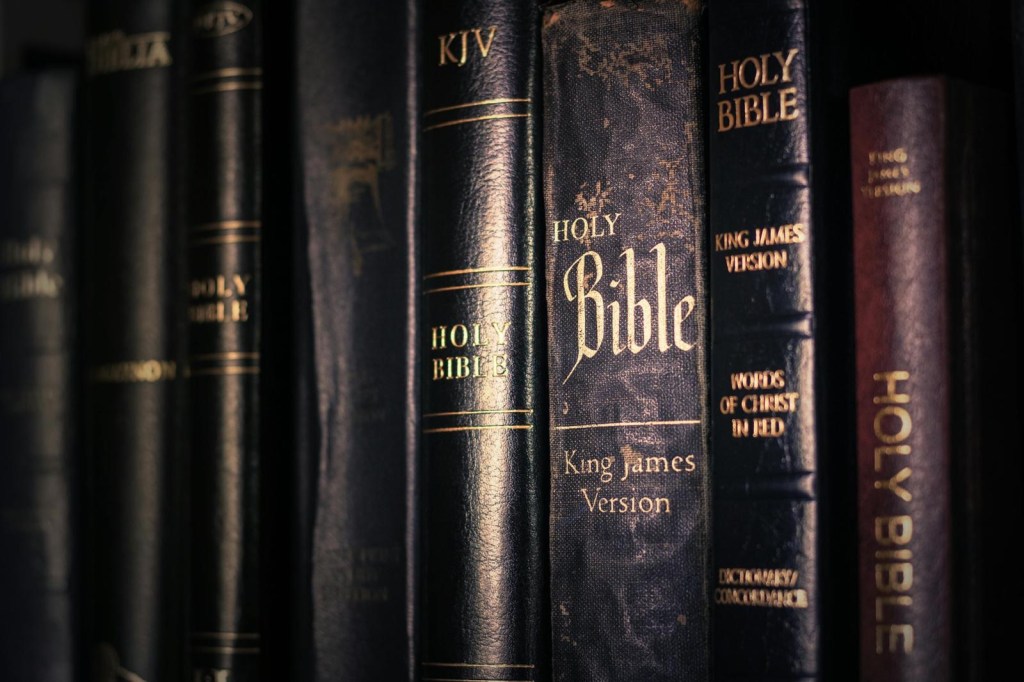
Unshakeable Faith is Essential in a Wavering World

Standing on the solid rock of faith means holding firmly to God’s Word while also being open to learning and growing in our understanding of it. Today, we are commonly told to keep an open mind about our beliefs and how we interpret the Word of God. Many people are encouraged to avoid being dogmatic, leading some to cherry-pick Scriptures or change their meanings altogether. This practice often involves using the Bible only when its teachings align with personal preferences or the expectations of the audience. Such a liberal view distorts the integrity of God’s Word—if you don’t like it, change it! What use is the Word of God if it can be altered? How can we have faith in truth if truth is seen as variable?

The Word of God is meant to assure us of both God’s nature and our future in Him. If we maintain an open mind to the point of compromising its teachings, we risk dismissing Christ’s promises and missing out on the fullness of what He guarantees. True Christians do not keep an open mind when it comes to God’s Word; you either believe it or you don’t. You cannot sit on the fence. The journey of faith requires a foundation rooted in the unchanging truth of God’s Word.

How many of you would board a plane knowing that the pilot was going to keep an open mind about the destination? Well just as a pilot must navigate their course with precision, they cannot afford to be liberal or selective about the path they choose to reach their destination. Each decision made in the cockpit matters greatly; even small adjustments can have significant consequences for the journey, and so it is with God’s Word. We are invited to align our lives with God’s truth, but this does not mean altering His Word to fit our preferences. His truth remains constant, and our understanding should deepen without compromising Scripture’s principles. Faith demands humility; there is always more to discover in the Bible.

As Paul reminds us in 2 Timothy 1:2, we are called to be faithful to the truth that has been entrusted to us. Our belief in Christ Jesus is our sure foundation—He is the rock upon which we stand and the anchor of hope for our blood-bought souls. Psalm 18:2 describes Him as the everlasting rock for those who fear and esteem Him, a steadfast refuge in times of trouble. There’s nothing wishy-washy about Jesus or His Word. He is the Word made flesh who dwelt among us and our soon-coming King, to whom every knee will bow and confess He is Lord.

Times may change, and people’s views may shift, but God remains the same yesterday, today, and tomorrow. His promises provide a firm foundation amidst a world of uncertainty.

Being open does not mean abandoning core beliefs. Instead, it helps us build a stronger foundation based on God’s eternal Word while remaining teachable. The Bible encourages us to think deeply about Scripture and to stay receptive to what God may reveal each day. This isn’t about changing God’s Word; it’s about allowing it to transform us. Our foundation is solid because it rests on God’s promises and truth.

As James 1:6-8 warns, we should not be double-minded in our faith, for such uncertainty leads to instability. We are called to take every thought captive to obey Christ, as stated in 2 Corinthians 10:5. Faith is not about rigidity; it’s about standing confidently on God’s promises, knowing His Word gives us a firm foundation. While we can be sure of what we believe, we should also allow God to enrich that understanding over time.

Let this balance between a solid foundation and an open heart inspire you today. Stand firm on the rock of God’s Word, knowing that you are both grounded and growing—rooted in unchanging truth yet open to the richness of God’s wisdom and grace as He reveals it, because God Himself backs it up.

———————

**Excerpt based on Reinhard Bonnke’s book, “Faith: The Link with God’s Power.” / Photo by Pixabay at Pexels

6 Ways Jesus Faced Opposition

“For we do not wrestle against flesh and blood, but against principalities, against powers, against the rulers of the darkness of this age, against spiritual hosts of wickedness in the heavenly places.” ~ Ephesians 6:12

I opened God’s Word with a heavy heart, feeling the burden of opposition. A friend had recently attacked my character due to a difference of ethical beliefs. Stunned and hurt by this, I quickly recognized my unpreparedness in facing this attack. Thankfully, the Holy Spirit prompted me to seek the Lord and the truth of his Word. I opened my Bible and was led to Hebrews 12:3, which answered my prayer for relief: “Consider him who endured such opposition from sinful men, so that you will not grow weary and lose heart.”

Six Ways Jesus Faced Opposition

Jesus, the Man of Sorrows, experienced opposition far worse than my situation. But in his eyes, it’s not relevant, for all who call on his name receive the same power and ability to face opposition. In studying and understanding the character of Jesus revealed in Scripture, I felt thoroughly equipped to face this challenging situation by mirroring Christ’s response.

When we are antagonized or provoked, our first step should always be to ask the Holy Spirit to guide our hearts, minds, and words. 1 Peter 3:15 instructs us to “give an answer to those who ask,” and Colossians 4:6 instructs us to speak graciously “so that [we] may know how you ought to answer each person.”

1. Jesus exposed motives.

In Mark 3, we find Jesus approaching a disfigured man in the synagogue. Verse 2 explains, “[The Pharisees] watched Jesus to see whether he would heal him on the Sabbath, so that they might accuse him.” Mark tells of Jesus challenging them by responding, “Is it lawful on the Sabbath to do good or to do harm, to save life or to kill?” (v. 4). Manmade rituals enforced by the Pharisees had made God’s Law joyless, and Jesus exposed their prideful and judgmental hearts.

2. Jesus sought peace.

When Jesus is arrested, in fear and protection, Peter cuts off the ear of the high priest’s servant. Instead of affirming this act of violence, Jesus commands peace:

Put your sword back in its place. For all who take the sword will perish by the sword. Do you think I cannot appeal to my Father, and he will at once send me more than twelve legions of angels? But how then should the Scriptures be fulfilled, that it must be so?” (Matthew 26:52-54).

Not only does Jesus condemn this behavior, but displays his loving nature by healing the man’s ear (Luke 22:51).

3. Jesus applied Scripture.

In Matthew 9, Jesus is found “reclined at a table in the house” with tax collectors and sinners (v. 10), which stirred up controversy amongst the Pharisees. They ask his disciples, “Why does your teacher eat with tax collectors and ‘sinners’?” (v. 11). How does Jesus respond? “It is not the healthy who need a doctor, but the sick. But go and learn what this means: ‘I desire mercy, not sacrifice.’ For I have not come to call the righteous, but sinners” (vv. 12-13, NIV). Jesus used Hosea 6:6, the very scripture the Pharisees preached, to challenge their hardened hearts. Later in Matthew 12, Jesus uses the same scripture from Hosea to challenge the Pharisees: “If you had known what this means…you would not have condemned the guiltless” (v. 7).

4. Jesus prayed.

As Jesus awaited his impending suffering and death, he stepped aside in isolation to pray. Opposition caused Jesus to feel sorrowful and troubled, overwhelming his soul to the point of death (Matthew 26:36-38). Jesus, fully God yet fully man, still needed his Father. Three times in Gethsemane, Matthew says he “fell with his face to the ground and prayed, ‘My Father, if it is possible, may this cup be taken from me. Yet not as I will, but as you will’” (vv. 39, 42, 44).

Similarly, in the Gospel of John chapter 17, Jesus prays for himself, for his disciples, and for all believers. As his impending death and resurrection approached, he prayed for salvation and for the Father’s glory as he awaited this fulfillment (vv. 1-5). He lifted up his disciples in prayer for physical and spiritual protection, unity, the full measure of his joy, obedience, and sanctification (vv. 6-19). Jesus prayed for all believers, that they may hear his message, believe, unite, evangelize, and be saved (vv. 20-25).

5. Jesus remained silent.

When Jesus is arrested and faced with the Sanhedrin looking for false evidence against him, they question him. “’Are you not going to answer? What is this testimony that these men are bringing against you?’ But Jesus remained silent” (Matthew 26:62-63, NIV). Jesus was aware of their bias, hostility, partiality, and their past history of twisting his words. His silence demonstrated how undeserving they were of a response. Though Jesus later responds in truth to their questions, he is still accused of blasphemy, declared worthy of death, spit in the face, struck with their fists, mocked, and provoked (vv. 64-68). Yet amidst the turmoil, he chooses silence.

6. Jesus loved.

As Jesus languished on the cross, he didn’t counter his accusers with insults, cursing, and retaliation—nor did he use his power to inflict pain. His submissive silence was a divine response from the nature of an almighty, all-powerful, sovereign God in the flesh—an example for all his people to follow. He withstood excruciating agony as long as he could so the door would be open to salvation, including for his enemies. Jesus forgave the thief on the cross hanging next to him who had earlier hurled insults at him, yet repented in his last moments (Luke 23:39-43). He prayed for the forgiveness of the very people who were crucifying him: “Father, forgive them, for they do not know what they are doing” (Luke 23:34, NIV). Even those responsible for the crucifixion had forgiveness available to them in love from the Lord.

Can you imagine the results had Jesus responded differently under opposition? Lives wouldn’t have changed, hearts wouldn’t have been transformed, and his beloved wouldn’t have been welcomed into his kingdom.

Equipped for Opposition

In following the tactics used by Jesus in the face of his opponents, this encounter with my friend ended in a manner I was not expecting. Though not immediately, our relationship was healed and elevated to a new level of intimacy and love—a true miracle of the Lord’s mercy and grace. Be encouraged, dear friends; though opposition in this world is inevitable, we can stand equipped under our Savior’s example and by his life, rising victoriously over it.

————

*** By Meredith Hodge at Open the Bible.org / Photo by Apollonia at Pexels

Made in God’s Image: A Radical Truth in a Confused World

In a world increasingly shaped by confusion and conflicting ideologies about our identity, it’s essential to return to the truth of Scripture to rediscover who we truly are. The profound and foundational truth that we are made in God’s image is not only the key to understanding our purpose but also the antidote to the confusion and despair that many face today. At the same time, we see a striking contradiction in society. On one hand, there is a growing emphasis on mental health and well-being, particularly for children and young people—a focus that is undeniably valuable. Yet, on the other hand, these same individuals are often taught that they are merely the accidental products of random, unguided processes. This disparity raises urgent questions about where our true value and sense of purpose come from.

This prevailing worldview, commonly seen in schools and even showcased in places like the Natural History Museum, suggests that humans originated from a “molecule-to-man” evolutionary process through natural selection. Under this framework, human beings are stripped of intrinsic value or ultimate purpose. If we are merely “rearranged atoms,” no different than the chairs we sit on, why should we consider ourselves more valuable than those objects? One bleak perspective even puts it this way: “It’s a fluke that you were born, all is futile while you live, and you’ll be fertilizer when you die.”

Environmental concerns, often valid, further deepen this narrative by portraying humanity as the planet’s primary problem. Influential figures like David Attenborough have even referred to mankind as a “plague on the planet.” These ideas contribute to widespread struggles among young people—challenges with identity, worth, and purpose—often leading them to cling desperately to fleeting causes.

The Bible’s Antidote: Our True Identity

Amid this cultural confusion, we find hope and clarity in the Bible. Genesis 1:26-27 teaches us a radically different truth about who we are. Humanity is made in the image of God. This phrase appears three times in just two verses, emphasizing its importance. “Then God said, “Let us make mankind in our image, in our likeness, so that they may rule over the fish in the sea and the birds in the sky, over the livestock and all the wild animals, and over all the creatures that move along the ground.” 27 So God created mankind in His own image, in the image of God He created them; male and female He created them.”

Humanity’s Unique Role in Creation

It is essential to note that only humans are described as being made in God’s image. While other living things are described as being made “according to their kind” (Genesis 1:24-25), humanity is set apart. Though we share similarities with animals, such as being made of the same physical elements and consuming similar foods, the differences are vast and profound:

Communication: Human communication is far more complex.

Innovation: Unlike spiders that spin the same web design repeatedly, humans innovate endlessly.

Self-awareness: Humans ponder their purpose, study the world, and plan for the future.

Appreciation of beauty: Our ability to create and appreciate art reflects the Creator Himself.

The Bible clearly teaches that the image of God was present from humanity’s beginning. This is not a trait added partway through a slow evolutionary process. Genesis 5:3 confirms that Adam passed this image onto his descendants, meaning all humans are bearers of God’s image. Furthermore, Genesis 1:31 declares that creation was not just “good” but “very good” only after humanity was created. Humanity is the pinnacle of God’s creation, the culmination of His work, as Psalm 8 poetically reflects: “You made man a little lower than the angels and crowned him with glory and honor.”

What Does It Mean to Be Made in God’s Image?

The phrase “image of God” comes from the Hebrew word “tselem,” meaning a replica or representative. In the ancient Near East, kings would place statues of themselves in far-flung regions of their empires to symbolize their authority. Similarly, humanity represents God’s authority and presence in the world.

Here are five “R’s” that summarize what it means to be made in God’s image:

1. Representing God

We are God’s representatives on Earth, symbolizing His dominion and authority. This is why the second commandment forbids creating images of God for worship; humanity itself is His intended representation.

2. Resembling God

The phrase “in His likeness” (Hebrew: “demuth”) expands the idea of resemblance. We resemble God in personal, moral, and rational ways:

• We are personal beings, capable of relationships.

• We are moral beings, understanding right and wrong.

• We think, reason, feel, and act with purpose, as God does.

While we are not divine—we are neither eternal nor self-sufficient like God—we reflect aspects of His character, much like the moon reflects the light of the sun.

3. Ruling for God

Genesis 1:26 continues: “…so that they may rule over the fish in the sea, the birds in the sky, and over all the earth.” The word for “rule” (Hebrew: “rāḏâ”) implies dominion and stewardship. Humans are entrusted with managing creation for its benefit, a role that remains positive despite the fall.

This stewardship involves cultivating and managing the earth to promote flourishing. Genesis 2 expands on this role, depicting Adam placed in the Garden to “work it and take care of it” (Genesis 2:15). Contrary to popular claims that nature would thrive without humans, evidence shows that human management often increases biodiversity and ecological health. For instance, even secular conservationists recognize that rewilding efforts (leaving land untouched) can reduce biodiversity. Carefully managed areas, such as gardens or cultivated lands, often support more diverse ecosystems than those left wild.

4. Reflecting God

As God’s image bearers, we are called to reflect His attributes—His love, righteousness, and justice. This reflection glorifies Him and points others to His character.

A Unique Design and Purpose

Humanity’s role as God’s image bearers underscores our unique purpose. Adam’s naming of the animals (Genesis 2:19-20) highlights this distinction; no animal was found to be a suitable helper for Adam because none shared God’s image.

When God declared it was “not good” for man to be alone (Genesis 2:18), He created woman as a complementary partner, further emphasizing the relational nature of humanity—a reflection of the relational nature of God Himself.

This foundational truth—that humanity is made in the image of God—contradicts the despairing messages of our culture. It affirms our value, dignity, and purpose, reminding us that we are more than atoms or accidents. We are God’s representatives, rulers, and reflections, created to glorify Him and enjoy His creation.

5. Made for Relationship

In addition to representing, resembling, and ruling for God, humanity was created for relationship. Genesis 1:27 emphasizes this: “male and female He created them.” Relationships are central to the human experience because they reflect the very nature of God Himself.

In Genesis 1:26, God says, “Let us make mankind in our image, in our likeness.” The plural pronouns point to the truth of the Trinity—God as one being in three persons: Father, Son, and Holy Spirit. This perfect, eternal relationship of love within the Trinity has profound implications. It reveals that love is intrinsic to God’s nature. Even before creating humanity, God existed in a communion of love. Unlike a solitary deity, a trinitarian God is inherently relational, making Him a God of love.

God’s design for us is rooted in this relational nature. He created us to participate in this love and to relate to Him in worship. In Genesis, God speaks to Adam and Eve, commands them, and walks with them in the garden. Humanity alone, among all creation, is given the capacity to communicate with God and with one another in meaningful ways.

Reflecting God in Human Relationships

God’s design extends to human relationships, starting with marriage. The union of man and woman reflects God’s relational nature and serves as a foundation for families. The psalmist speaks of God placing the lonely in families, emphasizing that all relationships—friendships, families, and communities—find their root in our shared identity as image-bearers of God.

However, society often promotes individualism and isolation, countering God’s intention for relationships. The idea of self-sufficiency, where everything is tailored for individual consumption, may seem appealing, but it directly opposes the biblical truth that we are created for connection.

The Marring of the Image

Although we are made in the image of God, that image has been marred by sin. Genesis 3 describes the fall of humanity through Adam and Eve’s disobedience. Though we retain God’s image, it has been distorted. Like graffiti defacing a masterpiece, sin obscures our ability to fully reflect God’s glory and carry out our God-given roles.

The Nature of the Fall

Satan’s temptation to Eve was rooted in pride and dissatisfaction. He suggested that she could “be like God,” ignoring the truth that humanity was already made in His image. Adam, failing to exercise his headship, joined in disobedience. As a result, sin entered the world, bringing suffering, pain, and death.

This is not how God created the world to be. Death and suffering are direct results of human sin, not inherent aspects of God’s creation. To argue otherwise undermines God’s goodness and the hope of redemption. The consequences of the fall are evident: fractured relationships, environmental exploitation, and a culture that either devalues humanity or elevates it to a godlike status.

Modern Rebellion Against God’s Design

Today, the rejection of God’s image leads to a host of societal issues. When we deny the intrinsic value of life, practices like abortion and euthanasia become normalized. The redefinition of marriage and gender further undermines God’s design, leaving people searching for identity and purpose in fleeting things like possessions, fame, or personal achievements. But these pursuits are inadequate. When our worth is tied to impermanent things, failure leaves us devastated. We begin to see others as objects, either competitors or tools for our benefit. This rejection of God’s image results in a society that dehumanizes itself.

The Mending of the Image

Thankfully, the story doesn’t end with the marring of the image. Through Jesus Christ, God has provided a way to restore what was broken.

Christ: The Perfect Image of God

Colossians 1:15 declares, “The Son is the image of the invisible God.” Unlike humanity, Christ is not merely made in the image of God—He is the image of God. As the Creator, Jesus demonstrates dominion over creation, calming storms, multiplying food, and even commanding fish to fulfill His purposes. He is the ultimate human, fully reflecting God’s glory while living in perfect obedience.

Yet, Christ did more than provide an example. He lived the life we were meant to live and bore the punishment for our sins. On the cross, He was marred for our transgressions so that we could be mended. Through His death and resurrection, He made reconciliation with God possible, restoring us to our original purpose as image-bearers.

Becoming Like Christ

When we repent and trust in Christ, God begins a process of transformation. Romans 8:29 explains that we are “predestined to be conformed to the image of His Son.” This transformation is not about adding religion to our lives but about aligning with the purpose for which we were created: to glorify God and enjoy Him forever.

This restoration affects every aspect of our lives. It shapes how we relate to others, how we steward creation, and how we pursue work and creativity. No longer striving for self-glory, we live to reflect God’s love, peace, and justice.

The Fulfillment of Restoration

One day, God will complete this work of restoration. Revelation promises a new creation where His people will dwell with Him forever, fully restored to His image. Until that day, we live with the hope and assurance that we are precious to God, not because of anything we achieve, but because of what Christ has done.

If you have not yet repented and turned to Christ, now is the time. Only through Him can we be restored to our true purpose and identity. May we all live as God intended, for His glory and the good of His creation.

Amen.

—-—————-

** How to become a child of God

** Summary of Talk By Matthew Pickhaver from Biblical Creation Trust / Picture by Mart Production at Pexels

** Recommended article: One Human Race – the Biblical, Scientific & Historical Truth about Human Diversity

The Traditions of Men Versus the Word of God

In Mark 7:8, Jesus speaks with profound clarity: “You disregard and neglect the commandment of God, and cling [faithfully] to the tradition of men.” This verse cuts to the heart of an ongoing tension that has existed since the days of Christ: the elevation of human traditions over the divine Word of God. Jesus’ confrontation with the Pharisees reveals a dangerous practice where man-made traditions overshadow and even invalidate God’s commandments.

Traditions: A Challenge in Jesus’ Time

Mark 7:2-9 paints a vivid picture of this confrontation. The Pharisees and scribes, having observed Jesus’ disciples eating with unwashed hands, found fault with them. They weren’t just concerned with hygiene, but with the breaking of religious customs—the “tradition of the elders”—which had become a cornerstone of Jewish religious practice. They viewed this tradition as equal to, or even above, God’s commandments.

Jesus’ response is striking. He calls them hypocrites, quoting Isaiah: “This people honors Me with their lips, but their heart is far from Me.” He condemns their practices, stating, “For laying aside the commandment of God, you hold the tradition of men.” This indictment is as relevant today as it was then. The Pharisees placed their traditions on a pedestal, and in doing so, lost sight of the heart of God’s law. They honored God with outward rituals, but their hearts were far from Him.

The Danger of Tradition Today

In the present age, many Christians find themselves at a similar crossroads. The traditions of men can still creep into our faith, subtly undermining the pure Word of God. Colossians 2:8 warns us to be vigilant: “Beware lest anyone cheat you through philosophy and empty deceit, according to the tradition of men, according to the basic principles of the world, and not according to Christ.” Tradition, when unchecked by Scripture, can lead us into a form of religion that has the appearance of wisdom but lacks the power to transform.

One of the greatest dangers of these traditions is that they often seem harmless or even beneficial. After all, they may have been passed down for generations and become ingrained in our communities and culture. But as 1 Peter 1:17-19 reminds us, we were not redeemed with corruptible things, like silver or gold, “from your aimless conduct received by tradition from your fathers, but with the precious blood of Christ.” Our salvation is not found in human traditions but in the sacrifice of Jesus Christ.

The Pharisees’ Blindness: An Ongoing Struggle

When Jesus rebuked the Pharisees for their traditions, He pointed to the deeper issue of the heart. The Pharisees had developed a system of religion that was all about outward appearances, with rules about washing hands and cleaning vessels (Mark 7:4). But their focus on external purity blinded them to the internal transformation that God desires. As Romans 10:3 states, “They being ignorant of God’s righteousness, and seeking to establish their own righteousness, have not submitted to the righteousness of God.”

This is a profound warning for believers today. If we are not careful, we can also fall into the trap of relying on human traditions or self-imposed practices to define our righteousness. But no amount of religious ritual can make us right with God—only faith in Jesus Christ, submission to His Word, and His finished work on the Cross can do that. No amount of external works or accolades will suffice, for obedience is better than sacrifice.

God’s Commandments are Sufficient

Deuteronomy 12:29-32 gives a stern warning: “Whatever I command you, be careful to observe it; you shall not add to it nor take away from it.” God’s Word is complete and sufficient. We are not to add to it with human traditions, nor are we to take away from it through selective obedience. The Scripture is clear: anything that detracts from the purity of God’s Word is not to be followed.

Traditions often evolve over time and may start with good intentions, but they can lead us away from the truth of the Gospel. In Matthew 15:1-9, Jesus again confronts the Pharisees, accusing them of transgressing the commandments of God in favor of their traditions. Their interpretation of the law had become twisted, allowing them to bypass God’s true commands—such as honoring father and mother—while upholding human rules that seemed religious.

Direct Access to God Through Christ

One of the most beautiful gifts that Christians have is direct access to God through Jesus Christ. As believers, we are not bound by the traditions of men that create barriers between us and God. The veil has been torn (Matthew 27:51), and we can approach the throne of grace with confidence (Hebrews 4:16). Through the sacrifice of Jesus, we have the privilege of a personal relationship with God. We no longer need a human intermediary to offer sacrifices or perform rituals on our behalf.

Because Jesus is our mediator, we have the incredible privilege of direct communication with God through prayer. He intercedes for us (Romans 8:34), making our prayers effective and heard by the Father. This divine access reminds us that our relationship with God is intimate and unbroken, secured through Christ’s finished work on the cross, as He alone died for our sins.

Conclusion: Cling to God’s Word, Not Man’s Tradition

The Word of God is living and powerful (Hebrews 4:12). It is our guide, our light, and our foundation. We must be careful not to allow human traditions—however well-meaning they may seem—to overshadow the authority of Scripture. Galatians 1:8 gives a sobering warning: “But even if we, or an angel from heaven, preach any other gospel to you than what we have preached to you, let him be accursed.” This shows the seriousness with which we must guard the purity of God’s Word, for Jesus Himself warned, “Get away from Me; I never knew you, you who practice disobedience” (Matthew 7:23). To neglect the truth of Scripture and substitute it with human traditions is to risk eternal separation from God.

As born-again believers, our allegiance is to Christ alone, not to any denomination, human traditions, or rituals. Let us examine our hearts and lives to ensure that we are following the Word of God rather than the traditions of men. Only by doing so can we worship God in spirit and truth (John 4:24), honoring Him with our lives and not just our lips. Our faith must be rooted in a personal relationship with Jesus, guided by His Word, and not defined by external affiliations or practices.