How to Start a House Group Fellowship

The really good news is that, to start a house church, you can lay down the burdens of planning how to cope with buildings, programs, and outreach strategies. You don’t have to be an impressive leader (though you probably will have some leadership gifts). To start a house church, you simply need to open your home to friends and neighbours and take things one step at a time.

Pray First!

The first step to starting a house church is to pray. House-church ministry must be birthed in prayer. Though it is a simple step, without prayer and God’s leading, we invite trouble. Starting a house church cannot be just a good idea; it must be a God idea. If you feel that you are called to start a house church, gather a few like-minded people together and begin to pray so that you can receive a strategy from God. Many house churches have false starts that are directly linked to a lack of prayer.

Taking time to pray gives God the opportunity to work in our hearts and purify our motives. When house churches start up because of a reaction to something we don’t like about the established church, the house church’s identity is built from rebellion and discord. Healthy house churches, on the contrary, must begin with God’s leading and a desire to reach those who don’t know Jesus. What a person sows, the Bible teaches us, he also reaps. Therefore, if you begin a house church because of an offense toward an existing church or leader, you will sow the seeds of fault-finding and pride in the church you are creating.

Along with prayer, it is also important to look to the local Christian community’s leaders for spiritual guidance and advice as you launch a new church. From day one of the Lancaster Micro-Church Network, we have cultivated relationships with established believers in our local community and beyond to answer questions and explain to them the concept of micro-church. A wise Bible teacher once said, “Lone rangers get shot out of the saddle.” We agree. Healthy house-church movements are not exclusive groups who refuse to be accountable. Vibrant micro-church networks are spiritually connected to leadership in the Body of Christ.

Know Whom You Are Called to Reach

Every micro-church should know whom they are called to reach. Here’s a great suggestion from Tony and Felicity Dale, who together started a successful network of house churches in Texas:

Draw together people from your circle of influence. We had a number of business associates who were not Christian, but whom we had come to know pretty well over a period of months or years. We asked a dozen of them to join us in a study of business principles while enjoying pizza in our home, using the book of proverbs as our textbook.
There were no rules to our discussion; everybody’s opinion was valid and there was no such thing as a wrong answer. Gradually we introduced prayer and worship and over the course of a year, every one of them became a Christian. They formed the nucleus of our original house church.

When the first micro-church in the Lancaster Micro-Church Network started in our (Larry’s) home a few years ago, we asked God for pre-Christians or new believers to join us—we also asked for labourers to help in the endeavour. However, we ran into some immediate problems. First of all, lots of believers wanted to come and check it out. Some of these Christians were looking for the latest Christian fad. They liked the idea that the micro-church met on a Wednesday, not a Sunday, and that it met in a living room, not a sanctuary.

But we were not starting something new for the sake of starting something new! Since we had a mandate from the Lord to reach new believers, we asked inquiring Christians not to come to our meetings. Having too many older Christians in the group would make the pre-Christians feel uncomfortable.

Jim Petersen, in his book Church Without Walls, clearly describes what can happen if a “migratory flock from neighbouring churches” invades a new church simply because they are curious:

I have a friend who was a part of a team that set out to start a church. The congregation was divided into house churches, each of which was assigned an elder who helped shepherd the members of that house church. Centralised activities were kept at a minimum for the sake of keeping people free to minister to their families and unbelieving friends.

The weekly meetings were dynamic. I will never forget the first one I visited. People of all sorts were there, from men in business suits to ponytails. Many were new believers. The Bible teaching was down to earth, aimed at people’s needs. I loved it.

So did most everyone else who visited. The word got around and soon the migratory flock from neighbouring churches came pouring in. Their needs consumed the energies of the leaders of this young church. Their wants gradually set the agenda. The inertia of the traditions of these migrants engulfed this very creative effort and shaped it accordingly.

So what’s the problem, we ask? The problem is that the vision that original team had for taking the church into society through the efforts of every believer was frustrated.

My wife and I knew that the vision the Lord had given to us to reach a new generation had to be safeguarded in the early days of our new micro-church network, and the young leaders of our network wisely set clear perimeters. They asked God to bring pre-Christians, new believers, and labourers—and the Lord honoured their request.

The Size of the House Church Matters

Quite soon, my wife and I had a second problem in our home-based micro-church. The pre-Christians attending invited their friends, and within 6 months of starting, we had 50 people in our living room on a given night. It was way too large!

It is wise to keep the number of people to between 6 and 12. From my experience, groups less than 6 strong tend to dwindle and be lacklustre because of the decreased number of relationships and interactions possible. However, groups over 12 tend to lose intimacy and every-member participation. It is perhaps not surprising, then, that rapid church planting movements today reproduce small house churches numbering between 10 and 30 people.

Frequency of Meeting

House churches should meet at least once a week to maintain a sense of connectedness. Again, though, we must emphasise the importance of flexibility. Some micro-churches meet at the same location every week, while others move the meeting place by rotating turns in members’ houses. Some groups meet more frequently, others less often. Some house churches meet during the week, others on weekends.

It is crucial that meeting together is an expression of the members’ desire to build community together—not just a religious duty to add more meetings to their already busy lives. If gathering together is done around food and for the purpose of fellow-shipping, it is more natural. Choose times that are convenient for everyone involved and then make an effort to connect with the other members (even just by phone or e-mail) outside of official meeting times. Building a spiritual family takes more than an hour or two one night a week!

Meeting Components

One thing is certain about house-church meetings: they should not be a smaller scale duplicate of a typical Sunday morning meeting. A house-church gathering should not look like an “escaped meeting captured by a living-room,” as one young man described house churches that do little more than replicate and repeat the traditional church service format: worship, teaching, prayer.

Instead, we have learned that there are often four basic components to a micro-church gathering: eating, meeting, small groups, and “the meeting after the meeting.

Although eating (usually a meal) is one of the elements of a house-church gathering, sometimes there may not be food. One week the house church may help someone trim their shrubs and have a time of prayer afterwards, and the next week they may come together for a whole smorgasbord of worship, prayer, teaching, and fellowship. Every week should be fresh and informal as people meet to discuss the life of Jesus and life with Jesus.

—Larry Kreider and Floyd McClung; excerpted from their book Starting a House Church (Regal Publishers, 2007) / Picture by Fauxes at pexels / By Small Groups

Testimony of Gladys Aylward: A Small Woman with a Mighty God

This inspiring documentary presents the events of Gladys Aylward’s life. Gladys was a commoner from a poor family in London, barely five feet tall, who worked as a maid, in a kitchen and other odd jobs to make ends meet. She was considered ordinary in every way, as there was nothing to distinguish her amongst her peers, but it was this very woman the Lord picked up, this empty and open vessel, God filled and used for His honour and glory, to be a blessing to the Chinese people and spread the good news of the gospel, as it’s not our ability the Lord wants, but our willingness and AVAILabilty, “use me Lord, send me!”

Gladys was rejected from the CIM (Chinese Inland Missions) because she couldn’t keep up with the academic studies. The CIM was set up by none other than Hudson Taylor to train new missionaries. Gladys was sure the Lord had called her and was not deterred. She needn’t have worried for she was in good company with others that had gone before her; people like Peter, Andrew, James and John lowly fishermen whom Jesus chose to be His disciples, who also in their day would’ve been rejected from the Bible colleges! But it’s these unlearned people that the Lord picked up and used. People wondered how these so called simpletons, knew and did the things they did. It was obviously all God’s doing, He had quickened their spirits, given them wisdom, guidance and much grace. He opened the doors He wanted opened, and closed the doors He wanted shut, and showed them favour. He doesn’t call the qualified, He qualifies the called! So not one could ever touch His glory.

God’s ways are not our ways, and His thoughts are not our thoughts, as stated in 1 Corinthians 1:27-29, ‘But God chose the foolish things of this world to put the wise to shame. He chose the weak things of this world to put the powerful to shame. What the world thinks is worthless, useless, and nothing at all is what God has used to destroy what the world considers important. God did all this to keep anyone from bragging to Him.’ To help us remain humble in our endeavours may we never forget that, all good gifts are from above, given to us by our loving Father. What is it we have that the Lord didn’t give us? Let us pray that the Lord will keep us humble like the examples of Godly men and women who have gone before us, such as Gladys.

Gladys Aylward’s biography can be found on Amazon:

Popular Articles

A Clear Gospel Message

The Abortion Debate

Human Trafficking / Child Abuse

The True Gift

True or False Conversion

Once Saved Always Saved?

The Judge – Upholding what is right comes at a cost

What is a True Christian or Believer

Prayer Speaking to God

Forgiving Others as God has Forgiving you

Prayer for forgiving others

Living Right Today

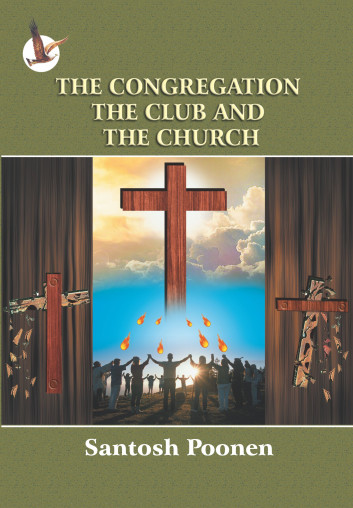
The Congregation, The Club and The Church

In order to help build God’s Church in your vicinity, you have to do things God’s way… the message above will help us understand the difference between a ‘church’ being a club, congregation or a church that the Lord is building. This is a prophetic message for our times.

The book that accompanies this message can be read for free, click on the book (below) for access. It can also be purchased at the CFC bookshop here. The other book that compliments this, is “God’s Work Done in God’s Way” just like Jesus and apostles. There’s a proven testimony by Apostle and Brother Zac Poonen of how this has already been done in our time!

There are many other wonderful free resources at the CFC site and here, that will truly bless you, as they have many around the world.

image description

God Does Not Want Our Offerings, But Our Body as a Living Sacrifice

“May we first learn to sit at His feet and listen, and nurture a pure and simple devotion unto Him… may He lead us in all our ways, never leaning on our own understand, but in all our ways acknowledging Him, so He can direct our paths…

In Hebrews 10:5, we read that “God doesn’t want our offerings.” I quote this verse to people who have suffered under preachers who have kept on telling them that God wants their offerings. What does it say here that God desires from us? – Our bodies. Under the old covenant, the emphasis was, “Pay your tithes to the Levites.” In the New Testament the emphasis is, “Give your bodies to God” (Rom.12:1). A church that is constantly asking its people to pay their tithes is an old-covenant church. A new-covenant church will emphasise presenting our bodies -our eyes, our hands, our tongues, etc.,- as a living sacrifice to God. It is not material offerings that God desires from us today, but our bodies.

Giving our bodies to God is the new-covenant equivalent of the old-covenant tithe – just like Christ dying on the cross is the equivalent of the old-covenant lamb sacrificed on the Passover day. Does this mean that we don’t have to give any money now for the work of God on earth? You may certainly give, but God wants only what you give cheerfully (2 Cor.9:7). In any case, He wants your body first of all. Those who give Him their bodies usually give Him everything else as well. But everything must be given cheerfully and joyfully.

When Jesus came into the world, He did not come to give tithes and material offerings to His Father (Hebrews 10:5). He came to give His body as a sacrifice. And He is the Mediator of the new covenant and taught us that what God wants from us, primarily, is our body.

Many give offerings of money and service to God. You may boast that you have distributed hundreds of tracts, or served as a missionary in some difficult area for many years, or prayed for a number of hours, or fasted for many days. These are all good offerings. But those offerings don’t have any value to God, if you still lust sexually with your eyes and still get angry. Then you haven’t given Him what He wants first of all – your body. Then God will say to you, “Forget about giving Me your sacrifices and your offerings. Give Me your eyes and your tongue first of all. I want your body.” Don’t substitute material offerings for your body. People who value the material offerings they have given to God are back in the old covenant. In the new covenant what God wants is your body. The book of Hebrews is one of the most important books in the Bible. If you want to live in the new covenant, study Hebrews.

Jesus never had a body when He was in heaven. When He came into this world the Father gave Him a body. What was He to do with that body? Was He to show His love for His Father by going to some difficult place like Africa as a missionary? Or was He to pray for 4 hours every day and fast twice a week? None of these. He says, “I have come (to earth), to do Your will O God – and not to make sacrifices” (Hebrews 10:7). This is what Jesus used His body for- and this is what we have to use our bodies for, as well. When we present our bodies to God, it is to do His will thereafter with every part of them- with our eyes, hands, tongues, passions, desires, etc., our only passion in life thereafter will be to do the will of God every day.


—————————————-

**Copyright – Zac Poonen. No changes whatsoever are to be made to the content of the article without written permission from the author: cfcindia.com / photo by Cottonbro at pixels

Don’t Despise Difficulty

One night, just before I went to bed, in my mind, I heard. “Don’t despise difficulty.”

In John 15:2 it says, “Every branch in Me that does NOT bear fruit, He takes away; and every branch that bears fruit, He prunes it…” Why does God do this? “… so that it (the branch-the Christian) may bear MORE fruit.
Vs.8 My Father is GLORIFIED by this, that you bear MUCH…fruit,.(not just a little, but MUCH fruit) and so prove to be My disciples.

To prune a tree, you must cut/remove specific branches or stems to BENEFIT the whole tree. The removal of dead, damaged diseased branches, HELP to PREVENT insect and decay organisms from entering the tree.

When God prunes me, ITS FOR MY BENEFIT! By the Holy Spirit He removes what is dead, damaged and diseased in my heart. When condescending words come from a co-worker, God can prune/cut off STEMS of pride, that are causing decay in your heart that says, how can you talk to me that way? I DESERVE RESPECT. IT’S FOR MY BENEFIT, when that big BILL comes. God can prune us to remove that disease of loving money, that UNREST you feel because your retirement fund has decreased.

God says, I’m pruning you, SO you CAN HAVE the BENEFIT of bearing MORE Fruit! Don’t despise the cuts, bear MUCH fruit! Fruit of the Holy Spirit (Gal. 5:22-23).

Much more love for one another (John 15:12) with people who are different than you, rejoicing ALWAYS, peace that surpasses understanding, an ABUNDANCE of patience DURING being tempted to be annoyed at someone, the law of kindness ALWAYS on your lips though you you’ve just been insulted, the goodness of God flowing out of your heart, faithfulness to God, the gentleness of Jesus to others, and dependence upon the Holy Spirit for self-control.

Do you want that? REALLY?

God is saying don’t despise the pruning, the cuts of difficulty. I’m doing great things in your life! And yes, you can enjoy a good meal, a nice trip and even good sleep, BUT that’s NOT the ABUNDANT life, God is calling us to! We SET ourselves up for discouragement, when we LIVE for ease, comfort and pleasure.
Jesus said, where your treasure is, there your heart will be also. Matt.6:19-21
We have to be careful NOT treasure our pleasure.

I also have to be careful what I call a BLESSING or a BENEFIT in my life.

I’m NOT COMPLETELY there yet, BUT I’m believing God WILL bring me to a place where I can ALWAYS see His pruning in my life, as an ABSOLUTE BENEFIT TO HIM! Not ONLY what benefits me. (2 Cor.5:9)

Just like we take our bags of fruit home from Safeway or farmers market. We enjoy eating the fruit. Can God do that too? When He walks out to the garden of my life, can HE partake of the Fruit of His Spirit? (Gal.5:22-23) Can He take each fruit, out of the bag and say Ah…humility? Another bite, Ah…love, ah…self-control? Another bite…ah patience, how good it is too eat of My children’s fruitful lives! If God does not prune me, I CANNOT give HIM that fruit! I cannot make Him go…Ah!

John 15:1 My Father is the vinedresser. He prunes, trains, and cultivates. If the fruit is NOT coming out of my branch, it’s possible I’m NOT abiding in the Vine, Jesus. Am I KEEPING His word? Am I dried up? Maybe you just got pruned. And you’re thinking, I got nothing man. PERFECT Vs. 5 Apart from Him, you CAN DO NOTHING! Realizing how INCAPABLE we are and how ABLE He is, will help us depend on Jesus, the Vine. His grace is sufficient (2 Cor.12: 9).

Before fruit appears/grows, it must go through a process of unseen nourishment from the vine.
So it is with fruit in my heart for God. Fruit will come as I get nourishment from the Vine/Jesus. That means I remain in His love and obey His word. Not copying and pasting on the fruit of the Spirit with some dead work, selfish motive. No, if I keep/obey His word, I can prove to God in MY HEART, I’m a DISCIPLE of Jesus. Not prove to others, BUT to God first, who sees and knows all, in the deep secrets of my thoughts and desires. To prove my devotion and allegiance to Him IN the difficulty. (John 15:8) Then the fruit can grow and be GENUINE.

If we look at Luke 14:25-33, we can see some ways our devotion and allegiances WILL be tested as a disciple of Jesus. My love for GOD should be MUCH greater in comparison to my love for others and for myself. So much so, that my love for others and for myself, LOOKS like hate. This is tested in the CLOSEST relationships. Father, mother, wife, children, siblings and even our own life (vs.26). All these relationships can have disagreements. And when you have a strong disagreement, you can have difficulty.

Jesus said in the very next verse, 27 “Whoever does not carry his own cross and come after Me cannot be My disciple.”
We face a choice to pick up our own INNER cross. We can decide to please others, please ourselves OR please Jesus. When we chose to please Jesus, it will cost us. It may cost us a “silent” treatment, disrespect, misunderstanding, others being angry with us and maybe even left alone or cut off. Yes, this can even happen in our OWN homes. (Luke 12:51-53).

In Phil. 2:1-11 We see the glory of Jesus, how He carried His cross. He humbled Himself His entire life, even to the point of death. Even in His own home, at least for a time, His brothers were not believing in Him ( John 7:5 ). They lived with Jesus and never saw Him sin even once! Yet they still mocked Him.
In Mark 3:21 says, “When His own people ( kinsmen-blood relatives ), heard of this, they went out to take custody of Him; for they were saying, “He has lost His senses.” In other words, Jesus’ own family called Him crazy! These are just a few examples of what we can face if we live by Jesus’ standards. Jesus Himself said in:
Matt.10: 34 “Do not think that I came to bring peace on the earth; I did not come to bring peace, but a sword. 35 For I came to set a man against his father, and a daughter against her mother, and a daughter-in-law against her mother-in-law; 36 and a man’s enemies will be the members of his household. 37 “He who loves father or mother more than Me is not worthy of Me; and he who loves son or daughter more than Me is not worthy of Me.38 And he who does not take his cross and follow after Me is not worthy of Me. 39 He who has found his life will lose it, and he who has lost his life for My sake will find it.

Maybe it’s Jesus’ standard against the finances between you and your spouse. Maybe it’s Jesus’ standard in your wedding plans against your family’s standards for your wedding plans. Maybe it’s deciding what church to go to or continue to go to. Or even different opinions and thoughts about ministry in the church. Yes, even there we can find Jesus’ dividing sword of discipleship. If I can’t have a humble attitude and pick up my INNER cross IN my home, I certainly won’t be able to do it in God’s church.

God knows in these relationships we WILL be tested. We CAN carry our own cross, when we love Jesus MORE than our own families and our own life. And in so doing, we actually love them better. Whether others say so or not. If that happens because we’ve chosen to obey God, not man, He will honor us ( 1 Sam.2:30 ). And that is greater than ANY honor we can receive!

Jesus sums it up in Vs.33 “So then, none of you can be My disciple who does not give up all his own possessions.”
If we are holding onto these relationships at the cost of lowering Jesus’ standards to follow what they say, we cannot be His disciple.
Being a follower of Jesus, is not a matter of how many times we’ve read, studied or memorized the Bible. Not a matter of how many times we went to church, shared the word, gave a testimony, prayed or helped people. Yes, amen, we should do these things BUT it’s NOT what qualifies me to be a disciple of Jesus.

Though God may prune me in these relationships, I don’t have to fear
God DOESN’T prune us to be mean. John 15:4-10 says, He does this so we can remain in His love. And when we keep His word, that’s what happens. We remain in His love. He stays close to us and we to Him. And I NEVER lose out, though the pruning HURT.
We see in verse 11 Jesus asked, why have I said these things to you? To discourage you? No. I HAVE SAID THIS TO YOU, SO I CAN…. GIVE you MY JOY TO THE FULLEST!!!!

So, I’m believing God, that when I face difficulty and I’m getting pruned, I can ACTUALLY look forward to some Promises!
John 15: 8 When I bear fruit of the Holy Spirit, I WILL give Him glory. Verse 10 If I obey His word, I WILL abide in His love like Jesus did. And verse 11 When I do these things, I WILL get Jesus’ JOY…. to the FULLEST!
The Lord is so generous, He gives us His joy too when we are faithful to Him in difficulty.

If you are IN a tough spot now, remain in His love. Obey His word and believe God WILL fulfill His promises, even IN your difficulty!

——————————————————

**By Paul Moore © Copyright – Paul Moore. No changes whatsoever are to be made to the content of the article without written permission from the author. https://nccf.com/ 

Picture by Pixabay at pexels