7 Firsts for Women in the Bible and Their Roles

During the time of Jesus, women in society were often marginalized and excluded from positions of authority or prominence. In many cultures, their testimonies were not considered reliable in legal matters, and their roles were largely confined to domestic spaces. Social and religious norms discouraged interactions between men and women outside their families, further isolating them from the public and spiritual spheres.

Yet, Jesus stood in stark contrast to these norms. He consistently demonstrated love, respect, and trust for women, engaging them in ways that were revolutionary for His time. Not only did He elevate their status by including them in His ministry, but He also entrusted them with vital roles that shaped the course of salvation history.

Below, we explore seven significant “firsts” for women in the Bible, highlighting their profound contributions as witnesses and messengers of the Good News—and the timeless lessons they offer for stepping boldly into new beginnings.

1. The First Evangelist: The Samaritan Woman at the Well

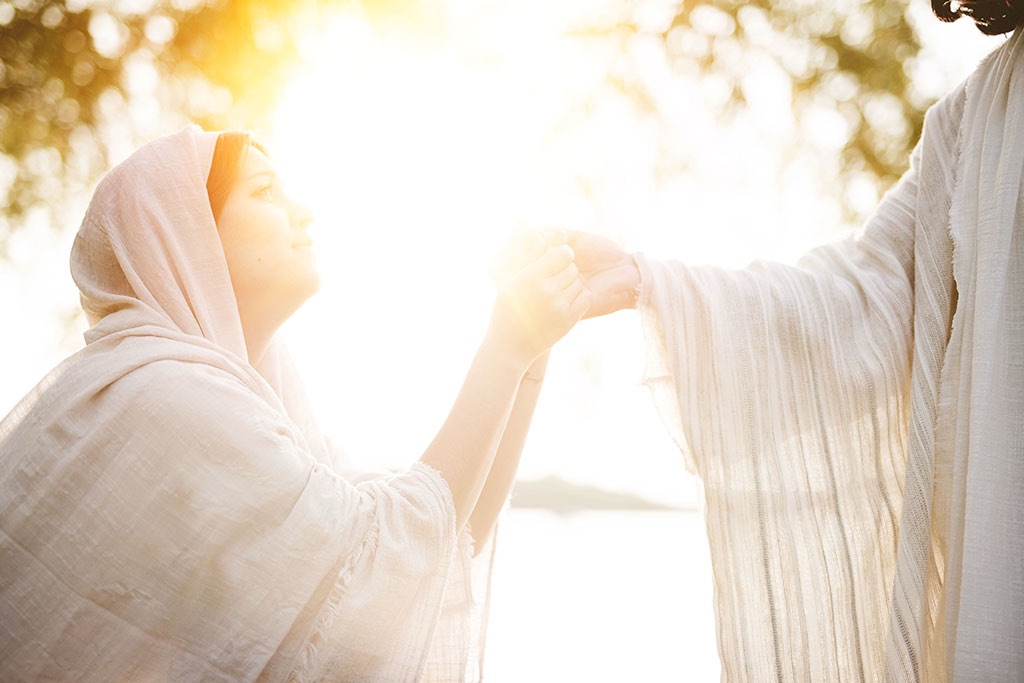
At Jacob’s well, Jesus spoke with a Samaritan woman, breaking societal and gender barriers (John 4:1–26). In this encounter, He revealed Himself as the Messiah, and her heart was forever changed. She became the first evangelist in the New Testament, sharing the news with her town and inspiring many to believe. Her story reminds us that each new day carries the potential for transformation—one conversation, one courageous step, or one act of faith can spark a ripple effect that changes the lives of those around us.

2. The First Witness of the Resurrection: Mary Magdalene

Mary Magdalene was the first person to see the risen Jesus (John 20:11–18). She encountered Him at the empty tomb, initially mistaking Him for the gardener. When Jesus called her by name, she recognized Him, and He entrusted her with the message of His resurrection. Her story reminds us that no matter where we are starting from, we are called to witness and share life-changing truths. Every beginning, no matter how uncertain, holds the potential to inspire others.

3. The First to Anoint Jesus for His Burial: Mary of Bethany

Mary of Bethany anointed Jesus’ feet with costly perfume, a prophetic act of devotion (John 12:1–8; Mark 14:6, 9). Jesus affirmed that her gesture would be remembered wherever the Gospel is preached. Mary’s actions teach us that intentional acts of faith, love, and service mark new beginnings with purpose. Each day offers a chance to leave a meaningful impact through devotion and thoughtful action.

4. The First Woman Healed Publicly: Peter’s Mother-in-Law

Peter’s mother-in-law was healed from a fever by Jesus (Matthew 8:14–15). Immediately following her restoration, she served Him and others, demonstrating how healing and empowerment go hand in hand. Her example reminds us that each fresh start can be met with action. Transformation—whether physical, emotional, or spiritual—is meant to inspire us to serve and make a difference in the lives of others.

5. The First Financial Supporters of Jesus: Women of Means

Women such as Mary Magdalene, Joanna, and Susanna played a vital role in supporting Jesus’ ministry (Luke 8:1–3). Their generosity ensured His mission could continue, reflecting faith in action. Their story encourages us to invest our resources—time, energy, and talents—into things that advance God’s work. Every new beginning is an opportunity to give in ways that create lasting impact.

6. The First to Hear of His Birth: Mary, the Mother of Jesus

Mary, the mother of Jesus, was the first to hear the angel Gabriel’s announcement of His birth (Luke 1:26–38). Her immediate response, “I am the Lord’s servant,” reflects remarkable faith and willingness to embrace God’s plan. Mary’s courage teaches us that accepting God’s call requires trust, even when the future is unknown. Each new chapter in life is a chance to step forward in obedience and confidence, trusting that God’s plan unfolds perfectly.

7. The First Gentile Woman Praised for Her Faith: The Syrophoenician Woman

In Matthew 15:21–28, a Syrophoenician woman approached Jesus seeking healing for her daughter. Her persistence and unwavering faith impressed Him, and He praised her: “Woman, you have great faith!” Her story reminds us that persistence and boldness in faith open doors to new opportunities. Every beginning carries challenges, but perseverance and trust can lead to extraordinary outcomes.

Jesus’ interactions with women consistently challenged cultural norms, emphasizing their faith, courage, and indispensable role in His mission. From the Samaritan woman who became the first evangelist to Mary Magdalene, the first witness of the resurrection, women were central to the story of salvation. Their lives inspire all believers to embrace God’s call, step boldly into their purpose, and recognize the transformative impact of faith, service, and courage—no matter what new beginnings lie ahead.

These seven “firsts” in the Bible remind us that God values courage, faith, and devotion, often entrusting ordinary individuals with extraordinary roles. The women highlighted here embraced their callings with boldness, obedience, and trust, leaving a lasting impact on the story of salvation. Their lives inspire us to step confidently into new beginnings, to serve with purpose, and to trust that every act of faith—no matter how small—can shape the world around us. Just as these women became witnesses, messengers, and pillars of God’s plan, we too are invited to live boldly, embrace our calling, and make each new day an opportunity for transformation and hope.


The Magnificence of Christ Our Savior and Soon-Coming King

The Magnificence of Christ Our Savior and Soon-Coming King

The story of Jesus Christ is the centerpiece of human history. His birth, life, death, resurrection, and promised return encapsulate the glory of God’s redemptive plan. Jesus, whose name means “The Lord saves,” is also called Emmanuel, meaning “God with us” (Matthew 1:21-23). His magnificence is proclaimed not only by heavenly hosts but also by humble shepherds, learned Magi, devout prophets, and even the unborn John the Baptist, pointing to His divine mission to save humanity from sin and reconcile us to God.

The Prophecies of the Messiah

Long before His earthly arrival, the coming of the Messiah was foretold by the prophets. These prophecies reveal the grandeur of His identity and mission:

  1. His Virgin Birth:
    Isaiah prophesied that the Messiah would be born of a virgin, signifying a divine and miraculous conception:
    “The virgin will conceive and give birth to a son, and will call him Emmanuel” (Isaiah 7:14).
  2. His Identity and Mission:
    Isaiah described the Messiah as both a mighty ruler and a source of eternal peace:
    “For to us a child is born, to us a son is given, and the government will be on his shoulders. And he will be called Wonderful Counselor, Mighty God, Everlasting Father, Prince of Peace” (Isaiah 9:6).
  3. His Eternal Kingship:
    The prophet Daniel foretold that the Messiah’s kingdom would never end:
    “His dominion is an everlasting dominion that will not pass away, and his kingdom is one that will never be destroyed” (Daniel 7:14).
  4. The Place of His Birth:
    Micah foretold that the Messiah would be born in Bethlehem:
    “But you, Bethlehem Ephrathah, though you are small among the clans of Judah, out of you will come for me one who will be ruler over Israel, whose origins are from of old, from ancient times” (Micah 5:2).

The Announcements of His Birth

The fulfillment of these prophecies was marked by divine announcements and extraordinary events.

To Mary

The angel Gabriel appeared to Mary, a humble young woman in Nazareth, and declared:
“Do not be afraid, Mary; you have found favor with God. You will conceive and give birth to a son, and you are to call him Jesus. He will be great and will be called the Son of the Most High. The Lord God will give him the throne of his father David, and he will reign over Jacob’s descendants forever; his kingdom will never end” (Luke 1:30-33).

Mary, in awe, humbly accepted God’s will, saying:
“I am the Lord’s servant. May your word to me be fulfilled” (Luke 1:38).

To Joseph

Joseph, initially troubled upon learning of Mary’s pregnancy, was reassured by an angel in a dream:
“Joseph son of David, do not be afraid to take Mary home as your wife, because what is conceived in her is from the Holy Spirit. She will give birth to a son, and you are to give him the name Jesus, because he will save his people from their sins” (Matthew 1:20-21).

The Joy of Elizabeth and Unborn John

After receiving the angel Gabriel’s announcement, Mary went to visit her relative Elizabeth, who was miraculously pregnant with John the Baptist in her old age. As soon as Mary greeted Elizabeth, an extraordinary event occurred:

“When Elizabeth heard Mary’s greeting, the baby leaped in her womb, and Elizabeth was filled with the Holy Spirit. In a loud voice, she exclaimed: ‘Blessed are you among women, and blessed is the child you will bear! But why am I so favored, that the mother of my Lord should come to me? As soon as the sound of your greeting reached my ears, the baby in my womb leaped for joy’” (Luke 1:41-44).

This moment underscores Jesus’s divine nature even as an unborn child. John, filled with the Holy Spirit even in the womb, recognized and rejoiced in the presence of the Savior.

The Birth of the Savior

The birth of Jesus was marked by simplicity and splendor. Born in Bethlehem, He was laid in a manger because there was no room for them in the inn. This humble setting did not diminish His magnificence but instead highlighted His mission to bring salvation to all people, from the lowliest to the greatest.

The Celebration of His Birth

The Shepherds – The First Witnesses

On the night of Jesus’s birth, shepherds in the fields outside Bethlehem became the first to hear the good news. An angel of the Lord appeared to them, proclaiming:
“Do not be afraid. I bring you good news that will cause great joy for all the people. Today in the town of David a Savior has been born to you; he is the Messiah, the Lord. This will be a sign to you: You will find a baby wrapped in cloths and lying in a manger” (Luke 2:10-12).

Suddenly, a multitude of heavenly hosts praised God, saying:
“Glory to God in the highest heaven, and on earth peace to those on whom his favor rests” (Luke 2:14).

The shepherds, filled with wonder, hurried to Bethlehem. Finding Mary, Joseph, and the baby as the angel described, they became the first earthly witnesses to proclaim His arrival:
“When they had seen him, they spread the word concerning what had been told them about this child, and all who heard it were amazed” (Luke 2:17-18).

The Magi – Honored Guests from the East

Some time later, wise men (Magi) from the East arrived in Jerusalem, guided by a miraculous star. They asked:
“Where is the one who has been born king of the Jews? We saw his star when it rose and have come to worship him” (Matthew 2:2).

Herod, troubled by their inquiry, sought to use the Magi to locate Jesus for sinister purposes. But the star led the Magi to Bethlehem, where they found Jesus. They worshiped Him and offered gifts of gold, frankincense, and myrrh—symbols of His kingship, divinity, and sacrificial death (Matthew 2:11).

Warned in a dream not to return to Herod, the Magi departed another way, protecting the child from harm.

Simeon and Anna’s Testimonies

When Mary and Joseph brought Jesus to the temple for consecration, Simeon, a devout man awaiting the Messiah, took the child in his arms and praised God:
“Sovereign Lord, as you have promised, you may now dismiss your servant in peace. For my eyes have seen your salvation, which you have prepared in the sight of all nations: a light for revelation to the Gentiles, and the glory of your people Israel” (Luke 2:29-32).

The prophetess Anna, who worshiped in the temple day and night, also recognized Jesus as the Redeemer. She gave thanks to God and spoke about Him to all who were awaiting the redemption of Jerusalem (Luke 2:36-38).

Jesus: The Savior and Soon-Coming King

The magnificence of Jesus extends far beyond His birth. He lived a sinless life, taught with divine authority, performed miracles, and ultimately gave His life as a ransom for many (Mark 10:45). Through His death and resurrection, He conquered sin and death, offering eternal life to all who believe in Him:
“For God so loved the world that he gave his one and only Son, that whoever believes in him shall not perish but have eternal life” (John 3:16).

As we celebrate His birth, we also look forward to His glorious return, when He will reign as King of Kings and Lord of Lords:
“Look, he is coming with the clouds, and every eye will see him” (Revelation 1:7).

Conclusion

The birth of Jesus Christ is a cause for joy and celebration. His arrival fulfilled ancient prophecies, was heralded by angels, acknowledged by shepherds, worshiped by wise men, and even celebrated by John the Baptist in the womb. He is Emmanuel, God with us, who came to save His people from their sins and bring light to the world.

As we await His return, let us proclaim with the heavenly hosts:
“Glory to God in the highest heaven, and on earth peace to those on whom his favor rests” (Luke 2:14).

———————

**Photo by Krivec Ales at Pexels

The Story of The Birdcage

“For our struggle is not against flesh and blood [contending only with physical opponents], but against the rulers, against the powers, against the world forces of this [present] darkness, against the spiritual forces of wickedness in the heavenly (supernatural) places.” ~ Ephesians 6:12

In the 1800s, an old Baptist pastor was preparing his Sunday sermon on a Saturday afternoon. After several hours of study, he grew tired and went for a walk to stretch his legs. While wandering through town, he saw a young boy carrying a birdcage in one hand and a stick in the other. Inside the cage were a dozen little field birds. The boy was jabbing the birds through the bars with the stick. The birds shrieked, feathers flew, and the boy laughed.

The pastor approached the boy and asked, “Son, why are you tormenting those birds?”

The boy replied, “Sir, I love to hear them shriek. I love to see their feathers fly. It is so much fun.”

“What will you do when you are finished having your fun?” the pastor asked.

The boy smiled broadly. “Oh sir, that’s the best part. I will bring them home, take them out of the cage one by one, pluck their feathers, and feed them to my cat.”

The pastor’s heart was broken. “Son, let me have those birds,” he said.

“No, these are my birds. I caught them myself. You can get your own birds. You can catch some in the field.”

“But I want those birds.”

“Why? They don’t even sing. They aren’t canaries, you know. They are just ordinary field birds.”

“Please, son. I’ll buy them from you. How much do you want?”

The pastor took out his wallet and opened it up. The boy saw an opportunity. “How much money do you have, sir?”

The pastor counted two hundred dollars, which was a significant amount of money in those days. “What a coincidence,” the boy said. “They cost exactly two hundred dollars, cage included.”

Knowing he was being taken advantage of, the pastor handed over all his money. The next day, he recounted this story to his congregation. He said, “I took that cage out into the field, opened the door, and backed away. One by one, the birds hopped to the open door. One by one, they spread their wings and began to fly. As they flew to freedom, they sang the same song: ‘Redeemed, Redeemed, Redeemed.’”

The Message of Redemption

You might wonder, what does this story have to do with us? The tale of the birdcage mirrors our relationship with God. Just as the birds were tormented by the boy, we too can feel trapped, harassed, and tormented by the enemy—Satan, who delights in our suffering and captivity to sin, addiction, and depression. The enemy Satan uses people who are willing to do his bidding. The Lord said he was a liar and murderer from the beginning, who comes to kill, steal, and destroy everything good in people’s lives. People are being tormented by the enemy and are hurting by present methods used to oppress the people. Satan torments with feelings of hopelessness, worthlessness, fear, depression, and suicidal thoughts.

The old Baptist pastor symbolizes God, who intervenes to set us free. Just as the pastor bought the birds at a great cost, God paid the ultimate price for our freedom through Jesus Christ. Jesus came to set the captives free and to break the chains that bind us, whether they are chains of sin, addiction, or despair.

When the pastor let the birds go, they flew away one by one, just like how God sets us free from being trapped by the things of this world and sin. The birds’ joyful song of “Redeemed, Redeemed, Redeemed” illustrates the happiness and freedom we feel when we accept God’s rescue—His redemption through Jesus Christ. This story beautifully shows how God’s love and grace change us, freeing us from sin’s chains so we can live freely and praise Him.

Understanding Our Condition

All of us have done wrong and fallen short of God’s standards. Sin is not just about major wrongdoings but also includes knowing what is right and failing to do it. It encompasses acts like lying, stealing, unforgiveness, hatred, jealousy, anger, sexual immorality, idolatry, addictions, pornography, drugs, and wanting to live separately from God. These wrongdoings separate us from a holy and righteous God.

God judges the heart, including our thoughts, words, deeds, and motives. While people can pretend to have a holy exterior and act pious, God sees through our facades and knows our true nature. It’s not about religion, where you have to do things to be accepted by God. It’s about a relationship with God who is near and accessible. Our good works cannot save us; they are like filthy rags in comparison to God’s purity, you cannot buy salvation. The Bible states that the wages of sin is death—eternal separation from God in hell, a fate none of us would wish upon anyone.

The Sacrifice of Jesus

Jesus Christ paid the price for our sins on the cross so we can be restored to God, our heavenly Father. There needed to be a sacrifice, and God so loved the world that He gave His only begotten Son, Jesus, who was sinless, to take our place. It’s like a mother giving away her newborn baby or you giving away your only child to pay someone else’s debt, someone who couldn’t care less about you or love you back. God was willing to do that for you and me.

Jesus Christ was crucified, with nails driven through His hands and feet and a crown of thorns pressed onto His head. He was whipped until His skin was torn off, becoming unrecognizable. As He hung on that cross, He did it for your sins. He took our sins upon Himself, including the very sins that have destroyed our lives. He was destroyed for those sins on that cross. He bled and died for our sins, which were buried with Him in the grave. Three days later, Jesus Christ was raised from the dead. Jesus is alive!

The Call to Salvation

This message is for everyone. Regardless of your wealth, status, sexual orientation or religious background, Jesus invites you to turn from sin and accept His gift of salvation. No amount of money, social standing, or religious observance can save you. It’s not about comparing yourself to others; the only comparison that matters is with God, and we all fall short, we all have sinned. God doesn’t want our religion; He wants a relationship with us. We are created with a God-shaped vacuum that nothing else can fill. He said, “I am the light of the world. Whoever follows me will never walk in darkness but will have the light of life.”

A Prayer of Salvation

If you feel the call in your heart, don’t wait. Embrace this good news today and pray:

Remember, it’s not the prayer that saves you; it’s the heartfelt belief and confession, turning away from sin, and choosing to trust in Jesus for a righteous life. Now is the time for salvation. Turn from darkness to light, from sin to salvation, and follow Jesus.


What Next?

Download the free guide on the 7 Things To Do After Getting Saved:


Photo by Kai-Chieh Chan at Pexels

Why It Is Important to Reflect on the True Meaning of Christmas

In a world where consumerism, materialism, and gluttony are pervasive, it seems that every day is treated as an opportunity to indulge, and holidays like Christmas have become occasions of excess rather than moments of gratitude. Yet, in the hustle of buying the latest gadgets, preparing lavish meals, and creating elaborate decorations, the deeper meaning of these celebrations risks being overshadowed. As Christians, we are reminded that Christmas is not just another day of festivity or an excuse for indulgence—it is a sacred time to give thanks and reflect on the greatest gift humanity has ever received: Jesus Christ.

The Reason for the Season

The world may often overlook the significance of Christmas, reducing it to commercial exchanges, but for believers, Christmas is a time to honor the birth of Jesus, God’s ultimate gift to the world. This is not just a day to exchange gifts, but a time to remember the immense love that God showed by sending His only son to save a broken world. John 3:16 states: “For God so loved the world that He gave His only begotten Son, that whoever believes in Him should not perish but have everlasting life.” This verse beautifully encapsulates the core of what Christmas represents—God’s gift of salvation, freely given to all who would receive it.

The Problem of Consumerism and Gluttony

It is no secret that, particularly during the holiday season, we see an increase in spending, overindulgence, and sometimes even stress as people attempt to create a “perfect” Christmas. From overspending on presents to overloading on food, the season can easily become a frenzy of excess, often leaving people feeling more drained than fulfilled. Instead of bringing joy and peace, it often creates anxiety, debt, and dissatisfaction.

What was meant to be a time of reflection and gratitude has, for many, morphed into a pressure-cooker of social expectations. This is in stark contrast to the simple, yet profound, reason for Christmas: the birth of Christ, who came to give us eternal life, not fleeting material possessions.

A Call to Give Thanks and Return to the Heart of Christmas

Christmas should remind us of the importance of gratitude, not just for earthly blessings but for the eternal gift of salvation through Jesus. Romans 6:23 says, “For the wages of sin is death, but the gift of God is eternal life through Jesus Christ our Lord.” This gift is freely offered to all of us. It is not something we can buy, nor something we deserve, but a testament to God’s infinite love for us.

Instead of focusing on the material aspects of the season, we are invited to reflect on Jesus’s life, His teachings, and most importantly, His sacrifice. As Christians, we are called to celebrate Christmas by remembering why Jesus came to this earth—to pay the price for our sins and offer us the gift of eternal life. This is the heart of the holiday, the reason behind all the joy, lights, and music. Without Christ, there would be no Christmas.

The Greatest Gift of All

The poem “The Greatest Gift” beautifully highlights the core message of the gospel: God’s love for us was so great that He sent His son to die in our place, offering us salvation and eternal life. This is the greatest gift the world has ever known—far more valuable than any material possession we might receive during the holiday season. It is a gift that cannot be earned, only accepted, through faith in Christ.

To receive this gift, we are invited to trust Jesus as our Savior and call upon His name. Through repentance and belief, we are born again, and our sins are forgiven, as Jesus already paid the price on the cross. This is the good news we celebrate during Christmas—a reminder that no matter how flawed or unworthy we may feel, God’s love for us is boundless.

Bringing the Focus Back to Christ

As the holiday season approaches, let us challenge ourselves to return to the true meaning of Christmas. Yes, it is a time for gathering with loved ones, enjoying good food, and exchanging gifts—but most importantly, it is a time to reflect on the immeasurable love of God shown through the birth of Jesus. Rather than getting lost in the distractions of consumerism and excess, we can choose to celebrate Christmas with a heart of gratitude, worship, and remembrance of God’s eternal gift.

In a world that constantly encourages us to seek more, Christmas reminds us that we have already been given the greatest gift—Jesus. Let us remember that Jesus is the reason for the season, and let that truth shape how we celebrate.

John 3:16: “For God so loved the world that He gave His only begotten Son, that whoever believes in Him should not perish but have everlasting life.”

——————

*** Photo by George Dolgikh by Pexels

A Mass Prayer for Nations, Leaders, and Peace

 “If My people who are called by My name will humble themselves, and pray and seek My face, and turn from their wicked ways, then I will hear from heaven, and will forgive their sin and heal their land.” ~ 2 Chronicles 7:14 NKJV

As believers, we are called to intercede for our leaders, nations, and for peace, especially in Jerusalem. In times of uncertainty and need, communal prayer is a powerful way to ask God to bring change, guidance, and healing. Below is a structured prayer for anyone who wishes to lift up these petitions over a community, a nation, or even the entire world.

Heavenly Father,

We come before You with humble hearts, united as Your people. You are the Almighty God, Creator of Heaven and Earth, and we honor You, acknowledging Your sovereign power over all nations. We gather in Your holy presence, seeking Your guidance, love, and protection over all people and lands.

Lord, we worship You

For You are good, and Your mercy endures forever. You are the King of Kings and the Lord of Lords, worthy of all honor and glory. We lift Your name high above all the earth, praising You for Your greatness, Your compassion, and Your mighty works.

Thank You, Lord,

For the blessings You have poured out upon us and our nations. You have sustained us through every season, and Your provision and protection have been unwavering. We are grateful for Your faithfulness, for hearing our prayers, and for Your unending love that guides us.

Forgive us, Lord,

For any ways we have strayed from Your will. We confess any sins of our nations, communities, and ourselves. We ask for Your cleansing, renewing us and bringing us back into alignment with Your ways. As we turn to You, we seek Your mercy and forgiveness, knowing that You are a gracious and compassionate God.

Father, we intercede for the leaders of every nation,

Grant them wisdom, courage, and integrity as they make decisions that impact millions. May they lead with righteousness, justice, and compassion, promoting peace and unity. Let Your justice prevail in all nations, and let truth and fairness guide every action and law.

We pray for peace among all people, especially in Jerusalem.

You have asked us to pray for its peace, and we humbly lift this city and its people to You. Bring harmony and understanding to regions marked by conflict, and heal the divisions that have separated us. Surround every nation with Your protection, Lord, shielding the innocent and vulnerable from harm.

Lord, we ask for a spiritual awakening across the world.

Pour out Your Spirit on every land and community, that hearts may turn toward You. Bring about a revival in faith, hope, and love, so that we may see Your Kingdom come and Your will be done on earth as it is in heaven.

As Your Word declares,

“If my people, who are called by my name, will humble themselves and pray and seek my face and turn from their wicked ways, then I will hear from heaven, and I will forgive their sin and will heal their land” (2 Chronicles 7:14). We stand on this promise, believing that as we humble ourselves, You will hear and bring healing and restoration.

Lord, we also pray for specific needs among the nations:

For those suffering from poverty and hunger, may You provide. For those impacted by natural disasters, may You bring comfort and relief. For the sick, may You bring healing, and for those who mourn, may You bring peace.

We trust in You, Lord,

Believing that You can do exceedingly and abundantly more than we ask or imagine. We thank You for hearing our prayers and for the answers that are already on the way. May Your will be done, Lord, and may Your name be glorified in all nations.

In Jesus’ name, we pray. Amen 🙏

May this prayer bring unity and strength, inviting God’s presence, protection, and guidance over all people and nations.

——————

** Photo by Hugo Magalhaes at Pexels