The Church needs the power and filling of the Holy Spirit
In the Old Testament, the Holy Spirit is pictured as oil. The oil made the lampstand burn in the tabernacle. The priests needed to make sure that the oil was always there.
You know that in the parable that Jesus spoke about his second coming, it was the lack of oil in the lamp that prevented some virgins from being ready. They were virgins. They were all virgins. It’s not five virgins and five harlots. All ten had a lamp that was burning. We know that all ten had lamps that were burning because when the bridegroom came at midnight what the foolish virgins said was: Our lamps are dying out. It’s not that they were never burning. External light speaks of what Jesus said: Let your light so shine before men that they may see your good works (your external works) and glorify your Father in heaven. Lamp speaks about our external testimony. Here are virgins that had a good external testimony like most people in the church. But among virgins with a good external testimony, five were not ready for the coming of Christ because they lacked something.
Five of them, in their garments, maybe in a pocket in their garments, they had a hidden flask of oil. That was the only difference. They had a hidden life which the other five didn’t have. That is what ensured that their lamps would still be burning when the bridegroom came. So what the Lord was emphasizing there was their hidden life before God.
External testimony does not necessarily make us ready for the coming of the Lord.
He answered and said to those five virgins in Matthew 25:12: “I do not know you” . What does that mean? It means “I do not have that intimate, personal relationship with you”.
Knowing is used in the Old Testament for the most intimate relationship in marriage. Adam knew his wife. It speaks of that close, intimate relationship between a husband and wife. Spiritually, it speaks of a close, intimate relationship with Jesus.
In secret and private, Adam knew his wife. Others knew their wives. It is always in private and secret. It is that secret of Jesus knowing me spiritually, very intimately. Jesus could say like: You did a lot of things for me but I didn’t know you intimately. You didn’t have an intimate walk with me in secret. So Jesus said: Be on the alert.
This light is also described in Revelation 1. He said: The lampstand is the church.
The ultimate goal of the Lord and of the Holy Spirit is to bring together a whole lot of people who are gripped by the challenge of this inner life and who want to have a vessel or flask full of oil and to bring them together and make them one in a church and not just as individuals who have an inner life. There were five wise virgins and they were meant to be one. This is a picture of a church. There were a number of people who had this inner life who were together ready for the coming of the Lord and that is God’s ultimate goal.
The ultimate goal of God in this day and age is to build a church. Not a bunch of holy individuals, even if they have an inner life, who float around but holy individuals who come together, five of them or ten of them, wise virgins with flasks of oil in their hidden life, who come together and are a corporate testimony for the Lord. The main thing that the Church needs is that flow of oil that keeps it burning all the time.
2 Corinthians 5:17~ “Therefore, if anyone is in Christ, he is a new creation; old things have passed away; behold, all things have become new.”
Our identity is our sense of self and our knowledge of who we are. When we are confident in our identity, we know who we are, what we believe, and why. We make decisions based on our personal values and belief system and surround ourselves with people who reinforce what we believe about ourselves.
As believers, our identity is found in Christ. We have value because He created us. We have purpose because we were created on purpose for a purpose. Our decisions are based on the Bible and the teachings of Jesus Christ.
The Link between Identity and Relationship
I have always maintained that true knowledge of God can only be accomplished when we know who God is. We are created in God’s image and were made to remain in a relationship with Him.
Before His crucifixion, Jesus told His followers: Abide in Me, and I in you. As the branch cannot bear fruit of itself, unless it abides in the vine, neither can you, unless you abide in Me (John 15:4 NKJV).
Jesus wanted His followers to make a deliberate choice to be present with Him. If you are choosing to remain in someone’s presence it means you desire to be in a relationship with them.
Your identity is impacted by the people you spend time with just as your identity influences the people you choose to spend time with.
7 Signs You May Be Losing Your Identity in Christ
Your personal devotion time has dwindled. As Christians, we need to spend time in the presence of our Heavenly Father. This is where we learn about who God is and build the foundation for our identity. When we sacrifice our alone time with God (for whatever reason), we put at risk the foundation on which we build our identity.
Your beliefs keep shifting. The world we live in is filled with many people who believe in many things. If we base our beliefs on what the world says, we will constantly be changing what we believe and how we feel about things. Our beliefs should be based on the Bible which is the infallible Word of God. God’s Word is true and it never changes. When you feel as though you are losing your identity in Christ, reach for God’s Word and find the truth you need.
You’ve lost your passion for Christ. When we first become believers, we are passionate about the Word, and work, of God. Unfortunately, this fervor doesn’t always last. This is why Jesus told the church of Ephesus: But I have this against you, that you have abandoned the love you had at first (Revelation 2:5 ESV). If we lose our love for God, what are we going to base our identity on?
You are constantly seeking approval and validation from the world or man. If you’re waiting for the world to approve you will wait for a very long time. Or if you do get the world’s approval, you will always be struggling to keep it. Let’s face it, the world’s standards change all the time. Do not base your self worth on what man thinks of you (the shallow emptiness of another mere mortal’s opinion) the only opinion that counts is God’s, He made you and didn’t make a mistake. You’re wonderfully made and one of a kind.
You talk mostly negative things to yourself. You know no one can criticize you the way you can. But if all you’re doing is talking down to yourself and saying negative things about you to you, you’re doing the devil’s work for him, and he too will be whispering negative things to you. Don’t be Satan’s handmaiden. You were bought with a price and you are special to God. He’s the one who gives you value and determines your worth.
You’ve lost your joy. In John 15:11, Jesus told His disciples: I have told you these things, that My joy and delight may be in you, and that your joy and gladness may be of full measure and complete and overflowing (AMP). When you can no longer find joy, especially in the things of God, you may be losing your identity in Christ.
You don’t have a sense of peace. One of the gifts of the Holy Spirit is a peace that surpasseth all understanding… the kind of peace that doesn’t make any sense because everything in your life is upside down, but you’re experiencing it anyway.
If you no longer feel this inner peace you may be losing your identity in Christ.
How to Regain Your Identity in Christ
When you realize you’ve lost, or are on the verge of, losing your identity in Christ, the devil will attack. He will tempt you to walk away from the faith or just give up. Here are some things you can do instead.
Do not give in to the enemy. Hell was never meant for God’s children. The everlasting fire was prepared specifically for the devil and his angels (Matthew 25:41). But Satan knows his time is short and he’s trying to get as many people in hell with him as he can. Refuse to be one of them.
Therefore submit to God. Resist the devil and he will flee from you (James 4:7 NKJV).
Read the Scriptures. The best way to remember who you are in Christ is to spend time reading and studying God’s Word. Maybe you won’t feel like doing an in-depth study, but you can read your favorites verses.
Listen to Scripture songs. Listening to scripturally-sound songs can encourage your heart when you feel like you’re losing your spiritual identity.
Spend time in nature. God is the Creator of everything on earth. Spend time appreciating what He has made and find connection with the sustainer of all life.
Serve in your community or local church. Service takes the focus off ourselves and puts it on others. When we serve others, we remember that Jesus was sent on earth to serve us and gave His life for us in the process.
Pray. Ask God to allow you to see His hand in your life. God is always working but we can’t always see Him because we’re not really paying attention. Ask Him to open your eyes so you can see the wonderful things He’s doing.
Listen to sermons. Sometimes, you just need someone to remind you who you are in Christ. Listen to your favorite pastor or search YouTube for videos on identity.
Reminisce. What was your life like before you were saved? If you grew up in the church, think about the person you were five years ago–how has God changed you?
Bible Verses on Identity and Purpose
Our purpose is intricately woven with our identity in Christ. Only when we know who we are will we begin to understand what God expects from us. Only then can we begin to think about and live our purpose.
As you ponder your identity in Christ, here are a few passages of Scripture to remind you of your identity and purpose.
In him we have obtained an inheritance, having been predestined according to the purpose of him who works all things according to the counsel of his will, (Ephesians 1:11 ESV).
For I know the plans I have for you, declares the Lord, plans for welfare and not for evil, to give you a future and a hope (Jeremiah 29:11 ESV).
But you are a chosen race, a royal priesthood, a holy nation, a people for his own possession, that you may proclaim the excellencies of him who called you out of darkness into his marvelous light (1 Peter 2:9 ESV).
Therefore, if anyone is in Christ, he is a new creation. The old has passed away; behold, the new has come (2 Corinthians 5:17 ESV).
I have been crucified with Christ. It is no longer I who live, but Christ who lives in me. And the life I now live in the flesh I live by faith in the Son of God, who loved me and gave himself for me (Galatians 2:20 ESV).
For we are his workmanship, created in Christ Jesus for good works, which God prepared beforehand, that we should walk in them (Ephesians 2:10 ESV).
I am the vine; you are the branches. Whoever abides in me and I in him, he it is that bears much fruit, for apart from me you can do nothing (John 15:5 ESV).
Therefore, we are ambassadors for Christ, God making his appeal through us. We implore you on behalf of Christ, be reconciled to God (2 Corinthians 5:20 ESV).
Oh come, let us worship and bow down; let us kneel before the Lord, our Maker! For he is our God, and we are the people of his pasture, and the sheep of his hand (Psalm 95:6-7 ESV).
Whatever you do, work heartily, as for the Lord and not for men, knowing that from the Lord you will receive the inheritance as your reward. You are serving the Lord Christ (Colossians 3:23-24 ESV).
When you feel as though you’re losing your identity in Christ it can be a scary thing. The key to not fully losing your identity is to remind yourself what God says about you and to take steps to stop the drift.
Jesus is and what He did. Studying His life in the Scriptures is a great place to start. Also there’s free study exposition called, “All Jesus taught” by Brother Zac Poonen that’s been a great blessing to many:
————
**By Aminata Coote -Hebrews12Endurance.com / Photo by pixabay
All of us come across others’ who say things so well that there is simply nothing left to add. Nancy DeMoss Wolgemuth created just such a piece in the form of a bookmark which you can download here, from her series Brokenness: The Heart God Revives
Proud people focus on the failures of others. Broken people are overwhelmed with a sense of their own spiritual need.
Proud people have a critical, fault-finding spirit; they look at everyone else’s faults with a microscope but their own with a telescope. Broken people are compassionate; they can forgive much because they know how much they have been forgiven.
Proud people are self-righteous; they look down on others. Broken people esteem all others better than themselves.
Proud people have an independent, self-sufficient spirit. Broken people have a dependent spirit; they recognize their need for others.
Proud people have to prove that they are right. Broken people are willing to yield the right to be right.
Proud people claim rights; they have a demanding spirit. Broken people yield their rights; they have a meek spirit.
Proud people are self-protective of their time, their rights, and their reputation. Broken people are self-denying.
Proud people desire to be served. Broken people are motivated to serve others.
Proud people desire to be a success. Broken people are motivated to be faithful and to make others a success.
Proud people desire self-advancement. Broken people desire to promote others.
Proud people have a drive to be recognized and appreciated. Broken people have a sense of their own unworthiness; they are thrilled that God would use them at all.
Proud people are wounded when others are promoted and they are overlooked. Broken people are eager for others to get the credit; they rejoice when others are lifted up.
Proud people have a subconscious feeling, “This ministry/church is privileged to have me and my gifts”; they think of what they can do for God. Broken people’s heart attitude is, “I don’t deserve to have a part in any ministry”; they know that they have nothing to offer God except the life of Jesus flowing through their broken lives.
Proud people feel confident in how much they know. Broken people are humbled by how very much they have to learn.
Proud people are self-conscious. Broken people are not concerned with self at all.
Proud people keep others at arms’ length. Broken people are willing to risk getting close to others and to take risks of loving intimately.
Proud people are quick to blame others. Broken people accept personal responsibility and can see where they are wrong in a situation.
Proud people are unapproachable or defensive when criticized. Broken people receive criticism with a humble, open spirit.
Proud people are concerned with being respectable, with what others think; they work to protect their own image and reputation. Broken people are concerned with being real; what matters to them is not what others think but what God knows; they are willing to die to their own reputation.
Proud people find it difficult to share their spiritual need with others. Broken people are willing to be open and transparent with others as God directs.
Proud people want to be sure that no one finds out when they have sinned; their instinct is to cover up. Broken people, once broken, don’t care who knows or who finds out; they are willing to be exposed because they have nothing to lose.
Proud people have a hard time saying, “I was wrong; will you please forgive me?” Broken people are quick to admit failure and to seek forgiveness when necessary.
Proud people tend to deal in generalities when confessing sin. Broken people are able to acknowledge specifics when confessing their sin.
Proud people are concerned about the consequences of their sin. Broken people are grieved over the cause, the root of their sin.
Proud people are remorseful over their sin, sorry that they got found out or caught. Broken people are truly, genuinely repentant over their sin, evidenced in the fact that they forsake that sin.
Proud people wait for the other to come and ask forgiveness when there is a misunderstanding or conflict in a relationship. Broken people take the initiative to be reconciled when there is misunderstanding or conflict in relationships; they race to the cross; they see if they can get there first, no matter how wrong the other may have been.
Proud people compare themselves with others and feel worthy of honor. Broken people compare themselves to the holiness of God and feel a desperate need for His mercy.
Proud people are blind to their true heart condition. Broken people walk in the light.
Proud people don’t think they have anything to repent of. Broken people realize they have need of a continual heart attitude of repentance.
Proud people don’t think they need revival, but they are sure that everyone else does. Broken people continually sense their need for a fresh encounter with God and for a fresh filling of His Holy Spirit.
—————-
**Article by Searching4Wisdom @ Biblical Perspectives on Narcissism.com / Photo by Pixabay
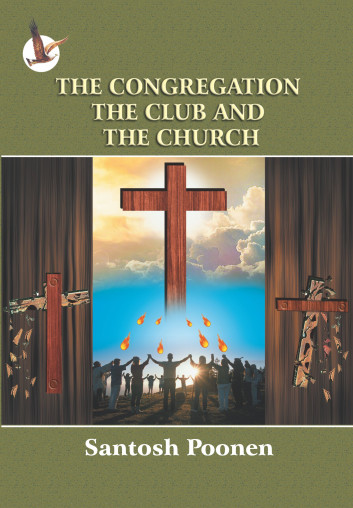
In order to help build God’s Church in your vicinity, you have to do things God’s way… the message above will help us understand the difference between a ‘church’ being a club, congregation or a church that the Lord is building. This is a prophetic message for our times.
The book that accompanies this message can be read for free, click on the book (below) for access. It can also be purchased at the CFC bookshop here. The other book that compliments this, is “God’s Work Done in God’s Way” just like Jesus and apostles. There’s a proven testimony by Apostle and Brother Zac Poonen of how this has already been done in our time!
There are many other wonderful free resources at the CFC site and here, that will truly bless you, as they have many around the world.
“May we first learn to sit at His feet and listen, and nurture a pure and simple devotion unto Him… may He lead us in all our ways, never leaning on our own understand, but in all our ways acknowledging Him, so He can direct our paths…
In Hebrews 10:5, we read that “God doesn’t want our offerings.” I quote this verse to people who have suffered under preachers who have kept on telling them that God wants their offerings. What does it say here that God desires from us? – Our bodies. Under the old covenant, the emphasis was, “Pay your tithes to the Levites.” In the New Testament the emphasis is, “Give your bodies to God” (Rom.12:1). A church that is constantly asking its people to pay their tithes is an old-covenant church. A new-covenant church will emphasise presenting our bodies -our eyes, our hands, our tongues, etc.,- as a living sacrifice to God. It is not material offerings that God desires from us today, but our bodies.
Giving our bodies to God is the new-covenant equivalent of the old-covenant tithe – just like Christ dying on the cross is the equivalent of the old-covenant lamb sacrificed on the Passover day. Does this mean that we don’t have to give any money now for the work of God on earth? You may certainly give, but God wants only what you give cheerfully (2 Cor.9:7). In any case, He wants your body first of all. Those who give Him their bodies usually give Him everything else as well. But everything must be given cheerfully and joyfully.
When Jesus came into the world, He did not come to give tithes and material offerings to His Father (Hebrews 10:5). He came to give His body as a sacrifice. And He is the Mediator of the new covenant and taught us that what God wants from us, primarily, is our body.
Many give offerings of money and service to God. You may boast that you have distributed hundreds of tracts, or served as a missionary in some difficult area for many years, or prayed for a number of hours, or fasted for many days. These are all good offerings. But those offerings don’t have any value to God, if you still lust sexually with your eyes and still get angry. Then you haven’t given Him what He wants first of all – your body. Then God will say to you, “Forget about giving Me your sacrifices and your offerings. Give Me your eyes and your tongue first of all. I want your body.” Don’t substitute material offerings for your body. People who value the material offerings they have given to God are back in the old covenant. In the new covenant what God wants is your body. The book of Hebrews is one of the most important books in the Bible. If you want to live in the new covenant, study Hebrews.
Jesus never had a body when He was in heaven. When He came into this world the Father gave Him a body. What was He to do with that body? Was He to show His love for His Father by going to some difficult place like Africa as a missionary? Or was He to pray for 4 hours every day and fast twice a week? None of these. He says, “I have come (to earth), to do Your will O God – and not to make sacrifices” (Hebrews 10:7). This is what Jesus used His body for- and this is what we have to use our bodies for, as well. When we present our bodies to God, it is to do His will thereafter with every part of them- with our eyes, hands, tongues, passions, desires, etc., our only passion in life thereafter will be to do the will of God every day.
—————————————-
**Copyright – Zac Poonen. No changes whatsoever are to be made to the content of the article without written permission from the author: cfcindia.com / photo by Cottonbro at pixels