The Silent Holocaust: Humanity Sacrificed in the Modern Age

Humanity is witnessing a horror so pervasive, so normalized, that it has become almost invisible — a silent holocaust consuming the most innocent among us. Every year, tens of millions of unborn children are terminated worldwide, their lives extinguished before they even draw their first breath. This is not a debate about choice; this is a confrontation with evil.

According to global data from multiple public health organizations, an estimated around 73 million induced abortions occur worldwide each year, translating to nearly 200,000 terminations every single day, and about 29% of all pregnancies globally end in abortion. Nearly three out of every five unintended pregnancies end in abortion.

In the United Kingdom alone, abortion numbers reached a record high in 2023, with nearly 300,000 pregnancies ending in abortion, marking continued increases across age groups year after year.

These numbers represent real human lives — not statistics. And yet, the world turns a blind eye, debating semantics while ignoring the massacre.

The Mechanism of Dehumanization — Then and Now

History has shown us how atrocities begin. In the 20th century, the Nazi regime systematically dehumanized entire populations, labeling them as less than human, creating a language and a mindset that justified systematic murder. Once a group is stripped of humanity in the collective mind, killing them becomes a moral non‑issue.

We are seeing the same linguistic and moral framework at work today. By referring to unborn children as “fetuses” or reducing them to abstract concepts — rather than acknowledging them as living, developing human beings — society creates the very moral distance needed to justify mass killing. This dehumanization is not a trivial matter; it is a spiritual and ethical failure on a massive scale.

It did not begin with Hitler. This evil, wickedness goes way back — to the Moloch worship of ancient times, when children were sacrificed on altars to appease false gods. Humanity has repeatedly turned away from God, offering the innocent as sacrifices in misguided devotion. Today, the same pattern repeats, clothed in legality and culture instead of pagan ritual, but the darkness is identical.

What Is Life?

What is it when a child is moments away from birth? Is it still a “fetus,” or is it an innocent human being, fully formed, fully alive, and utterly defenseless? Scripture is unambiguous: life begins in the womb. Psalm 139 declares that God knits us together even before birth. Jeremiah 1:5 says, “Before I formed you in the womb, I knew you.” Humanity is made in the image of God. To destroy that life is nothing less than moral and spiritual depravity.

Humanity is made in the image of God. Every man, woman, and child bears His divine imprint, endowed with intrinsic worth and purpose. To destroy that life is nothing less than moral and spiritual depravity. This is not merely about biology; it is about the sanctity of God’s creation. When we take life, we strike at the image of God Himself.

This is not a local problem. This is a global spiritual crisis. Governments, institutions, and even religious bodies have abandoned their duty to protect life. Leaders compromise morality for political expediency. Traditions are erased. The sanctity of life is reduced to a calculation, a convenience, a momentary whim. Across continents, unborn children are sacrificed on the altar of secular ideology, as generations watch in silence.

The Culture of Selfishness and Sexual Immorality

The holocaust of the unborn is fueled not only by law and ideology but by the moral decay of society itself. Selfishness reigns. Sexual immorality is celebrated. Marriage is mocked. Casual sex is normalized. Pornography is rampant. Society teaches people to gratify every desire without restraint, to seek pleasure above responsibility, and to discard consequences as irrelevant.

Children are conceived in the chaos of irresponsibility and abandoned to death, while culture tells parents, “It’s your choice; it’s your body.” The truth is that society has chosen convenience, comfort, and self-interest over morality and life itself. Pleasure has become an idol, and the eternal consequences of sin are ignored. This casual-sex culture, divorced from covenantal responsibility, feeds directly into the silent holocaust, ensuring that each generation grows more desensitized to human suffering.

Broader Societal Collapse

This moral decay does not stop with abortion. It spreads like a virus, infecting every aspect of society:

  • Families are broken; divorce rates and absent fathers leave children without guidance or stability.
  • Substance abuse rises as people seek escape from guilt and despair.
  • Mental health crises skyrocket — anxiety, depression, and hopelessness become epidemic.
  • Societies increasingly reward self-interest, greed, and the pursuit of pleasure over justice and righteousness.

The silent holocaust is only one symptom of this spiritual and moral rot. It is part of a broader collapse, a culture losing its capacity to care, to protect, and to honor God’s image in humanity.

The Spiritual Warfare Dimension

This phenomenon is demonic in its reach. It is the modern echo of the ancient dark ages, when blood was shed in vain under the guise of devotion. Today, the rituals are legal, socially accepted, and financially sanctioned, but the spiritual reality is the same: humanity is being defiled, innocence is being slaughtered, and the conscience of the world has gone numb.

Abortion attacks God’s creation directly. Sexual immorality opens the door to exploitation, trafficking, and addiction. Pornography and lust enslave the mind, while society celebrates them as freedom. This is not simply lawlessness; this is spiritual warfare — a battle for the souls of individuals and the conscience of nations.

Historical Parallels & Warnings

History repeats itself when the innocent are forsaken:

  • Ancient Canaanites sacrificed children on altars to idols; societies condoned evil for perceived benefit.
  • The collapse of Rome followed moral decay and the abandonment of divine principles.
  • Nazi Germany systematically dehumanised certain groups, declaring some lives “unworthy of life,” and used language and ideology to justify the mass murder of millions, including many children.

Today, the echoes of those atrocities are alive in our modern culture. The dehumanization of the unborn, the casual sex culture, and the abandonment of covenant morality are warning signs that civilization itself is in peril.

The Call to Moral Awakening

The time for compromise is over. To ignore this atrocity is to participate in it. The world must awaken to the reality of this silent slaughter and recognize it for what it is: a spiritual plague, a moral abyss, and a crime against God’s creation. Humanity must rise, speak out, and act — not just to debate legality, but to defend life itself.

Even within the church, many so-called Christian leaders have failed to raise their voices for the voiceless. They compromise morality for convenience, politics, or popularity, abandoning the defenseless unborn to the darkness of this silent holocaust. When those entrusted with spiritual authority turn a blind eye, the weight of guilt and complicity grows heavier, and the culture drifts further into moral decay.

The silent holocaust is real. Its victims are defenseless. Its perpetrators are legion. And the moral decay that enables it is profound. History repeats itself when societies forsake the innocent, and today, the world stands on that precipice. The question is not if we will act — but when, and how fiercely, we will confront this evil.

A Call to Individual and Community Responsibility

Change begins with the heart. Families, churches, and communities must:

  • Protect life at every stage.
  • Teach and uphold sexual morality, honoring marriage and abstinence before marriage.
  • Support and mentor youth to resist cultural pressures and pursue holiness.
  • Pray and actively oppose the spiritual darkness influencing our culture.

Without personal and collective action, the silent holocaust will continue, and culture will continue to decay.

There Is Hope — True Change Begins in the Heart

Even in the midst of darkness, hope is possible. Change begins not with despair, but with hearts turning toward truth, mercy, and life. God offers a way to overcome the moral decay of our age—not through human strength alone, but through His Spirit, which renews hearts, restores conscience, and empowers communities to stand for what is right.

When individuals embrace life, holiness, and responsibility, their choices ripple outward, shaping families, neighborhoods, and society itself. True change springs from hearts willing to reject selfishness, honor the sanctity of life, and act courageously in the face of evil.

The message of salvation is central to this transformation. Through faith in Jesus Christ, people find forgiveness, wisdom, and eternal hope. He restores what is broken, strengthens what is weak, and lights the path for a culture lost in moral darkness. When hearts turn to Him, the patterns of sin and indifference can be broken, and a society that honors life and righteousness can begin to flourish.

The fight for the defenseless begins within each of us. When hearts are changed, culture follows. The silent holocaust can be confronted, and the world can once again bear witness to the value of every human life.

——————

***Photo by Ángel León Lara at Pexels

The Dark Legacy of Margaret Sanger, Eugenics and Modern Parallels

Question: What does Hitler, Margaret Sanger and modern day ideologies all have in common?

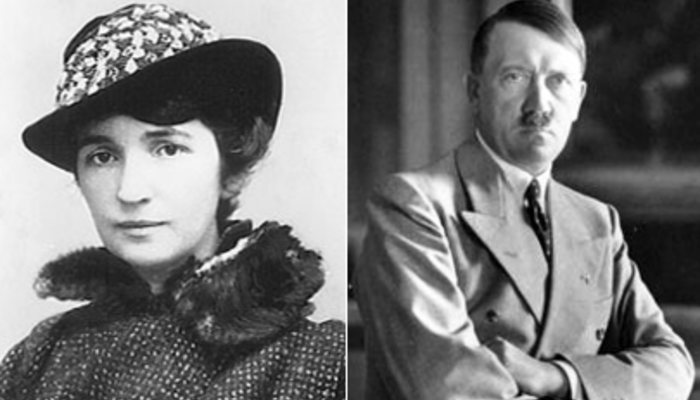
Throughout history, ideas cloaked in progress and compassion have often concealed darker agendas. One clear example is Margaret Sanger, the founder of Planned Parenthood, while widely recognized for advocating birth control, her work was deeply rooted in eugenics—a pseudoscience claiming that humanity could be “improved” by controlling who reproduces. This ideology targeted the poor, minorities, and the disabled and was a precursor to policies that influenced Adolf Hitler’s Nazi regime. Sanger was the face of the eugenics movement in the United States.

Disturbingly, these ideologies are resurfacing today under the guise of compassionate policies aimed at solving global problems like poverty and climate change. Bills currently being passed in parts of Europe, for example, advocate for euthanasia and abortion as solutions to societal issues. These practices echo the destructive ideas of eugenics and serve as a chilling reminder of history repeating itself.

This article unpacks Margaret Sanger’s troubling beliefs, her connections to eugenics, the parallels between her ideologies and Adolf Hitler’s policies, and how these concepts persist in modern society. It also examines these issues from a spiritual perspective, revealing the deception and destruction that underpins them.


Who Was Margaret Sanger and What Did She Believe?

Margaret Sanger was an American born in the 1800’s who is celebrated as a pioneer for women’s rights and reproductive health. However, a closer look reveals that her advocacy for birth control was deeply intertwined with harmful, dark and oppressive ideologies. Recently Planned Parenthood has tried to distance itself from Sanger’s eugenics ties, with many branches removing her name from clinics in order to try and erase historical facts of Planned Parenthood’s disturbing origins.

1. Eugenics: The Idea of “Weeding Out” Society

  • Margaret Sanger believed that society could be “improved” by preventing certain groups from reproducing. This idea, rooted in eugenics, targeted those she deemed “unfit,” such as individuals with disabilities, mental illnesses, or extreme poverty.
  • She infamously referred to such individuals as “human weeds” in her book The Pivot of Civilization (1922). This dehumanizing language revealed her belief that some lives were less valuable than others.
  • Her push for birth control wasn’t just about family planning; it was about controlling who had the right to have children, and how many, she once callously quoted, “one of the most merciful thing that a large family does to one of it’s infant members is to kill it.”

2. Targeting Minorities and the Poor

  • Sanger spearheaded initiatives like the “Negro Project” in 1939, which promoted birth control among African American communities. While some viewed this as an effort to address poverty, critics argue it was a covert attempt to control black and other minority populations. Sanger was quoted, “The most successful educational approach to the negro is through a religious appeal. We do not want word to go out that we want to exterminate the negro population, and the (Church) Minister is the man who can straighten out that idea if it ever occurs to any of their more rebellious members.”
  • Sanger and her colleagues framed these efforts as “help,” but they were rooted in the same racist ideologies that underpin eugenics.

3. Connections to Racist Groups

  • Sanger’s support for eugenics has led to allegations of racism, particularly given her associations with eugenicists who promoted sterilization and birth control to curb the reproduction of marginalized groups. In writings and speeches, Sanger expressed views that are classist and ableist, and she once addressed a women’s group associated with the Ku Klux Klan in an effort to promote birth control. While she later criticized their ignorance, her willingness to engage with such groups demonstrates how far she would go to promote her agenda, even if it meant making morally dubious alliances.

Adolf Hitler, Eugenics, and Parallels with Margaret Sanger

The ideology of eugenics didn’t stop with Margaret Sanger, it extended beyond her work and had a significant global impact, influencing Adolf Hitler and the policies of the Nazi regime. Hitler’s early gas chamber experiments on the institutionalised disabled and mentally ill German and Austrian citizens, called ‘the Aktion T4 program’ foreshadowed the broader atrocities of the Holocaust, illustrating the dangers of dehumanizing policies. Critics of modern global health initiatives express concern that contemporary policies aimed at public health or climate change could follow a similar trajectory, evolving into coercive population control measures.

How Hitler Used Eugenics

  • Hitler’s policies on sterilization, euthanasia, and genocide were directly inspired by eugenics principles. He sought to create a “master race” by eliminating groups he deemed inferior, such as Jews, Romani people, and the disabled.
  • The Nazis’ forced sterilization programs were modeled after similar laws in the United States, which Sanger supported.

Did Hitler Admire Sanger?

Although cited, there is no direct evidence that Adolf Hitler personally admired Margaret Sanger, even though they shared the same ideologies and rooted for similar goals. There are significant connections between the eugenics movements in the U.S. and Europe, which influenced the policies of Nazi Germany.

Nazi Eugenics Influenced by American Policies

Historians agree that Nazi eugenics policies, including forced sterilizations and euthanasia programs, were strongly influenced by American eugenics laws. Key figures in the U.S. eugenics movement, such as Charles Davenport and Harry Laughlin, were cited in Nazi propaganda. This influence contributed to the Holocaust, where millions were murdered under the guise of racial purity. The Nazi regime cited American eugenics programs as justification for their policies, including forced sterilizations and the implementation of genocidal measures. Both Sanger and Nazi officials used pseudoscientific rhetoric to justify their actions, presenting them as efforts to improve the human race, despite the harmful and oppressive consequences. This ideological connection was also referenced during the Nuremberg Trials, where the links between U.S. eugenics programs and Nazi practices were acknowledged.

The Link to Margaret Sanger and Planned Parenthood

Margaret Sanger was an active member of the American eugenics movement, advocating for birth control and sterilization to “improve” society. As noted in research (e.g., Margaret Sanger and the Nazis: How Many Degrees of Separation), the eugenics movement in the U.S. strongly influenced Nazi eugenics. This association ties Sanger’s work and Planned Parenthood to the horrors of Nazism, as both shared a belief in controlling reproduction to shape a “better” society, often through coercive and oppressive means.

Sanger also embraced Darwinism, particularly its emphasis on survival of the fittest. She believed that applying Darwinian principles to human society could improve the gene pool and eliminate those deemed “unfit.” This belief further aligns her views with the ideas of Nazi eugenics, which sought to rid society of “undesirable” individuals.

Rebranding Eugenics

After World War II, the term “eugenics” fell out of favor due to its association with Nazi atrocities. However, the principles of eugenics were rebranded as “family planning,” a term still used today. Planned Parenthood’s early mission reflects this ideological shift.


Modern Policies: The Return of Eugenics?

Eugenics never truly disappeared—it has simply evolved. Many modern policies echo these harmful ideas while being marketed as compassionate or progressive solutions.

1. Abortion and Minority Communities

  • Planned Parenthood continues to disproportionately serve minority neighborhoods. While supporters argue this improves healthcare access, critics point to Sanger’s eugenics legacy, suggesting these clinics target the same groups she sought to suppress.
  • Abortion rates among African American and Hispanic communities are significantly higher than among white populations, raising concerns about systemic targeting.

2. Euthanasia and Assisted Suicide

  • In Europe and parts of Canada, euthanasia laws have expanded to include individuals with disabilities and mental illnesses. These policies, marketed as compassionate “choices,” echo the eugenics-era belief in eliminating those deemed burdensome to society.
  • These laws disproportionately impact vulnerable groups, raising ethical concerns about coercion and societal devaluation of life.

3. Global Population Control

  • Organizations like the World Health Organization (WHO) and World Economic Forum (WEF) advocate for population control in developing countries, often tying these programs to climate change initiatives.
  • In some cases, nations have reported being pressured to implement sterilization programs or abortion policies in exchange for foreign aid—echoing the coercive tactics of eugenics campaigns.

4. Genetic Screening and Selective Abortion

  • Advances in prenatal testing allow parents to screen for disabilities like Down syndrome. In countries such as Iceland, nearly all pregnancies with a Down syndrome diagnosis end in abortion. Critics argue this amounts to modern eugenics, targeting those deemed less “perfect.”

The Spiritual and Ethical Perspective

For many of us, the debate over abortion and related policies feels like part of a larger spiritual battle. Citing passages like Ephesians 6:12, “For we do not wrestle against flesh and blood, but against principalities, against powers, against the rulers of the darkness of this age,” it becomes clear that these issues reflect a deeper struggle between good and evil.

From this perspective, policies that promote abortion or population control are seen as opposing the sanctity of life. These actions are viewed as contrary to divine principles, as they undermine God’s plan for humanity. In this way, the modern debate is not just a political issue, but a spiritual one, where we are called to stay vigilant and resist the moral decay in society.


Playing God: A Sinful Rebellion Against the Creator

At the core of eugenics and similar ideologies is the desire to play God with human lives—determining who is worthy to live and who is not. This inflated sense of power and nefarious manipulation reflects the nature of their father, the devil, who “was a murderer from the beginning, not holding to the truth, for there is no truth in him” (John 8:44).

A Spiritual Battle: Why This is Satanic

From a biblical perspective, the dehumanization and destruction central to eugenics reflect satanic influence. The Bible teaches that every person is made in God’s image (Genesis 1:27) and has inherent value.

  1. Deception: Satan often disguises evil as good, twisting compassion into harm. Eugenics was presented as “scientific progress,” while modern policies like euthanasia and abortion are framed as acts of kindness.
  2. Dehumanization: By labeling people as “weeds” or “unfit,” eugenics denies the God-given dignity of every individual. This devaluation of life is a direct rebellion against God’s creation.
  3. Mass Destruction: The ultimate goal of eugenics—whether through sterilization, abortion, or euthanasia—is the destruction of life. This reflects Satan’s role as a murderer and deceiver (John 8:44).
  4. Spiritual Warfare: Ephesians 6:12 reminds us that our struggle is not merely against human systems but against “spiritual forces of evil.” Recognizing these influences helps us stand firm against them.

Recognizing and Resisting Evil

Margaret Sanger’s advocacy for birth control was rooted in eugenics, targeting minorities, the poor, and the disabled. Her ideas influenced Nazi policies and continue to echo in modern practices like abortion, euthanasia, and population control.

As Christians and as a society, we must remain vigilant against these deceptions. Upholding the sanctity of life and recognizing the inherent worth of every individual is essential to combating these ideologies. We are all made in the image of God, and He did not make a mistake when He knitted us together in our mothers’ wombs. All our days are numbered, and we are deeply loved by God. The enemy’s efforts to continuously mar the ‘image’ of God reflect his desire to destroy and distort the inherent dignity of each person. We must resist these lies, stand firm in the truth, and honor the sanctity of every life.


Defund Planned Parenthood:

Planned Parenthood, America’s largest abortion provider, performs over 1,000 abortions every day—approximately one every 80 seconds. In the 2022-2023 fiscal year alone, the organization received $699 million in taxpayer funding. Over the years, this has amounted to billions of dollars supporting practices that many Americans oppose.

Live Action, a leader in the pro-life movement, is pioneering the effort to end this taxpayer funding. Sign the petition today to join the fight and demand that the government stops funding Planned Parenthood.


Further Reading and References

  • Margaret Sanger: Darwinian Eugenicist (Creation Ministries International)
  • Timeline of Eugenics in America (Genome.gov)
  • Time: Planned Parenthood and Margaret Sanger’s Troubling Legacy
  • Academia.edu: Margaret Sanger and the Holocaust
  • America Magazine: Sanger’s Eugenicist Legacy
  • Courier Herald: Hitler, the KKK, and Margaret Sanger
  • EWTN: Who Was Margaret Sanger?
  • Edwin Black: War Against the Weak: Eugenics and America’s Campaign to Create a Master Race

————————————

***Photo by Newsbusters

Topics of Interest:

Support for Crisis Pregnancies in USA & UK

GET INFORMED:

Please be informed and educated about abortion procedures and gain a better understanding of what they entail, visit: PRO LIFE CONNECT. This resource provides accurate, evidence based information designed to educate and inform people about the medical, emotional, and social aspects of abortion. Understanding the facts is a critical step in making informed decisions and engaging thoughtfully in the abortion debate.

Made in God’s Image: A Radical Truth in a Confused World

In a world increasingly shaped by confusion and conflicting ideologies about our identity, it’s essential to return to the truth of Scripture to rediscover who we truly are. The profound and foundational truth that we are made in God’s image is not only the key to understanding our purpose but also the antidote to the confusion and despair that many face today. At the same time, we see a striking contradiction in society. On one hand, there is a growing emphasis on mental health and well-being, particularly for children and young people—a focus that is undeniably valuable. Yet, on the other hand, these same individuals are often taught that they are merely the accidental products of random, unguided processes. This disparity raises urgent questions about where our true value and sense of purpose come from.

This prevailing worldview, commonly seen in schools and even showcased in places like the Natural History Museum, suggests that humans originated from a “molecule-to-man” evolutionary process through natural selection. Under this framework, human beings are stripped of intrinsic value or ultimate purpose. If we are merely “rearranged atoms,” no different than the chairs we sit on, why should we consider ourselves more valuable than those objects? One bleak perspective even puts it this way: “It’s a fluke that you were born, all is futile while you live, and you’ll be fertilizer when you die.”

Environmental concerns, often valid, further deepen this narrative by portraying humanity as the planet’s primary problem. Influential figures like David Attenborough have even referred to mankind as a “plague on the planet.” These ideas contribute to widespread struggles among young people—challenges with identity, worth, and purpose—often leading them to cling desperately to fleeting causes.

The Bible’s Antidote: Our True Identity

Amid this cultural confusion, we find hope and clarity in the Bible. Genesis 1:26-27 teaches us a radically different truth about who we are. Humanity is made in the image of God. This phrase appears three times in just two verses, emphasizing its importance. “Then God said, “Let us make mankind in our image, in our likeness, so that they may rule over the fish in the sea and the birds in the sky, over the livestock and all the wild animals, and over all the creatures that move along the ground.” 27 So God created mankind in His own image, in the image of God He created them; male and female He created them.”

Humanity’s Unique Role in Creation

It is essential to note that only humans are described as being made in God’s image. While other living things are described as being made “according to their kind” (Genesis 1:24-25), humanity is set apart. Though we share similarities with animals, such as being made of the same physical elements and consuming similar foods, the differences are vast and profound:

Communication: Human communication is far more complex.

Innovation: Unlike spiders that spin the same web design repeatedly, humans innovate endlessly.

Self-awareness: Humans ponder their purpose, study the world, and plan for the future.

Appreciation of beauty: Our ability to create and appreciate art reflects the Creator Himself.

The Bible clearly teaches that the image of God was present from humanity’s beginning. This is not a trait added partway through a slow evolutionary process. Genesis 5:3 confirms that Adam passed this image onto his descendants, meaning all humans are bearers of God’s image. Furthermore, Genesis 1:31 declares that creation was not just “good” but “very good” only after humanity was created. Humanity is the pinnacle of God’s creation, the culmination of His work, as Psalm 8 poetically reflects: “You made man a little lower than the angels and crowned him with glory and honor.”

What Does It Mean to Be Made in God’s Image?

The phrase “image of God” comes from the Hebrew word “tselem,” meaning a replica or representative. In the ancient Near East, kings would place statues of themselves in far-flung regions of their empires to symbolize their authority. Similarly, humanity represents God’s authority and presence in the world.

Here are five “R’s” that summarize what it means to be made in God’s image:

1. Representing God

We are God’s representatives on Earth, symbolizing His dominion and authority. This is why the second commandment forbids creating images of God for worship; humanity itself is His intended representation.

2. Resembling God

The phrase “in His likeness” (Hebrew: “demuth”) expands the idea of resemblance. We resemble God in personal, moral, and rational ways:

• We are personal beings, capable of relationships.

• We are moral beings, understanding right and wrong.

• We think, reason, feel, and act with purpose, as God does.

While we are not divine—we are neither eternal nor self-sufficient like God—we reflect aspects of His character, much like the moon reflects the light of the sun.

3. Ruling for God

Genesis 1:26 continues: “…so that they may rule over the fish in the sea, the birds in the sky, and over all the earth.” The word for “rule” (Hebrew: “rāḏâ”) implies dominion and stewardship. Humans are entrusted with managing creation for its benefit, a role that remains positive despite the fall.

This stewardship involves cultivating and managing the earth to promote flourishing. Genesis 2 expands on this role, depicting Adam placed in the Garden to “work it and take care of it” (Genesis 2:15). Contrary to popular claims that nature would thrive without humans, evidence shows that human management often increases biodiversity and ecological health. For instance, even secular conservationists recognize that rewilding efforts (leaving land untouched) can reduce biodiversity. Carefully managed areas, such as gardens or cultivated lands, often support more diverse ecosystems than those left wild.

4. Reflecting God

As God’s image bearers, we are called to reflect His attributes—His love, righteousness, and justice. This reflection glorifies Him and points others to His character.

A Unique Design and Purpose

Humanity’s role as God’s image bearers underscores our unique purpose. Adam’s naming of the animals (Genesis 2:19-20) highlights this distinction; no animal was found to be a suitable helper for Adam because none shared God’s image.

When God declared it was “not good” for man to be alone (Genesis 2:18), He created woman as a complementary partner, further emphasizing the relational nature of humanity—a reflection of the relational nature of God Himself.

This foundational truth—that humanity is made in the image of God—contradicts the despairing messages of our culture. It affirms our value, dignity, and purpose, reminding us that we are more than atoms or accidents. We are God’s representatives, rulers, and reflections, created to glorify Him and enjoy His creation.

5. Made for Relationship

In addition to representing, resembling, and ruling for God, humanity was created for relationship. Genesis 1:27 emphasizes this: “male and female He created them.” Relationships are central to the human experience because they reflect the very nature of God Himself.

In Genesis 1:26, God says, “Let us make mankind in our image, in our likeness.” The plural pronouns point to the truth of the Trinity—God as one being in three persons: Father, Son, and Holy Spirit. This perfect, eternal relationship of love within the Trinity has profound implications. It reveals that love is intrinsic to God’s nature. Even before creating humanity, God existed in a communion of love. Unlike a solitary deity, a trinitarian God is inherently relational, making Him a God of love.

God’s design for us is rooted in this relational nature. He created us to participate in this love and to relate to Him in worship. In Genesis, God speaks to Adam and Eve, commands them, and walks with them in the garden. Humanity alone, among all creation, is given the capacity to communicate with God and with one another in meaningful ways.

Reflecting God in Human Relationships

God’s design extends to human relationships, starting with marriage. The union of man and woman reflects God’s relational nature and serves as a foundation for families. The psalmist speaks of God placing the lonely in families, emphasizing that all relationships—friendships, families, and communities—find their root in our shared identity as image-bearers of God.

However, society often promotes individualism and isolation, countering God’s intention for relationships. The idea of self-sufficiency, where everything is tailored for individual consumption, may seem appealing, but it directly opposes the biblical truth that we are created for connection.

The Marring of the Image

Although we are made in the image of God, that image has been marred by sin. Genesis 3 describes the fall of humanity through Adam and Eve’s disobedience. Though we retain God’s image, it has been distorted. Like graffiti defacing a masterpiece, sin obscures our ability to fully reflect God’s glory and carry out our God-given roles.

The Nature of the Fall

Satan’s temptation to Eve was rooted in pride and dissatisfaction. He suggested that she could “be like God,” ignoring the truth that humanity was already made in His image. Adam, failing to exercise his headship, joined in disobedience. As a result, sin entered the world, bringing suffering, pain, and death.

This is not how God created the world to be. Death and suffering are direct results of human sin, not inherent aspects of God’s creation. To argue otherwise undermines God’s goodness and the hope of redemption. The consequences of the fall are evident: fractured relationships, environmental exploitation, and a culture that either devalues humanity or elevates it to a godlike status.

Modern Rebellion Against God’s Design

Today, the rejection of God’s image leads to a host of societal issues. When we deny the intrinsic value of life, practices like abortion and euthanasia become normalized. The redefinition of marriage and gender further undermines God’s design, leaving people searching for identity and purpose in fleeting things like possessions, fame, or personal achievements. But these pursuits are inadequate. When our worth is tied to impermanent things, failure leaves us devastated. We begin to see others as objects, either competitors or tools for our benefit. This rejection of God’s image results in a society that dehumanizes itself.

The Mending of the Image

Thankfully, the story doesn’t end with the marring of the image. Through Jesus Christ, God has provided a way to restore what was broken.

Christ: The Perfect Image of God

Colossians 1:15 declares, “The Son is the image of the invisible God.” Unlike humanity, Christ is not merely made in the image of God—He is the image of God. As the Creator, Jesus demonstrates dominion over creation, calming storms, multiplying food, and even commanding fish to fulfill His purposes. He is the ultimate human, fully reflecting God’s glory while living in perfect obedience.

Yet, Christ did more than provide an example. He lived the life we were meant to live and bore the punishment for our sins. On the cross, He was marred for our transgressions so that we could be mended. Through His death and resurrection, He made reconciliation with God possible, restoring us to our original purpose as image-bearers.

Becoming Like Christ

When we repent and trust in Christ, God begins a process of transformation. Romans 8:29 explains that we are “predestined to be conformed to the image of His Son.” This transformation is not about adding religion to our lives but about aligning with the purpose for which we were created: to glorify God and enjoy Him forever.

This restoration affects every aspect of our lives. It shapes how we relate to others, how we steward creation, and how we pursue work and creativity. No longer striving for self-glory, we live to reflect God’s love, peace, and justice.

The Fulfillment of Restoration

One day, God will complete this work of restoration. Revelation promises a new creation where His people will dwell with Him forever, fully restored to His image. Until that day, we live with the hope and assurance that we are precious to God, not because of anything we achieve, but because of what Christ has done.

If you have not yet repented and turned to Christ, now is the time. Only through Him can we be restored to our true purpose and identity. May we all live as God intended, for His glory and the good of His creation.

Amen.

—-—————-

** How to become a child of God

** Summary of Talk By Matthew Pickhaver from Biblical Creation Trust / Picture by Mart Production at Pexels

** Recommended article: One Human Race – the Biblical, Scientific & Historical Truth about Human Diversity

Crisis Pregnancy Help: Find the Support You Need

Need help? Empowering women with compassionate care for crisis pregnancies, you are not alone – pregnancy support, guidance and resources in the UK and USA at Pro Life Connect.

If you’re pregnant and unsure of what comes next, you’re not alone. This page is dedicated to providing you with compassionate support and valuable resources to help you through your journey. We have gathered a list of trusted organizations offering assistance with pregnancy, parenting, adoption, and emotional support. Explore the links to find practical help, whether you need medical care, counselling, or simply someone to talk to. No matter where you are in your journey, there are options available, and we’re here to help you find the path that’s right for you and your baby.

HOPE Pregnancy offers kindness, truth, and support for anyone in an unexpected or challenging pregnancy who is unsure what to do and looking for help. 

We are here to listen, and with compassion, we use honest language to help them think through their situation for themselves. 

CONTACT  

Website: www.hopepregnancy.org.uk 

Contact page on their website link

If you are a mother or father bereaved by abortion. If you are seeking to support a mother grieving the loss of her baby to abortion, if you are a church leader looking for ways to make access to support after abortion easier in your church, Welcome! Abortion affects the whole society. Each of us bears some responsibility for the death of each baby. Together we have let down the parents who carry the burden, but together we can make a way for them to find peace again. 

CONTACT 

Website: http://www.postabortsupport.org.uk 

Rachel’s Vineyard is a healing ministry for those who are suffering from the trauma of abortion(s) or have been closely connected to someone who is; this includes siblings, grandparents, aunts etc.  We recognise that abortion impacts the wider family and community.  

We also support those that have worked in the abortion industry and subsequently regret the part they played in abortion decisions. 

CONTACT 

Website: rachelsvineyard.org.uk 

National Support Centre – Call:  07734 059 080 

Email: rachel@rachelsvineyard.org.uk 

The Good Counsel Network is a life-affirming women’s organisation which offers moral support, medical information, legal advice and practical help to women seeking abortion. We reach out to these women to inform them about the risks to their physical and psychological health and present them with realistic alternatives to abortion. We deal with the hardest cases of crisis pregnancy every day. 

CONTACT 

Website: www.goodcounselnet.co.uk 

Email: info@goodcounselnetwork.com 

Call:  020-7723-1740  

Life is a UK charity from women and families facing unexpected pregnancy or pregnancy loss, including abortion. Services include: emotional help, counselling, housing and community support around the country for mums and their babies, free supplies and much more… 

CONTACT 

Website: www.lifecharity.org.uk 

Call:  0808 802 5433  

Text: 07860 077339 

Contact page on their website link

COERCED ABORTION IS ABUSE. PRESSURIZED CONSENT IS NOT CONSENT.  

The narrative around abortion decisions is often focused on ‘choice’ and ‘autonomy’, but that is far from the reality that many women face. Women often find themselves subject to coercion and pressure to have an abortion from partners, family members, employers, healthcare staff or others in their life. This pressure can be subtle, like suggesting she would be unable to cope with parenthood, to severe, like threatening violence if she refuses to have an abortion. This coercion often goes unidentified by clinic and healthcare staff, and women go on to have abortions they never wanted. This is not informed consent. Coerced abortion is abuse, and women deserve to be protected from it.  

Life is a UK charity from women and families facing unexpected pregnancy or pregnancy loss, including abortion. Services include: emotional help, counselling, housing and community support around the country for mums and their babies, free supplies and much more… 

CONTACT 

Website: www.coercionisabuse.org 

Call the helpline: 0345 603 8501 

Email: info@archtrust.org.uk 

The Alma Mater Fund provides financial grants to pregnant students facing difficulties at universities across the UK, in order to support them in pursuing their academic and personal goals. Through the work of the initiative, the Alma Mater Fund coordinator can also direct students to further sources of support and advice.  

CONTACT 

Website: www.spuc.org.uk/alma-mater-fund 

Call, text or WhatsApp:  07849 088 244  

Treatment for infertility and miscarriage. Committed to keeping conception the natural way by combining restorative reproductive medicine with naturopathy. Did your heart sink when IVF was mentioned at your fertility consultation? Want to keep the ‘lovingly conceived’ aspect of your fertility story?  

We are here to guide how to stay true to God’s plan for conception and make your dream for a family a reality. 

CONTACT 

Website: www.fiatfertilitycare.co.uk 

Email: fertilitycare@lifecharity.org.uk 

Call: 01926 834654 

Contact page of their website link

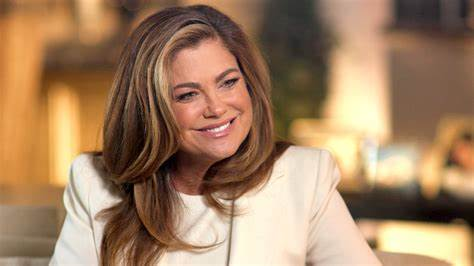
From Supermodel to Advocate: Kathy Ireland’s Pro-Life Journey

Kathy Ireland, once celebrated as a supermodel, has embarked on a profound journey of transformation, emerging as a passionate advocate for the pro-life cause. In an interview on the show Huckabee, she shared her personal evolution from being pro-choice to embracing a staunch pro-life stance.

Initially identifying as pro-choice while maintaining her Christian faith, Kathy’s perspective shifted as she immersed herself in medical literature and scientific research. She discovered the undeniable truth that human life begins at the moment of conception, equipped with its DNA, sex, blood type, and unique fingerprints.

The transcript from the show:

Interviewer: “We’re back with Kathy Ireland, author of the bestselling book ‘Real Solutions for Busy Moms and Dads.’ Kathy, what mom’s advice is all about?”

Interviewer: “But on a personal level, there’s another aspect of your life that I found fascinating, and you’re unafraid to talk about it. I think that’s so refreshing in the life of the celebrity who often says, ‘I don’t want to get into anything like this.’ You were once pro-choice but you became very clearly pro-life. What was the turning point for you? When did the switch click for you that said, ‘This is a human being?'”

Kathy Ireland: When I looked at some medical books and saw the scientific evidence ahead of me. As I mentioned, I was baby Christian for such a long time, even though I was a Christian, very pro-choice. I always have and I will continue to fight for women’s rights. And so, even though maybe I wouldn’t have one myself, who am I to impose my beliefs on someone else? It’s a woman’s body, it’s her choice.

After I really realized that I was on the fence, I dove into the medical books, I dove into the scientific research. What I learned is, at the moment of conception, a new life comes into being. The DNA, the genetic blueprint is there, the sex is determined, the blood type is determined, the unique set of fingerprints is there.

And I picked up the phone, I called Planned Parenthood. ‘Help me out here, give me your best arguments.’ And the best arguments were, ‘Well, if you get it early enough, it doesn’t even look like a baby.’

We’re clumps of cells and that unborn human being does not look like a baby the same way a baby does not look like a teenager; a teenager does not look like a senior. But that unborn human being looks exactly the way human beings are supposed to look at that stage of development.

Some people say, ‘Well if you get it at a certain state, it’s okay.’ According to the law of biogenesis, all life comes from pre-existing life and each species reproduces after its own kind. Therefore, human beings can only reproduce other human beings.

So, it doesn’t start out as one species and suddenly become a human being somewhere along the way. And some people say, ‘Well, it’s a woman’s body, it should be her choice.’ There’s a 50% chance the baby she’s carrying is a male child and he would have a penis. Women don’t have penises.”

So, it’s residing in her body, it is not a part of her body. And the bottom line is, I really believe if The Unborn is not a human being, have as many abortions as you want, whenever you want, no justification is necessary. If, on the other hand, The Unborn is a human being, no justification is adequate unless another human life is at risk, that being the mother’s.

But in that case, you’re not acting to kill, you’re acting to save a life. And I also believe that when an abortion takes place, there are at least two victims.

We cannot be condemning women. Women have been so hurt by this and they’re not given all the facts. And especially as Christians, we need to be so careful that we are not condemning her because by doing that we can turn her away from oh this person and their God and they’re being so unkind, I don’t want to have anything to do with their God. And not only that, they’ll tell 10 friends.

So, it’s an issue we need to deal with love but I believe we got to get politics out of it. We need to put this in the hands of science. Even if you don’t share our faith, an atheist can know that it’s wrong to take an innocent human life. That’s why I don’t mind imposing this on other people and the science on that is clear.

Interviewer: Kathy, your explanation is maybe the clearest, the most effective that I’ve heard, not just from a person who is a celebrity, from any person in politics or even from the pulpit. And I want to say thank you for the clarity with which you have brought about this topic.”

———————————-

**Interview at Huckabee © 2009 FOX News Network, LLC. / Photo by Today show

Topics of Interest:

Planned Parenthood Origins

Support for Crisis Pregnancies in USA & UK

GET INFORMED:

Please be informed and educated about abortion procedures and gain a better understanding of what they entail, visit: PRO LIFE CONNECT. This resource provides accurate, evidence based information designed to educate and inform people about the medical, emotional, and social aspects of abortion. Understanding the facts is a critical step in making informed decisions and engaging thoughtfully in the abortion debate.