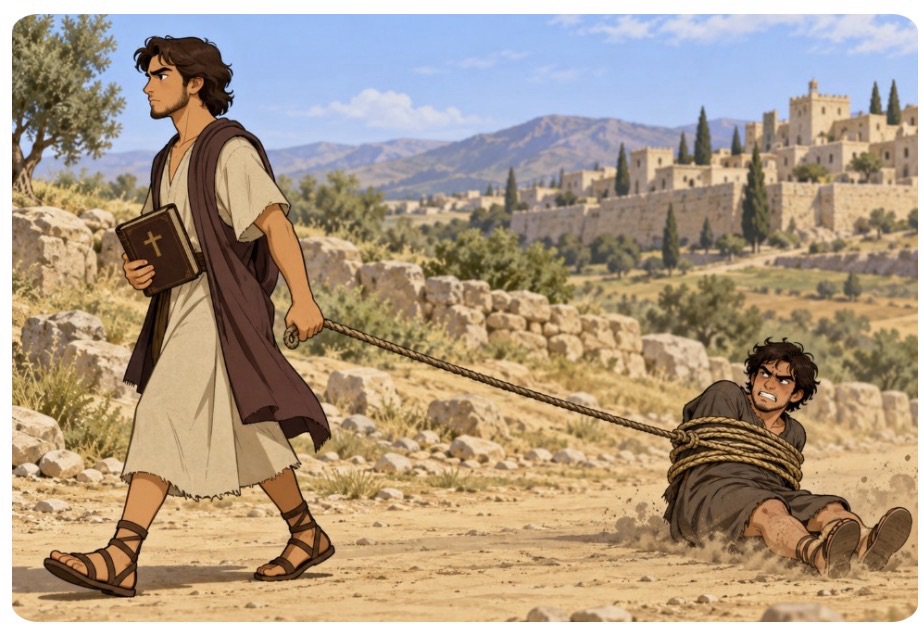
The Sovereign Majesty of God in a World of Darkness

We are living in a time where darkness is not only increasing, it is being normalized, justified, and even celebrated. Evil is no longer always hidden in the shadows; it is often presented openly, repackaged as truth, and embraced by many. What Scripture warned about is unfolding before our eyes: good being called evil, and evil being called good. There are systems, institutions, and individuals who exalt themselves, who seek control, who redefine morality, and who attempt to take the place that belongs to God alone.

There are wolves in sheep’s clothing, those who outwardly appear righteous, compassionate, or trustworthy, yet inwardly are driven by pride, deception, and self-interest. There are agendas that operate both in plain sight and behind closed doors. There is manipulation of truth, distortion of reality, and a growing boldness in rebellion against what is holy and right. Many things that once would have been recognized clearly as wrong are now defended, protected, and even celebrated, while those who stand for truth are often ridiculed, silenced, or opposed.

Behind all of this, Scripture reveals a deeper reality: this is not merely human behaviour, it is spiritual warfare. Satan, described as the deceiver of the whole world, works through lies, through hardened hearts, and through minds that have been darkened. The Bible speaks of consciences that become seared, of people who suppress the truth, and of a world that increasingly follows its own sinful desires. This is why the darkness feels so deep, it is not just external, but spiritual at its root, influencing thought, culture, and direction. And yet, in the midst of all this chaos, corruption, and rebellion, there is a truth that stands firm, unshaken, and eternal: God is still on the throne.

“Be still, and know that I am God; I will be exalted among the nations, I will be exalted in the earth.” (Psalm 46:10)

This is a declaration of absolute authority. God is not reacting to events as they unfold. He is not surprised, overwhelmed, or challenged. He is sovereign over all things—past, present, and future—and He declares the end from the beginning. Regardless of how far humanity drifts into rebellion, His name will be exalted in all the earth. To “be still” is not merely to be quiet, it is to cease striving, to stop placing ultimate trust in human systems, to stop fearing what man can do, and to recognize the reality that God alone reigns. It is a call to re-center our perspective in a world that constantly pulls us away from truth.

God Still Rules Over All

It may appear, on the surface, that men control the world, that governments determine the future, that powerful individuals shape history, and that decisions made behind closed doors dictate the direction of nations. But Scripture pulls back the curtain and reveals what is truly happening beneath the surface.

“The king’s heart is in the hand of the Lord; he directs it like a watercourse wherever he pleases.” (Proverbs 21:1)

This imagery is deliberate and profound. A watercourse does not ultimately decide its own direction, it flows according to the channels that have been carved out for it. In the same way, the hearts of kings, presidents, rulers, and authorities are directed by God. Even when they believe they are acting independently, they are moving within boundaries that God has established. Even those in the highest positions of power are not beyond God’s reach. Their decisions, their rise, and their fall all exist under His sovereign will. What appears to be unchecked authority is, in truth, governed authority, authority that is permitted, limited, and accountable.

“He changes times and seasons; he deposes kings and raises up others.” (Daniel 2:21)

This verse strips away the illusion of permanence from human power. Governments rise, flourish, and fall. Empires dominate for a time and then collapse. Leaders come into power and are removed, sometimes unexpectedly, sometimes gradually, but always under God’s authority. No government stands forever. No system escapes His control. No ruler ultimately writes their own destiny. What looks like strength is temporary. What looks like control is limited. What looks like permanence is fleeting.

This is why even Nebuchadnezzar, the great king of Babylon, who once glorified himself and took pride in his achievements was humbled by God. At the height of his power, he believed his kingdom was the result of his own greatness. But God brought him low, stripped him of his reason, and allowed him to experience the consequences of his pride until he finally lifted his eyes to heaven. And when his understanding returned, his confession stands as one of the most powerful acknowledgments of God’s sovereignty in all of Scripture:

“His dominion is an eternal dominion… He does as he pleases with the powers of heaven and the peoples of the earth. No one can hold back his hand or say to him: ‘What have you done?’” (Daniel 4:34–35)

This is the end of all human pride. Every proud ruler, every corrupt system, every person who exalts themselves and seeks to take the place of God will one day face this same truth: God cannot be challenged. God cannot be overthrown. God cannot be questioned.

The Reality Behind the Darkness

The darkness we see in the world is not random. It is not merely the result of flawed human systems, it is the outworking of spiritual rebellion that has existed since the beginning. Scripture tells us that Satan blinds minds, deceives nations, and works through those who are willing to follow their own sinful desires. This is why there are those who promote lies as truth, who celebrate what is destructive, and who oppose what is good while presenting themselves as righteous and enlightened.

Jesus warned clearly:

“Watch out for false prophets. They come to you in sheep’s clothing, but inwardly they are ferocious wolves.” (Matthew 7:15)

These wolves are not always obvious. They may appear kind, articulate, intelligent, and persuasive. They may gain influence, build platforms, and attract large followings. But their message subtly leads people away from truth and toward deception. There is darkness operating both in plain sight and under disguise. There are forces that seek to reshape morality, redefine truth, and draw people away from God. But none of this escapes God’s awareness or control.

“The Lord has established his throne in heaven, and his kingdom rules over all.” (Psalm 103:19)

Even the works of darkness exist within limits. They are not ultimate. They are not eternal. They are permitted for a time, but they will be judged.

The Illusion of Human Power

In a world obsessed with achievement, recognition, influence, and outward success, people are constantly striving for things that ultimately cannot save them. Entire lives are spent chasing status, wealth, appearance, validation, and control, yet these things, no matter how impressive they may seem, cannot address the deepest need of the human soul. Jesus confronts this illusion directly with a question that cuts through every layer of human ambition:

“What does it profit a man to gain the whole world, yet lose his soul?” (Mark 8:36)

This is not just a rhetorical question, it is a warning. A person may accumulate everything the world values: riches, fame, power, physical strength, beauty, knowledge, and still lose what is most valuable and irreplaceable. The soul is eternal. It does not perish when the body dies. It continues, either in the presence of God or separated from Him. This means that the true measure of a life is not what is seen externally, but what is true internally. A person may appear successful in every worldly sense and yet be spiritually lost. Another may appear insignificant by worldly standards and yet be rich toward God. Life itself is fragile. It can change in a moment. No one is guaranteed tomorrow. No amount of influence or wealth can secure even one extra day beyond what God has appointed. And when life ends, everything that was pursued in this world, every possession, every achievement, every title is left behind. Only the soul remains, and its eternal destination is sealed.

The Urgency of Now

Every human being has value because every person is created by God and deeply loved by Him. From the very beginning of life to its final breath, God sees, knows, and cares. He is not distant or indifferent, He is intimately aware of every life. But while God cares for both body and spirit, Scripture makes it clear that it is the spirit that lives on forever.

We have been given free will, the ability to choose. Every day we make decisions between truth and deception, good and evil, obedience and rebellion. These choices shape not only our lives but also influence others, sometimes in ways we may never fully see. And yet, there is a moment that every person will face: we will all stand before God.

“We must all appear before the judgment seat of Christ.” (2 Corinthians 5:10)

This is a real and unavoidable reality. Every thought, every word, every action, and every hidden motive will be brought into the light. Nothing will remain concealed. Everything will be revealed in truth. This leads to the most serious question a person can ask: Who can stand before a holy and perfect God? The answer is humbling: no one can stand on their own.

“All have sinned and fall short of the glory of God.” (Romans 3:23)

Sin is not merely a list of wrong actions, it is the condition of the human heart. It is a state of separation from God, expressed through thoughts, desires, and behaviors that go against His holiness. It includes things that many attempt to justify or minimize: sexual immorality, idolatry, addiction, drunkenness, lying, stealing, unforgiveness, hatred, anger, gossip, pride, and selfish ambition. God sees everything, not only what is visible to others, but what is hidden within. He sees intentions, motives, and desires. Because God is holy and just, sin cannot simply be ignored.

“The wages of sin is death…” (Romans 6:23)

This is not only physical death, it is spiritual death, eternal separation from God. Yet in the face of this reality, God did something extraordinary. Out of love, mercy, and grace, He made a way for humanity to be restored.

Jesus Christ came into the world, not as a political leader or earthly king, but as a Savior. He entered into the brokenness of humanity, lived a perfect and sinless life, and then willingly took upon Himself the punishment that we deserved. He was mocked, rejected, beaten, and crucified. Nails were driven through His hands and feet. A crown of thorns was pressed onto His head. He was scourged until His flesh was torn. He bore the full weight of sin, our sin. He died. He was buried. And on the third day, He rose again, defeating sin and death. Jesus is alive. It is the foundation of hope, the turning point of history, and the only reason salvation is possible. Jesus made an exclusive and undeniable claim:

“I am the way and the truth and the life. No one comes to the Father except through me.” (John 14:6)

There is no alternative path. No amount of good works, religious activity, moral effort, or human achievement can bridge the gap between humanity and God.

“Our righteous acts are like filthy rags…” (Isaiah 64:6)

“The gift of God is eternal life in Christ Jesus our Lord.” (Romans 6:23)

Time is one of the greatest uncertainties of life.

“Now is the day of salvation.” (2 Corinthians 6:2)

The world constantly encourages delay, “later,” “another time,” “when I’m ready.” But Scripture warns against this mindset. Life is short, and eternity is certain. Every moment is an opportunity to respond, but no moment is guaranteed beyond the present.

“If you declare with your mouth, ‘Jesus is Lord,’ and believe in your heart that God raised him from the dead, you will be saved.” (Romans 10:9)

“Whoever believes in the Son has eternal life, but whoever rejects the Son will not see life…” (John 3:36)

This decision determines your eternal destination. When we look at the increasing darkness, confusion, and upheaval in the world, it can feel overwhelming. But Scripture tells us that these things are not random, they are like birth pangs, increasing in intensity as history moves toward God’s ultimate plan

The Triumph of God and the Call to Endurance

Even as darkness spreads and deception seems to prevail, Scripture assures us that God is fully in control and His kingdom will come in all its glory. The book of Revelation reveals the ultimate outcome of human rebellion and spiritual warfare. Though the enemy works through lies, pride, and violence, none of it escapes God’s awareness or authority. Satan and his followers may seem powerful, but their victory is temporary, and every act of evil is measured against the eternal plan of God. Jesus Himself declares:

“I am the Alpha and the Omega… the Almighty.” (Revelation 1:8)

He is the beginning and the end, the One who holds all history in His hands. Every nation, every ruler, every scheme, no matter how cunning or oppressive is moving toward His appointed judgment and ultimate triumph. When He returns in power, every act of injustice will be judged, every tear wiped away, and every faithful life fully rewarded:

“On his robe and on his thigh he has this name written: KING OF KINGS AND LORD OF LORDS.” (Revelation 19:16)

“He will wipe every tear from their eyes. There will be no more death or mourning or crying or pain, for the old order of things has passed away.” (Revelation 21:4)

This truth is meant to inspire courage and endurance. The struggles we face, the lies we witness, the evil we cannot stop these are like birth pangs, signs that God’s plan is unfolding. They are not meaningless; they are part of the process that brings about ultimate justice and restoration. It is vital to remember that God’s ways are not our ways, and His timing is not ours. We may feel frustrated, anxious, or impatient as we see wickedness appear unchecked or prayers seemingly unanswered. Yet God is orchestrating events according to His perfect wisdom, and what seems slow or hidden to us is unfolding precisely according to His plan:

“For my thoughts are not your thoughts, neither are your ways my ways,” declares the Lord. “As the heavens are higher than the earth, so are my ways higher than your ways and my thoughts than your thoughts.” (Isaiah 55:8–9)

Even when earthly justice seems absent, Scripture assures us that there will be perfect justice in God’s kingdom. Jesus will judge according to each person’s deeds, rewarding righteousness and punishing evil. Every act of oppression, every deceit, every abuse of power is noted by Him, and none will go unanswered. Earthly systems may fail, but God’s eternal justice cannot fail:

“For we must all appear before the judgment seat of Christ, so that each one may receive what is due for what he has done in the body, whether good or evil.” (2 Corinthians 5:10)

Believers are called not only to trust but also to pray as part of the spiritual battle. Prayer is not just personal comfort; it is a powerful weapon against the forces of darkness. When we pray, we align ourselves with God’s will, invite His intervention, and intercede for the world. Scripture repeatedly reminds us that spiritual realities are influenced by prayer: it can strengthen the church, protect the vulnerable, and restrain the enemy’s schemes. Prayer is the channel through which God’s power moves in response to His people’s faith and obedience.

“The prayer of a righteous person is powerful and effective.” (James 5:16)

“Pray in the Spirit on all occasions with all kinds of prayers and requests.” (Ephesians 6:18)

Through prayer, we participate in God’s work. We are called to pray for wisdom, courage, and guidance, as well as for the advancement of God’s kingdom. Spiritual vigilance and prayer go hand in hand: while we endure earthly trials, our prayers are part of God’s unseen, eternal strategy to bring about His will.

“Be faithful… and I will give you life as your victor’s crown.” (Revelation 2:10)

“Here is a call for the endurance of the saints…” (Revelation 14:12)

God sees everything. He knows the hidden struggles, the silent prayers, the private battles of heart and mind. He is not distant or uninvolved. He will act at the appointed time. Every injustice will be addressed, every lie exposed, and every faithful life rewarded. What may seem like delay is actually divine timing. Every event is part of His perfect plan, moving history toward the triumph of His kingdom.

Therefore, the call is clear: be still and recognize God’s authority. Place your trust in Jesus Christ, the King of Kings and Lord of Lords, who alone saves, restores, and reigns forever. Life is fleeting, and eternity is certain. Each choice, each act of obedience, each moment of faithful prayer matters. Now is the time to turn fully to Him, to stand in faith, to live in righteousness, and to participate in the spiritual battle through prayer.

“Be still, and know that I am God; I will be exalted among the nations, I will be exalted in the earth.” (Psalm 46:10)

God reigns. He will triumph. Those who remain faithful will share in His eternal victory. The darkness around us is real, but it is temporary. The kingdom of God is coming, justice will be served, and His name will be exalted in all the earth. Stand firm. Pray fervently. Trust Him. Take courage—for the Lord is with you, and His ultimate victory is certain.

———————-

If you are ready to respond to the free gift of salvation:

– How to be saved: The Path to Salvation – Click here

– 7 Things to Do After Getting Saved – Download PDF

*** Photo by Arina Dmitrieva at Pexels

Reflecting Christ: Cultivating His Character in Our Daily Lives

The Christian journey is not merely about believing in Christ but also about becoming like Him. The Bible calls us to be transformed into the image of Christ, reflecting His character in our daily lives. As Paul writes in Galatians 4:19, “My little children, of whom I travail in birth again until Christ be formed in you,” our ultimate goal as believers is to allow Christ’s nature to be fully developed in us. However, this transformation is not instant; it is a continuous process of sanctification, where the Holy Spirit works in us, perfecting us until Christ returns.

Understanding the Character of Christ

To manifest Christ’s character, we must first understand what defines Him. The Bible reveals key attributes of Jesus that every believer should seek to emulate:

1. Love – Jesus’ love is sacrificial and unconditional. He commands us to love one another as He has loved us (John 13:34-35).

2. Humility – Though He was God, Jesus humbled Himself, taking on the nature of a servant (Philippians 2:5-8).

3. Patience – Christ endured suffering and was patient with people’s weaknesses, always showing grace (1 Timothy 1:16).

4. Holiness – Jesus lived a life without sin, and He calls us to pursue holiness (1 Peter 1:15-16).

5. Compassion – He was moved by compassion for the lost, the sick, and the broken-hearted (Matthew 9:36).

6. Faithfulness – Jesus was obedient to the Father’s will, even unto death (Hebrews 3:2).

7. Forgiveness – On the cross, He forgave those who crucified Him (Luke 23:34).

How to Manifest the Character of Christ

1. We Are Being Perfected Until Christ Comes

Our transformation into Christ’s image is an ongoing work of the Holy Spirit. Though we are saved, we are still being perfected. Paul reminds us, “He who has begun a good work in you will complete it until the day of Jesus Christ” (Philippians 1:6). This means our growth in Christlikeness continues until Christ returns, as the Holy Spirit refines and purifies us.

2. Abide in Christ

Jesus said, “Abide in me, and I in you” (John 15:4). A deep, personal relationship with Christ is the foundation for transformation. This happens through prayer, worship, and daily fellowship with Him.

3. Be Transformed by the Word

The Word of God renews our minds and shapes our character. Paul urges us, “Do not be conformed to this world, but be transformed by the renewing of your mind” (Romans 12:2). The more we study and meditate on Scripture, the more we begin to think and act like Christ.

However, simply knowing Scripture is not enough. The Pharisees had extensive knowledge of the Scriptures, yet they did not live according to God’s heart. Even Satan knows the Word better than any human, but he does not obey it. This is why we must not only study and meditate on the Word but also apply it in daily life. James warns us, “But be doers of the word, and not hearers only, deceiving yourselves” (James 1:22).

4. Walk in the Spirit Despite the Weakness of the Flesh

Jesus said, “The spirit indeed is willing, but the flesh is weak” (Matthew 26:41). Although our inner man desires to follow Christ, our flesh resists. This is why we must depend on the Holy Spirit, who strengthens us from within. Paul prayed, “That He would grant you, according to the riches of His glory, to be strengthened with might through His Spirit in the inner man” (Ephesians 3:16).

We also face multiple enemies that continually seek to pull us away from God:

The Flesh – Our sinful nature desires things contrary to God’s will (Galatians 5:17).

Our Own Will – Often, our personal desires and ambitions conflict with God’s plan (Luke 22:42).

Satan – The devil constantly tempts and deceives us (1 Peter 5:8).

The World – The world’s system and culture often oppose God’s ways (1 John 2:15).

Yet, through the power of the Holy Spirit, we can overcome. “Greater is He who is in you than he who is in the world” (1 John 4:4).

5. Trials and Tests Strengthen Our Inner Man

James encourages us, “My brethren, count it all joy when you fall into various trials, knowing that the testing of your faith produces patience” (James 1:2-3). God allows difficulties to refine our character, deepen our faith, and strengthen our inner man so that we become more like Christ.

6. The Fruits of the Spirit: Evidence of Christ’s Character in Us

The fruit of the Spirit is a powerful way Christ’s character is made manifest in us. Paul describes these as essential qualities cultivated by the Holy Spirit in believers:

“But the fruit of the Spirit is love, joy, peace, longsuffering, kindness, goodness, faithfulness, gentleness, self-control. Against such there is no law.” (Galatians 5:22-23)

Each of these attributes reflects the very nature of Christ:

Love – A selfless, sacrificial love that seeks the good of others.

Joy – A deep, abiding joy that is not dependent on circumstances but on the presence of God.

Peace – An inner peace that comes from trusting in God, even in the midst of trials.

Long-suffering (Patience) – The ability to endure hardships and remain patient with others.

Kindness – A tender, compassionate heart that seeks to bless others.

Goodness – A moral purity and desire to do what is right before God and man.

Faithfulness – A steadfast commitment to God and to righteousness.

Gentleness – A humble and meek spirit that does not seek to dominate or harm others.

Self-Control – The ability to resist sin and exercise discipline over one’s desires and actions.

The Holy Spirit produces these fruits in us as we yield to Him. They are not merely external behaviours but deep transformations of the heart that align us with the nature of Christ.

7. Imitate Christ in Daily Life

Paul encourages believers to “Be imitators of me, as I am of Christ” (1 Corinthians 11:1).

8. Die to Self

Jesus said, “If anyone desires to come after Me, let him deny himself, and take up his cross, and follow Me” (Matthew 16:24).

9. Serve Others with Humility

Jesus demonstrated servant leadership when He washed His disciples’ feet (John 13:12-17).

10. Show Forgiveness and Grace

Just as Christ forgave us, we must also forgive others (Ephesians 4:32).

The Impact of Manifesting Christ’s Character

When Christ’s character is evident in our lives, we become a light to the world (Matthew 5:16).

Conclusion

Manifesting the character of Christ is not an instant change but a lifelong journey of transformation. It requires a deep, abiding relationship with Him, a commitment to His Word, and daily submission to the Holy Spirit. Though we face opposition from the flesh, our own will, Satan, and the world, God strengthens our inner man through trials, refining us as gold in the fire.

As we endure and grow in Christlikeness, the fruits of the Spirit become evident in our lives, serving as a testimony to the world that we are His true disciples. This transformation is not for our glory but for His, that His light may shine through us, drawing others to Him.

May we yield ourselves completely to His work in us, that we may truly say, “It is no longer I who live, but Christ lives in me” (Galatians 2:20). May His character be fully formed in us, bringing glory to His name and advancing His Kingdom on earth. Amen!

——————-

**Photo by Tasha Kamrowski by Pexels

Forget Coldplay’s Kiss Cam—What Happens When God Puts Your Life on the Big Screen?

Foreword (July 2025)

After watching the viral Coldplay kiss cam debacle—an awkward, unfiltered moment projected onto a stadium screen and then replayed endlessly online—I couldn’t help but think of this article Jeremy Utley wrote a few years ago. That kiss cam caught two people in a moment they probably wish could be erased.

But what about when our entire lives are put on display—every thought, word, and action—before God Himself?

This reflection, “Screening An Un-Blanked-Out Documentary,” written in 2022, feels even more relevant today. The world is quick to spotlight our embarrassing moments, but heaven is watching for something deeper: the moments that hold eternal significance.


Screening An Un-Blanked-Out Documentary

Published 2022

“Therefore do not go on passing judgment before the time, but wait until the Lord comes who will both bring to light the things hidden in the darkness and disclose the motives of men’s hearts; and then each man’s praise will come to him from God.” ~ 1 Corinthians‬ ‭4:5‬ ‭NASB‬‬

At the judgment seat of Christ, all of God’s ways will be seen to be perfectly just and righteous. That’s why we’re commanded to wait to judge — because there will come a day when even the secret motives of men’s hearts will be revealed, and then and only then can we judge righteously. Jesus says the same thing in Luke 12:2-3:

“But there is nothing covered up that will not be revealed, and hidden that will not be known. Accordingly, whatever you have said in the dark will be heard in the light, and what you have whispered in the inner rooms will be proclaimed upon the housetops.”
‭‭
The picture I have of the judgment seat is one where everyone who has ever lived will see my every thought, word, deed, and motive, and will be able to see that God’s judgment of my life is perfectly righteous. It’s as if a documentary of all my life — inward and outward — will be on a giant movie screen for everyone who’s ever lived to see. And all people, finally having “perfect information” so to speak, will come to the same exact conclusion that God does in His judgment of my life. For some, that may be an absolutely terrifying idea. But for Christians, we can take comfort knowing that God has “blotted out” those sinful spots on the tape (Psalm 51:9), because He chooses not to remember (Isaiah 43:25) any of the sins that we confess in the name of Jesus Christ (1 John 1:7,9). Praise God for that!!

But Christian, let me ask you a question: how will you feel if, when it’s “showtime” for your documentary in heaven, your entire movie is just a series of blanked-out scenes and bleeped-out speech? No sound, no video, all blank? Definitely no sin there to speak of, just hours and hours of silence. Non-footage, so to speak. It’s as if your life almost never took place. Will that be cause for rejoicing?

Or does that sound terrible to you? I must say that I will be utterly heartbroken if my documentary is all bleeped-out footage, with nothing worth screening in the final day! I want more than that! I want a life that brings God glory and honor and praise (Philippians 1:10-11), a life He can put on display to the rulers and authorities in the heavenly places as evidence of His trustworthiness and wisdom and power (Ephesians 3:10, Job 1:8), a life that is not merely stripped of all evidence of bad, but that fulfills all the good that God had in His heart when He made me (Ephesians 2:10)! (I encourage you to read those verses and see whether that is God’s hope for your life too.)

The Holy Spirit says that “each man’s work will become evident; for the day will show it because it is to be revealed with fire, and the fire itself will test the quality of each man’s work. If any man’s work which he has built on it remains, he will receive a reward. If any man’s work is burned up, he will suffer loss; but he himself will be saved, yet so as through fire” (‭‭1 Corinthians‬ ‭3:13-15‬)‬‬. I don’t know about you, but that’s not what I want the subtitle of my movie to be: “saved, yet so as through fire.” To be sure, I’m not interested in reward, except that it will be something I get to throw at my precious Savior’s feet (Revelation 4:10). What I’m interested in is a life that brings God praise and glory in the final day, and the way to do that is to seek for there to be something left on the tape after the fire blots out all of the footage that dishonors the Lord. 

Lord, according to Your Holy Spirit’s work in me, I want an un-bleeped tape! I want my life to count for You! I want to be a part of the manifestation that shames the devil and brings glory to Jesus Christ in the final day, that extols His trustworthiness and power. 

“But you are A CHOSEN RACE, A royal PRIESTHOOD, A HOLY NATION, A PEOPLE FOR God’s OWN POSSESSION, so that you may proclaim the excellencies of Him who has called you out of darkness into His marvelous light; for you once were NOT A PEOPLE, but now you are THE PEOPLE OF GOD; you had NOT RECEIVED MERCY, but now you have RECEIVED MERCY. Beloved, I urge you as aliens and strangers to abstain from fleshly lusts which wage war against the soul. Keep your behavior excellent among the Gentiles, so that in the thing in which they slander you as evildoers, they may because of your good deeds, as they observe them, glorify God in the day of visitation.”
‭‭1 Peter‬ ‭2:9-12‬ ‭NASB‬‬

Our good deeds may never be evident to worldly-minded people during our life on earth. But our hope is that, in the final day, when all things are known perfectly, and they watch the movies of our lives, they would have cause to glorify God. Not because there’s a blank tape (unlike their filthy tape), but there’s a tape filled with evidence of God’s glory. 

—————————

**By Jeremy Utley © Copyright – Jeremy Utley. No changes whatsoever are to be made to the content of the article without written permission from the author at NCCF Church / Photo by Annushka Ahuja at Pexels

Why Judas Was Lost — And Religion Didn’t Save Him

Matthew 27:1–7 (ESV): When morning came, all the chief priests and the elders of the people took counsel against Jesus to put him to death. And they bound him and led him away and delivered him over to Pilate the governor.

Then when Judas, his betrayer, saw that Jesus was condemned, he changed his mind and brought back the thirty pieces of silver to the chief priests and the elders, saying, “I have sinned by betraying innocent blood.” They said, “What is that to us? See to it yourself.”

And throwing down the pieces of silver into the temple, he departed, and he went and hanged himself.

But the chief priests, taking the pieces of silver, said, “It is not lawful to put them into the treasury, since it is blood money.” So they took counsel and bought with them the potter’s field as a burial place for strangers.

This moment in Scripture is one of the most sobering in the entire Gospel story. It’s easy to rush past it — to get to the crucifixion, the resurrection, the victory. But if we skip over this, we miss something crucial: a warning wrapped in tragedy.

This isn’t just a story about ancient villains. It’s a spotlight on the human heart — our hearts. On what happens when someone is close to Jesus in proximity, but far from Him in surrender. It’s not about how wicked “they” were — it’s about how easily we can walk the same path without even realizing it.

This is not an attack on sincere believers walking humbly with Jesus. But it is a wake-up call for anyone trusting in church involvement, ministry roles, emotional worship experiences, Bible knowledge, or spiritual performance — instead of in Jesus Himself.

Judas’s downfall didn’t begin with the silver. It began when he let religion take the place of repentance. And when the weight of his sin finally hit him, he ran to the wrong people — religious leaders who had no grace to give. They were full of rules, titles, and temple rituals, but hollowed out of mercy, compassion, and truth.

And that’s where this story becomes our warning. Judas went to religion, and it couldn’t save him. Judas chose guilt over grace.

Judas: A Man Who Walked with Jesus—But Lost His Way

Judas wasn’t some random outsider. He was one of Jesus’ own twelve disciples. He walked with Jesus daily, witnessed His miracles firsthand, ate at His table, and heard His teachings. Yet, despite all this closeness, Judas made a devastating choice.

What went wrong? Judas let earthly things—money, greed, and material gain—take priority over the spiritual truth he had seen. Instead of clinging to Jesus, the source of true life and forgiveness, he sold out the Savior for thirty pieces of silver. His heart turned away from grace and toward greed, but religion without real repentance couldn’t save him.

This betrayal reminds us that Christians can “sell out” their faith—not only for money but also for power, popularity, comfort, personal ambition, or by compromising God’s design for relationships.

Judas Went to the Wrong People

Judas betrayed Jesus and was filled with guilt—he knew what he did was wrong. But here’s the shocker: he didn’t run to Jesus, the only One who could truly forgive and heal him.

No. Judas ran to the chief priests and elders—sinners like us, mere men with titles but no power to forgive sins. These were the very people Judas was not meant to confess to, yet he went to them instead. Men steeped in religion, but rotten inside. Men who were complicit in condemning an innocent man. Men whose hearts were cold to mercy, justice, and truth. Religion without Jesus had hardened their hearts and kept them from true repentance.

Instead of repentance or sorrow, they cared only about their laws and their money. When Judas threw down the blood money, these priests refused to put it into the temple treasury because it was “unclean.” So what did they do? They took that money stained with innocent blood and bought a burial field for foreigners—as if buying a field could cover their guilt, their sin, their wickedness. As if putting money in the offering box or doing philanthropy deeds can do the same!

They thought a real estate transaction would redeem them. But no amount of money or good deed can wash away the stain of hypocrisy, envy, hatred, and betrayal. Their actions expose the brutal reality of religion without Jesus: cold legalism that cares more about rules and appearances than mercy, grace, and true repentance.

The disconnect is astounding—here were men steeped in religion yet utterly disconnected from true repentance and mercy. They were guilty of: envy, hatred, lying, hypocrisy and legalism that valued money over justice, yet they called themselves God’s representatives.

This is the cold reality of religion without Jesus: ritual replaces relationship, rules replace repentance, and good deeds become a mask for rebellion and wickedness.

Peter’s Path: Failure Met by Forgiveness

Peter was another man who walked closely with Jesus but made a very different choice. Like Judas, Peter was one of the twelve disciples, witnessing Jesus’ miracles and hearing His teachings firsthand. Yet when the pressure came, Peter denied Jesus—not once, but three times.

But here’s the crucial difference: Peter didn’t remain in his failure. He genuinely repented, was restored by Jesus, and went on to live a life marked by bold faith and transformation.

Peter’s story brings hope: no failure is final when met with sincere repentance. Grace and restoration are available to anyone who turns back to Jesus wholeheartedly.

(See Matthew 26:69–75; John 21:15–19; Luke 22:31–32; Acts 2:14–41)

Two Paths Lie Before You

You’ve failed. So have I. We’ve all sold Jesus out for something—pleasure, control, popularity, pride, money, lust, whatever.

The question isn’t whether you’ve sinned. The question is, what are you going to do about it?

You have two choices:

JUDAS

Regret

Isolation

Death

Religion

Shame

PETER

Repentance

Restoration

Life

Relationship

Grace

One ran to religion and died. The other ran to Jesus and lived.

This is not a game. Your soul is at stake.

Application for Us Today

Many people believe they’ve gone too far—betrayed too deeply, denied too loudly, messed up too many times. Judas’s path shows us what happens when we believe our sin is stronger than God’s grace.

But Peter’s story tells another truth:

Jesus is greater than our greatest failure.

He doesn’t just forgive. He redeems, restores, and reuses the broken. In fact, it’s those very cracks that let His glory shine through.

Final Encouragement

“Let God be true and every man a liar.” Peter is living proof of that. Men may fail—but God never does. Jesus knew Peter would fall and planned to restore him before it even happened (Luke 22:31–32).

That same grace is available today. Judas’s story warns us of despair, but Peter’s shows us the way back: through Christ alone.

The Bottom Line

If you think your church attendance, good behavior, ministry work, or religious “track record” can replace a real, repentant walk with Jesus—think again. Don’t rely on religion to save your soul. Only a genuine relationship with Jesus, marked by repentance and surrender, brings true forgiveness and restoration.

Run to Jesus — not to man-made religion, lifeless ritual, or guilt-driven striving. Only Jesus can forgive sin and restore your soul.

Don’t make Judas’s mistake. Don’t settle for empty religion that kills your spirit.

Choose life. Choose Jesus.

If you’re not sure where you stand with God or want to understand how to receive His forgiveness and eternal life, you can read this article here:

Responding to God’s Call: Salvation, Repentance, and Eternal Life

——————-

*** Photo by Nikolett Emmert by Pexels

Life Is Short. Eternity Is Long. Are You Ready?

We often hear, “Life is short… better enjoy it!” But how about this: “Eternity is long… better prepare for it.”

“For what shall it profit a man, if he gain the whole world, and suffer the loss of his soul?”

— Mark 8:36

We live in very sobering times. This life is not paradise. It is a preparation for paradise. How we choose to live it will determine how we spend eternity — in heaven or in hell. Death, Judgment, Heaven, and Hell: these are the Four Last Things. And they’re not distant — they’re approaching with every tick of the clock.

Many say, “Life is short, enjoy it while it lasts.” But eternity? It will be very long. You better prepare for it.

We are so caught up in this life — in money, relationships, entertainment, career — we give little attention to the life that never ends. Yet Jesus taught that every soul has an eternal destiny — either heaven or hell (John 5:25–29). And that destiny is determined in this life (Luke 16:19–31). Every choice matters.

“The days of our lives are seventy years;

And if by reason of strength they are eighty years,

Yet their boast is only labor and sorrow;

For it is soon cut off, and we fly away…

So teach us to number our days,

That we may gain a heart of wisdom.”

— Psalm 90:10,12

Time is collapsing. Technology is advancing — faster travel, faster internet, faster communication — yet we seem to have less time for what matters. We’ve gained speed but lost direction. We’ve advanced in knowledge but declined in wisdom. And worst of all — we are drifting further from God.

We are shadows that vanish. Grass that withers. Time is passing — and so are we.

“My days are like an evening shadow that lengthens and vanishes…

But You, O Lord, shall endure forever.”

— Psalm 102:11–12

From the moment you were born, you began dying. In 90 years, most of us reading this will be gone. The grave waits for no one.

So… what will you do with the time you have?

Every person gets the same 24 hours a day. But how we use it shapes our eternity.

Let’s say you live to 70:

The first 15 years? Childhood and adolescence. Around 20 years? Spent asleep. The final 5 years? Likely reduced activity. That leaves just 30 years — and even that includes eating, working, paying bills, and daily responsibilities.

What will you do with the years you have left?

“What is your life? It is even a vapor that appears for a little time and then vanishes away.”

— James 4:14

Even the wealthiest person cannot buy more time. Scientists cannot invent more minutes. Doctors cannot guarantee more years.

The most valuable thing you have is your time — use it for God.

“Be very careful, then, how you live — not as unwise but as wise, redeeming the time, because the days are evil.”

— Ephesians 5:15–16

The world is dark — violence, immorality, brokenness. But Jesus is calling His people to shine as lights and make disciples. To do that, we must stop wasting time and start investing it in what truly matters.

Too many Christians tithe their money but not their time. We find time for entertainment, social media, and distractions — but little for God.

We have time… but what are we using it for?

You have time to:

Seek Christ Serve others Obey His will Fulfill your calling

You want to be with God after death — but do you want to spend time with Him now?

Where is your heart? Where is your treasure? Where is your time?

“My times are in Your hand.”

— Psalm 31:15

Can you say this honestly? That your time — your life — belongs fully to God?

So… How Do You Give Jesus Your Heart?

You may be wondering:

“How do I know I’m saved? How do I give my heart to Jesus and prepare for eternity?”

It starts with repentance.

That means turning away from your sin — from living life your own way — and turning to God.

“Repent therefore and be converted, that your sins may be blotted out…”

— Acts 3:19

We’ve all sinned. Sin separates us from God and leads to death — not just physical death, but eternal separation.

But the good news is this:

God sent His Son, Jesus, to die for your sins.

He took your place. He bore your punishment.

He rose again to give you life — eternal life.

“But God demonstrates His own love toward us, in that while we were still sinners, Christ died for us.”

— Romans 5:8

To be saved, forgiven, and made right with God:

1. Acknowledge that you are a sinner in need of a Savior.

2. Believe that Jesus died for you and rose again.

3. Confess Him as Lord — surrender your whole life to Him.

“If you declare with your mouth, ‘Jesus is Lord,’ and believe in your heart that God raised Him from the dead, you will be saved.”

— Romans 10:9

This is more than a prayer. It’s a life-altering commitment.

Here’s a simple prayer you can make your own:

“Lord Jesus, I know that I am a sinner. I have broken Your laws and lived for myself. But I believe You died for me and rose again. I ask You to forgive me, wash me clean, and give me a new heart. I turn from my sin, and I turn to You. I surrender my life — all of it — to You. Be my Savior, be my Lord, and help me follow You all the days of my life. Thank You for saving me. In Jesus’ name, Amen.”

If you prayed that sincerely, you’ve taken the first and most important step into eternal life.

But remember — salvation is not the finish line. It’s the starting point.

Now begin walking with Him:

Read the Bible (start with the Gospel of John)

Pray — talk to God every day via prayer

Join a Bible-believing church Get baptized

Share what God has done in your life

“And this is the way to have eternal life—to know You, the only true God, and Jesus Christ, the one You sent.”

— John 17:3

Your time is still in God’s hands. Don’t waste another moment.

Live for what truly matters.

Live for the One who gave His life for you.

Give Him your heart — today.

——-——-

** By Shalom for the world / Photo by KoolShooters at Pexels