Comparison Is The Thief of Joy


One of the fastest ways of discouraging yourself and getting trapped by the sin of envy is when you compare yourself to others. God has a specific plan for you and you won’t accomplish that plan by looking at others. 

Count your blessings and not the blessings of someone else. Let God control your life and give Satan no opportunity to discourage you from the purpose God has for you. Know that all you need is Christ. Set your mind at peace by focusing on the Lord.

This is another way to build unity, by not looking to see if I’m better than the next person, spiritually, intellectually or with anything else the Lord has blessed me with.

“Don’t compare yourself to others. You have no idea what their journey is all about.”

“A flower does not think of competing with the flower next to it. It just blooms.”

What does the Bible say? Bible verses to Help in Comparing yourselves to others:

Galatians 6:4-5 Each of you must examine your own actions. Then you can be proud of your own accomplishments without comparing yourself to others.  Assume your own responsibility.

2 Corinthians 10:12 We wouldn’t put ourselves in the same class with or compare ourselves to those who are bold enough to make their own recommendations. Certainly, when they measure themselves by themselves and compare themselves to themselves, they show how foolish they are.

1 Thessalonians 4:11-12 And that ye study to be quiet, and to do your own business, and to work with your own hands, as we commanded you.  That ye may walk honestly toward them that are without, and that ye may have lack of nothing.

All it does is lead to envy

James 3:16 For where jealousy and selfish ambition exist, there will be disorder and every vile practice.

Proverbs 14:30 A tranquil heart gives life to the flesh, but envy makes the bones rot.

1 Corinthians 3:3 For you are still of the flesh. For while there is jealousy and strife among you are you not of the flesh and behaving only in a human way?

Set apart from the world

Romans 12:2 Do not be conformed to this world, but be transformed by the renewal of your mind, that by testing you may discern what is the will of God, what is good and acceptable and perfect.

“1 John 2:15 Do not love the world or the things in the world. If anyone loves the world, the love of the Father is not in him.”

We don’t live for people

Philippians 2:3 Don’t act out of selfish ambition or be conceited. Instead, humbly think of others as being better than yourselves.

Galatians 1:10 Am I saying this now to win the approval of people or God? Am I trying to please people? If I were still trying to please people, I would not be Christ’s servant.

Isaiah 2:22 Stop regarding man in whose nostrils is breath, for of what account is he?

Give God your all

Mark 12:30 Love the Lord your God with all your heart and with all your soul and with your entire mind and with all your strength.’

Psalm 37:5 Commit your way to the LORD; trust in Him, and He will act.

Proverbs 3:5-6 Trust in the Lord with all your heart, and do not lean on your own understanding. In all your ways acknowledge him, and he will make straight your paths.

Be content

1 Timothy 6:6-8 Now there is great gain in godliness with contentment, for we brought nothing into the world, and we cannot take anything out of the world. But if we have food and clothing, with these we will be content.

Psalm 23:1 A psalm of David. The LORD is my shepherd; I have all that I need.

Be grateful in all situations.

1 Thessalonians 5:18  Whatever happens, give thanks, because it is God’s will in Christ Jesus that you do this.

Psalm 136:1-2 Give thanks to the Lord because he is good, because his mercy endures forever. Give thanks to the God of gods because his mercy endures forever.

Compare yourself to Christ instead so you can be more like Him. 

2 Corinthians 10:17 As the Scriptures say, “If you want to boast, boast only about the LORD.”

1 Corinthians 11:1 Be imitators of me, as I am of Christ.

That way you can live out God’s will for your life.

Jeremiah 29:11 For I know the plans I have for you,” declares the LORD, “plans to prosper you and not to harm you, plans to give you hope and a future.

Psalm 138:8 The LORD will work out his plans for my life–for your faithful love, O LORD, endures forever. Don’t abandon me, for you made me.

Advice

2 Corinthians 13:5 Examine yourselves, to see whether you are in the faith. Test yourselves. Or do you not realise this about yourselves, that Jesus Christ is in you?—unless indeed you fail to meet the test!

Philippians 4:8 Finally, brothers, whatever is true, whatever is honourable, whatever is just, whatever is pure, whatever is lovely, whatever is commendable, if there is any excellence, if there is anything worthy of praise, think about these things.

Reminder

Psalm 139:14 I praise you, for I am fearfully and wonderfully made. Wonderful are your works; my soul knows it very well.


———————————————–


By Fritz Chery at Bible Reasons / Picture Photo by Bich Tran from Pexels

John Wesley’s Tribute to His Mother, Susanna Wesley: A Son’s Admiration

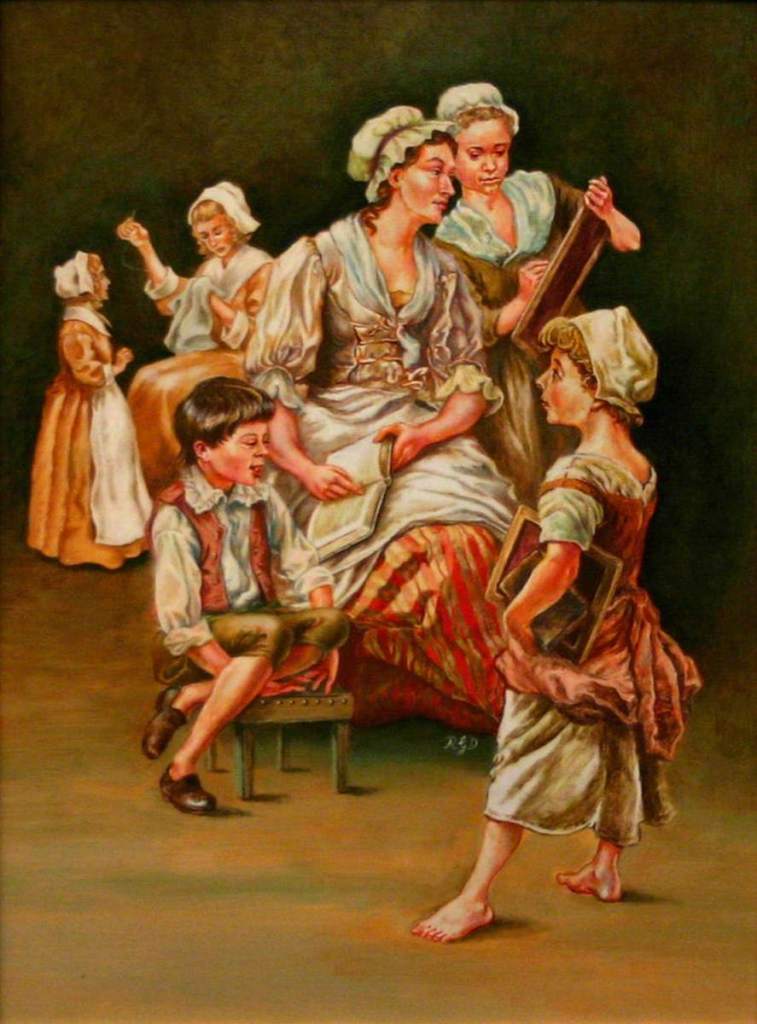
Artwork Susanna Wesley with Five Children by Richard Gilmore Douglas

AN ADMIRING SON

Susanna’s devotion to her faith and her family clearly shaped her son John Wesley’s character and had an impact on countless lives.
Few mums know what it’s like to raise 10 children like Susanna Wesley. Her son John, the founder of the Methodist movement, published a letter in which his mum shared her “principal rules” for parenting, covering things big and small.
Because our understandings of child development have changed greatly in the nearly 300 years since Susanna was raising her kids, we might not agree with all of her advice. But some still rings true today.

RELIGIOUS EDUCATION
Devotions –“The children of this family were taught, as soon as they could speak, the Lord’s prayer, which they were made to say at rising and bedtime constantly,” Susanna reminded her son.
Worship and Music – When the Wesley children were a little older, the day began with reading or singing a psalm, reading an Old Testament chapter, and saying private prayers — all before breakfast. At the end of the school day, they paired up to read a psalm and a New Testament chapter.
Sabbath – Sundays were special in the Wesley house. The children “were very early made to distinguish the sabbath from other days,” Susanna wrote. Even when the kids were very young, they were expected to participate in the family prayers, “which they used to do by signs before they would kneel or speak.”

EDUCATION
Focus – In the Wesley household, nine to noon and two to five were reserved for the children’s education, a top priority for Susanna. “It is almost incredible what a child may be taught in a quarter of a year, by a vigorous application,” she remembered.
No goofing off – Susanna expected the children’s full attention during the education hours. “Rising out of their places, or going out of the room, was not permitted unless for good cause, and running into the yard, garden or street, without leave, was always esteemed a capital offence.” I imagine Susanna smiling as she wrote that last line to her now grown son.
Reading – Each child was taught to read at age 5, both the boys and the girls. Susanna noted, “[P]utting children to learn sewing before they can read perfectly is the very reason why so few women can read fit to be heard, and never to be well understood.” She would not allow that for her daughters or sons.

ORDER AND DISCIPLINE
Routine – The Wesley house ran on a tight schedule. “The children were always put into a regular method of living,” she wrote. Times were assigned for naps, education, meals, and bedtime.
Self-regulation – Susanna was convinced that “self-will is the root of all sin and misery,” and worked to help her children develop self-control.
Positive reinforcement – Susanna believed, “That every signal [sic] act of obedience…should always be commended and frequently rewarded.” When the thought is there, but the execution lacking, Susanna adds that parents should then “sweetly” direct the child on “how to do better for the future.”
Discipline – When needed, Susanna strived to discipline appropriately. “Some [infractions] should be overlooked and taken no notice of, and others mildly reproved,” she wrote, “but no willful transgression ought ever to be forgiven children without chastisement, less or more, as the nature and circumstances of the offence require.”
Forgiveness – Susanna taught that a child should never be punished for the same offense twice, and “that if they amended they should never be upbraided with it afterwards.”
Peace – The child-filled Wesley household was not chaotic. “The family usually lived in as much quietness as if there had not been a child among them,” Susanna remembers.

SLEEP
Bedtime – After dinner at 6, the process of getting the children ready for bed began at 7 p.m. with the youngest child. All children were in bed by 8 p.m., whether they were ready for sleep or not. “[T]here was no such thing allowed of in our house as sitting by a child till it fell asleep,” she wrote.
Naps – As infants, the children napped on a schedule. “This was done to bring them to a regular course of sleeping,” Susanna reasoned.

MEALS AND DINING
Dining – Mealtime was family time. When the children were young, “At dinner their little table and chairs were set by ours,” Susanna recalls, near enough to be supervised. Children graduated to the dining room table, “As soon as they could handle a knife and fork.”
No snacking – “Drinking or eating between meals was never allowed,” Susanna shares, “unless in case of sickness which seldom happened.”
Choosing meals – The children were expected to eat what was served. “They were never suffered [permitted] to choose their meat, but always made to eat such things as were provided by the family,” Susanna wrote.
Medicine – “They were so constantly used to eat and drink what was given them,” she remembers, “that when any of them was ill there was no difficulty in making them take the most unpleasant medicine.”

MANNERS
Polite speech – Susanna expected her children to be polite. If they wanted something they were to ask, and were given “nothing they cried for, and instructed to speak handsomely for what they wanted.”
No lying – Susanna believed that children were tempted to lie when they feared punishment. “To prevent this,” she reasoned, “a law was made that whoever was charged with a fault, of which they were guilty, if they would ingenuously confess it, and promise to amend,” they would not be punished.
Respect for property – The Wesley children were taught to keep their hands off of another’s stuff, even “in the smallest matter, though it were but of the value of a farthing [1/4 of a penny], or a pin; which they might not take from the owner without, much less Money against his consent.”
John Wesley shared this advice from his mom in his published Journal as he reflected on her death. The entry is dated August 1st, 1742, the day of her funeral. He hoped it would help others caring for “a numerous family.”

*Susanna Wesley gave birth to 19 children (including two sets of twins). Unfortunately, nine died in infancy or soon after.

———

** By Joe Iovino works for UMC.org at United Methodist Communications. Contact him by email.

The Breaking of Bread Covenant


When Jesus instituted the ‘breaking of bread’, He used a word that He never used before – the word ‘covenant’. A proper understanding of this word is essential if we are to partake in the Lord’s table meaningfully.

A Covenant Relationship with God

The first mention of the word ‘covenant’ is found in Genesis 6:18, where God promises to establish a covenant with Noah (Genesis 9:9, 11). God had judged the whole world because of man’s sin and now He made a covenant with Noah that He would never again judge the world with a flood as He had just done. God gave a sign to mark the covenant that He then made. It was what we now call the ‘rainbow’. God, however, called it ‘My bow in the cloud’ (Genesis 9:13). The word used for ‘bow’ there is exactly the same word as is translated elsewhere in the Bible for the weapon, the bow. A bow is always aimed in the direction of the one who is to be shot with the arrow. The significance of the bow in the cloud pointing upwards (instead of downwards) is that God who dwells in the heavens was Himself going to receive the arrow released by that bow and take the judgement for man’s sin. The bow would not be aimed at man but God Himself. The world has never since been judged by a flood. Psalm 69:1, 2 states that the floods of God’s judgement went over Jesus on the cross. This was the fulfilment of the sign of the bow in the cloud.

The next person in the Scriptures with whom God made a covenant was Abram. This is first mentioned in Genesis 15:18. Notice there, how God entered into the covenant with Abram. Abram was told to bring three animals and two birds, to slay them and spread them out on the ground (15:9, 10). The animals were to be cut into two and laid each half opposite the other. At night, God came down and as a smoking fire-pot and a flaming fire passed between those halves of the dead animals. Thus it was that the Lord made a covenant with Abram. The significance was again clear – that God Himself would lay down His life (as those dead animals) for Abram. As in the case of the sign of the covenant with Noah, death was the way that the covenant was established – a death in which God Himself took the initiative.

This method of establishing and confirming a covenant later became a practice in Israel (as is seen from Jeremiah 34:18, 19). Whenever two people entered into a covenant, they would slay a calf, divide it into two and walk between the two halves, thus symbolically stating that each was prepared to lay down his life for the other in being true to the covenant. It was a serious offence to make such a symbolic vow and not to keep it. Hence God told the people of Judah through Jeremiah that He would judge them severely for making such a covenant and then breaking it.In Genesis 17, we find God re-confirming the covenant with Abraham. Again God gave a sign to mark the covenant – this time, circumcision. Circumcision is a cutting off of the flesh and symbolises (as Philippians 3:3 and Colossians 2:11 make plain) death to the flesh.

We notice that the symbol of the covenant is again something that speaks of death. This time, it was Abraham and his seed who had to signify their willingness to be faithful to the covenant unto death. The external circumcision was but a sign of God’s desire to circumcise the hearts of the Israelites to love Him wholeheartedly (See Deuteronomy 30:6; Romans 2:28, 29). This teaches us that there can be no wholehearted love for God apart from death to the flesh.The next time we read of a covenant is when God made a covenant with the nation of Israel through Moses – what we call the ‘old covenant’ or the ‘Old Testament’. We read this is Exodus 24:4-7. Moses wrote God’s words in a book (the book of the covenant), slew young bulls as a sacrifice to the Lord and sprinkled the blood of the bulls on the people saying, “Behold the blood of the covenant which the Lord has made with you” (Exodus 24:8). The covenant was sealed by the blood of the slain animals.

This is the first time in the Bible that the phrase ‘the blood of the covenant’ occurs. This is the same phrase that Jesus used when passing the cup around, at the last supper, to His disciples (Matthew 26:28). Under the old covenant, the blood was only sprinkled on the people. Under the new covenant, Jesus invites us to drink of the cup. This symbolises the fact that under the old covenant, the law could only cleanse a person’s external life whereas under the new covenant, we can be purified inwardly.

Again, the covenant is entered through death. In Hebrews 9:13-22, this contrast between the blood of bulls and the blood of Christ is brought out; and we are told there that “where a covenant is, there must of necessity be the death of the one who made it. ….it is never in force while the one who made it lives” (verses 16, 17). This is why every symbol of every covenant that God made with any man symbolised death.The only way that Jesus could establish the new covenant with us was through His own death; and the only way that we can enter into that covenant and its privileges is through death to ourselves. This is the meaning of eating the bread and drinking the wine at the ‘breaking of bread’.

In Hebrews 13:20, we are told that God brought up Jesus from the dead through the blood of the eternal covenant. What does this mean? The blood shed by Jesus on Calvary’s cross was shed as a result of resisting sin unto death (Hebrews 12:4). Jesus was determined to obey the Father and never to sin. His attitude to His Father was, “Father, I would rather die than disobey You in one small point” (See Philippians 2:8 – “obedient unto death”). This was Jesus’ covenant with His Father.

Now Jesus invites us at His table to drink of the cup which is the blood of this new covenant. Are we willing? Can we drink of the cup which He drank of? Do we long, like the apostle Paul, to know “the fellowship of His sufferings being conformed to His death in order that (we too) may attain to the resurrection from the dead” (Philippians 3:10, 11).

Most believers come to the Lord’s table so lightly, without any understanding of what it implies and what the covenant is all about. Only one who is determined to strive against sin even unto blood can take part of the Lord’s table worthily.The word ‘covenant’ could be likened to a solemn agreement signed in a court. No one would sign an agreement in a court, without carefully reading and understanding the terms of the agreement. But how lightly believers take part of the bread and wine at the Lord’s table! No wonder, as in Corinth, even today many believers are weak (physically and spiritually), sick (physically and spiritually) and a number of them die before God’s appointed time (1 Corinthians 11:30) – all because they come to the Lord’s table lightly.

In Leviticus 26:14-20, God had warned the Israelites that if they made a covenant with Him and then broke it, they would become sick and diseased and defeated and there would be no profit in their labours or in their businesses.It is a serious thing to break a covenant. “Do not be hasty in word in the presence of God. When you make a vow to God, do not be late in paying it. ….It is better that you should not vow than that you should vow and not pay it” (Ecclesiastes 5:2-5).Anyone who is repeatedly plagued by sickness and weakness should carefully consider whether he has carelessly broken his covenant with God. This is why James tells us to confess our sins in order to be healed (James 5:16).

The bread that we break symbolises the body of Christ. First of all it symbolises that physical body that Jesus took when He came to earth, in which He never did His own will but His Father’s (see Hebrews 10:5-7). Thus His body was a broken, yielded body all through His earthly life. His body was like bread – easily broken when touched even slightly. Such was His yieldedness to His Father’s will at all points. When we break the bread and partake of it, we are testifying thereby, very solemnly, that we too desire to go the same way of yieldedness and brokenness. It is a serious thing therefore to say that to the Lord at the Lord’s table, and then live as though we never made a covenant with God. We may not be perfect, but the Lord expects even the newest believer to have a willingness to go the way of death to self, no longer to live for oneself, but for Him alone (2 Corinthians 5:15). Otherwise we partake of the bread unworthily, not discerning the Lord’s body rightly.

A Covenant Relationship in the Brotherhood:

The bread that we break symbolises not only the physical body of Christ but also the church, the body of Christ (1 Corinthians 10:16, 17), for there is but one loaf, and we who are many are one body. Those who “eat the sacrifices are sharers in the altar” (1 Corinthians 10:18). If we eat at the Lord’s table, we are to share His death on the cross (the altar) – death to our self – not only in our relationship with God, but also in our relationship with others in the body of Christ.”We ought to lay down our lives for the brothers” (1 John 3:16). This is another aspect of our testimony at the Lord’s table. It is not only with the Lord that we enter into a covenant, but also with our fellow believers. And here too the covenant is entered through death to self.

As the two parties entering into a covenant in Israel passed between the two halves of the slain (‘broken’) calf, even so today we enter into a covenant with one another through the broken bread. This is just as serious a matter as the first aspect that we considered earlier, of making a covenant with God.In 1 Samuel 18:1-8, we read of Jonathan entering into a covenant with David. This is a beautiful picture of what the covenant relationship should be like in the body of Christ. It says there that Jonathan’s soul was knit to the soul of David. The ‘knit’ used here is the same word used in Nehemiah 4:6 where it refers to the wall being built in such a way that there was no gap at all in it. So too was Jonathan’s heart was knit with David’s – there was no gap between their hearts for the enemy to come through. It says further that Jonathan loved David as himself. This is our calling in the body of Christ too – to be joined together as ONE, such that there is no gap between us (no gap of misunderstanding, jealousy, suspicion, etc.) whereby the enemy can come through and bring a division.

Jonathan should have been the one person in Israel who should have been most jealous of David, for he was a threat to Jonathan succeeding Saul as the next king of Israel. Yet he overcame jealousy and loved David as his own self. How Jonathan puts New Testament believers to shame!

Jonathan then made a covenant with David; and as a symbol of the covenant, he took off his royal robe and put it on David. This was symbolic of Jonathan’s desire to die to himself as the next king of Israel and to make David king. We are commanded in the body of Christ to “outdo one another in showing honor” (Romans 12:10 – margin). We are to so die to ourselves that we sincerely and earnestly long that our brothers will be greater and higher and more regarded than ourselves. And we take our robe, if necessary, to cover a brother’s nakedness wherever it is seen. Thus we can make our brother glorious in the eyes of others. This is what it means to enter into a covenant relationship with the brothers in the body of Christ.

It is impossible to enter into such a covenant without dying to self persistently. All the problems that riddle almost every assembly of believers arise because the believers therein have not entered into such a covenant relationship with one another. Everyone seeks his own. The net result of this is that Satan triumphs. But such assemblies are not the church that Jesus is building, for Jesus said that the gates of hell would not be able to prevail against the church that He builds (Matthew 16:18).

Jesus is building His church in this world today. If we are to be a part of that church and to have a part in building that church, then we need to take to heart covenant relationships and should seek to learn with all our hearts what it means to make our brother glorious.

Then we read that Jonathan also took his armor, his sword, his bow and his belt and gave them to David. Entering into a covenant with our brothers, we surrender every possible weapon with which we can harm them in any way. This is the meaning of Jonathan’s action. The weapon with which the maximum damage has been done in Christendom is the tongue. Are we willing to lay down this weapon in a covenant relationship with our brothers in such a way that we will never again speak evil or backbite or gossip against another, even once.

This surrender of our weapons also implies a trust in our brother such that we can afford to be defenseless before him, because we know that he will never harm us. It is through such trust and confidence that the brotherhood is built.

In 1 Samuel 19, 20, we see Jonathan’s steadfast loyalty to David even at the cost of having to stand against his own father. Jonathan stood by his brother David in the presence of carnal relatives. Truly he is a worthy example for all of us to follow. We are to love the brotherhood more than our blood relatives.In Amos 1:9, 10, we see how seriously God viewed a breaking of the covenant of brotherhood. Tyre had made a covenant with Israel in the days of Hiram. Yet in the moment of Israel’s need, they betrayed Israel and delivered them over to their enemies and thus broke the covenant that they had made. God told Amos that He was going to judge Tyre severely for this.

In 2 Samuel 21:1, 2, we read another example of this. For three years there had been a famine in Israel. When David sought the Lord for the cause of this, the Lord told him that it was because Israel had broken the covenant that they had made with the Gibeonites in the days of Joshua. King Saul had killed the Gibeonites, disregarding that solemn covenant. Years later, long after Saul had died, judgment caught up with Israel. God may delay His judgments, but where He does not see repentance, those judgments will surely come. One may ask why God delayed so much in sending the famine. No doubt it was because He gave Israel time to repent. When they did not repent, judgment fell on them.

Paul told the Corinthians that if they judged themselves, God would not judge them. But since they had not judged themselves, therefore many of them were sick and weak and many died before their time (1 Corinthians 11:30, 31). All believers who are perpetually weak and sick should seek God to see if the reason for it is perhaps a broken covenant of brotherhood – taking part in the table of the Lord and then betraying their brothers and sisters, behind their backs, by slander, gossip, etc. This was the chief crime of Judas Iscariot – that he had partaken of the covenant meal with Jesus and then gone out and betrayed Him. As the psalmist prophesied, “Even my close friend, whom I trusted, who ate my bread, has lifted his heel against me” (Psalm 41:9).

May the Lord enable each one of us to examine ourselves and partake of the Lord’s table meaningfully in future. Let us repent wholeheartedly of the sin of breaking covenant with the Lord and with our brothers and sisters; and let us take heed to the voice of the Spirit that has come to us.

**By Zac Poonen excerpt from his book: New wine for new wineskins

Zac Poonen © Copyright – Zac Poonen. No changes whatsoever are to be made to the content of the article without written permission from the author. https://www.cfcindia.com/

Gentleness

“Be completely humble and gentle.” -Ephesians 4:2

The troubles of life can make us cranky and out of sorts, but we should never excuse these bouts of bad behaviour, for they can wither the hearts of those we love and spread misery all around us. We have not fulfilled our duty to others until we have learned to be pleasant.

The New Testament has a word for the virtue that corrects our unpleasantness—gentleness, a term that suggests a kind and gracious soul. Ephesians 4:2 reminds us, “Be completely humble and gentle.”

Gentleness is a willingness to accept limitations and ailments without taking out our aggravation on others. It shows gratitude for the smallest service rendered and tolerance for those who do not serve us well. It puts up with bothersome people—especially noisy, boisterous little people; for kindness to children is a crowning mark of a good and gentle person. It speaks softly in the face of provocation. It can be silent; for calm, unruffled silence is often the most eloquent response to unkind words.

Jesus is “gentle and humble in heart” (Matt. 11:29). If we ask Him, He will, in time, recreate us in His image. Scottish author George MacDonald says, “[God] would not hear from [us] a tone to jar the heart of another, a word to make it ache . . . . From such, as from all other sins, Jesus was born to deliver us.”

Humility towards God will make us gentle towards others.

Insight

The apostle Paul had a lot to say about gentleness. Paul was the founding pastor of the church at Corinth and taught there for eighteen months (Acts 18:1–11). Yet, soon after he left the city, the believers rejected him as a true apostle. Paul had every reason and every right to come down hard on these believers, but he didn’t. Instead, he appealed to them “by the humility and gentleness of Christ” (2 Cor. 10:1). In his letter to another church, Paul urged two feuding sisters to reconcile. Paul asked that their “gentleness be evident to all” (Phil. 4:5). In dealing with people who are not sympathetic to the Christian faith and are antagonistic towards us, Peter urged us to be ready “to give an answer to everyone who asks [us] to give the reason for the hope that [we] have.” But we are to do so “with gentleness and respect” (1 Peter 3:15).

The Scriptures show us how we should relate to everyone—we are to be kind, gracious, respectful, and gentle.

Prayer: Dear Lord, I want to be a gentle person. Please help me to be kind and gracious to others today.


Article by David H Roper (c) 2020 Our Daily Bread Ministries / Photo by Erik Karits at Pexels

Have Patience With Me

“With all humility and gentleness, with patience, bearing with one another in love” Ephesians 4:2

“Have patience with me,” cried the slave as he begged his fellow-slave for mercy (Matt.18:29). This is also the unspoken cry that comes to us as housewives and mothers from many of those with whom we have to do each day. But we need to be sensitive in our spirits if we are to hear that cry – for it is unspoken. It may be that our children are slow at learning something that we have repeatedly been trying to teach them, and we are sorely tempted to become impatient with them. If we could hear their unspoken cry, saying, “Have patience with me, I am trying my best to do it right,” then it would be easier for us to overcome the temptation to get irritated with them.

Perhaps the servant who helps us with our work around the home is somewhat clumsy, and not as clean as we want her to be, and we are tempted to be hard on her. But her unspoken cry is, “Have patience with me. Give me another chance and I’ll improve” – and we are presented with another opportunity to be more gentle. Or it may be that our aged parents, being old and infirm, are now dependent on us. Their feeble, unspoken cry is also, “Have patience with me. I don’t want to trouble you, but I need your help now.” If we are sensitive to their feelings, we will hear their cry and help them, without depriving them of their dignity, and without letting them feel their dependence.

Perhaps the behaviour of our fellow-sisters in the church is a trial for us. Their unspoken cry is also, “Have patience with me. I still lack a lot of wisdom.” Then we realise that they also, like us, are struggling towards perfection.In such situations, we all find a tendency in our flesh to be like that unmerciful slave. Yet those are the very times when we need to remember afresh how much we have been forgiven by God, and how patient others have been with our own follies. So we should have our spiritual ears attuned at all times to hear the cry for patience that comes to us from our fellow-slaves – both young and old. Let patience have its perfect work, that you may be perfect and complete, lacking nothing. (James 1:4).

——————————

**By Dr Annie Poonen © Copyright – Annie Poonen. No changes whatsoever are to be made to the content of the article without written permission from the author. https://www.cfcindia.com/ 

**Be blessed further by Annie Poonen with FREE books, articles and sermons: Here