“If My people who are called by My name will humble themselves, and pray and seek My face, and turn from their wicked ways, then I will hear from heaven, and will forgive their sin and heal their land.” ~ 2 Chronicles 7:14 NKJV
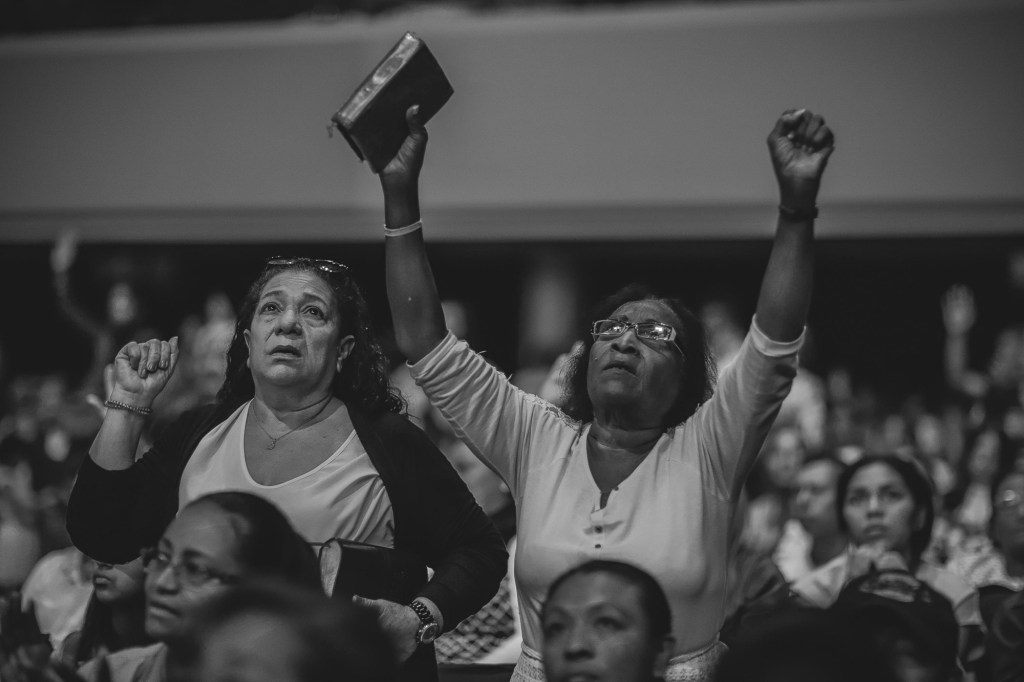
As believers, we are called to intercede for our leaders, nations, and for peace, especially in Jerusalem. In times of uncertainty and need, communal prayer is a powerful way to ask God to bring change, guidance, and healing. Below is a structured prayer for anyone who wishes to lift up these petitions over a community, a nation, or even the entire world.
Heavenly Father,
We come before You with humble hearts, united as Your people. You are the Almighty God, Creator of Heaven and Earth, and we honor You, acknowledging Your sovereign power over all nations. We gather in Your holy presence, seeking Your guidance, love, and protection over all people and lands.
Lord, we worship You
For You are good, and Your mercy endures forever. You are the King of Kings and the Lord of Lords, worthy of all honor and glory. We lift Your name high above all the earth, praising You for Your greatness, Your compassion, and Your mighty works.
Thank You, Lord,
For the blessings You have poured out upon us and our nations. You have sustained us through every season, and Your provision and protection have been unwavering. We are grateful for Your faithfulness, for hearing our prayers, and for Your unending love that guides us.
Forgive us, Lord,
For any ways we have strayed from Your will. We confess any sins of our nations, communities, and ourselves. We ask for Your cleansing, renewing us and bringing us back into alignment with Your ways. As we turn to You, we seek Your mercy and forgiveness, knowing that You are a gracious and compassionate God.
Father, we intercede for the leaders of every nation,
Grant them wisdom, courage, and integrity as they make decisions that impact millions. May they lead with righteousness, justice, and compassion, promoting peace and unity. Let Your justice prevail in all nations, and let truth and fairness guide every action and law.
We pray for peace among all people, especially in Jerusalem.
You have asked us to pray for its peace, and we humbly lift this city and its people to You. Bring harmony and understanding to regions marked by conflict, and heal the divisions that have separated us. Surround every nation with Your protection, Lord, shielding the innocent and vulnerable from harm.
Lord, we ask for a spiritual awakening across the world.
Pour out Your Spirit on every land and community, that hearts may turn toward You. Bring about a revival in faith, hope, and love, so that we may see Your Kingdom come and Your will be done on earth as it is in heaven.
As Your Word declares,
“If my people, who are called by my name, will humble themselves and pray and seek my face and turn from their wicked ways, then I will hear from heaven, and I will forgive their sin and will heal their land” (2 Chronicles 7:14). We stand on this promise, believing that as we humble ourselves, You will hear and bring healing and restoration.
Lord, we also pray for specific needs among the nations:
For those suffering from poverty and hunger, may You provide. For those impacted by natural disasters, may You bring comfort and relief. For the sick, may You bring healing, and for those who mourn, may You bring peace.
We trust in You, Lord,
Believing that You can do exceedingly and abundantly more than we ask or imagine. We thank You for hearing our prayers and for the answers that are already on the way. May Your will be done, Lord, and may Your name be glorified in all nations.
In Jesus’ name, we pray. Amen 🙏
May this prayer bring unity and strength, inviting God’s presence, protection, and guidance over all people and nations.
This is what the LORD says: “Cursed is the one who trusts in man, who depends on flesh for his strength and whose heart turns away from the Lord.” — Jeremiah 17:5
When Spiritual Leaders Fall: How to Stay Strong
A lot of Christians face moments when a spiritual hero falls. This could be a father, coach, mentor, pastor, or leader—someone you admire, whose books you read or whose ministry you follow. The awareness that they’ve fallen can deeply shake any believer’s faith. Here are a few ways to recover and remain strong when faced with instances like this.
Understand This to Remain Unmovable
1. Miracles Are a Sign That God Is Good, Not a Confirmation of a Minister’s Integrity
When you discover that a minister you follow has had a moral failing, scandals surface, and your faith might get shaken. Many become distrustful, skeptical, and afraid, closing their hearts to new leaders.
I experienced this at 16 or 17 when a gentleman, whom God used in another country, fell. I had followed him closely—buying every book he had, listening to every sermon, and trying to pray and fast like he did. But when I found out about his immoral behavior, it shook me. You go from admiring them to suddenly distrusting all leaders. This skepticism can settle in your heart, making it difficult to trust again.
It’s important to understand that while miracles are a sign that God is good, they do not always confirm that the minister is good. When people are used by God for miracles like prophesying, healing, or deliverance, we often assume it’s because of their holiness. However, this view is incomplete and inaccurate.
2. It’s the Devil’s Goal to Allow the Minister to Rise as High as Possible Before a Big Fall
I believe that sometimes the devil allows a minister to live in secret sin for a long time, allowing them to rise to prominence. When they eventually fall, the damage is much greater. The more well-known the minister, the greater the harm within the body of Christ.
The devil knows this and waits for the right moment to cause the most damage. When a leader with influence falls, it can create widespread distrust and pain among believers.
3. God Is the One Who Brings Hidden Things to Light
Luke 8:17 says, “For nothing is secret that will not be revealed, nor anything hidden that will not be known and come to light.”
God reveals both good and bad things done in secret. He is patient, wanting everyone to come to repentance, but when leaders refuse to repent, God eventually exposes their sin to prevent further harm.
4. When We Notice Unrepentant Sin in Our Leaders, We Can’t Ignore It
Don’t ignore unrepentant sin in your leaders. Address issues like sexual immorality, dishonesty, denial of core doctrines, abuse of power, or lack of self-control in a respectful manner. If leaders isolate followers and demand absolute loyalty, it’s a sign of a cult.
When leaders control aspects of their followers’ lives—associations, living arrangements, finances—and manipulate them through fear, they are leading through a demonic trap of control and witchcraft.
5. You Can Receive a Blessing from a Ministry Without It Being Contaminated
Even if a ministry later falls into scandal, the blessings you received from it are still from God. For example, if Judas gave a gift from Jesus’s ministry fund before his betrayal, the gift was still valid. Similarly, if you were blessed by a ministry that later faced moral failure, those blessings came from God, not the fallen leader, and therefore, they are not contaminated.
How to Heal
Grieve, Don’t Gloat
When leaders fall, it’s painful. Grieve for them instead of gloating. We see in the Bible that Samuel grieved for Saul (1 Samuel 16), and we should do the same for fallen leaders.
Heal with Time
Healing takes time, but with Jesus, it is possible. Spend time in His presence and allow Him to guide you through the process. Don’t let betrayal turn into bitterness. Release unforgiveness and trust that God has a better future for you. Remember, just because one leader fell doesn’t mean all will. God has still raised up good leaders.
Trust Slowly
Forgiveness doesn’t mean instant trust. Trust must be earned over time. It’s important to forgive fallen leaders, but trust is something they need to rebuild.
Be Hopeful
Despite some ministers falling, many others remain strong and faithful. Focus on leaders who demonstrate godly character and consistent good fruit, rather than those who are merely famous. Trust that God can restore what has been lost and bring healing and hope for the future.
Bible Verses to Reflect On
It is better to trust in the Lord than to put confidence in man. It is better to trust in the Lord than to put confidence in princes. — Psalm 118:8-9
Trust in the LORD with all your heart, and do not lean on your own understanding. In all your ways acknowledge Him, and He will make straight your paths. — Proverbs 3:5-6
There is no distinction: for all have sinned and fall short of the glory of God. — Romans 3:23
If we say we have no sin, we deceive ourselves, and the truth is not in us. If we confess our sins, He is faithful and just to forgive us our sins and to cleanse us from all unrighteousness. — 1 John 1:8-10
“I am the Lord! That is My name! I will not share My glory with anyone else, or the praise due Me with idols.” — Isaiah 42:8
CitizenGO – started this petition to The UK Prime Minister, The Right Honourable Sir Keir Starmer KCB KC MP, and UN Ambassador Dame Barbara Janet Woodward DCMG OBE – 2024/09/05
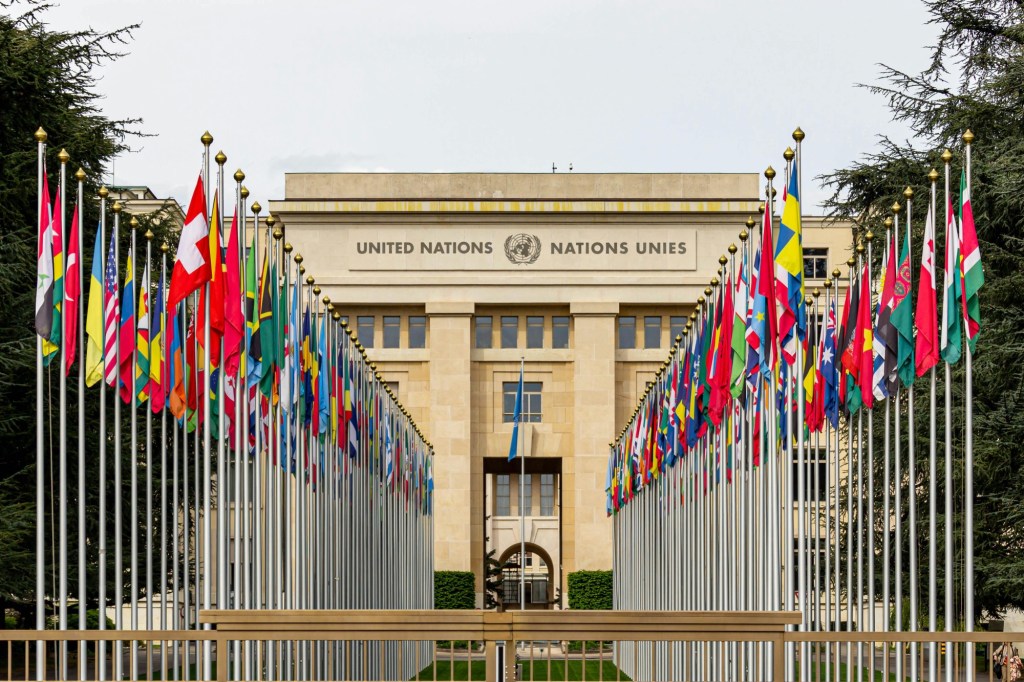
The UN (United Nations) is on the brink of legalising something unimaginable that will effect children around the world.
Right now, it’s pushing a horrifying treaty that could make it acceptable to create and possess explicit materials involving children—as long as it’s deemed “private” or “consensual”.
The UN’s latest treaty on cybercrime could allow predators to exploit children under the guise of “consensual” or “private” use of sexual content – child rape material.
Imagine AI-generated images of children in disturbing scenarios or real minors (children) being manipulated and / or coerced into creating their own exploitation—all potentially decriminalised. This is beyond comprehension—it’s a direct threat to the safety of every child.
If this treaty is signed, it could pave the way for the normalisation of the most horrific forms of child exploitation and even elements of paedophilia around the world.
And the UN isn’t just allowing this—they’re endorsing it.
By decriminalising “consensual” child pornography i.e child rape material, they’re opening the floodgates for paedophiles and predators. And make no mistake—if we let this happen, it’s only a matter of time before they push for even more: lowering the age of consent and defending the “rights” of those who prey on our children.
This is a nightmare in the making, and we cannot afford to wake up too late. We are standing at the edge of a cliff, and if we don’t act now, the protections that keep our children safe will be eroded.
What will be left? A world where the law protects predators, and our ability to safeguard our children will be stripped away.
We must rise up and make our voices heard. Add your name today to demand that the UK Prime Minister, Sir Keir Starmer, and UN Ambassador Dame Barbara Janet Woodward block this outrageous treaty.
The time to protect our children from this madness is now—before it’s too late.
Urgent: Opposition to Proposed UN Cybercrime Treaty
Dear The Right Honourable Sir Keir Starmer KCB KC MP and Dame Barbara Janet Woodward DCMG OBE,
I am writing to express my deep concern regarding the new UN treaty on cybercrime. What should be a positive step toward global safety has instead raised significant alarm.
Among the most distressing aspects of this proposed treaty is the inclusion of language that would decriminalize certain forms of child pornography.
According to Article 14 of the treaty, countries may choose to decriminalize the production, distribution, and possession of content depicting children that are sexually exposed so long as the material does not represent an “existing person” or does not visually depict actual “child sexual abuse or child sexual exploitation.”
This proposal is not only deeply unethical but also poses a direct threat to the safety and well-being of the most vulnerable members of our society—our children.
It opens the door to depictions of paedophilia and legalizes some forms of child pornography, long considered illegal.
It is deeply troubling that the UN, which should prioritize the protection of all citizens, especially children, is considering provisions that could improve the social perception of paedophiles and protect those who possess and consume such vile material.
We must keep these dangerous individuals far away from our children and ensure that their abhorrent behaviour is not legitimised through international treaties.
In light of this, I urge you to take a stand against this treaty when it comes before the United Nations General Assembly this month. Please abstain from endorsing any agreement that would undermine the protection of our children and compromise the safety of our society.
Thank you for your attention to this critical issue.
[Your Name]
—————
It’s important. Will you sign it too? Here’s the link:
“He said to her, “Conjure up for me, please, and bring up [from the dead] for me [the spirit] whom I shall name to you.” But the woman said to him, “See here, you know what Saul has done, how he has cut off (eliminated) those who are mediums and spiritists from the land.” – “For false christs and false prophets will rise and show great signs and wonders to deceive, if possible, even the elect” – “No wonder! For even Satan disguises himself as an angel of light.” ~ 1 Samuel 28:7-10; Matthew 24:24; 2 Corinthians 11:13.
Praying to the dead is strictly forbidden in the Bible. Deuteronomy 18:11 tells us that anyone who “consults with the dead” is “detestable to the Lord.” The story of Saul consulting a medium to bring up the spirit of the dead Samuel resulted in his death “because he was unfaithful to the LORD; he did not keep the word of the LORD and even consulted a medium for guidance” (1 Samuel 28:1-25; 1 Chronicles 10:13-14). Clearly, God has declared that such things are not to be done.
Consider the characteristics of God. God is omnipresent—everywhere at once—and is capable of hearing every prayer in the world (Psalm 139:7-12). A human being, on the other hand, does not possess this attribute. Also, God is the only one with the power to answer prayer. God is omnipotent—all powerful (Revelation 19:6). Certainly, this is an attribute a human being—dead or alive—does not possess. Finally, God is omniscient—He knows everything (Psalm 147:4-5). Even before we pray, God knows our genuine needs and knows them better than we do. Not only does He know our needs, but He answers our prayers according to His perfect will.
So, in order for a dead person to receive prayers, the dead individual has to hear the prayer, possess the power to answer it, and know how to answer it in a way that is best for the individual praying. Only God hears and answers prayer because of His perfect essence and because of what some theologians call His “immanence.” Immanence is the quality of God that causes Him to be directly involved with the affairs of mankind (1 Timothy 6:14-15); this includes answering prayer.
Even after a person dies, God is still involved with that person and his destination. Hebrews 9:27 says so: “…Man is destined to die once, and after that to face judgment.” If a person dies in Christ, he goes to heaven to be present with the Lord (2 Corinthians 5:1-9, especially verse 8); if a person dies in his sin, he goes to hell, and eventually everyone in hell will be thrown into the lake of fire (Revelation 20:14-15).
God has provided His Son, Jesus Christ, to be the mediator between man and God (1 Timothy 2:5). With Jesus Christ as our mediator, we can go through Jesus to God. Why would you want to risk the wrath of God?
7 Prayers You Must Stop Praying
Not all prayers are the same. In fact, some prayers are not only unpleasing to God, but they can even border on witchcraft. Praying the wrong type of prayer can introduce problems in life rather than blessings. Here are the seven prayers that you should stop saying today.
1. Praying to Saints or Angels
The first type of prayer to stop is praying to saints or angels. The Bible clearly instructs Christians to pray directly to God through Jesus by the power of the Holy Spirit (1 Timothy 2:5). Nowhere in Scripture are we told to pray through saints, angels, or Mary. These figures did not die for us, nor do they intercede for us at God’s right hand. We must use the direct access we have to God through Jesus.
2. Using Repetitive, Formulaic Prayers
Next, stop using repetitive, formulaic prayers. Jesus warned against babbling like pagans who think they will be heard because of their many words (Matthew 6:7). Genuine prayer must come from the heart, not from mindless repetition. It’s about the sincerity of your heart, not the repetition of your words.
3. Praying for Harm or Curses on Others
Another prayer to avoid is praying for harm or curses on others. Romans 12:14 tells us to bless those who persecute us, not curse them. Using prayer to curse others is a form of witchcraft and is not aligned with Christian principles. Even when Jesus was on the cross, He did not curse His enemies. Instead, He prayed for them.
4. Praying with Manipulative Intentions
Another important reminder is to stop praying with manipulative intentions. James 4:3 warns us that prayers asked with wrong motives will not be answered. Prayer should not be used to manipulate situations or people for selfish gains. Instead, align your desires with God’s will, testing them through your delight in Him.
5. Invoking Spirit Guides or Using Occult Practices
Another prayer to avoid is prayers invoking spirit guides or engaging in occult practices. Deuteronomy 18:10-12 strictly prohibits practices like divination, sorcery, and interpreting omens. Mixing occult practices with prayer is dangerous and unbiblical.
6. Seeking Signs Instead of Trusting God’s Word
Another mistake is seeking signs or omens instead of trusting God’s Word. Jesus warned that a wicked generation seeks after signs (Matthew 12:39). While God can confirm signs through His Word, our faith should be based on His promises, not on supernatural signs.
7. Using Objects as Sources of Power
Avoid using objects as sources of power in prayer. Using things like crystals, rosaries, or any other form of objects to help you connect with God or pray is not biblical and should be avoided. However, the Bible does tell us one thing that helps us to strengthen our prayer. That is fasting (Acts 19:19).
8. Praying for Material Wealth Without Seeking God’s Kingdom
Finally, stop praying for material wealth without seeking God’s Kingdom first. Matthew 6:33 reminds us to seek God’s Kingdom and righteousness before anything else. Prioritizing wealth or fame over spiritual growth leads to misguided prayers. In the Kingdom, the King cares for His citizens. He will provide for us when we prioritize Him first.
Five Short Prayers to Pray
In the Bible, we see that Jesus often prayed all night, Daniel prayed for three weeks, and Nehemiah and the Israelites prayed a lengthy confession and repentance prayer in Nehemiah chapter 9. Longer prayers are needed in our walk with the Lord and provide a lengthy set of benefits. They help us focus, deepen our relationship with God, allow us to pour out our hearts, develop persistence, and promote spiritual growth.
While I often encourage people to go further in their prayer time and to push to know the Lord more, I do want to acknowledge the power that a short and sincere prayer can have on your life.
Matthew 6:7 says, “And when you pray, do not use vain repetitions as the heathen do. For they think that they will be heard for their many words.” The heart of prayer lies in revelation, not repetition. While it’s not wrong to repeat the same prayer multiple times, because Jesus prayed the same prayer three times and so did Paul, the heart of prayer is not in repetition; it’s in revelation. In other words, a prayer’s impact lies in its heartfelt connection with God, not its length. A prayer’s value doesn’t depend on how long it is.
Here are 5 prayers that are powerful if you pray them with the sincerity of your heart
1. Lord, Help Me (Matthew 15:25)
This prayer is for the deliverance of others. A mother worshiped Jesus and then she prayed a sincere, humble, but very short prayer, “Lord, help me!” That prayer was so powerful that Jesus delivered her daughter.
2. Have Mercy on Me (Mark 10:47)
“Jesus, Son of David, have mercy on me!” This is a prayer for a miracle. In God’s mercy, you will find your miracle. We must understand that when God extends His mercy, the miracle is on its way.
3. Lord, Save Me (Matthew 14:30)
This prayer is a plea for intervention and rescue. When you’re overwhelmed by fear or when your life feels like it’s spinning out of control, cry out to the Lord and He will intervene.
4. Show Me Your Ways, Lord (Psalm 25:4)
This prayer is for guidance. When we don’t know which way to go, this short, sincere prayer can help us lean on God’s understanding rather than our own. Prayers that align with God’s will and His purpose recognize and receive His power.
5. Not My Will Be Done But Yours (Luke 22:42)
“Father, if it is Your will, take this cup away from Me; nevertheless not My will, but Yours, be done.” This is a prayer of surrender, aligning your will with God’s will. The ultimate success of prayer is to surrender to God’s will, His plan, and His timing.
What Makes Short Prayers Powerful?
1. Faith Short prayers require faith. It’s not the shortness of the prayer that guarantees the answer, but the faith in that short prayer. The Bible emphasizes that prayers made in faith will be heard and answered by God.
2. Humility Short prayers require humility. They express the true condition of the heart without pretense. God opposes the proud but gives grace to the humble.
3. Urgency Short prayers often arise in moments of great need or urgency, reflecting a deep dependence on God.
4. According to God’s Will Powerful prayers align with God’s will and purpose, recognizing His sovereignty.
Remember that short prayers can be as dynamic and powerful as long ones because the heart of prayer is in its revelation, not in its repetition.
Final Thoughts
We need to be mindful of the prayers we offer to God. I encourage you to avoid prayers that are unbiblical, manipulative, or focused on material gain without spiritual growth. Instead, focus on prayers that align with God’s will, seek His Kingdom, and come from a sincere heart.
God blesses things that are in line with God’s Word.
————
***By Got Questions + Vladimir Savchuk at HungryGen / Photo by Faizi Ali at Pexels
“Woe to those who call evil good and good evil, who substitute darkness for light and light for darkness, who substitute bitter for sweet and sweet for bitter.” ~ Isaiah 5:20
The tale of The Emperor’s New Clothes has captivated readers for centuries, serving as a sharp critique of human vanity, pride, and collective denial. Hans Christian Andersen’s story, however, speaks with renewed relevance in today’s society, where the desire to fit in often outweighs honesty, and social pressures can obscure truth and clarity. Isaiah’s warning in the Bible, “Woe to those who call evil good and good evil, who put darkness for light and light for darkness…” (Isaiah 5:20), resonates deeply in our time. We see modern forms of this inversion in the gaslighting of false truths, narratives that exclude anyone who doesn’t conform, and a “collective narcissism” that prioritizes appearance over integrity. This article revisits the moral insights of Andersen’s story, drawing a parallel to today’s cultural landscape where narratives conflict and individuals face pressure to align with popular opinion or risk exclusion. In a world that frequently blurs lines between right and wrong, Andersen’s cautionary tale offers timeless wisdom, reminding us that courage and innocence, like that of the young child in the story, are essential to speak truth against illusion.
The Tale
Once upon a time… there was an emperor who loved nothing more than fine clothes. He spent all his money on luxurious fabrics and exquisite outfits, caring little for his army, his people, or anything else. He had a new coat for every hour of the day, and instead of attending important meetings, he would simply admire his wardrobe.
One day, two swindlers arrived in the city. They claimed to be master weavers and boasted that they could make the most beautiful fabric in the world—so light and fine that it was almost invisible. But there was something special about it: only the wise and worthy could see it. Anyone who was foolish or unfit for their position would be unable to see the fabric at all.
The emperor was intrigued. “If I had clothes made from this marvellous fabric,” he thought, “I would know who in my kingdom is wise and who is foolish!” So he gave the swindlers a large sum of money and instructed them to begin work immediately.
The two men set up their looms and pretended to weave, though there was nothing on their looms at all. They demanded the finest silk and the purest gold thread, which they stuffed into their bags while they worked at their empty looms late into the night.
Curious about their progress, the emperor sent his most trusted minister to inspect the fabric. The minister entered the workshop, but—oh dear!—he saw nothing. There was no fabric at all!
“Can it be that I am unfit for my position?” the minister thought, his heart pounding. “No one must know!” So he cleared his throat, smiled, and exclaimed, “Ah! Such beautiful colours! Such fine patterns!”
The swindlers beamed with pride. “We are so pleased you like it!” they said, pretending to cut and stitch the invisible fabric.
When the minister returned to the emperor, he reported that the fabric was indeed magnificent. The emperor, eager to see it himself, visited the workshop with his highest officials.
But when he looked at the looms, he saw nothing. Nothing at all!
“Am I a fool? Am I unworthy to be emperor?” he wondered, horrified. But rather than admit it, he smiled and nodded. “It is exquisite!” he declared. His officials, too afraid to say otherwise, all agreed. “Majestic! Stunning!” they cried.
The day of the grand parade arrived, and the swindlers pretended to dress the emperor in his new clothes. They fussed and adjusted the imaginary garments, exclaiming how light and comfortable they were. The emperor stood before a mirror, unable to see anything, yet unwilling to admit the truth.
He stepped out into the streets, and the people of the city gasped. No one could see his clothes—but no one wanted to be thought foolish, so they all cheered, “How splendid! What a marvellous outfit!”
Then, from the crowd, a small child’s voice rang out:
“But he isn’t wearing anything at all!”
A hush fell over the crowd. The people looked at one another, and soon, they began to murmur, “He isn’t wearing anything!”
The emperor felt his face burn with embarrassment. He knew they were right—but what could he do? He straightened his back, held his head high, and continued to march proudly through the streets as his attendants hurried after him, pretending to carry the train of his non-existent robe.
And so, the emperor remained the most foolish of all, trapped by his own vanity and fear of the truth.
Conclusion
The Emperor’s New Clothes remains a poignant reminder that truth can become distorted when pride and conformity overpower self-honesty. Just as the Emperor continued his procession, fully aware of his own nakedness, society today often maintains a facade rather than confront uncomfortable truths. The moral of Andersen’s tale encourages us to value integrity over appearances and to prioritize truth over the allure of fitting in. Let this story inspire us to cultivate discernment, maintain our faith, and seek peace rooted in truth and honesty, drawing courage from the child who dared to speak out. As we navigate a world prone to deception, may we hold firm to what is right and shine light in places obscured by societal pressures.
“Open the gates that the righteous nation may enter, the nation that keeps faith. You will keep in perfect peace those whose minds are steadfast, because they trust in you.” ~ Isaiah 26:2-3
Prayer
Heavenly Father, thank You for the gift of truth that lights our path. In a world that often values appearance over integrity, help me to see with clear eyes and a discerning heart. Give me the courage to speak truth with humility, even when it’s difficult, and to stand firm in my faith, grounded in Your wisdom. Shield my heart from pride and fear of judgment, so I may live with honesty and peace. May Your spirit of clarity and grace be my guide, as I seek to honor You in all I say and do. In Jesus’ name, I pray. Amen.









 The Sisterhood Hub