
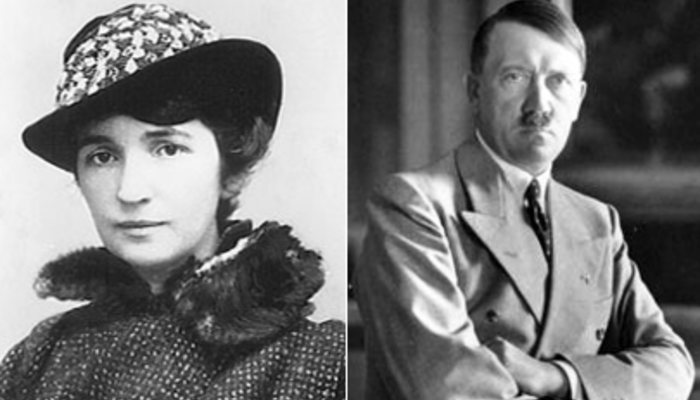
Question: What does Hitler, Margaret Sanger and modern day ideologies all have in common?
Throughout history, ideas cloaked in progress and compassion have often concealed darker agendas. One clear example is Margaret Sanger, the founder of Planned Parenthood, while widely recognized for advocating birth control, her work was deeply rooted in eugenics—a pseudoscience claiming that humanity could be “improved” by controlling who reproduces. This ideology targeted the poor, minorities, and the disabled and was a precursor to policies that influenced Adolf Hitler’s Nazi regime. Sanger was the face of the eugenics movement in the United States.
Disturbingly, these ideologies are resurfacing today under the guise of compassionate policies aimed at solving global problems like poverty and climate change. Bills currently being passed in parts of Europe, for example, advocate for euthanasia and abortion as solutions to societal issues. These practices echo the destructive ideas of eugenics and serve as a chilling reminder of history repeating itself.
This article unpacks Margaret Sanger’s troubling beliefs, her connections to eugenics, the parallels between her ideologies and Adolf Hitler’s policies, and how these concepts persist in modern society. It also examines these issues from a spiritual perspective, revealing the deception and destruction that underpins them.
Who Was Margaret Sanger and What Did She Believe?
Margaret Sanger was an American born in the 1800’s who is celebrated as a pioneer for women’s rights and reproductive health. However, a closer look reveals that her advocacy for birth control was deeply intertwined with harmful, dark and oppressive ideologies. Recently Planned Parenthood has tried to distance itself from Sanger’s eugenics ties, with many branches removing her name from clinics in order to try and erase historical facts of Planned Parenthood’s disturbing origins.
1. Eugenics: The Idea of “Weeding Out” Society
- Margaret Sanger believed that society could be “improved” by preventing certain groups from reproducing. This idea, rooted in eugenics, targeted those she deemed “unfit,” such as individuals with disabilities, mental illnesses, or extreme poverty.
- She infamously referred to such individuals as “human weeds” in her book The Pivot of Civilization (1922). This dehumanizing language revealed her belief that some lives were less valuable than others.
- Her push for birth control wasn’t just about family planning; it was about controlling who had the right to have children, and how many, she once callously quoted, “one of the most merciful thing that a large family does to one of it’s infant members is to kill it.”
2. Targeting Minorities and the Poor
- Sanger spearheaded initiatives like the “Negro Project” in 1939, which promoted birth control among African American communities. While some viewed this as an effort to address poverty, critics argue it was a covert attempt to control black and other minority populations. Sanger was quoted, “The most successful educational approach to the negro is through a religious appeal. We do not want word to go out that we want to exterminate the negro population, and the (Church) Minister is the man who can straighten out that idea if it ever occurs to any of their more rebellious members.”
- Sanger and her colleagues framed these efforts as “help,” but they were rooted in the same racist ideologies that underpin eugenics.
3. Connections to Racist Groups
- Sanger’s support for eugenics has led to allegations of racism, particularly given her associations with eugenicists who promoted sterilization and birth control to curb the reproduction of marginalized groups. In writings and speeches, Sanger expressed views that are classist and ableist, and she once addressed a women’s group associated with the Ku Klux Klan in an effort to promote birth control. While she later criticized their ignorance, her willingness to engage with such groups demonstrates how far she would go to promote her agenda, even if it meant making morally dubious alliances.
Adolf Hitler, Eugenics, and Parallels with Margaret Sanger
The ideology of eugenics didn’t stop with Margaret Sanger, it extended beyond her work and had a significant global impact, influencing Adolf Hitler and the policies of the Nazi regime. Hitler’s early gas chamber experiments on the institutionalised disabled and mentally ill German and Austrian citizens, called ‘the Aktion T4 program’ foreshadowed the broader atrocities of the Holocaust, illustrating the dangers of dehumanizing policies. Critics of modern global health initiatives express concern that contemporary policies aimed at public health or climate change could follow a similar trajectory, evolving into coercive population control measures.
How Hitler Used Eugenics
- Hitler’s policies on sterilization, euthanasia, and genocide were directly inspired by eugenics principles. He sought to create a “master race” by eliminating groups he deemed inferior, such as Jews, Romani people, and the disabled.
- The Nazis’ forced sterilization programs were modeled after similar laws in the United States, which Sanger supported.
Did Hitler Admire Sanger?
Although cited, there is no direct evidence that Adolf Hitler personally admired Margaret Sanger, even though they shared the same ideologies and rooted for similar goals. There are significant connections between the eugenics movements in the U.S. and Europe, which influenced the policies of Nazi Germany.
Nazi Eugenics Influenced by American Policies
Historians agree that Nazi eugenics policies, including forced sterilizations and euthanasia programs, were strongly influenced by American eugenics laws. Key figures in the U.S. eugenics movement, such as Charles Davenport and Harry Laughlin, were cited in Nazi propaganda. This influence contributed to the Holocaust, where millions were murdered under the guise of racial purity. The Nazi regime cited American eugenics programs as justification for their policies, including forced sterilizations and the implementation of genocidal measures. Both Sanger and Nazi officials used pseudoscientific rhetoric to justify their actions, presenting them as efforts to improve the human race, despite the harmful and oppressive consequences. This ideological connection was also referenced during the Nuremberg Trials, where the links between U.S. eugenics programs and Nazi practices were acknowledged.
The Link to Margaret Sanger and Planned Parenthood
Margaret Sanger was an active member of the American eugenics movement, advocating for birth control and sterilization to “improve” society. As noted in research (e.g., Margaret Sanger and the Nazis: How Many Degrees of Separation), the eugenics movement in the U.S. strongly influenced Nazi eugenics. This association ties Sanger’s work and Planned Parenthood to the horrors of Nazism, as both shared a belief in controlling reproduction to shape a “better” society, often through coercive and oppressive means.
Sanger also embraced Darwinism, particularly its emphasis on survival of the fittest. She believed that applying Darwinian principles to human society could improve the gene pool and eliminate those deemed “unfit.” This belief further aligns her views with the ideas of Nazi eugenics, which sought to rid society of “undesirable” individuals.
Rebranding Eugenics
After World War II, the term “eugenics” fell out of favor due to its association with Nazi atrocities. However, the principles of eugenics were rebranded as “family planning,” a term still used today. Planned Parenthood’s early mission reflects this ideological shift.
Modern Policies: The Return of Eugenics?
Eugenics never truly disappeared—it has simply evolved. Many modern policies echo these harmful ideas while being marketed as compassionate or progressive solutions.
1. Abortion and Minority Communities
- Planned Parenthood continues to disproportionately serve minority neighborhoods. While supporters argue this improves healthcare access, critics point to Sanger’s eugenics legacy, suggesting these clinics target the same groups she sought to suppress.
- Abortion rates among African American and Hispanic communities are significantly higher than among white populations, raising concerns about systemic targeting.
2. Euthanasia and Assisted Suicide
- In Europe and parts of Canada, euthanasia laws have expanded to include individuals with disabilities and mental illnesses. These policies, marketed as compassionate “choices,” echo the eugenics-era belief in eliminating those deemed burdensome to society.
- These laws disproportionately impact vulnerable groups, raising ethical concerns about coercion and societal devaluation of life.
3. Global Population Control
- Organizations like the World Health Organization (WHO) and World Economic Forum (WEF) advocate for population control in developing countries, often tying these programs to climate change initiatives.
- In some cases, nations have reported being pressured to implement sterilization programs or abortion policies in exchange for foreign aid—echoing the coercive tactics of eugenics campaigns.
4. Genetic Screening and Selective Abortion
- Advances in prenatal testing allow parents to screen for disabilities like Down syndrome. In countries such as Iceland, nearly all pregnancies with a Down syndrome diagnosis end in abortion. Critics argue this amounts to modern eugenics, targeting those deemed less “perfect.”
The Spiritual and Ethical Perspective
For many of us, the debate over abortion and related policies feels like part of a larger spiritual battle. Citing passages like Ephesians 6:12, “For we do not wrestle against flesh and blood, but against principalities, against powers, against the rulers of the darkness of this age,” it becomes clear that these issues reflect a deeper struggle between good and evil.
From this perspective, policies that promote abortion or population control are seen as opposing the sanctity of life. These actions are viewed as contrary to divine principles, as they undermine God’s plan for humanity. In this way, the modern debate is not just a political issue, but a spiritual one, where we are called to stay vigilant and resist the moral decay in society.
Playing God: A Sinful Rebellion Against the Creator
At the core of eugenics and similar ideologies is the desire to play God with human lives—determining who is worthy to live and who is not. This inflated sense of power and nefarious manipulation reflects the nature of their father, the devil, who “was a murderer from the beginning, not holding to the truth, for there is no truth in him” (John 8:44).
A Spiritual Battle: Why This is Satanic
From a biblical perspective, the dehumanization and destruction central to eugenics reflect satanic influence. The Bible teaches that every person is made in God’s image (Genesis 1:27) and has inherent value.
- Deception: Satan often disguises evil as good, twisting compassion into harm. Eugenics was presented as “scientific progress,” while modern policies like euthanasia and abortion are framed as acts of kindness.
- Dehumanization: By labeling people as “weeds” or “unfit,” eugenics denies the God-given dignity of every individual. This devaluation of life is a direct rebellion against God’s creation.
- Mass Destruction: The ultimate goal of eugenics—whether through sterilization, abortion, or euthanasia—is the destruction of life. This reflects Satan’s role as a murderer and deceiver (John 8:44).
- Spiritual Warfare: Ephesians 6:12 reminds us that our struggle is not merely against human systems but against “spiritual forces of evil.” Recognizing these influences helps us stand firm against them.
Recognizing and Resisting Evil
Margaret Sanger’s advocacy for birth control was rooted in eugenics, targeting minorities, the poor, and the disabled. Her ideas influenced Nazi policies and continue to echo in modern practices like abortion, euthanasia, and population control.
As Christians and as a society, we must remain vigilant against these deceptions. Upholding the sanctity of life and recognizing the inherent worth of every individual is essential to combating these ideologies. We are all made in the image of God, and He did not make a mistake when He knitted us together in our mothers’ wombs. All our days are numbered, and we are deeply loved by God. The enemy’s efforts to continuously mar the ‘image’ of God reflect his desire to destroy and distort the inherent dignity of each person. We must resist these lies, stand firm in the truth, and honor the sanctity of every life.
Defund Planned Parenthood:
Planned Parenthood, America’s largest abortion provider, performs over 1,000 abortions every day—approximately one every 80 seconds. In the 2022-2023 fiscal year alone, the organization received $699 million in taxpayer funding. Over the years, this has amounted to billions of dollars supporting practices that many Americans oppose.
Live Action, a leader in the pro-life movement, is pioneering the effort to end this taxpayer funding. Sign the petition today to join the fight and demand that the government stops funding Planned Parenthood.
Further Reading and References
- Margaret Sanger: Darwinian Eugenicist (Creation Ministries International)
- Timeline of Eugenics in America (Genome.gov)
- Time: Planned Parenthood and Margaret Sanger’s Troubling Legacy
- Academia.edu: Margaret Sanger and the Holocaust
- America Magazine: Sanger’s Eugenicist Legacy
- Courier Herald: Hitler, the KKK, and Margaret Sanger
- EWTN: Who Was Margaret Sanger?
- Edwin Black: War Against the Weak: Eugenics and America’s Campaign to Create a Master Race
————————————
***Photo by Newsbusters
Topics of Interest:
Support for Crisis Pregnancies in USA & UK
GET INFORMED:
Please be informed and educated about abortion procedures and gain a better understanding of what they entail, visit: PRO LIFE CONNECT. This resource provides accurate, evidence based information designed to educate and inform people about the medical, emotional, and social aspects of abortion. Understanding the facts is a critical step in making informed decisions and engaging thoughtfully in the abortion debate.


 The Sisterhood Hub