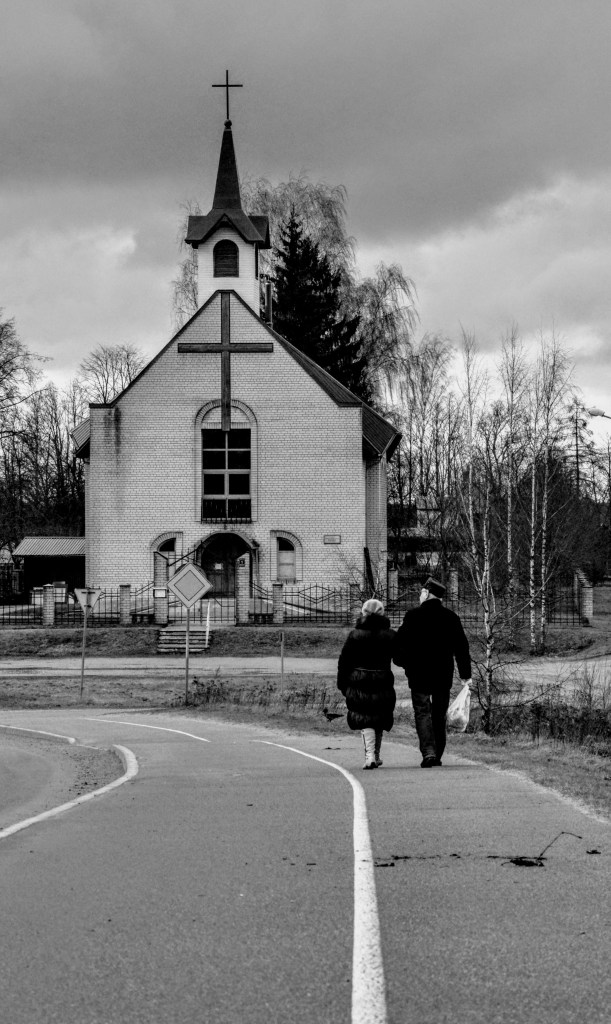
Power Through Unity in The Church


“Two can accomplish more than twice as much as one, for the results can be much better. If one falls, the other pulls him up; but if a man falls when he is alone, he’s in trouble…..And one standing alone can be attacked and defeated, but two can stand back-to-back and conquer; three is even better, for a triple-braided cord is not easily broken” (Eccl. 4:9-12-TLB).

You may remember the story from Aesop’s fables, where an old farmer taught an object lesson on unity to his three children, who were constantly quarreling among themselves. Taking a number of weak sticks, he showed them how the sticks could quite easily be broken individually, but when tied together in a bundle were almost impossible to break. Even the children of this world realise that there is strength in unity and fellowship. “The locusts”, the Bible says, “though small are unusually wise, for though they have no leader, they stay together in swarms (Prov. 30:27-TLB). Therein lies their safety and their power. In the church of Jesus Christ, we need to relearn this lesson.

The unity that the New Testament speaks of, is the unity of the members of Christ’s Body with one another, under the Headship of Christ – an organic unity and not an organisational one. It excludes those who are outside of the Body of Christ, even if they have the label `Christian’. There can be no union between the living and the dead. Those made alive in Christ through the new birth can find their spiritual unity only with others who have been similarly regenerated by God. Christian unity is forged by the Holy Spirit Who alone makes us members of Christ’s Body. The Bible exhorts us to “strive earnestly to guard the harmony and oneness produced by the Spirit” (Eph. 4:3-Amplified). Any unity formed by man is worthless.

Satan is a cunning foe and he realises that he cannot overcome a united Christian fellowship that lives under the authority of Christ and His Word. His strategy for warfare, is therefore, to begin by sowing discord, suspicion and misunderstanding among the members of a fellowship, so that he can paralyze them individually. Jesus said that the powers of Hell would not be able to overcome His church.

(Matt. 16:18). It is the church, the Body of Christ, that is promised victory in the battle against Satan. A believer standing in isolation from other believers may find himself defeated. Satan attacked Christ constantly during Christ’s life on earth, but was unable to prevail. Finally at the cross, Satan’s power over man was taken away from him by Christ (Heb. 2:14; Col. 2:15).

Today, Satan cannot attack the Risen Christ. His attacks are therefore directed at Christ’s Body, the church. Victory over Satan is possible only as we stand united against him, as a Body under the Headship of our Lord. In a fellowship of Christians, even if one member is not fulfilling his function, the power of the Body is, to that extent, weakened. Satan knowing this, seeks continually to isolate individual members of a group, or to divide the group (or church) into cliques. Either way, he succeeds in his aim. This is why we must be constantly on our guard against the wiles of Satan, lest he weaken the links between us and other members of the Body of Christ.

Jesus made many promises in relation to individual believers praying to God. But in Matthew 18:18,19, we have a promise made to a section of Christ’s Body praying in unison: “Whatever you bind on earth”, Jesus said, “is bound in heaven, and whatever you free on earth will be freed in heaven. I also tell you this – if two of you agree down here on earth concerning anything you ask for, my Father in heaven will do it for you” (TLB). The word translated “agree” in verse 19, is the Greek word “sumphoneo”, from which our English word “symphony” is derived. Jesus was referring in these verses to a unity among even two of His children that would be like a musical symphony. This implies more than just saying “Amen” at the end of another’s prayer. Symphony implies a deep harmony of spirit between those who are praying together.

When the fellowship of even a small group of Christians is like the symphony produced by a well-conducted orchestra, then (Jesus said) their prayers will have such authority that anything they asked for would be granted. Such a group of Christians would have authority to bind Satan’s power and to liberate Satan’s captives. The reason why such a fellowship could exercise such authority was explained by Jesus: “For”, He said, “wherever two or three are gathered together into My Name, there I AM in the midst of them” (verse 20-Amplified). Christ the Head is present with all His authority in the midst of such a fellowship, and therefore the powers of Hell can never stand against it. One reason why the church described in the “Acts of the Apostles” knew the reality of this authority was because they had this unity in their fellowship. “All of these (the 11 apostles) with their minds in full agreement devoted themselves steadfastly to prayer….. “And all who believed were united and together…..and day after day they regularly assembled in the temple with united purpose…… “And they (the apostles and other believers)… lifted their voices together with one united mind to God… (Acts 1:14; 2:44,46; 4:24-Amplified). Because they were integrated into one Body under the authority of Christ, they could exercise the Lord’s authority in prayer. They were not highly educated, they had no social influence and no financial backing, yet they turned the then-known world upside down for Christ. When Peter was locked up in prison, all of Herod’s forces could not stand against the power of that early church on its knees before God (Acts 12:5-11). Satan’s kingdom was shaken to its foundations by that church as it went forth as one Body, registering the victory and authority of Christ in human lives all over the Roman Empire (See Acts 19:11-20 for one example of this).

Today Satan ridicules the efforts of a disunited church trying to oust him from his strongholds by gimmicks, gadgets, conferences, theological knowledge, eloquence and trained choirs. None of these are of any avail against Satan. The church needs to know again the reality of being one Body united under the Headship of Christ. A fellowship of Christians properly related to each other, growing in love for one another and living in obedience to Christ and His Word is the greatest threat to the kingdom of the Devil on earth. Satan dreads nothing else as much as that.

Let us make it our prayer that the Lord will help us to live each day in the light of the glorious truth of our being one Body in Christ. As more and more Christians throughout the world begin to understand and to live by this truth, we shall assuredly see the church, though small in number, restored to her pristine glory, an instrument in God’s Hands to rout the forces of darkness and a channel of blessing to a needy world.

——-

** Copyright – Zac Poonen. No changes whatsoever are to be made to the content of the article without written permission from the author at CFC India.com / Photo by Aigars Neļķefrom Pexels

How to Start a House Group Fellowship

The really good news is that, to start a house church, you can lay down the burdens of planning how to cope with buildings, programs, and outreach strategies. You don’t have to be an impressive leader (though you probably will have some leadership gifts). To start a house church, you simply need to open your home to friends and neighbours and take things one step at a time.

Pray First!

The first step to starting a house church is to pray. House-church ministry must be birthed in prayer. Though it is a simple step, without prayer and God’s leading, we invite trouble. Starting a house church cannot be just a good idea; it must be a God idea. If you feel that you are called to start a house church, gather a few like-minded people together and begin to pray so that you can receive a strategy from God. Many house churches have false starts that are directly linked to a lack of prayer.

Taking time to pray gives God the opportunity to work in our hearts and purify our motives. When house churches start up because of a reaction to something we don’t like about the established church, the house church’s identity is built from rebellion and discord. Healthy house churches, on the contrary, must begin with God’s leading and a desire to reach those who don’t know Jesus. What a person sows, the Bible teaches us, he also reaps. Therefore, if you begin a house church because of an offense toward an existing church or leader, you will sow the seeds of fault-finding and pride in the church you are creating.

Along with prayer, it is also important to look to the local Christian community’s leaders for spiritual guidance and advice as you launch a new church. From day one of the Lancaster Micro-Church Network, we have cultivated relationships with established believers in our local community and beyond to answer questions and explain to them the concept of micro-church. A wise Bible teacher once said, “Lone rangers get shot out of the saddle.” We agree. Healthy house-church movements are not exclusive groups who refuse to be accountable. Vibrant micro-church networks are spiritually connected to leadership in the Body of Christ.

Know Whom You Are Called to Reach

Every micro-church should know whom they are called to reach. Here’s a great suggestion from Tony and Felicity Dale, who together started a successful network of house churches in Texas:

Draw together people from your circle of influence. We had a number of business associates who were not Christian, but whom we had come to know pretty well over a period of months or years. We asked a dozen of them to join us in a study of business principles while enjoying pizza in our home, using the book of proverbs as our textbook.
There were no rules to our discussion; everybody’s opinion was valid and there was no such thing as a wrong answer. Gradually we introduced prayer and worship and over the course of a year, every one of them became a Christian. They formed the nucleus of our original house church.

When the first micro-church in the Lancaster Micro-Church Network started in our (Larry’s) home a few years ago, we asked God for pre-Christians or new believers to join us—we also asked for labourers to help in the endeavour. However, we ran into some immediate problems. First of all, lots of believers wanted to come and check it out. Some of these Christians were looking for the latest Christian fad. They liked the idea that the micro-church met on a Wednesday, not a Sunday, and that it met in a living room, not a sanctuary.

But we were not starting something new for the sake of starting something new! Since we had a mandate from the Lord to reach new believers, we asked inquiring Christians not to come to our meetings. Having too many older Christians in the group would make the pre-Christians feel uncomfortable.

Jim Petersen, in his book Church Without Walls, clearly describes what can happen if a “migratory flock from neighbouring churches” invades a new church simply because they are curious:

I have a friend who was a part of a team that set out to start a church. The congregation was divided into house churches, each of which was assigned an elder who helped shepherd the members of that house church. Centralised activities were kept at a minimum for the sake of keeping people free to minister to their families and unbelieving friends.

The weekly meetings were dynamic. I will never forget the first one I visited. People of all sorts were there, from men in business suits to ponytails. Many were new believers. The Bible teaching was down to earth, aimed at people’s needs. I loved it.

So did most everyone else who visited. The word got around and soon the migratory flock from neighbouring churches came pouring in. Their needs consumed the energies of the leaders of this young church. Their wants gradually set the agenda. The inertia of the traditions of these migrants engulfed this very creative effort and shaped it accordingly.

So what’s the problem, we ask? The problem is that the vision that original team had for taking the church into society through the efforts of every believer was frustrated.

My wife and I knew that the vision the Lord had given to us to reach a new generation had to be safeguarded in the early days of our new micro-church network, and the young leaders of our network wisely set clear perimeters. They asked God to bring pre-Christians, new believers, and labourers—and the Lord honoured their request.

The Size of the House Church Matters

Quite soon, my wife and I had a second problem in our home-based micro-church. The pre-Christians attending invited their friends, and within 6 months of starting, we had 50 people in our living room on a given night. It was way too large!

It is wise to keep the number of people to between 6 and 12. From my experience, groups less than 6 strong tend to dwindle and be lacklustre because of the decreased number of relationships and interactions possible. However, groups over 12 tend to lose intimacy and every-member participation. It is perhaps not surprising, then, that rapid church planting movements today reproduce small house churches numbering between 10 and 30 people.

Frequency of Meeting

House churches should meet at least once a week to maintain a sense of connectedness. Again, though, we must emphasise the importance of flexibility. Some micro-churches meet at the same location every week, while others move the meeting place by rotating turns in members’ houses. Some groups meet more frequently, others less often. Some house churches meet during the week, others on weekends.

It is crucial that meeting together is an expression of the members’ desire to build community together—not just a religious duty to add more meetings to their already busy lives. If gathering together is done around food and for the purpose of fellow-shipping, it is more natural. Choose times that are convenient for everyone involved and then make an effort to connect with the other members (even just by phone or e-mail) outside of official meeting times. Building a spiritual family takes more than an hour or two one night a week!

Meeting Components

One thing is certain about house-church meetings: they should not be a smaller scale duplicate of a typical Sunday morning meeting. A house-church gathering should not look like an “escaped meeting captured by a living-room,” as one young man described house churches that do little more than replicate and repeat the traditional church service format: worship, teaching, prayer.

Instead, we have learned that there are often four basic components to a micro-church gathering: eating, meeting, small groups, and “the meeting after the meeting.

Although eating (usually a meal) is one of the elements of a house-church gathering, sometimes there may not be food. One week the house church may help someone trim their shrubs and have a time of prayer afterwards, and the next week they may come together for a whole smorgasbord of worship, prayer, teaching, and fellowship. Every week should be fresh and informal as people meet to discuss the life of Jesus and life with Jesus.

—Larry Kreider and Floyd McClung; excerpted from their book Starting a House Church (Regal Publishers, 2007) / Picture by Fauxes at pexels / By Small Groups