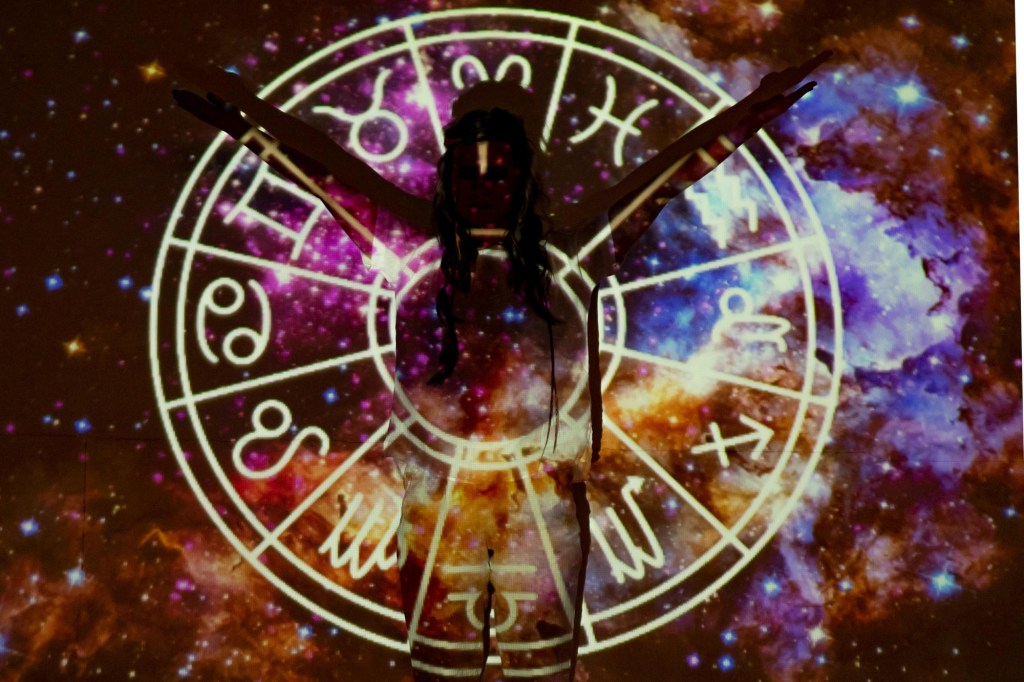
What I discovered after leaving the New Age and coming to faith in Jesus Christ.
The following article is based on my personal experience. I was once deeply involved in New Age spirituality before coming to faith in Jesus Christ. My journey from New Age spirituality to Christianity profoundly changed the way I understood God, truth, spirituality, salvation and my own identity. I am sharing these reflections because I know how appealing these beliefs can be, and I also know what it is like to discover that something which appears deeply spiritual can lead us away from the God revealed in Scripture.
INTRODUCTION
I know what it is like to search for God while looking in places that ultimately led me further away from Him. I was deeply involved in New Age spirituality, and at the time, I believed I was searching for truth, healing, meaning and spiritual understanding. Much of what I encountered sounded beautiful. There was language about love, light, energy, consciousness, healing, awakening and personal transformation. It did not initially feel like a rejection of God. In many ways, it felt like I was becoming more spiritual and moving closer to something greater than myself.
That was part of what made it so difficult to recognise what was happening.
I was not looking for something that I believed was evil. I was looking for something spiritual. I wanted answers. I wanted healing. I wanted to understand the deeper meaning of life. I wanted to know what existed beyond what I could see. Yet as I eventually began comparing the beliefs I had embraced with the teachings of the Bible, I started noticing something that I could no longer ignore. The spirituality I had trusted was repeatedly moving the centre of authority away from God and placing it back onto me.
God was being replaced with the universe. His Word was being replaced with personal revelation. Prayer was being replaced with spiritual techniques. Repentance was being replaced with self improvement. His authority was being replaced with intuition and personal experience. Salvation was being replaced with the belief that I could somehow awaken, heal or transform myself.
The language was spiritual, but the direction was increasingly away from dependence on God and towards dependence on self.
That is the central concern behind this article.
I am not writing this to attack people who are searching for meaning, healing or spiritual truth. I understand that search because I was there. Nor am I suggesting that every person who identifies with New Age spirituality believes every idea or practices everything discussed here. New Age spirituality is a broad term covering many different beliefs, practices and movements.
What I am doing is examining forty beliefs and practices commonly associated with New Age spirituality and comparing them with the biblical understanding of God, humanity, truth, sin, salvation and spiritual authority.
Because beneath all the individual practices, there is one question that matters more than any other.
Who gets the final word, God or me?
That is the question I eventually had to face.
1. IT CAN MAKE HUMANS DIVINE
One of the most fundamental differences between New Age spirituality and biblical Christianity concerns the nature of humanity. Some New Age teachings suggest that human beings are divine in themselves, or that we are fragments or expressions of a divine universal consciousness. The emphasis is often placed on awakening to the divinity that supposedly already exists within us.
The Bible presents a completely different picture. Human beings are created in the image of God, which gives every person immense dignity and value, but being made in God’s image does not make us God. There remains an absolute distinction between Creator and creation. God is God, and we are His creatures. When that distinction disappears, spirituality can become centred on discovering our own supposed divinity rather than worshipping the One who created us.
Scripture: Genesis 1:27, Isaiah 45:5
2. IT CAN REPLACE THE PERSONAL GOD WITH AN IMPERSONAL FORCE
New Age spirituality can use the word God while giving it a very different meaning from the God revealed in Scripture. God may be described as energy, universal consciousness, the universe, the source, vibration or an impersonal force connecting everything.
The biblical God is not an impersonal energy. He speaks, He creates, He commands, He loves, He judges, He forgives and He calls people into relationship with Him. The God of Scripture is personal and sovereign. Replacing Him with an impersonal force changes the very nature of worship and relationship with God.
If God is merely energy, there is no personal Lord to obey. If God is simply the universe, there is no Creator standing above creation. What appears to be a small change in terminology can therefore represent a completely different understanding of who God is.
Scripture: Exodus 3:14, Isaiah 45:5
3. IT CAN MAKE THE SELF THE FINAL AUTHORITY
A common theme in New Age spirituality is the encouragement to look within for answers, guidance and truth. Intuition, inner wisdom and personal spiritual experience can become more authoritative than anything outside the individual.
This raises an important question. What happens when what I feel inside contradicts what God has revealed? If my intuition always gets the final word, then ultimately I am the authority. I may still use spiritual language and speak about God, but I have placed myself in the position of deciding what is true.
The Bible calls us to trust God rather than placing ultimate confidence in ourselves. Human beings are capable of misunderstanding, self deception and error. Our inner voice therefore cannot become the final authority over God’s revealed truth.
Scripture: Proverbs 3:5, 6, Jeremiah 17:9
4. IT CAN MAKE PERSONAL EXPERIENCE THE MEASURE OF TRUTH
Spiritual experiences can feel extraordinarily powerful. A person may experience an overwhelming sense of peace, a profound connection with the universe, an unusual coincidence or what appears to be a supernatural encounter. These experiences can feel so real that questioning them seems almost impossible.
But the fact that an experience feels real does not automatically mean that our interpretation of it is correct. Christianity teaches that spiritual experiences must be tested rather than automatically accepted as divine revelation.
The Bible directs us back to God’s truth rather than making our experiences the final standard. Experience can influence us deeply, but experience itself cannot determine what is true.
Scripture: John 17:17, 1 John 4:1
5. IT CAN MAKE FEELINGS EQUAL TO TRUTH
The idea that something must be true because it feels right is particularly attractive in modern spirituality. If a belief brings peace, feels positive or resonates deeply within us, it can be accepted as personally true.
The problem is that feelings change. We can feel something strongly and still be mistaken. Fear, desire, pride, excitement and disappointment can all influence how we perceive reality. What feels right to one person can feel completely wrong to another.
God’s truth is not determined by our emotional state. Biblical Christianity calls us to bring our feelings under the authority of truth rather than allowing our feelings to define truth.
Scripture: John 17:17, Proverbs 14:12
6. IT REJECTS THE UNIQUE AUTHORITY OF JESUS CHRIST
One of the clearest conflicts between New Age spirituality and Christianity concerns the identity of Jesus. New Age teachings may acknowledge Jesus as an enlightened teacher, spiritual master or example of higher consciousness while rejecting His unique identity as the Son of God and Saviour.
Christianity does not allow Jesus to be reduced to one teacher among many. Jesus made an exclusive claim when He said, “I am the way, and the truth, and the life.” He did not present Himself as one spiritual path among many. He presented Himself as the way to the Father.
If Jesus is who the Bible says He is, then He cannot simply be one option on a spiritual menu.
Scripture: John 14:6, Acts 4:12
7. IT REPLACES SALVATION WITH SELF IMPROVEMENT
New Age spirituality often focuses on healing, awakening, enlightenment and becoming a higher version of oneself. These ideas can sound positive because personal growth is presented as the solution to our deepest problems.
The gospel begins somewhere very different. Christianity teaches that humanity does not simply need improvement. We need reconciliation with God because sin has separated us from Him.
If our greatest problem is simply ignorance, we need enlightenment. If our greatest problem is sin, we need forgiveness. That is why the gospel is not a message telling us to work harder until we become spiritually advanced. It is the message that God has done for us what we could never do for ourselves.
Scripture: Ephesians 2:8, 9, Titus 3:5
8. IT REPLACES GRACE WITH KARMA
Karma and biblical grace present fundamentally different understandings of how people are made right. Karma is often understood as a system of consequences in which actions eventually return to the person who performed them.
The gospel presents something entirely different. Christianity teaches that forgiveness is not something we earn by balancing our spiritual account. It is something God gives through His grace.
We cannot work enough good deeds to erase our sin. We cannot spiritually improve ourselves into perfection. We need mercy.
That is what makes grace so powerful. It means salvation depends ultimately on what God has done, not on how successfully we manage to save ourselves, based on what we have done.
Scripture: Romans 6:23, Ephesians 2:8, 9
9. IT TEACHES REINCARNATION INSTEAD OF FINAL ACCOUNTABILITY
Reincarnation teaches that a person may live repeatedly through different lives, continuing a process of spiritual development. Biblical Christianity presents a very different understanding of human existence.
Scripture teaches that each person has one earthly life, followed by judgment. This gives our present life enormous significance. Our choices matter because this life is not simply one stage in an endless cycle.
The gospel therefore calls people to respond to God now. Christianity does not teach that we will eventually work our way towards God through countless lives. It teaches that we need His grace in this life and that our eternal destiny ultimately rests in His hands.
Scripture: Hebrews 9:27
10. IT REDEFINES SIN AS IGNORANCE OR IMBALANCE
New Age spirituality can describe human problems in terms of ignorance, imbalance, negative energy, low vibration or lack of awareness. While these concepts may seem less condemning than the biblical concept of sin, they also remove something fundamental from the picture.
According to Scripture, sin is not simply being spiritually unbalanced. It is rebellion against a holy God. It is a failure to live according to His righteous standard.
That distinction matters because the diagnosis determines the cure. If I am merely ignorant, I need information. If I am spiritually unbalanced, I need alignment. But if I am a sinner separated from God, I need forgiveness and reconciliation.
Scripture: Romans 3:23, Romans 6:23
11. IT REDUCES THE NEED FOR REPENTANCE
If the problem is simply that humanity needs to awaken, then repentance becomes unnecessary. There is no need to turn away from sin if sin itself has been redefined as ignorance or a low spiritual state.
Jesus, however, called people to repent. Repentance means recognising that we have gone our own way and turning back towards God.
The Christian message is not simply that we should discover ourselves. It is that we should surrender ourselves to God, turn away from sin and receive His forgiveness.
Scripture: Acts 3:19, 1 John 1:9
12. IT TEACHES THAT ALL RELIGIONS ARE ESSENTIALLY THE SAME
New Age spirituality often brings together ideas from many religious traditions and presents them as different expressions of one universal truth. The appeal is understandable. It seems tolerant and inclusive.
The problem is that different religions make contradictory claims about God, salvation, sin, humanity and eternity. They cannot all be saying exactly the same thing.
Christianity claims that God has revealed Himself and that His revelation is not merely one interpretation among many. Jesus is not presented as one path among many. He is presented as the way, the only one.
Scripture: John 14:6, Acts 4:12
13. IT LOOKS TO ASTROLOGY FOR GUIDANCE
Astrology assigns spiritual or personal significance to the positions of stars and planets. People may use birth charts to understand personality, relationships or future events.
From a biblical perspective, this shifts our attention from the Creator to creation. The stars belong to God. They do not possess authority over our identity or destiny.
The Bible consistently directs God’s people to seek Him rather than attempting to obtain hidden knowledge through forbidden spiritual practices.
Scripture: Isaiah 47:13, 14, Deuteronomy 18:10, 12
14. IT CAN TURN COINCIDENCES INTO SUPERNATURAL SIGNS
Repeated numbers, unexpected coincidences, animals appearing at significant moments or particular events happening at what seems like exactly the right time can become interpreted as messages from the universe.
There is nothing wrong with noticing meaningful moments in life. The danger comes when every coincidence is treated as supernatural communication.
Once we begin searching for hidden messages everywhere, subjective interpretation can take the place of God’s revealed Word. Instead of asking what God has actually said, we begin asking what the universe might be trying to tell us.
Scripture: Deuteronomy 29:29, 2 Timothy 3:16
15. IT CAN TURN NUMBERS INTO SPIRITUAL CODES
Numerology and the idea of angel numbers encourage people to interpret numerical patterns as messages carrying spiritual significance. Numbers that repeatedly appear may be seen as signs of guidance, confirmation or warning.
Again, the deeper concern is authority. Where is our spiritual guidance coming from? Are we receiving truth from God’s revealed Word, or are we interpreting patterns and assigning our own meaning to them?
The more we depend on hidden signs, the easier it becomes for subjective interpretation to replace biblical discernment.
Scripture: 2 Timothy 3:16, 17
16. IT USES DIVINATION TO SEEK HIDDEN KNOWLEDGE
Practices such as tarot, fortune telling and other forms of divination seek knowledge about hidden things, the future or spiritual realities.
Scripture specifically warns against these practices. The biblical concern is not simply that they may be inaccurate. It is that God’s people are being directed to seek spiritual knowledge from sources He has not authorised.
God calls us to trust Him rather than attempting to obtain hidden knowledge through alternative spiritual systems, where you can be deceived by demonic forces.
Scripture: Deuteronomy 18:10, 12
17. IT ENCOURAGES SPIRITUAL GUIDANCE FROM OTHER ENTITIES
Some New Age practices encourage people to seek guidance from spirit guides or other spiritual beings. These encounters may initially appear comforting, loving or enlightening.
The Bible, however, does not teach that every spiritual being should be trusted. Scripture explicitly tells believers to test the spirits because spiritual deception is possible.
The issue is therefore not whether an experience feels positive. The question is whether the source is actually from God.
Scripture: 1 John 4:1, 2 Corinthians 11:14
18. IT NORMALISES CHANNELING
Channeling involves attempting to receive messages or guidance from spiritual entities. It can be presented as a harmless way of accessing higher wisdom.
But Christianity does not instruct us to seek spiritual communication from unknown entities. God’s people are directed towards God and His revealed truth.
When people deliberately open themselves to spiritual communication outside God’s authority, they are entering territory Scripture warns them to avoid, for their own safety.
Scripture: Leviticus 19:31, 1 John 4:1
19. IT SEEKS CONTACT WITH THE DEAD
The desire to communicate with someone who has died can be deeply emotional, especially when grief is involved. Practices claiming to connect people with the dead may therefore appear comforting.
Yet Scripture explicitly warns against seeking spiritual guidance from the dead. God establishes boundaries around these matters, and Christians are called to trust Him rather than seeking information through forbidden spiritual channels, as the enemy comes as an angel of light.
Comfort in grief is important, but Scripture directs that comfort towards God rather than attempting to communicate with the dead.
Scripture: Isaiah 8:19
20. IT CAN TURN SPIRITUALITY INTO A COLLECTION OF METHODS
There is a significant difference between knowing God and learning techniques for obtaining a desired spiritual outcome.
New Age spirituality can become highly method based. A person learns how to align energy, raise vibration, manifest desires, access consciousness or achieve particular spiritual states.
The danger is that spirituality becomes something we control.
Biblical Christianity teaches dependence rather than control. Prayer is not a technique for manipulating reality. It is communication with God and submission to His will.
Scripture: Matthew 6:10, James 4:13, 15
21. IT CAN GIVE HUMAN THOUGHTS CREATIVE POWER OVER REALITY
Manifestation teaching can suggest that thoughts, intentions and beliefs have the power to attract or create particular circumstances.
Positive thinking can certainly influence behaviour and motivation, but that is very different from believing human consciousness possesses supernatural authority over reality.
God is sovereign. Human beings are not.
We can make plans, work hard and exercise wisdom, but we do not possess the creative authority of God.
Scripture: Genesis 1:1, Isaiah 45:12
22. IT CAN TURN DESIRE INTO A SPIRITUAL LAW
Manifestation can change the focus of spirituality from asking God what He wants to asking how we can get the universe to give us what we want.
That may sound empowering, but it places personal desire at the centre.
Biblical prayer begins with a different posture. Jesus taught His followers to pray, “Your will be done.” Christianity therefore does not teach us to control the universe. It teaches us to trust the One who created it.
Scripture: Matthew 6:10, 1 John 5:14
23. IT CAN ATTRIBUTE SPIRITUAL POWER TO CRYSTALS AND OBJECTS
Crystals and other objects may be used for healing, protection, cleansing or energy. The concern is not the physical object itself. The concern arises when an object is believed to possess spiritual power that can influence a person’s life.
The Bible repeatedly warns against placing spiritual trust in created things.
Creation is not the Creator.
The Christian is called to place trust in God rather than in objects believed to possess supernatural power.
Scripture: Isaiah 44:9, 10, Jeremiah 10:5
24. IT CAN REPLACE GOD’S POWER WITH ENERGY AND VIBRATION
Energy and vibration are ordinary words, but within certain spiritual teachings they can take on a supernatural meaning. They may become explanations for healing, protection, manifestation or spiritual advancement.
The danger is that an impersonal spiritual force begins to function as a replacement for God.
Biblical Christianity does not teach that we need to learn how to manipulate a spiritual energy. It teaches that God is sovereign and that healing, provision and protection ultimately depend upon Him.
Scripture: Psalm 103:2, 3, James 5:14, 15
25. IT CAN TURN HEALING INTO A SPIRITUAL TECHNIQUE
Practices such as Reiki present healing in terms of accessing, directing or balancing energy. While people may describe their experiences in different ways, the spiritual framework raises a biblical question about where healing authority is believed to come from.
The Bible certainly teaches that God heals. What it does not teach is that human beings can control divine healing through a spiritual energy system.
God is not a force that can be manipulated through technique. He is Lord.
Scripture: Psalm 103:2, 3, James 5:14, 15
26. IT REPLACES GOD’S DESIGN OF HUMANITY WITH ALTERNATIVE SPIRITUAL ANATOMY
Chakra systems describe the human being through spiritual energy centres that can supposedly become blocked, activated or balanced.
Whatever psychological or physical interpretations people may attach to these concepts, the spiritual framework is different from the biblical understanding of humanity.
Scripture tells us that human beings are created by God and made in His image. Our identity does not depend upon discovering hidden energy centres. Our identity begins with our Creator.
Scripture: Genesis 1:27, Genesis 2:7
27. IT CAN MAKE ALTERED SPIRITUAL EXPERIENCES THE GOAL
Astral projection, out of body experiences and other altered spiritual states can be presented as ways of exploring realities beyond the physical world.
The attraction is understandable. Human beings naturally want to know what lies beyond what we can see.
But Christianity does not teach us to pursue supernatural experiences for their own sake. The goal is not to have increasingly extraordinary experiences. The goal is to know God and remain faithful to His truth.
Experience should never become more authoritative than God’s revelation.
Scripture: Colossians 2:18, 2 Corinthians 11:14
28. IT CAN CREATE A SPIRITUALITY WITHOUT SURRENDER
Perhaps one of the most attractive aspects of New Age spirituality is the sense of personal freedom it can provide. You can choose the practices that resonate with you, the beliefs that feel right and the teachers you prefer.
But Christianity confronts the human desire to remain in control.
Jesus does not simply ask us to add Him to our spiritual journey. He calls us to follow Him.
That means surrendering our own authority and acknowledging that God, not the individual, has the right to define truth and direct our lives.
Scripture: Luke 9:23, James 4:10
29. IT MAKES PERSONAL AWAKENING THE PURPOSE OF LIFE
New Age spirituality can place great emphasis on awakening, higher consciousness and becoming more spiritually aware.
But Scripture gives humanity a different purpose.
We were created by God and for God. Our purpose is not ultimately to become fascinated with our own consciousness. It is to know our Creator, worship Him and live for His glory.
The centre of Christianity is therefore not human consciousness.
It is Christ.
Scripture: Isaiah 43:7, Romans 11:36
30. IT CAN TURN SELF REALISATION INTO A SUBSTITUTE FOR WORSHIP
Worship places God at the centre. Self realisation places the individual at the centre.
That is the distinction.
Christianity does not teach us to discover that we are secretly God. It teaches us to discover who God is and who we are in relationship to Him.
The more clearly we see God, the more clearly we understand ourselves. We do not become greater by replacing God with ourselves. We find our true identity by knowing our Creator.
Scripture: Isaiah 42:8, Revelation 4:11
31. IT INTRODUCES OTHER SPIRITUAL AUTHORITIES BESIDE CHRIST
Ascended masters, enlightened beings and other spiritual teachers can be presented as guides to higher truth.
Christianity cannot place these figures alongside Christ as equal spiritual authorities.
Jesus is not simply one enlightened teacher among many. He is Lord. Scripture presents Him as the unique mediator between God and humanity. The only one who died to save humanity from their sinful nature, and rose again to make intercession for us. The only one who reached out to us in love.
When other spiritual authorities are elevated alongside Christ, the uniqueness of Jesus is necessarily diminished.
Scripture: 1 Timothy 2:5, Colossians 1:18
32. IT CAN REPEAT THE ORIGINAL TEMPTATION OF EDEN
The temptation in Eden involved more than eating forbidden fruit. At its heart was the desire to become like God independently of God.
That same idea can appear in modern spiritual language. People may be told that they are divine, that they possess unlimited spiritual potential, that they can awaken to their true power or that they can create their own reality.
The language may be modern, but the underlying temptation is ancient.
You do not need to depend upon God.
That is precisely the attitude Scripture warns us against.
Scripture: Genesis 3:5, Isaiah 42:8
33. IT CAN REPLACE BIBLICAL MEDITATION WITH MIND EMPTYING
Meditation itself is not the problem. The important question is what we are meditating upon and what the practice is intended to accomplish.
Biblical meditation involves deliberately dwelling upon God’s Word and allowing His truth to shape our thoughts.
Some forms of New Age meditation instead emphasise emptying the mind or entering an altered state of consciousness, where the enemy can come in.
There is a significant difference between quieting ourselves before God and seeking spiritual insight through an empty mind.
Scripture: Joshua 1:8, Psalm 1:2
34. IT CAN REPLACE REPENTANCE WITH RITUAL CLEANSING
Practices such as smudging and aura cleansing can treat spiritual problems as though they are forms of contamination that can be removed through ritual.
The Bible presents sin differently.
Sin is not simply something attached to us that needs to be energetically cleansed. It is a problem between human beings and a holy God.
What we need is not simply cleansing through a ritual. We need repentance, forgiveness and reconciliation with God.
Scripture: 1 John 1:9, Hebrews 9:14
35. IT CAN TURN EVERY COINCIDENCE INTO DIVINE GUIDANCE
When every unusual event becomes a sign, spiritual discernment can easily become subjective interpretation.
A number becomes a message. A coincidence becomes confirmation. A dream becomes direction. A feeling becomes revelation.
The Bible does not teach us to search every ordinary event for secret messages from the universe. It directs us towards God’s revealed truth.
We do not need to decode the universe when God has already spoken.
Scripture: Deuteronomy 29:29, 2 Timothy 3:16
36. IT CAN REPLACE TRANSFORMATION WITH SELF ACCEPTANCE
There is nothing wrong with recognising that every human being has value. The problem comes when self acceptance becomes a reason to reject the need for repentance and transformation.
The gospel offers something much deeper than simply telling us to accept ourselves exactly as we are.
God loves us, but He also calls us to change.
He forgives us, but He also transforms us.
Christianity does not say that we are beyond hope because we have sinned. It says that through Christ we can become new.
Scripture: Acts 3:19, Romans 12:2
37. IT CAN DIMINISH THE REALITY OF JUDGMENT
A spirituality built around karma, reincarnation and continual spiritual progression can make final judgment seem unnecessary.
The Bible presents a much more serious picture of eternity. God is loving, but He is also holy and just. Every person is accountable to Him.
This is not meant to create fear for fear’s sake. It explains why the gospel matters.
If there is no judgment, there is little need for salvation. But if humanity really is accountable to a holy God, then the offer of forgiveness through Christ becomes the most important message we could ever hear.
Scripture: Hebrews 9:27, Romans 14:10, 12
38. IT REDEFINES SIN AS IGNORANCE RATHER THAN REBELLION AGAINST GOD
One of the most significant differences between New Age spirituality and biblical Christianity is the way they understand the problem at the heart of humanity. Within many New Age teachings, what Christianity calls sin may instead be described as ignorance, unconsciousness, low vibration, spiritual imbalance or a lack of awareness. The solution is therefore presented as awakening, raising consciousness, healing the inner self or becoming more spiritually aware.
From a biblical perspective, this does not go far enough. Sin is not simply a lack of knowledge or an imbalance that needs to be corrected. Scripture describes sin as rebellion against God, a turning away from our Creator and a failure to live according to His holy standard. It is not merely something within us that needs to be understood, balanced or healed. It is a broken relationship with God that requires forgiveness and reconciliation.
This distinction matters because our understanding of the problem determines what we believe we need in order to be saved. If humanity’s greatest problem is ignorance, then greater knowledge appears to be the answer. If the problem is spiritual unawareness, then awakening appears to be the answer. If the problem is low vibration, then raising our vibration appears to be the answer. But if the problem is sin, then none of these things can remove our guilt before a holy God.
We do not simply need to become more spiritually aware. We need to be forgiven.
This is where the gospel is fundamentally different. Christianity does not tell us that we can overcome our deepest problem by discovering more about ourselves or reaching a higher level of consciousness. It tells us that God has acted on our behalf through Jesus Christ. We cannot remove our guilt through spiritual practices, personal development or spiritual achievement. We need the grace of God and the saving work of Christ.
Scripture: Romans 3:23, Romans 6:23
39. IT SHIFTS THE CENTRE FROM CHRIST TO SELF
Once the beliefs and practices discussed throughout this article are considered together, a deeper pattern becomes visible. The issue is not simply whether someone uses crystals, reads a horoscope, or tarot cards, or practises manifestation, seeks spiritual guidance or follows a particular healing practice. The deeper issue is where those beliefs ultimately place authority.
Again and again, authority can be transferred from God to the individual. Truth becomes something we discover within ourselves. Guidance becomes something we receive through intuition, signs or spiritual experiences. Healing becomes something we learn to access. Spiritual growth becomes something we achieve. The individual becomes the person who decides what is true, what is spiritual and what God supposedly wants.
This can happen gradually. A person may still speak about God, love, light, healing and spirituality while increasingly trusting their own interpretation above God’s revealed Word. What begins as a desire to find spiritual truth can eventually become a system in which the individual decides which truth to accept.
That was something I had to confront in my own journey. I had not consciously decided to reject God. I believed I was searching for Him. But I was searching on my own terms, to support the way of life, I wanted to live, which actually separated me from Him. I wanted my will to be done, not His. I was using my own experiences, intuition and understanding as the measure of what I would accept. I wanted spiritual truth, but I also wanted to remain in control of what that truth would look like.
The Bible presents a completely different direction. God does not ask us to reshape Him according to our understanding. He calls us to humble ourselves before Him. He does not ask us to create our own truth. He calls us to receive His truth. He does not tell us to save ourselves through spiritual achievement. He offers salvation by grace through Jesus Christ.
The centre of the Christian life is therefore not the discovery of the self, but surrender to God. It is not about becoming our own authority, but recognising God’s authority. It is not about discovering that we are divine, but discovering who God is and who we are in relation to Him.
Scripture: Colossians 2:8, 10, Galatians 2:20
40. IT CAN CREATE A SPIRITUALITY THAT NO LONGER NEEDS JESUS
This is where the entire question becomes personal. If I can find truth within myself, why do I need God’s revelation? If I can heal and transform myself through spiritual practices, why do I need a Saviour? If I can create my own reality through consciousness and intention, why do I need to submit to God’s sovereignty? If I can awaken to my own divine potential, why do I need Christ?
Those questions expose the heart of the issue.
It is possible to build a spiritual life that speaks about God while leaving very little room for the God of the Bible to actually be Lord. It is possible to believe in something greater than ourselves while still remaining the final authority over our own beliefs. It is possible to pursue spirituality without surrender, seek healing without repentance and search for truth without being willing to accept truth when it challenges us.
That was the point at which I could no longer treat Jesus as simply another spiritual teacher. If Jesus really is who Scripture says He is, then He cannot be placed alongside other spiritual teachers as one option among many. He cannot simply be added to a collection of beliefs and practices that I choose according to what resonates with me. His claims demand a response.
Jesus did not present Himself as one path among many. He said, “I am the way, and the truth, and the life.” The apostles did not present Him as one spiritual guide among many either. They proclaimed Him as Lord and Saviour, the One through whom salvation is found.
The more I understood that, the clearer the choice became. I could continue searching for a spirituality that allowed me to remain at the centre, or I could surrender to the God who had revealed Himself and receive the salvation I could never achieve for myself. I could continue looking inward for the ultimate answer, or I could look to Christ.
For me, that was the turning point.
I had spent so much time looking for spiritual answers that I eventually had to face the simplest and most important question of all. What if the answer was not another experience, another technique, another revelation or another discovery within myself? What if I did not need to find the divine within me because I needed to know the God who had already revealed Himself?
That question changed everything.
Scripture: John 14:6, Acts 4:12, Colossians 2:8, 10
CONCLUSION
After looking at these forty areas of conflict, the central issue becomes clear. New Age spirituality and biblical Christianity are not simply two different ways of expressing the same spiritual truth. They begin with fundamentally different understandings of God, humanity, truth, sin and salvation. New Age spirituality can place the individual at the centre, encouraging people to look within themselves for truth, power, healing and spiritual awakening. Scripture points us away from ourselves and towards the living God, the Creator who has revealed Himself and calls us into relationship with Him.
This distinction became deeply personal for me because I know what it is like to be sincerely searching for spiritual truth and yet be looking in the wrong direction. I was drawn to ideas that promised healing, purpose, deeper understanding and a connection with something greater than myself. But over time, I began to recognise that the spirituality I had embraced was not leading me towards greater dependence upon God. It was teaching me to trust my own experiences, intuition and spiritual understanding. The more I examined these beliefs against Scripture, the more I realised that I was not simply exploring different spiritual practices. I was accepting a different understanding of who God is and what I needed from Him.
The turning point came when I understood that my deepest need was not greater spiritual awareness, personal power or another path to enlightenment. My deepest need was reconciliation with God. Scripture does not tell us that we can save ourselves by becoming more enlightened or spiritually awakened. It tells us that we are sinners who need forgiveness and that salvation is found through Jesus Christ. That is a very different message from the one I had previously believed, but it was also the message that finally made sense of what I had been searching for.
I no longer believe that Jesus is simply one spiritual teacher among many, or that Christianity is one path among countless paths leading to the same destination. I believe Jesus is exactly who He claimed to be, the way, the truth and the life. That means the question is ultimately not which spiritual system feels most appealing, but whether we are willing to submit ourselves to the truth God has revealed.
My journey from New Age spirituality to Christianity was therefore not a journey away from spirituality. It was a journey towards truth. I had spent years searching for something beyond myself, only to discover that I did not need to find the divine within me. I needed to know the God who created me. I did not need to learn how to save myself. I needed a Saviour.
That is why I ultimately walked away from New Age spirituality and placed my faith in Jesus Christ. What I had been searching for through spiritual practices, experiences and beliefs could not be found by looking deeper into myself. The answer was not another technique, another revelation or another version of truth. The answer was found in the person of Jesus Christ.
If you are currently exploring New Age spirituality, I would encourage you to examine these beliefs honestly rather than accepting them simply because they sound peaceful, positive or spiritual. Ask where they place your trust, who they make the ultimate authority, and whether they leave you dependent upon God or increasingly dependent upon yourself. Most importantly, read what Scripture actually says about God, Jesus, sin, salvation and eternity.
I once thought I was searching for a way to become spiritually awakened. In the end, I discovered that I needed to be spiritually reconciled to God.
I was looking for the truth. I found Him in Jesus Christ.
——-—————-
** Photo by Wojtek Pacześ on Pexels