The Truth About Easter: How It Affects Every Human Life

Easter week marks one of the most important moments in all of human history. It is not simply a religious tradition or seasonal reflection—it is rooted in real events that changed the course of humanity. This week forces us to confront a truth we all recognize, whether we admit it or not: the world is broken, and so are we. Everywhere we look, there is suffering, injustice, selfishness, and wrongdoing. These are not isolated problems—they point to a deeper reality: humanity has a fallen, sinful nature.

At our core, we often know what is right but fail to do it. We may desire justice yet act in ways that perpetuate harm. This condition separates us from God, who is perfectly holy and just. The standard is not other people—it is God Himself. Measured against that standard, everyone falls short. No amount of human effort, morality, or religious practice can repair this brokenness. The problem runs too deep for us to fix on our own.

This is where Easter week begins to unfold its true significance. The events of this week show that God did not leave humanity in this condition. He acted. Jesus came not merely as a teacher or moral example, but as the solution to the problem itself. He lived a sinless life, yet willingly entered a world filled with suffering, injustice, and evil, fully aware of what lay ahead.

Humanity, because of sin, was separated from God. The Bible teaches that the wages of sin is death (Romans 6:23, WEB)—not just physical death, but eternal separation from God. Because God is perfectly holy, nothing impure can stand in His presence. That is why a sacrifice was needed: a sinless life had to take the place of sinful humanity so that forgiveness and reconciliation could be possible.

In the most significant week in human history, events unfolded that revealed both the depth of human sin and the depth of God’s love. Jesus was betrayed, arrested, and unjustly condemned. He endured extreme physical suffering: He was beaten, whipped until His flesh was torn, and mocked. A crown of thorns was pressed onto His head. He was forced to carry the heavy wooden cross to the place of execution. Nails were driven through His hands and feet, and He was left to die in one of the most painful forms of death known at the time—crucifixion.

But what happened on that cross was far more than physical suffering. Jesus bore the weight of human sin. He took upon Himself the consequences of the brokenness that separates us from God. Isaiah 53:5 (WEB) says, “He was pierced for our transgressions. He was crushed for our iniquities; the punishment that brought our peace was upon him. By his wounds we are healed.” In simple terms, He carried the punishment for all of humanity’s sins—what we could not bear ourselves. This was not accidental or meaningless. It was a deliberate act of love so that forgiveness could be offered to all of us.

He died and was buried, and for a moment it seemed the story had ended in defeat. But three days later, He rose from the dead. The resurrection is the heart of Easter. It is not symbolic—it is the reality that death itself was overcome. It confirms that the work of the cross was complete: sin had been dealt with, and separation from God was not the final outcome for humanity.

Because of Jesus’ sacrifice and resurrection, a way is open for every person. Salvation is not something we can earn through wealth, status, good deeds, or religious observance—it is a free gift from God. But this gift requires a genuine response: repentance, acknowledging our sins, turning away from them, and seeking to live according to God’s will, coupled with trusting fully in what Jesus has done. It is through this heartfelt turning to Him that forgiveness and restoration become real in our lives.

“For what shall it profit a man, if he shall gain the whole world, and lose his own soul? Or what shall a man give in exchange for his soul?” (Mark 8:36–37, WEB)

Every life matters. Each of us has been given free will to choose right from wrong, and every choice affects ourselves and others, for good or for harm. If justice seems absent in this life, there will be justice in the life to come. Every person will one day stand before the judgment seat of Christ (2 Corinthians 5:10, WEB) to give an account of their lives—their thoughts, words, actions, and motives. God cares deeply for each person, body and spirit, but it is the spirit that lives on forever. This is why every choice matters, and why Jesus’ sacrifice is the only way to be reconciled to God before that day. Through Him, forgiveness and restoration are offered to all who turn from sin and trust in Him.

The call to salvation is for everyone. Regardless of wealth, social status, sexual orientation, or religious background, Jesus invites each of us to turn from sin and accept His gift of salvation. No amount of money, social standing, or religious observance can save anyone. The only comparison that matters is with God, and all of us fall short. God doesn’t want mere religion; He wants a personal relationship with each of us. Our good works are like filthy rags before a holy God. Humanity is created with a God-shaped vacuum that nothing else can fill but Him.

Jesus Christ paid the price for our sins so that we could be restored to God. He was crucified—nails driven through His hands and feet, a crown of thorns pressed onto His head, beaten and whipped until His body was torn and unrecognizable. He died for our sins, taking upon Himself the very sins that destroy lives. He was buried, and three days later, He rose from the dead—alive, victorious, and offering eternal life to all who believe.

Romans 10:9 (WEB) says, “If you declare with your mouth, ‘Jesus is Lord,’ and believe in your heart that God raised him from the dead, you will be saved.”

John 3:36 (WEB) warns, “Whoever believes in the Son has eternal life, but whoever rejects the Son will not see life, for God’s wrath remains on them.”

Salvation begins with acknowledging sin, turning from it, and trusting Jesus. It is not a prayer alone but heartfelt belief, repentance, and surrender. Jesus did not die only for a certain group of people or for one religion—He died for all humanity.

And the story continues: the Bible promises that He will return again, not in suffering, but in power, justice, and authority, to right all wrongs and establish His reign as King of Kings and Lord of Lords, the Alpha and Omega (Acts 1:11, Revelation 22:12–13). Every soul will stand before Him, and every choice we make matters.

Easter week is therefore not just about history or tradition—it is about understanding the problem of human sin, the depth of God’s love, and the gift of salvation that is available to all. Healing, restoration, and eternal life are possible for everyone who responds to Jesus. This week is a reminder that the remedy for humanity’s brokenness is already here, and that hope, forgiveness, and reconciliation are offered freely to all.

—————

If you are ready to respond to Jesus’ gift of salvation:

– How to be saved: The Path to Salvation – Click here

– 7 Things to Do After Getting Saved – Download PDF

How Paul Witnessed to the Jews and Revealed Jesus the Messiah

Bible Study

This transcript is an adaptation from Pastor Warren Wiersbe’s sermon – a Bible study on the Book of Acts featured on BBN Radio called “3 Events from Chapter 28.” I have transcribed the passage for you.

In this part of the sermon, Warren Wiersbe expounds Paul the apostle in Rome, imprisoned with much liberty, ministering to his Jewish brothers in the synagogues, using the Scriptures to show them that prophecy had been fulfilled, as his ordained mission and passion was to preach to the Jews and the gentiles about the Messiah Jesus Christ.

Here is the passage:

The second event that took place was Paul’s ministry to the Jews. He hadn’t been there very long until he said, “I want to talk to leaders of all the synagogues in Rome.” Now history tells us there were eleven big synagogues in Rome, and the Jewish people were favoured by the Roman people, the Jewish religion was an acceptable religion to the Roman people. And so Paul called together the leaders of these synagogues. He said, “men I want to meet with your representatives and spend a whole day with you, telling you what God wants you to know.”

Now Paul had a great burden for his people Israel, there were already gentile churches in Rome, but these gentile Christians had not begun to witness to the Jewish people. It’s rather interesting Paul was the missionary to the gentiles, you know when he came to Rome, he had a great burden to meet the Jewish people, but this was Paul’s policy, “for I am not ashamed of the Gospel of Christ,” he wrote, “it is the power of God unto salvation, to the Jew first.” Now most of us gathered here today in Moody Church, here in Chicago, are gentiles, and yet we wouldn’t be here were it not for the Jews.

Throughout the New Testament you are going to find this principle, to the Jew first. When Jesus came, He came unto His own, to His own world and His own people. He said to His disciples early in His ministry, “now don’t go to the Samaritans, and don’t go to the gentiles, go to the lost sheep of Israel,” and when my Lord ministered on this Earth, He ministered to the Jew first. When the apostles began their ministries after Pentecost, it was to the Jew first. In Acts chapter 2 through to Acts chapter 7, it’s the Jew first, and only the Jew, then in Acts chapter 7 they stoned Stephen, and rejected the Word of God, then the gospel began to go Samaria, and then the gentiles and then to the uttermost parts of the Earth, but it was to the Jew first.

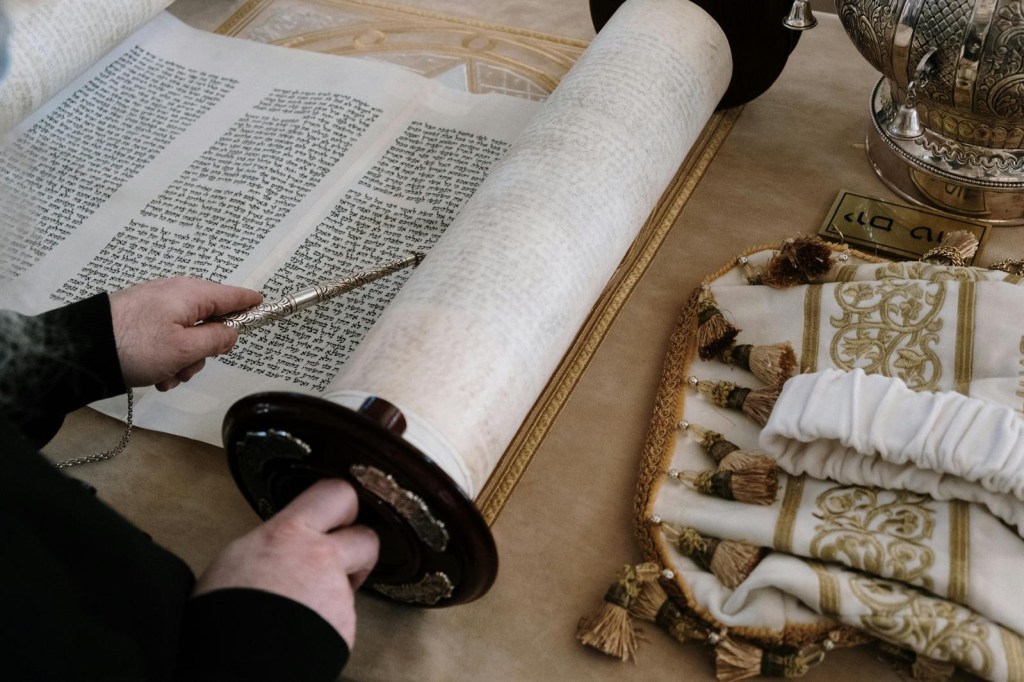
When Paul went to a city, he went to the Jew first. You see the Jews had been a privileged people, to whom much is given, much is going to be required. They had the law and the prophets, they had the Word of God, and Paul would step into the synagogue and tell them that this Word of God, this Old Testament scripture talked about the Lord Jesus, and that’s what he did with those Jewish people in the city of Rome. He gathered them together, all day they had a meeting. There was a roman soldier there, the only interruption was that every 4 hours a different soldier came in and got chained to Paul. Many of these soldiers got saved listening to Paul preach to other people. Paul met with them early in the morning. He said, “now you be sure to bring your Bibles with you, and they did. They had their Old Testament Scriptures, their scrolls. Paul said, “I want to start back in Genesis and I’m going to go through the entire Old Testament, I want to talk to you about, the hope of Isreal.”

“Oh,” they said, “there’s no hope for Isreal. We’ll just gather together by ourselves and maintain our traditions.”

“No,” said Paul, “the hope of Israel is the resurrection of Jesus Christ, the Messiah,” all through the Book of Acts, you find Paul saying this, “the hope of Israel is the resurrection of Jesus Christ.” And he started in Genesis chapter 3, verse 15. He said, “do you remember this promise that Moses wrote, that the seed of the woman is going to conquer the seed of the serpent? Now who is the seed of the woman?”

And they said, “Well this is the Messiah, we’ve known this all our lives.”

“Ah,” he said, “where did Messiah come from?”

“Well,” they said, “from Abraham. God called Abraham and said through him, all nations will be blessed.”

“Abraham, Isaac, Jacob, yes! But Jacob had twelve sons, which of his sons is going to give us Messiah?”

They said, “well that’s easy, Judah. We’re told that the scepter comes from Judah.”

“Oh, but Judah has many families,” said Paul, “now which of the families?”

“Why the family of David, the Messiah is the Son of David.”

“How is He going to come?” said Paul.

“He’s going to be born of the virgin.”

“Where is He going to be born?”

“Why, He is to be born in Bethlehem, Micah tells us that!”

And then Paul leaned over and said, “do you know that all of these prophecies have been fulfilled.”

And they looked at each other, and they looked at Paul, they said, “we didn’t know that. We’ve heard of this new sect called, Christians… it’s spoken against every place we go.”

He said, “this Christ, fulfills these prophecies.” And Paul begun to explain, how that Jesus was born of the virgin Mary, just as Isaiah 7:14 said He would be, that He was born in Bethlehem, just like Micah said He would be. That He was of the family of David, just the way the scriptures said He would be. And he went right down the line, verse after verse.

They said, “Ah, but we hear that this Jesus was crucified. Surely our Messiah is not going to be crucified.”

And Paul said, “have you never read psalm 22?”

And they turned to psalm 22 and began to read, “My God, My God, why hast thou forsaken Me? They pierced My hands and My feet.” Paul said, “I have talked to people who where there when that happened, and that’s exactly what happened when Jesus was crucified. He said look at Isaiah chapter 53.”

And they turned over to Isaiah 53, “for He was wounded for our transgressions, He was bruised for our iniquities.” Paul said, “if this is not Jesus, who is it?”

And the Word of God tells us that half of this crowd believed and became Christians, and the other half chose not to accept it. So at least 5, possibly 6 of the synagogues that were in Rome became Christian synagogues.

The patience of God. You see God had been patient with the Jewish nation, down through the years. As the people begun to leave, Paul said, “before you go, I want to quote a scripture for you.” He goes back to Isaiah chapter 6, Isaiah said, “how do I minister, what’s going to happen?”

“Oh,” He said, “You’re going to preach! They are going to hear, but they won’t hear. They’re going to see, but they won’t see, their hearts are getting fat, and calloused, and hard.”

Interestingly enough these verses from Isaiah verses, 6,9 and 10, are found several times in the Bible. They’re found in Isaiah chapter 6, Matthew 13, in Mark, in Luke, in John, here in Acts, and also in Romans. Seven times, God quotes this passage, referring to what happens to people when they reject the Word of God.

Now listen, God had spoken to the Jewish people, God had given them His Word, God had sent His messengers, and what did the people do? Their ears became deaf, their eyes became blind, their hearts became heavy, and they would not believe and be converted. I wonder if this is not happened to some people here at Moody church. There are those of you who have been hearing the Word of God, you’ve been seeing what God has been doing in the lives of other people, but your hearts have not responded to Jesus Christ. What happened? “Oh, you say, I go to church, I listen to the radio,” that’s wonderful, wonderful… “I even read my Bible occasionally!” That’s fine but unless we open the heart to Jesus Christ, you know what happens, we start hearing but we don’t hear, we grow spiritually blind. And our hearts get calloused and cold, and I want to warn you my friend, against a hard heart. It happened to these people; it can happen to you!

Oh, the patience of God. All through the years, God had been patient with His people Israel, and many did not accept the message. Paul then said that if some did not receive this message, it would now also be shared more widely with the Gentiles. The principle remained: to the Jew first, in responsibility, in revelation, and in accountability. For to whom much is given, much will be required.

Salvation Message

Truth number three: the grace of God. We have learned about God’s faithfulness and patience. Many Jewish people understood their relationship with God primarily through the Law as it had been taught to them. Some thought, “If I do this, and do that, and don’t do this, and don’t do that, God will accept me.”

But the Word of God says there is no difference between Jew or Gentile. All have sinned and come short of the glory of God. “The same Lord is rich unto all who call upon Him. For whosoever shall call upon the name of the Lord shall be saved.”

Paul didn’t go around preaching against the social evils of his day; he simply won people to Christ. When the church began to grow, the same Savior that Paul offered in Rome is offered to us today. In Jesus Christ, there is forgiveness, wisdom, joy, and life eternal. No one is a slave to sin when they trust Him.

The Lord Jesus Christ was crucified for you, buried, and arose again. He is alive today, speaking to your heart through His Holy Spirit. He offers you everything you need to enjoy life, and when life ends, eternal blessings in heaven.

If you reject Him, the pleasures of this life are temporary, and you risk eternal separation from God, a place Scripture calls the Second Death. But if you trust Christ, He will give you all you need to live a life of purpose and hope.

As Paul wrote, “For whosoever shall call upon the name of the Lord shall be saved.” God’s grace is sufficient, His patience is ongoing, and His offer of salvation is open to anyone who calls upon Jesus today.

Editor’s Note

 This message reflects events recorded in the Acts of the Apostles and describes specific responses in Paul’s time. It is not a statement about all Jewish people, and Christians affirm that God remains faithful to His promises to Israel. As it is written: “For the gifts and calling of God are irrevocable.” (Romans 11:29).

The heart of the message is simple: Jesus Christ came to save sinners, no matter who you are, Jew or gentile. He lived a perfect life, died on the cross for our sins, and rose again, offering forgiveness and eternal life to all who repent of their sins and trust Him. Salvation is a turning from sin and a turning toward Christ. If you have not yet placed your faith in Jesus, you can call on Him today—He promises that “whosoever shall call upon the name of the Lord shall be saved.”

—————-

** Photo by cottonbro studio at Pexels

Salvation by Grace Through Faith: Why Christianity Is About Relationship, Not Religion

God Came Down to Reach Us

Throughout history, humanity has searched for ways to reach God through rituals, traditions, religious systems, and good works. Yet the gospel message revealed in Scripture shows something radically different: God did not wait for humanity to reach Him—God came down to reach us. This truth stands at the very heart of Christianity.

The one true God, the God of Abraham, Isaac, and Jacob (Exodus 3:6; Matthew 22:32), has revealed Himself as God the Father, God the Son, and God the Holy Spirit (Matthew 28:19; 2 Corinthians 13:14). This same God did not remain distant from human suffering or sin. Instead, God the Son, Jesus Christ, took on flesh and dwelt among us (John 1:14). He willingly went to the cross, bore the sins of the world, and rose again on the third day, just as the Scriptures foretold (1 Corinthians 15:3–4). At the cross, Jesus declared, “It is finished” (John 19:30), making clear that the work of salvation was fully completed and not dependent on human effort.

The Problem With Works-Based Religion

Despite this, many religious systems throughout history have taught—either openly or subtly—that people must earn God’s acceptance through works, rituals, suffering, or religious performance. The underlying message often becomes that people must do enough good, follow enough rules, or give enough to be accepted by God. Scripture directly contradicts this idea. The Bible teaches that all human righteousness falls short before God, declaring that all our righteous deeds are like filthy rags (Isaiah 64:6) and that by works of the law no human being will be justified (Romans 3:20).

Historically, fear-based doctrines and practices have been used to convince people that forgiveness, purification, or relief for loved ones could be achieved through money, rituals, or repeated works. This turns salvation into a transaction, something Scripture explicitly condemns. Believers were redeemed not with silver or gold, but with the precious blood of Christ (1 Peter 1:18–19). Salvation cannot be purchased, because it has already been paid for in full.

What the Bible Teaches About Salvation

The Bible consistently teaches that salvation is a gift of grace received through faith. “By grace you have been saved through faith,” Scripture says, “and this is not your own doing; it is the gift of God, not a result of works” (Ephesians 2:8–9). Jesus’ sacrifice was completely sufficient. Hebrews tells us that by a single offering Christ has perfected for all time those who are being sanctified (Hebrews 10:14), and Romans assures believers that there is now no condemnation for those who are in Christ Jesus (Romans 8:1).

To add human effort as a requirement for salvation is to diminish the cross itself. Scripture makes this clear when it says that if righteousness could come through the law, then Christ died for no purpose (Galatians 2:21). The finished work of Jesus Christ leaves no room for fear-based striving or religious earning.

Relationship Over Religion

True Christianity is not about religious pomp, external performance, or institutional control. It is about knowing Jesus Christ personally. Jesus defined eternal life as knowing the only true God and Jesus Christ whom He sent (John 17:3). Faith is not about trying to earn God’s love, but about responding to the love He has already shown. “We love because He first loved us” (1 John 4:19).

Repentance and righteous living matter deeply, but they flow from salvation rather than leading to it. Anyone who is in Christ is a new creation (2 Corinthians 5:17), and believers are God’s workmanship, created in Christ Jesus for good works that follow salvation, not create it (Ephesians 2:10). Obedience is the fruit of faith, not the foundation of it.

The Gospel Is an Invitation, Not a Transaction

The gospel is not a system of spiritual payments; it is an invitation into restored relationship with God. Jesus said that the Son of Man came to seek and to save the lost (Luke 19:10), and Scripture tells us that while we were still sinners, Christ died for us (Romans 5:8). Religion tells people to work their way up to God, but the gospel declares that God came down.

Jesus Himself said that no one has ascended into heaven except the One who descended from heaven, the Son of Man (John 3:13). Faith produces obedience, but obedience is the result of love, not the condition for salvation. “If you love Me, you will keep My commandments” (John 14:15).

The Finished Work of Christ

The cross was enough. The resurrection confirmed it. Salvation is a gift freely given by God through Jesus Christ. Jesus promised that whoever hears His word and believes Him who sent Him has eternal life and has passed from death to life (John 5:24). The call of the gospel is not to perform, pay, or prove worthiness, but to believe, repent, and follow Christ. “Repent therefore, and turn back, that your sins may be blotted out” (Acts 3:19). “Believe in the Lord Jesus, and you will be saved” (Acts 16:31).

This is the heart of Christianity: not religion, but relationship; not fear, but faith; not human effort, but divine grace. This is the finished work of Christ, and it remains good news for people everywhere.

——————

** Photo by Pexels

Why Judas Was Lost — And Religion Didn’t Save Him

Matthew 27:1–7 (ESV): When morning came, all the chief priests and the elders of the people took counsel against Jesus to put him to death. And they bound him and led him away and delivered him over to Pilate the governor.

Then when Judas, his betrayer, saw that Jesus was condemned, he changed his mind and brought back the thirty pieces of silver to the chief priests and the elders, saying, “I have sinned by betraying innocent blood.” They said, “What is that to us? See to it yourself.”

And throwing down the pieces of silver into the temple, he departed, and he went and hanged himself.

But the chief priests, taking the pieces of silver, said, “It is not lawful to put them into the treasury, since it is blood money.” So they took counsel and bought with them the potter’s field as a burial place for strangers.

This moment in Scripture is one of the most sobering in the entire Gospel story. It’s easy to rush past it — to get to the crucifixion, the resurrection, the victory. But if we skip over this, we miss something crucial: a warning wrapped in tragedy.

This isn’t just a story about ancient villains. It’s a spotlight on the human heart — our hearts. On what happens when someone is close to Jesus in proximity, but far from Him in surrender. It’s not about how wicked “they” were — it’s about how easily we can walk the same path without even realizing it.

This is not an attack on sincere believers walking humbly with Jesus. But it is a wake-up call for anyone trusting in church involvement, ministry roles, emotional worship experiences, Bible knowledge, or spiritual performance — instead of in Jesus Himself.

Judas’s downfall didn’t begin with the silver. It began when he let religion take the place of repentance. And when the weight of his sin finally hit him, he ran to the wrong people — religious leaders who had no grace to give. They were full of rules, titles, and temple rituals, but hollowed out of mercy, compassion, and truth.

And that’s where this story becomes our warning. Judas went to religion, and it couldn’t save him. Judas chose guilt over grace.

Judas: A Man Who Walked with Jesus—But Lost His Way

Judas wasn’t some random outsider. He was one of Jesus’ own twelve disciples. He walked with Jesus daily, witnessed His miracles firsthand, ate at His table, and heard His teachings. Yet, despite all this closeness, Judas made a devastating choice.

What went wrong? Judas let earthly things—money, greed, and material gain—take priority over the spiritual truth he had seen. Instead of clinging to Jesus, the source of true life and forgiveness, he sold out the Savior for thirty pieces of silver. His heart turned away from grace and toward greed, but religion without real repentance couldn’t save him.

This betrayal reminds us that Christians can “sell out” their faith—not only for money but also for power, popularity, comfort, personal ambition, or by compromising God’s design for relationships.

Judas Went to the Wrong People

Judas betrayed Jesus and was filled with guilt—he knew what he did was wrong. But here’s the shocker: he didn’t run to Jesus, the only One who could truly forgive and heal him.

No. Judas ran to the chief priests and elders—sinners like us, mere men with titles but no power to forgive sins. These were the very people Judas was not meant to confess to, yet he went to them instead. Men steeped in religion, but rotten inside. Men who were complicit in condemning an innocent man. Men whose hearts were cold to mercy, justice, and truth. Religion without Jesus had hardened their hearts and kept them from true repentance.

Instead of repentance or sorrow, they cared only about their laws and their money. When Judas threw down the blood money, these priests refused to put it into the temple treasury because it was “unclean.” So what did they do? They took that money stained with innocent blood and bought a burial field for foreigners—as if buying a field could cover their guilt, their sin, their wickedness. As if putting money in the offering box or doing philanthropy deeds can do the same!

They thought a real estate transaction would redeem them. But no amount of money or good deed can wash away the stain of hypocrisy, envy, hatred, and betrayal. Their actions expose the brutal reality of religion without Jesus: cold legalism that cares more about rules and appearances than mercy, grace, and true repentance.

The disconnect is astounding—here were men steeped in religion yet utterly disconnected from true repentance and mercy. They were guilty of: envy, hatred, lying, hypocrisy and legalism that valued money over justice, yet they called themselves God’s representatives.

This is the cold reality of religion without Jesus: ritual replaces relationship, rules replace repentance, and good deeds become a mask for rebellion and wickedness.

Peter’s Path: Failure Met by Forgiveness

Peter was another man who walked closely with Jesus but made a very different choice. Like Judas, Peter was one of the twelve disciples, witnessing Jesus’ miracles and hearing His teachings firsthand. Yet when the pressure came, Peter denied Jesus—not once, but three times.

But here’s the crucial difference: Peter didn’t remain in his failure. He genuinely repented, was restored by Jesus, and went on to live a life marked by bold faith and transformation.

Peter’s story brings hope: no failure is final when met with sincere repentance. Grace and restoration are available to anyone who turns back to Jesus wholeheartedly.

(See Matthew 26:69–75; John 21:15–19; Luke 22:31–32; Acts 2:14–41)

Two Paths Lie Before You

You’ve failed. So have I. We’ve all sold Jesus out for something—pleasure, control, popularity, pride, money, lust, whatever.

The question isn’t whether you’ve sinned. The question is, what are you going to do about it?

You have two choices:

JUDAS

Regret

Isolation

Death

Religion

Shame

PETER

Repentance

Restoration

Life

Relationship

Grace

One ran to religion and died. The other ran to Jesus and lived.

This is not a game. Your soul is at stake.

Application for Us Today

Many people believe they’ve gone too far—betrayed too deeply, denied too loudly, messed up too many times. Judas’s path shows us what happens when we believe our sin is stronger than God’s grace.

But Peter’s story tells another truth:

Jesus is greater than our greatest failure.

He doesn’t just forgive. He redeems, restores, and reuses the broken. In fact, it’s those very cracks that let His glory shine through.

Final Encouragement

“Let God be true and every man a liar.” Peter is living proof of that. Men may fail—but God never does. Jesus knew Peter would fall and planned to restore him before it even happened (Luke 22:31–32).

That same grace is available today. Judas’s story warns us of despair, but Peter’s shows us the way back: through Christ alone.

The Bottom Line

If you think your church attendance, good behavior, ministry work, or religious “track record” can replace a real, repentant walk with Jesus—think again. Don’t rely on religion to save your soul. Only a genuine relationship with Jesus, marked by repentance and surrender, brings true forgiveness and restoration.

Run to Jesus — not to man-made religion, lifeless ritual, or guilt-driven striving. Only Jesus can forgive sin and restore your soul.

Don’t make Judas’s mistake. Don’t settle for empty religion that kills your spirit.

Choose life. Choose Jesus.

If you’re not sure where you stand with God or want to understand how to receive His forgiveness and eternal life, you can read this article here:

Responding to God’s Call: Salvation, Repentance, and Eternal Life

——————-

*** Photo by Nikolett Emmert by Pexels

Life Is Short. Eternity Is Long. Are You Ready?

We often hear, “Life is short… better enjoy it!” But how about this: “Eternity is long… better prepare for it.”

“For what shall it profit a man, if he gain the whole world, and suffer the loss of his soul?”

— Mark 8:36

We live in very sobering times. This life is not paradise. It is a preparation for paradise. How we choose to live it will determine how we spend eternity — in heaven or in hell. Death, Judgment, Heaven, and Hell: these are the Four Last Things. And they’re not distant — they’re approaching with every tick of the clock.

Many say, “Life is short, enjoy it while it lasts.” But eternity? It will be very long. You better prepare for it.

We are so caught up in this life — in money, relationships, entertainment, career — we give little attention to the life that never ends. Yet Jesus taught that every soul has an eternal destiny — either heaven or hell (John 5:25–29). And that destiny is determined in this life (Luke 16:19–31). Every choice matters.

“The days of our lives are seventy years;

And if by reason of strength they are eighty years,

Yet their boast is only labor and sorrow;

For it is soon cut off, and we fly away…

So teach us to number our days,

That we may gain a heart of wisdom.”

— Psalm 90:10,12

Time is collapsing. Technology is advancing — faster travel, faster internet, faster communication — yet we seem to have less time for what matters. We’ve gained speed but lost direction. We’ve advanced in knowledge but declined in wisdom. And worst of all — we are drifting further from God.

We are shadows that vanish. Grass that withers. Time is passing — and so are we.

“My days are like an evening shadow that lengthens and vanishes…

But You, O Lord, shall endure forever.”

— Psalm 102:11–12

From the moment you were born, you began dying. In 90 years, most of us reading this will be gone. The grave waits for no one.

So… what will you do with the time you have?

Every person gets the same 24 hours a day. But how we use it shapes our eternity.

Let’s say you live to 70:

The first 15 years? Childhood and adolescence. Around 20 years? Spent asleep. The final 5 years? Likely reduced activity. That leaves just 30 years — and even that includes eating, working, paying bills, and daily responsibilities.

What will you do with the years you have left?

“What is your life? It is even a vapor that appears for a little time and then vanishes away.”

— James 4:14

Even the wealthiest person cannot buy more time. Scientists cannot invent more minutes. Doctors cannot guarantee more years.

The most valuable thing you have is your time — use it for God.

“Be very careful, then, how you live — not as unwise but as wise, redeeming the time, because the days are evil.”

— Ephesians 5:15–16

The world is dark — violence, immorality, brokenness. But Jesus is calling His people to shine as lights and make disciples. To do that, we must stop wasting time and start investing it in what truly matters.

Too many Christians tithe their money but not their time. We find time for entertainment, social media, and distractions — but little for God.

We have time… but what are we using it for?

You have time to:

Seek Christ Serve others Obey His will Fulfill your calling

You want to be with God after death — but do you want to spend time with Him now?

Where is your heart? Where is your treasure? Where is your time?

“My times are in Your hand.”

— Psalm 31:15

Can you say this honestly? That your time — your life — belongs fully to God?

So… How Do You Give Jesus Your Heart?

You may be wondering:

“How do I know I’m saved? How do I give my heart to Jesus and prepare for eternity?”

It starts with repentance.

That means turning away from your sin — from living life your own way — and turning to God.

“Repent therefore and be converted, that your sins may be blotted out…”

— Acts 3:19

We’ve all sinned. Sin separates us from God and leads to death — not just physical death, but eternal separation.

But the good news is this:

God sent His Son, Jesus, to die for your sins.

He took your place. He bore your punishment.

He rose again to give you life — eternal life.

“But God demonstrates His own love toward us, in that while we were still sinners, Christ died for us.”

— Romans 5:8

To be saved, forgiven, and made right with God:

1. Acknowledge that you are a sinner in need of a Savior.

2. Believe that Jesus died for you and rose again.

3. Confess Him as Lord — surrender your whole life to Him.

“If you declare with your mouth, ‘Jesus is Lord,’ and believe in your heart that God raised Him from the dead, you will be saved.”

— Romans 10:9

This is more than a prayer. It’s a life-altering commitment.

Here’s a simple prayer you can make your own:

“Lord Jesus, I know that I am a sinner. I have broken Your laws and lived for myself. But I believe You died for me and rose again. I ask You to forgive me, wash me clean, and give me a new heart. I turn from my sin, and I turn to You. I surrender my life — all of it — to You. Be my Savior, be my Lord, and help me follow You all the days of my life. Thank You for saving me. In Jesus’ name, Amen.”

If you prayed that sincerely, you’ve taken the first and most important step into eternal life.

But remember — salvation is not the finish line. It’s the starting point.

Now begin walking with Him:

Read the Bible (start with the Gospel of John)

Pray — talk to God every day via prayer

Join a Bible-believing church Get baptized

Share what God has done in your life

“And this is the way to have eternal life—to know You, the only true God, and Jesus Christ, the one You sent.”

— John 17:3

Your time is still in God’s hands. Don’t waste another moment.

Live for what truly matters.

Live for the One who gave His life for you.

Give Him your heart — today.

——-——-

** By Shalom for the world / Photo by KoolShooters at Pexels