Dowry

The Dowry System

It is unfortunately, normal among Christians of all denominations in India, for a boy’s father to ask for a dowry from the girl’s father before a marriage is finalised. This has reduced marriage to a business deal. Among unbelievers, such a practice is understandable because, being spiritually blind, they allow covetousness to rule their lives. But what shall we say when most believers also indulge in this practice – even those who claim to be Spirit-filled? Surely the Devil has blinded them too.

Many a marriage arrangement has failed because the parents of the girl could not meet the exorbitant demand for dowry made by the parents of the boy. Many girls in our land have been emotionally disturbed and brought to frustration because of this – and some have even committed suicide. Every day in India, some wife somewhere burns herself to death because of her husband harassing her to get more dowry from her father.

God will severely judge all those who make marriage a matter of striking a financial deal. This judgment will begin at the house of God, among those who claim to be born again. It is because many believers have not spoken out against the evil practice of dowry that it is still so widely prevalent in Christendom in India today. It is a sad thing indeed when those who should be standing upright for God in a warped and crooked world, become warped and crooked themselves. No Christian who wants to please God should ever ask for, or receive a dowry.

Some brothers hide under the excuse that it is their parents who ask for dowry and not they themselves. But if they have any convictions at all, why don’t they speak up and tell their parents that they don’t want any dowry? The reason must be that they too secretly desire the money. If they are convinced that the dowry system is wrong, they should speak up for the truth. It is surprising that many brothers who are strong-willed when it comes to other matters, act like spineless jelly-fish when it comes to expressing their convictions on dowry to their parents!

Some brothers say that it is only reasonable that their parents who have spent so much money on their education should now receive some money as dowry from the girl’s parents. But the girl’s parents have also spent money on educating her! Why doesn’t the boy give money to her father for giving him an educated girl??

Others justify their asking for dowry by saying that their parents will need money to give as dowry for their sisters when the latter get married. But we can be certain that God will not let anyone down, who seeks to honour Him in this matter. If you honour Him, He will honour you and give good husbands to your sisters (or daughters) without your having to pay any dowry (1 Samuel 2:30). If you say you don’t have faith for that, then I have nothing more to say to you, for I am writing now only for wholehearted Christians. The commandments of Jesus are meant only for wholehearted Christians.

Others may ask, “What is wrong in receiving money which the father of a girl gives gladly to her as a gift?” There is certainly nothing wrong with that. But before any brother uses this as an excuse for his covetousness, let him answer these three questions first:

(a) Was money any factor at all (even if the least important) in deciding the marriage?

(b) Did you or your representative (whether father or relatives) ever ask for the money, (or try to find out how much money the girl’s parents had) before or after the marriage had been settled?

(c) Did you secretly hope that money would be given by the girl’s parents (either to the girl or to you)?

If the answer is “Yes” to any of these questions, then you have certainly fallen a prey to covetousness, however well it may have been covered up by different excuses.

It is in such situations that the contradiction between a believer’s preaching and his practice becomes evident to all. No wonder infidels are prompted to say, “Whatever Christians may preach, when it comes to money, they have the same religion as everyone else”.

In some places, I have heard that the dowry system is the reverse of what is found in most parts of India. There the boy has to give a dowry to the girl’s father in order to marry her. But whichever dowry system it be, the practice is an abomination to God.

Many may resent such a strong denunciation of the dowry system. But we must remember that the system is a product of man’s covetousness, which the Bible calls idolatry (Colossians 3:5). One has only to read the severe denunciation of idolatry in the Old Testament to realize how God detests it. The prophets of old were fiery in their preaching against it. They did not mince words when speaking against that which God hated.

We have preached against and stood against dowry consistently in CFC ever since the Lord established our church in 1975.

Personally, I have practised exactly what I have written above, in my own life. I refused to allow any discussion of dowry at the time of my wedding. I took the same stand against dowry when my four sons were getting married. In addition, I never sought to find out whether the parents of the girls (whom my sons were marrying) were rich or whether the girls themselves had good educational qualifications that would enable them to work and earn money. Unfortunately, these are the matters that most believers today are keen on finding out when getting their sons married. I was only keen to find out if the girls themselves loved the Lord and were disciples of the Lord Jesus. And I thank God that He honoured my desire by giving each of my four sons God-fearing wives who would help them in their ministry for the Lord and also help them to raise God-fearing children.

Whenever I conduct a wedding, I always take a signed declaration from both the bride and the bridegroom stating that no dowry has been exchanged between them or their parents. I do this so that both parties see the seriousness of this evil. If any dowry was given or received, then I refuse to conduct the wedding. If they deceive me they are answerable to God.

To expect dowry, or to accept dowry are both just as bad as asking for dowry. Those who accept or expect a dowry are both covetous. Such “Christians” should be honest and call themselves “heathen“. They are certainly NOT followers of Jesus Christ.

Can you picture your asking Jesus to negotiate with a girl’s father about the amount of dowry he should pay you before you agree to give your son in marriage to his daughter? You know very well that Jesus would never be willing to negotiate in such a matter. That itself should show you that expecting or receiving a dowry is wrong.

Receiving dowry or giving dowry or helping someone receive a dowry are all offences according to the law in India. The Dowry Prohibition Act, 1961 states:

“If anyone gives or takes or abets the giving or taking of dowry, he/she shall be punishable with imprisonment for not less than five years and with fine not less than Rs.15,000 or the amount of value of dowry, whichever is more.”

Leaders of churches should be the foremost to obey the country’s laws and to honour God in this matter. Any church-leader who is unwilling to take a stand against this evil dowry system has no right to remain in leadership in any church. Some leaders may secretly take a dowry without anyone knowing it. But God will deal with such hypocrites in His own time.

At a wedding, money may be given for the actual expenses of the wedding and the reception. But even this should ideally be equally shared by both parties. Thus both the boy and the girl are given equal dignity before God. But we cannot make a rule in this matter, because some are able to afford an expensive wedding and reception, while others are not.

It is perfectly in order for a bride’s parents to give money to their daughter. But this is best done by putting the money in a bank account in her name. This is not a rule but only a guideline so that believers can preserve their testimony and not be accused of having received a dowry after the wedding.

There is another equally great evil in India – and that is the way daughters are treated by their parents when it comes to an inheritance. Many parents do not give an equal share of their wealth and assets to their daughters as they do to their sons. If it is evil to give or ask for dowry, it is an equally great evil for a parent not to give their daughters an equal share of their wealth as they give their sons. In God’s eyes, sons and daughters have equal rights to their parents’ assets. Any father who shows partiality to his sons over his daughters is an ungodly father, unfit to be called a Christian. Whether the father writes this in his will to be distributed after his death or whether he gives it to his children earlier is immaterial. But he must treat his daughters exactly like he treats his sons. And a daughter has every right to ask to be treated equally. Jesus taught that it is proper for children to ask their fathers for good gifts (Matthew 7:9-11).

If Jesus were in India today, He would denounce the dowry system ruthlessly. Unfortunately, church-leaders who claim to represent Him, do not denounce this practice – because they love money themselves, or are eager not to offend the rich, or hope to get a commission themselves in the process!

Even a non-Christian film-actor in India has spoken out against dowry recently. Aamir Khan writes:

“I am totally opposed to dowry. It is not only a retrograde practice but also an illegal one. Think about it – can a relationship, built on the foundation of money and greed, be meaningful or beautiful? We should make our daughter so accomplished and independent that she is capable of crafting her own future and becoming the master of her own happiness. Then she won’t need a greedy, useless groom to complete her life. Let her marry a person who respects her. Let her marry a man who she believes is worthy of her; whom she is happy to spend the rest of her life with.” 
http://www.thehindu.com/opinion/columns/article3439626.ece]

Such non-Christian film-stars are now putting to shame so-called “Spirit-filled, tongue-speaking” believers, in this matter! Those film-stars will rise up in the day of judgment and condemn all hypocritical believers.

This is one reason why the Lord has placed CFC and related churches (and I hope, some other churches too) as lighthouses in India, to stand for the truth and to proclaim His will in this matter. The Bible commands us to speak up for the rights of the needy (Proverbs 31:8, 9). We must stand totally against this evil dowry system that has destroyed the lives of so many helpless girls in our land. We must also urge all parents to give an equal share of their wealth to their daughters as they give to their sons.

Daniel took a stand for the Lord in Babylon in a very small matter – not eating certain foods that God had forbidden in Leviticus 11. That was a very small commandment – but it was a small commandment given by a great God. Because Daniel honoured God, God honoured him. God is testing us now in little matters, to see whether we qualify to be a voice for Him.

May the Lord preserve us as a prophetic voice for Him in our land.

By Zac Poonen

**Copyright – Zac Poonen. No changes whatsoever are to be made to the content of the article without written permission from the author. cfcindia.com / Picture by pexels


A Sower of Discord

”Anyone who is not with me is against me, and anyone who does not gather with me scatters…” ~ Matthew 12:30

Satan is called the accuser of the brethren who accuses them to God night and day. Jesus on the other hand, is at the right hand of the Father forever making intercession for them. When we cover the sins of others by praying for them instead of talking ill of them, you’re in fellowship with the Lord, but when you talk ill of others and point out their sins to others, your in fellowship with Satan and do his work for him.

To sow discord is to say and do things which cause distrust, anger, and bitterness, which results in arguments, fights and ill-feeling towards others, which the sower has planted into the ground of people’s hearts.

Usually the ‘sower’ is acting as if he/she is not trying to cause arguments or ill feeling towards someone else. Sowing discord is something done in secret, justified, done by deceit authored by the father of deceit. We have come to think that it is a harmless thing to sow discord in the office, home or church, but the Bible says God not only hates the sowing of discord but God says, that it is an abomination to Him. God hates discord and strongly denounce those who sows strife. Sowers of discord disrupts unity and causes great division which in many cases could be irreparable.

Sowers of discord are usually driven to serve their own interests. Discord Sowers exploit the passion/emotion of others, and, more often than not, derive pleasure from conflict. Sometimes they are aware of what they are doing but sometimes they just play into the hands of spiritual forces that are intent upon destroying the mission of the church.

They regularly nourish these feelings that drive their behavior by brooding on, real or perceived: past injuries, present suspicions and future insecurities. They are often propelled by inner turmoil. The sower of discord probes the vulnerabilities of other’s; seeking for weak points to expose and exploit. Psalm 133:1 reminds us, “Behold, how good and pleasant it is for brothers to dwell together in unity.”

Zechariah 3:1-5

Then he showed me Joshua the high priest standing before the angel of the Lord, and Satan standing at his right side to accuse him. The Lord said to Satan, “The Lord rebuke you, Satan! The Lord, who has chosen Jerusalem, rebuke you! Is not this man a burning stick snatched from the fire?”
Now Joshua was dressed in filthy clothes as he stood before the angel. The angel said to those who were standing before him, “Take off his filthy clothes.” Then he said to Joshua, “See, I have taken away your sin, and I will put fine garments on you.” Then I said, “Put a clean turban on his head.” So they put a clean turban on his head and clothed him, while the angel of the Lord stood by.

———————————————–

** By Christ centred church of God / Photo by Skitteroo at pixels

Prayer – Speaking To God

Fellowship With God

COMMUNICATION WITH GOD is a two-way matter. We hear God speaking to us through His Word first. And then we speak to Him. But prayer is not just making requests to God. A primary part of prayer should be having fellowship with God, like a bride with her bridegroom. There are no rules on how a bride should speak to her bridegroom.

But as a discipline, it’s good for our prayers to consist of: (i) praise to our Father for Who He is; (ii) confession of sin and failure; (iii) petitions concerning the kingdom of God; (iv) petitions concerning our own needs; (v) intercession for the needs of others; (vi) thanksgiving for what God has done; and (vii) thanksgiving for what God will do. Jesus told us to “pray at all times” (Lk. 18:1).

A Good Habit
A good habit to develop is to learn to speak to God about the little things of daily life – and thus to be in a spirit of prayer throughout the day. Thus, speaking to God will become a joy for us and not a ritual. We’ll also find that God speaks to us in our hearts in surprising ways.But these are just the kindergarten-lessons in the school of prayer. We can progress further if we are faithful. In any case, prayer should never be allowed to degenerate into a dry, empty ritual. Prayer is like breathing. When our breathing becomes difficult for us, then we know that something is wrong! Prayer was never meant by God to be dry or boring.

But as we progress, we will find that prayer becomes hard work. If we are faithful with the little burdens God lays on our heart to pray about, we’ll find that God gives us more and more of His burdens. Thus we can become co-workers with God, in His work of blessing others. Jesus prayed `with loud crying and tears’ (Heb. 5:7). Once when He prayed in Gethsemane, His sweat became like great drops of blood (Lk. 22:44). His praying was so intense. Once He spent a whole night in prayer (Lk. 6:12). He had a habit of slipping off frequently into the wilderness to pray (Lk. 5:16). As someone has said “Like tourists look for sights to see, whenever they come to a new place, Jesus always looked for a quiet place to pray wherever He went.”

Fight The Battle
Jesus’ example shows us how important prayer is. If He needed to pray so much, how much more you and I need to. Fight the battle against laziness then, and determine to be a man/woman of prayer at any cost.

New Covenant Church
The primary mark of a new-covenant church is that God is present in its midst. When the church comes together, and everyone prophesies under the anointing of the Holy Spirit, those who come to the meeting should be convicted of their sins and acknowledge that God is present in the meeting (1 Cor.14:24,25).

————————————————————–

**By Zac Poonen © Copyright – Zac Poonen. No changes whatsoever are to be made to the content of the article without written permission from the author. https://www.cfcindia.com/ 

Photo by  chepté cormani  at pexels

Comparison Is The Thief of Joy


One of the fastest ways of discouraging yourself and getting trapped by the sin of envy is when you compare yourself to others. God has a specific plan for you and you won’t accomplish that plan by looking at others. 

Count your blessings and not the blessings of someone else. Let God control your life and give Satan no opportunity to discourage you from the purpose God has for you. Know that all you need is Christ. Set your mind at peace by focusing on the Lord.

This is another way to build unity, by not looking to see if I’m better than the next person, spiritually, intellectually or with anything else the Lord has blessed me with.

“Don’t compare yourself to others. You have no idea what their journey is all about.”

“A flower does not think of competing with the flower next to it. It just blooms.”

What does the Bible say? Bible verses to Help in Comparing yourselves to others:

Galatians 6:4-5 Each of you must examine your own actions. Then you can be proud of your own accomplishments without comparing yourself to others.  Assume your own responsibility.

2 Corinthians 10:12 We wouldn’t put ourselves in the same class with or compare ourselves to those who are bold enough to make their own recommendations. Certainly, when they measure themselves by themselves and compare themselves to themselves, they show how foolish they are.

1 Thessalonians 4:11-12 And that ye study to be quiet, and to do your own business, and to work with your own hands, as we commanded you.  That ye may walk honestly toward them that are without, and that ye may have lack of nothing.

All it does is lead to envy

James 3:16 For where jealousy and selfish ambition exist, there will be disorder and every vile practice.

Proverbs 14:30 A tranquil heart gives life to the flesh, but envy makes the bones rot.

1 Corinthians 3:3 For you are still of the flesh. For while there is jealousy and strife among you are you not of the flesh and behaving only in a human way?

Set apart from the world

Romans 12:2 Do not be conformed to this world, but be transformed by the renewal of your mind, that by testing you may discern what is the will of God, what is good and acceptable and perfect.

“1 John 2:15 Do not love the world or the things in the world. If anyone loves the world, the love of the Father is not in him.”

We don’t live for people

Philippians 2:3 Don’t act out of selfish ambition or be conceited. Instead, humbly think of others as being better than yourselves.

Galatians 1:10 Am I saying this now to win the approval of people or God? Am I trying to please people? If I were still trying to please people, I would not be Christ’s servant.

Isaiah 2:22 Stop regarding man in whose nostrils is breath, for of what account is he?

Give God your all

Mark 12:30 Love the Lord your God with all your heart and with all your soul and with your entire mind and with all your strength.’

Psalm 37:5 Commit your way to the LORD; trust in Him, and He will act.

Proverbs 3:5-6 Trust in the Lord with all your heart, and do not lean on your own understanding. In all your ways acknowledge him, and he will make straight your paths.

Be content

1 Timothy 6:6-8 Now there is great gain in godliness with contentment, for we brought nothing into the world, and we cannot take anything out of the world. But if we have food and clothing, with these we will be content.

Psalm 23:1 A psalm of David. The LORD is my shepherd; I have all that I need.

Be grateful in all situations.

1 Thessalonians 5:18  Whatever happens, give thanks, because it is God’s will in Christ Jesus that you do this.

Psalm 136:1-2 Give thanks to the Lord because he is good, because his mercy endures forever. Give thanks to the God of gods because his mercy endures forever.

Compare yourself to Christ instead so you can be more like Him. 

2 Corinthians 10:17 As the Scriptures say, “If you want to boast, boast only about the LORD.”

1 Corinthians 11:1 Be imitators of me, as I am of Christ.

That way you can live out God’s will for your life.

Jeremiah 29:11 For I know the plans I have for you,” declares the LORD, “plans to prosper you and not to harm you, plans to give you hope and a future.

Psalm 138:8 The LORD will work out his plans for my life–for your faithful love, O LORD, endures forever. Don’t abandon me, for you made me.

Advice

2 Corinthians 13:5 Examine yourselves, to see whether you are in the faith. Test yourselves. Or do you not realise this about yourselves, that Jesus Christ is in you?—unless indeed you fail to meet the test!

Philippians 4:8 Finally, brothers, whatever is true, whatever is honourable, whatever is just, whatever is pure, whatever is lovely, whatever is commendable, if there is any excellence, if there is anything worthy of praise, think about these things.

Reminder

Psalm 139:14 I praise you, for I am fearfully and wonderfully made. Wonderful are your works; my soul knows it very well.


———————————————–


By Fritz Chery at Bible Reasons / Picture Photo by Bich Tran from Pexels

John Wesley’s Tribute to His Mother, Susanna Wesley: A Son’s Admiration

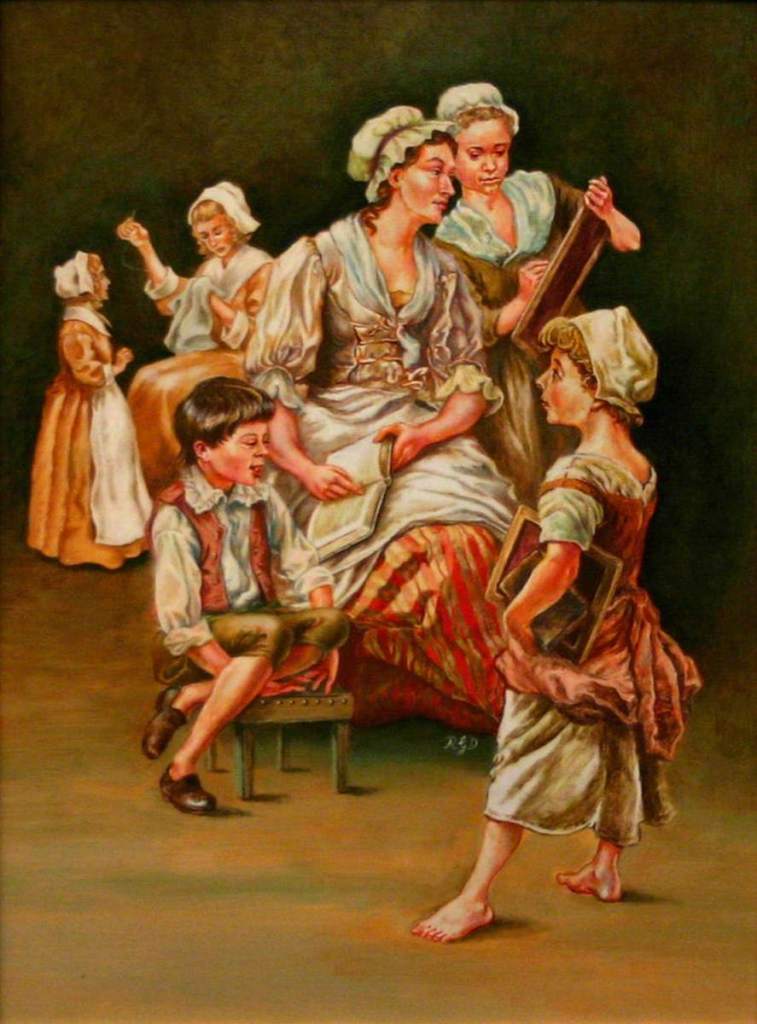
Artwork Susanna Wesley with Five Children by Richard Gilmore Douglas

AN ADMIRING SON

Susanna’s devotion to her faith and her family clearly shaped her son John Wesley’s character and had an impact on countless lives.

Few mums know what it’s like to raise 10 children like Susanna Wesley. Her son John, the founder of the Methodist movement, published a letter in which his mum shared her “principal rules” for parenting, covering things big and small.

Because our understandings of child development have changed greatly in the nearly 300 years since Susanna was raising her kids, we might not agree with all of her advice. But some still rings true today.

RELIGIOUS EDUCATION

Devotions – “The children of this family were taught, as soon as they could speak, the Lord’s prayer, which they were made to say at rising and bedtime constantly,” Susanna reminded her son.

Worship and Music – When the Wesley children were a little older, the day began with reading or singing a psalm, reading an Old Testament chapter, and saying private prayers — all before breakfast. At the end of the school day, they paired up to read a psalm and a New Testament chapter.

Sabbath – Sundays were special in the Wesley house. The children “were very early made to distinguish the sabbath from other days,” Susanna wrote. Even when the kids were very young, they were expected to participate in the family prayers, “which they used to do by signs before they would kneel or speak.”

EDUCATION

Focus – In the Wesley household, nine to noon and two to five were reserved for the children’s education, a top priority for Susanna. “It is almost incredible what a child may be taught in a quarter of a year, by a vigorous application,” she remembered.

No goofing off – Susanna expected the children’s full attention during the education hours. “Rising out of their places, or going out of the room, was not permitted unless for good cause, and running into the yard, garden or street, without leave, was always esteemed a capital offence.” I imagine Susanna smiling as she wrote that last line to her now grown son.

Reading – Each child was taught to read at age 5, both the boys and the girls. Susanna noted, “[P]utting children to learn sewing before they can read perfectly is the very reason why so few women can read fit to be heard, and never to be well understood.” She would not allow that for her daughters or sons.

ORDER AND DISCIPLINE

Routine – The Wesley house ran on a tight schedule. “The children were always put into a regular method of living,” she wrote. Times were assigned for naps, education, meals, and bedtime.

Self-regulation – Susanna was convinced that “self-will is the root of all sin and misery,” and worked to help her children develop self-control.

Positive reinforcement – Susanna believed, “That every signal [sic] act of obedience…should always be commended and frequently rewarded.” When the thought is there, but the execution lacking, Susanna adds that parents should then “sweetly” direct the child on “how to do better for the future.”

Discipline – When needed, Susanna strived to discipline appropriately. “Some [infractions] should be overlooked and taken no notice of, and others mildly reproved,” she wrote, “but no willful transgression ought ever to be forgiven children without chastisement, less or more, as the nature and circumstances of the offence require.”

Forgiveness – Susanna taught that a child should never be punished for the same offense twice, and “that if they amended they should never be upbraided with it afterwards.”

Peace – The child-filled Wesley household was not chaotic. “The family usually lived in as much quietness as if there had not been a child among them,” Susanna remembers.

SLEEP

Bedtime – After dinner at 6, the process of getting the children ready for bed began at 7 p.m. with the youngest child. All children were in bed by 8 p.m., whether they were ready for sleep or not. “[T]here was no such thing allowed of in our house as sitting by a child till it fell asleep,” she wrote.

Naps – As infants, the children napped on a schedule. “This was done to bring them to a regular course of sleeping,” Susanna reasoned.

MEALS AND DINING

Dining – Mealtime was family time. When the children were young, “At dinner their little table and chairs were set by ours,” Susanna recalls, near enough to be supervised. Children graduated to the dining room table, “As soon as they could handle a knife and fork.”

No snacking – “Drinking or eating between meals was never allowed,” Susanna shares, “unless in case of sickness which seldom happened.”

Choosing meals – The children were expected to eat what was served. “They were never suffered [permitted] to choose their meat, but always made to eat such things as were provided by the family,” Susanna wrote.

Medicine – “They were so constantly used to eat and drink what was given them,” she remembers, “that when any of them was ill there was no difficulty in making them take the most unpleasant medicine.”

MANNERS

Polite speech – Susanna expected her children to be polite. If they wanted something they were to ask, and were given “nothing they cried for, and instructed to speak handsomely for what they wanted.”

No lying – Susanna believed that children were tempted to lie when they feared punishment. “To prevent this,” she reasoned, “a law was made that whoever was charged with a fault, of which they were guilty, if they would ingenuously confess it, and promise to amend,” they would not be punished.

Respect for property – The Wesley children were taught to keep their hands off of another’s stuff, even “in the smallest matter, though it were but of the value of a farthing [1/4 of a penny], or a pin; which they might not take from the owner without, much less Money against his consent.”

John Wesley shared this advice from his mom in his published Journal as he reflected on her death. The entry is dated August 1st, 1742, the day of her funeral. He hoped it would help others caring for “a numerous family.”

*Susanna Wesley gave birth to 19 children (including two sets of twins). Unfortunately, nine died in infancy or soon after.

———

** By Joe Iovino works for UMC.org at United Methodist Communications. Contact him by email.