
Easter week marks one of the most important moments in all of human history. It is not simply a religious tradition or seasonal reflection—it is rooted in real events that changed the course of humanity. This week forces us to confront a truth we all recognize, whether we admit it or not: the world is broken, and so are we. Everywhere we look, there is suffering, injustice, selfishness, and wrongdoing. These are not isolated problems—they point to a deeper reality: humanity has a fallen, sinful nature.
At our core, we often know what is right but fail to do it. We may desire justice yet act in ways that perpetuate harm. This condition separates us from God, who is perfectly holy and just. The standard is not other people—it is God Himself. Measured against that standard, everyone falls short. No amount of human effort, morality, or religious practice can repair this brokenness. The problem runs too deep for us to fix on our own.
This is where Easter week begins to unfold its true significance. The events of this week show that God did not leave humanity in this condition. He acted. Jesus came not merely as a teacher or moral example, but as the solution to the problem itself. He lived a sinless life, yet willingly entered a world filled with suffering, injustice, and evil, fully aware of what lay ahead.
Humanity, because of sin, was separated from God. The Bible teaches that the wages of sin is death (Romans 6:23, WEB)—not just physical death, but eternal separation from God. Because God is perfectly holy, nothing impure can stand in His presence. That is why a sacrifice was needed: a sinless life had to take the place of sinful humanity so that forgiveness and reconciliation could be possible.
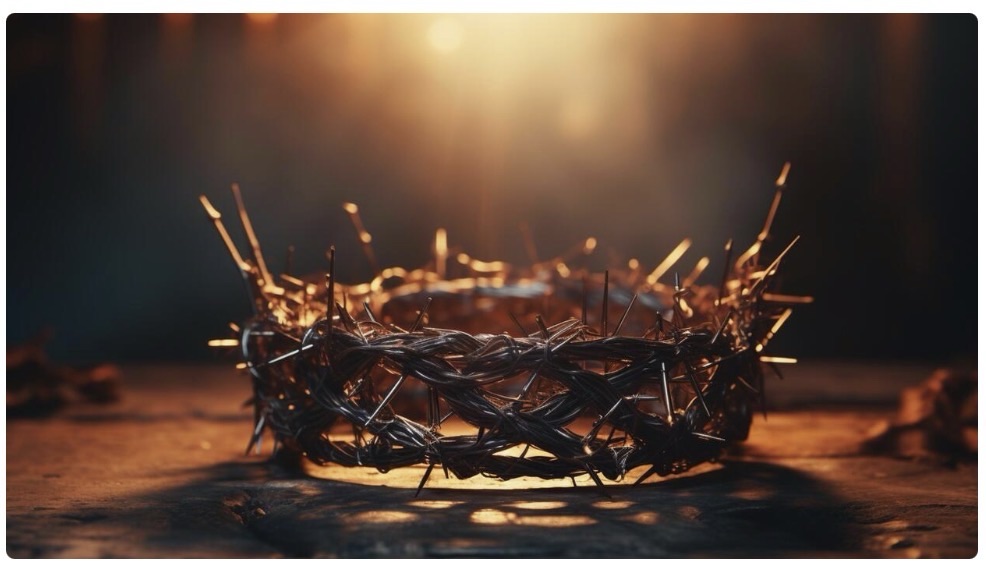
In the most significant week in human history, events unfolded that revealed both the depth of human sin and the depth of God’s love. Jesus was betrayed, arrested, and unjustly condemned. He endured extreme physical suffering: He was beaten, whipped until His flesh was torn, and mocked. A crown of thorns was pressed onto His head. He was forced to carry the heavy wooden cross to the place of execution. Nails were driven through His hands and feet, and He was left to die in one of the most painful forms of death known at the time—crucifixion.
But what happened on that cross was far more than physical suffering. Jesus bore the weight of human sin. He took upon Himself the consequences of the brokenness that separates us from God. Isaiah 53:5 (WEB) says, “He was pierced for our transgressions. He was crushed for our iniquities; the punishment that brought our peace was upon him. By his wounds we are healed.” In simple terms, He carried the punishment for all of humanity’s sins—what we could not bear ourselves. This was not accidental or meaningless. It was a deliberate act of love so that forgiveness could be offered to all of us.
He died and was buried, and for a moment it seemed the story had ended in defeat. But three days later, He rose from the dead. The resurrection is the heart of Easter. It is not symbolic—it is the reality that death itself was overcome. It confirms that the work of the cross was complete: sin had been dealt with, and separation from God was not the final outcome for humanity.
Because of Jesus’ sacrifice and resurrection, a way is open for every person. Salvation is not something we can earn through wealth, status, good deeds, or religious observance—it is a free gift from God. But this gift requires a genuine response: repentance, acknowledging our sins, turning away from them, and seeking to live according to God’s will, coupled with trusting fully in what Jesus has done. It is through this heartfelt turning to Him that forgiveness and restoration become real in our lives.
“For what shall it profit a man, if he shall gain the whole world, and lose his own soul? Or what shall a man give in exchange for his soul?” (Mark 8:36–37, WEB)
Every life matters. Each of us has been given free will to choose right from wrong, and every choice affects ourselves and others, for good or for harm. If justice seems absent in this life, there will be justice in the life to come. Every person will one day stand before the judgment seat of Christ (2 Corinthians 5:10, WEB) to give an account of their lives—their thoughts, words, actions, and motives. God cares deeply for each person, body and spirit, but it is the spirit that lives on forever. This is why every choice matters, and why Jesus’ sacrifice is the only way to be reconciled to God before that day. Through Him, forgiveness and restoration are offered to all who turn from sin and trust in Him.
The call to salvation is for everyone. Regardless of wealth, social status, sexual orientation, or religious background, Jesus invites each of us to turn from sin and accept His gift of salvation. No amount of money, social standing, or religious observance can save anyone. The only comparison that matters is with God, and all of us fall short. God doesn’t want mere religion; He wants a personal relationship with each of us. Our good works are like filthy rags before a holy God. Humanity is created with a God-shaped vacuum that nothing else can fill but Him.
Jesus Christ paid the price for our sins so that we could be restored to God. He was crucified—nails driven through His hands and feet, a crown of thorns pressed onto His head, beaten and whipped until His body was torn and unrecognizable. He died for our sins, taking upon Himself the very sins that destroy lives. He was buried, and three days later, He rose from the dead—alive, victorious, and offering eternal life to all who believe.
Romans 10:9 (WEB) says, “If you declare with your mouth, ‘Jesus is Lord,’ and believe in your heart that God raised him from the dead, you will be saved.”
John 3:36 (WEB) warns, “Whoever believes in the Son has eternal life, but whoever rejects the Son will not see life, for God’s wrath remains on them.”
Salvation begins with acknowledging sin, turning from it, and trusting Jesus. It is not a prayer alone but heartfelt belief, repentance, and surrender. Jesus did not die only for a certain group of people or for one religion—He died for all humanity.
And the story continues: the Bible promises that He will return again, not in suffering, but in power, justice, and authority, to right all wrongs and establish His reign as King of Kings and Lord of Lords, the Alpha and Omega (Acts 1:11, Revelation 22:12–13). Every soul will stand before Him, and every choice we make matters.
Easter week is therefore not just about history or tradition—it is about understanding the problem of human sin, the depth of God’s love, and the gift of salvation that is available to all. Healing, restoration, and eternal life are possible for everyone who responds to Jesus. This week is a reminder that the remedy for humanity’s brokenness is already here, and that hope, forgiveness, and reconciliation are offered freely to all.
—————
If you are ready to respond to Jesus’ gift of salvation:
– How to be saved: The Path to Salvation – Click here
– 7 Things to Do After Getting Saved – Download PDF


