
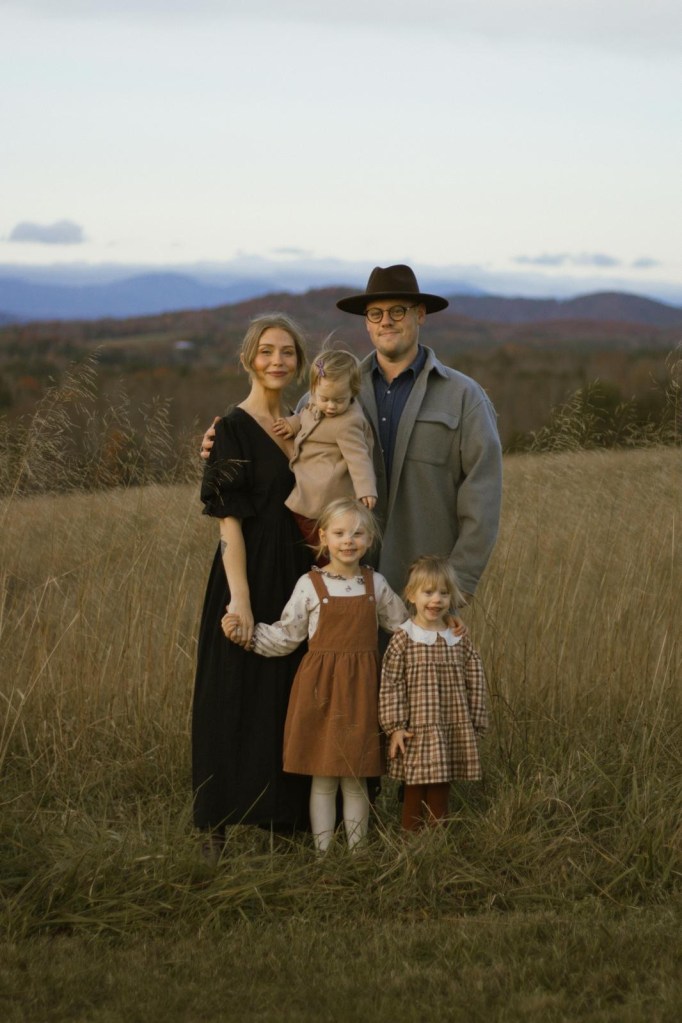
I have politically incorrect views. I live a politically incorrect life. I hold what many would now call a politically incorrect “career”: I am a wife, a mother, and a homemaker.
I am a born-again Christian. I stay at home to raise our four children, while my husband works to provide for our family. We live on one income. I make no apology for this—because I am fulfilled in my role.
In today’s world, that statement alone can invite criticism. It can provoke eye-rolls, assumptions, or quiet dismissal. There is a prevailing narrative that fulfillment must look a certain way, that success must be defined by career progression, financial independence, and public achievement. Anything outside of that can be seen as outdated, regressive—even oppressive.
And yet, here I stand.
I should also say—this was not always the path I expected to take. I was raised by a mother who strongly identified with feminism, and I was taught to strive, to compete, and to hold my own alongside the best in the workplace. Success, as I understood it then, was measured by status, recognition, and professional achievement.
And then, one day, everything changed.
The Lord intervened. I stopped, quite literally, in my tracks. What I had been pursuing no longer felt like the path I was meant to walk. Instead, I felt called toward something entirely different—something quieter, but no less significant. I chose to follow the life I believed God was leading me into.
And here I am.
In a culture that prides itself on openness and self-expression, it is striking how certain choices still fall outside what is readily accepted. There is a sense that “anything goes”—but often only within a set of unspoken boundaries. Step beyond them, and the tone can quickly shift from acceptance to scepticism.
Even something as simple as saying, “I identify as who the Lord made me to be,” can feel, at times, countercultural.
It is, in many ways, refreshing to live outside the expectations of the age. From an early age, many are shaped—by education, media, and social influence—to adopt the prevailing views of the time. To align with the collective is often easier than to question it. To choose differently can invite misunderstanding or quiet exclusion.
Conformity is often rewarded; divergence, less so.
And yet, here lies the paradox: what was once considered ordinary has now become, in some circles, unconventional. A family life ordered around faith, a mother at home raising her children, a father bearing primary responsibility for provision—these were once widely accepted norms. Today, they can be perceived as a form of resistance.
And in a sense, they are.
Because to choose this life today is not to drift with the current, but to step deliberately against it. It is to say: I will not simply adopt what is expected, but will pursue what I believe to be right.
For me, that conviction is rooted in faith—a desire to honour God and to live within what I understand to be His design for family and life. Not as a limitation, but as a framework given by a loving Father. One who sees the whole picture. One who, I trust, knows what leads to true flourishing.
That does not mean it is without challenge.
There are moments when the scrutiny feels tangible. When questions arise—sometimes well-meaning, sometimes not: “Don’t you want more?” “What about independence?” “Are you making the most of your potential?”
These questions persist—not always because they carry weight, but because they are so often repeated.
And yet, I return to this: fulfillment is not something that can be defined externally. It is not measured solely by income, status, or visibility. It is found in purpose, in conviction, and in a clear sense of why one has chosen the path they walk.
My days are not outwardly remarkable. They are filled with the ordinary rhythms of life: meals, laundry, school runs, conversations, discipline, prayer. But within that ordinary lies something deeply significant—the shaping of lives, the nurturing of character, the steady building of a home.
This is not a rejection of women who choose differently. Nor is it a claim that one path is right for everyone. Rather, it is a case for recognising that this path, too, holds value—and that choosing it should not require apology.
If empowerment is to mean anything, it must include the freedom to choose a life that may not align with prevailing trends, but is deeply aligned with personal conviction.
So yes, by today’s standards, I may be considered politically incorrect.
But perhaps the more important question is this: when did living with conviction become something to explain away?
And if choosing faith, family, and a life of intentional simplicity places me outside the norm—then I am content to stand there.
Because sometimes, what appears unconventional in the present is simply a rediscovery of what has long been meaningful.
Yours sincerely,
A Wife, Mother, and Homemaker
—————
***Photo Family Snipes


