When Jesus instituted the ‘breaking of bread’, He used a word that He never used before – the word ‘covenant’. A proper understanding of this word is essential if we are to partake in the Lord’s table meaningfully.
A Covenant Relationship with God
The first mention of the word ‘covenant’ is found in Genesis 6:18, where God promises to establish a covenant with Noah (Genesis 9:9, 11). God had judged the whole world because of man’s sin and now He made a covenant with Noah that He would never again judge the world with a flood as He had just done. God gave a sign to mark the covenant that He then made. It was what we now call the ‘rainbow’. God, however, called it ‘My bow in the cloud’ (Genesis 9:13). The word used for ‘bow’ there is exactly the same word as is translated elsewhere in the Bible for the weapon, the bow. A bow is always aimed in the direction of the one who is to be shot with the arrow. The significance of the bow in the cloud pointing upwards (instead of downwards) is that God who dwells in the heavens was Himself going to receive the arrow released by that bow and take the judgement for man’s sin. The bow would not be aimed at man but God Himself. The world has never since been judged by a flood. Psalm 69:1, 2 states that the floods of God’s judgement went over Jesus on the cross. This was the fulfilment of the sign of the bow in the cloud.
The next person in the Scriptures with whom God made a covenant was Abram. This is first mentioned in Genesis 15:18. Notice there, how God entered into the covenant with Abram. Abram was told to bring three animals and two birds, to slay them and spread them out on the ground (15:9, 10). The animals were to be cut into two and laid each half opposite the other. At night, God came down and as a smoking fire-pot and a flaming fire passed between those halves of the dead animals. Thus it was that the Lord made a covenant with Abram. The significance was again clear – that God Himself would lay down His life (as those dead animals) for Abram. As in the case of the sign of the covenant with Noah, death was the way that the covenant was established – a death in which God Himself took the initiative.
This method of establishing and confirming a covenant later became a practice in Israel (as is seen from Jeremiah 34:18, 19). Whenever two people entered into a covenant, they would slay a calf, divide it into two and walk between the two halves, thus symbolically stating that each was prepared to lay down his life for the other in being true to the covenant. It was a serious offence to make such a symbolic vow and not to keep it. Hence God told the people of Judah through Jeremiah that He would judge them severely for making such a covenant and then breaking it.In Genesis 17, we find God re-confirming the covenant with Abraham. Again God gave a sign to mark the covenant – this time, circumcision. Circumcision is a cutting off of the flesh and symbolises (as Philippians 3:3 and Colossians 2:11 make plain) death to the flesh.
We notice that the symbol of the covenant is again something that speaks of death. This time, it was Abraham and his seed who had to signify their willingness to be faithful to the covenant unto death. The external circumcision was but a sign of God’s desire to circumcise the hearts of the Israelites to love Him wholeheartedly (See Deuteronomy 30:6; Romans 2:28, 29). This teaches us that there can be no wholehearted love for God apart from death to the flesh.The next time we read of a covenant is when God made a covenant with the nation of Israel through Moses – what we call the ‘old covenant’ or the ‘Old Testament’. We read this is Exodus 24:4-7. Moses wrote God’s words in a book (the book of the covenant), slew young bulls as a sacrifice to the Lord and sprinkled the blood of the bulls on the people saying, “Behold the blood of the covenant which the Lord has made with you” (Exodus 24:8). The covenant was sealed by the blood of the slain animals.
This is the first time in the Bible that the phrase ‘the blood of the covenant’ occurs. This is the same phrase that Jesus used when passing the cup around, at the last supper, to His disciples (Matthew 26:28). Under the old covenant, the blood was only sprinkled on the people. Under the new covenant, Jesus invites us to drink of the cup. This symbolises the fact that under the old covenant, the law could only cleanse a person’s external life whereas under the new covenant, we can be purified inwardly.
Again, the covenant is entered through death. In Hebrews 9:13-22, this contrast between the blood of bulls and the blood of Christ is brought out; and we are told there that “where a covenant is, there must of necessity be the death of the one who made it. ….it is never in force while the one who made it lives” (verses 16, 17). This is why every symbol of every covenant that God made with any man symbolised death.The only way that Jesus could establish the new covenant with us was through His own death; and the only way that we can enter into that covenant and its privileges is through death to ourselves. This is the meaning of eating the bread and drinking the wine at the ‘breaking of bread’.
In Hebrews 13:20, we are told that God brought up Jesus from the dead through the blood of the eternal covenant. What does this mean? The blood shed by Jesus on Calvary’s cross was shed as a result of resisting sin unto death (Hebrews 12:4). Jesus was determined to obey the Father and never to sin. His attitude to His Father was, “Father, I would rather die than disobey You in one small point” (See Philippians 2:8 – “obedient unto death”). This was Jesus’ covenant with His Father.
Now Jesus invites us at His table to drink of the cup which is the blood of this new covenant. Are we willing? Can we drink of the cup which He drank of? Do we long, like the apostle Paul, to know “the fellowship of His sufferings being conformed to His death in order that (we too) may attain to the resurrection from the dead” (Philippians 3:10, 11).
Most believers come to the Lord’s table so lightly, without any understanding of what it implies and what the covenant is all about. Only one who is determined to strive against sin even unto blood can take part of the Lord’s table worthily.The word ‘covenant’ could be likened to a solemn agreement signed in a court. No one would sign an agreement in a court, without carefully reading and understanding the terms of the agreement. But how lightly believers take part of the bread and wine at the Lord’s table! No wonder, as in Corinth, even today many believers are weak (physically and spiritually), sick (physically and spiritually) and a number of them die before God’s appointed time (1 Corinthians 11:30) – all because they come to the Lord’s table lightly.
In Leviticus 26:14-20, God had warned the Israelites that if they made a covenant with Him and then broke it, they would become sick and diseased and defeated and there would be no profit in their labours or in their businesses.It is a serious thing to break a covenant. “Do not be hasty in word in the presence of God. When you make a vow to God, do not be late in paying it. ….It is better that you should not vow than that you should vow and not pay it” (Ecclesiastes 5:2-5).Anyone who is repeatedly plagued by sickness and weakness should carefully consider whether he has carelessly broken his covenant with God. This is why James tells us to confess our sins in order to be healed (James 5:16).
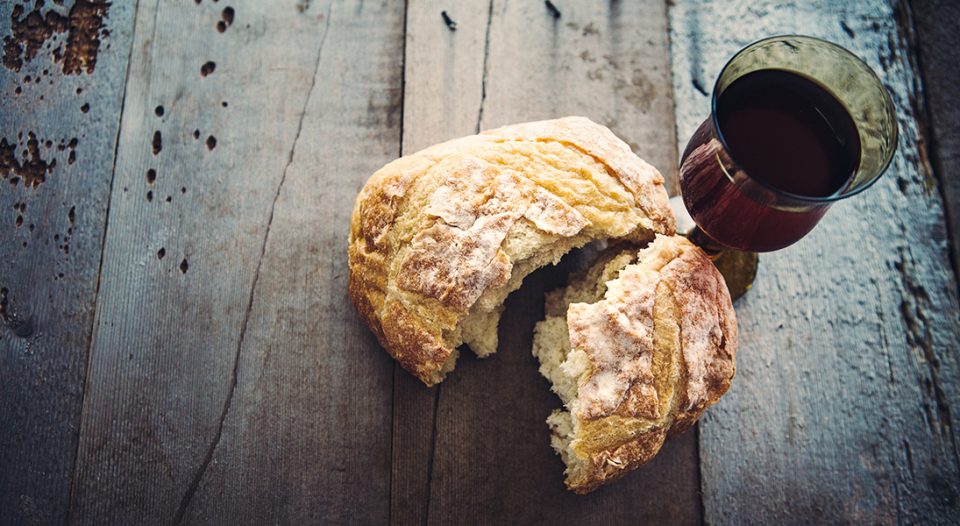
The bread that we break symbolises the body of Christ. First of all it symbolises that physical body that Jesus took when He came to earth, in which He never did His own will but His Father’s (see Hebrews 10:5-7). Thus His body was a broken, yielded body all through His earthly life. His body was like bread – easily broken when touched even slightly. Such was His yieldedness to His Father’s will at all points. When we break the bread and partake of it, we are testifying thereby, very solemnly, that we too desire to go the same way of yieldedness and brokenness. It is a serious thing therefore to say that to the Lord at the Lord’s table, and then live as though we never made a covenant with God. We may not be perfect, but the Lord expects even the newest believer to have a willingness to go the way of death to self, no longer to live for oneself, but for Him alone (2 Corinthians 5:15). Otherwise we partake of the bread unworthily, not discerning the Lord’s body rightly.
A Covenant Relationship in the Brotherhood:
The bread that we break symbolises not only the physical body of Christ but also the church, the body of Christ (1 Corinthians 10:16, 17), for there is but one loaf, and we who are many are one body. Those who “eat the sacrifices are sharers in the altar” (1 Corinthians 10:18). If we eat at the Lord’s table, we are to share His death on the cross (the altar) – death to our self – not only in our relationship with God, but also in our relationship with others in the body of Christ.”We ought to lay down our lives for the brothers” (1 John 3:16). This is another aspect of our testimony at the Lord’s table. It is not only with the Lord that we enter into a covenant, but also with our fellow believers. And here too the covenant is entered through death to self.
As the two parties entering into a covenant in Israel passed between the two halves of the slain (‘broken’) calf, even so today we enter into a covenant with one another through the broken bread. This is just as serious a matter as the first aspect that we considered earlier, of making a covenant with God.In 1 Samuel 18:1-8, we read of Jonathan entering into a covenant with David. This is a beautiful picture of what the covenant relationship should be like in the body of Christ. It says there that Jonathan’s soul was knit to the soul of David. The ‘knit’ used here is the same word used in Nehemiah 4:6 where it refers to the wall being built in such a way that there was no gap at all in it. So too was Jonathan’s heart was knit with David’s – there was no gap between their hearts for the enemy to come through. It says further that Jonathan loved David as himself. This is our calling in the body of Christ too – to be joined together as ONE, such that there is no gap between us (no gap of misunderstanding, jealousy, suspicion, etc.) whereby the enemy can come through and bring a division.
Jonathan should have been the one person in Israel who should have been most jealous of David, for he was a threat to Jonathan succeeding Saul as the next king of Israel. Yet he overcame jealousy and loved David as his own self. How Jonathan puts New Testament believers to shame!
Jonathan then made a covenant with David; and as a symbol of the covenant, he took off his royal robe and put it on David. This was symbolic of Jonathan’s desire to die to himself as the next king of Israel and to make David king. We are commanded in the body of Christ to “outdo one another in showing honor” (Romans 12:10 – margin). We are to so die to ourselves that we sincerely and earnestly long that our brothers will be greater and higher and more regarded than ourselves. And we take our robe, if necessary, to cover a brother’s nakedness wherever it is seen. Thus we can make our brother glorious in the eyes of others. This is what it means to enter into a covenant relationship with the brothers in the body of Christ.
It is impossible to enter into such a covenant without dying to self persistently. All the problems that riddle almost every assembly of believers arise because the believers therein have not entered into such a covenant relationship with one another. Everyone seeks his own. The net result of this is that Satan triumphs. But such assemblies are not the church that Jesus is building, for Jesus said that the gates of hell would not be able to prevail against the church that He builds (Matthew 16:18).
Jesus is building His church in this world today. If we are to be a part of that church and to have a part in building that church, then we need to take to heart covenant relationships and should seek to learn with all our hearts what it means to make our brother glorious.
Then we read that Jonathan also took his armor, his sword, his bow and his belt and gave them to David. Entering into a covenant with our brothers, we surrender every possible weapon with which we can harm them in any way. This is the meaning of Jonathan’s action. The weapon with which the maximum damage has been done in Christendom is the tongue. Are we willing to lay down this weapon in a covenant relationship with our brothers in such a way that we will never again speak evil or backbite or gossip against another, even once.
This surrender of our weapons also implies a trust in our brother such that we can afford to be defenseless before him, because we know that he will never harm us. It is through such trust and confidence that the brotherhood is built.
In 1 Samuel 19, 20, we see Jonathan’s steadfast loyalty to David even at the cost of having to stand against his own father. Jonathan stood by his brother David in the presence of carnal relatives. Truly he is a worthy example for all of us to follow. We are to love the brotherhood more than our blood relatives.In Amos 1:9, 10, we see how seriously God viewed a breaking of the covenant of brotherhood. Tyre had made a covenant with Israel in the days of Hiram. Yet in the moment of Israel’s need, they betrayed Israel and delivered them over to their enemies and thus broke the covenant that they had made. God told Amos that He was going to judge Tyre severely for this.
In 2 Samuel 21:1, 2, we read another example of this. For three years there had been a famine in Israel. When David sought the Lord for the cause of this, the Lord told him that it was because Israel had broken the covenant that they had made with the Gibeonites in the days of Joshua. King Saul had killed the Gibeonites, disregarding that solemn covenant. Years later, long after Saul had died, judgment caught up with Israel. God may delay His judgments, but where He does not see repentance, those judgments will surely come. One may ask why God delayed so much in sending the famine. No doubt it was because He gave Israel time to repent. When they did not repent, judgment fell on them.
Paul told the Corinthians that if they judged themselves, God would not judge them. But since they had not judged themselves, therefore many of them were sick and weak and many died before their time (1 Corinthians 11:30, 31). All believers who are perpetually weak and sick should seek God to see if the reason for it is perhaps a broken covenant of brotherhood – taking part in the table of the Lord and then betraying their brothers and sisters, behind their backs, by slander, gossip, etc. This was the chief crime of Judas Iscariot – that he had partaken of the covenant meal with Jesus and then gone out and betrayed Him. As the psalmist prophesied, “Even my close friend, whom I trusted, who ate my bread, has lifted his heel against me” (Psalm 41:9).
May the Lord enable each one of us to examine ourselves and partake of the Lord’s table meaningfully in future. Let us repent wholeheartedly of the sin of breaking covenant with the Lord and with our brothers and sisters; and let us take heed to the voice of the Spirit that has come to us.
**By Zac Poonen excerpt from his book: New wine for new wineskins
Zac Poonen © Copyright – Zac Poonen. No changes whatsoever are to be made to the content of the article without written permission from the author. https://www.cfcindia.com/







 The Sisterhood Hub