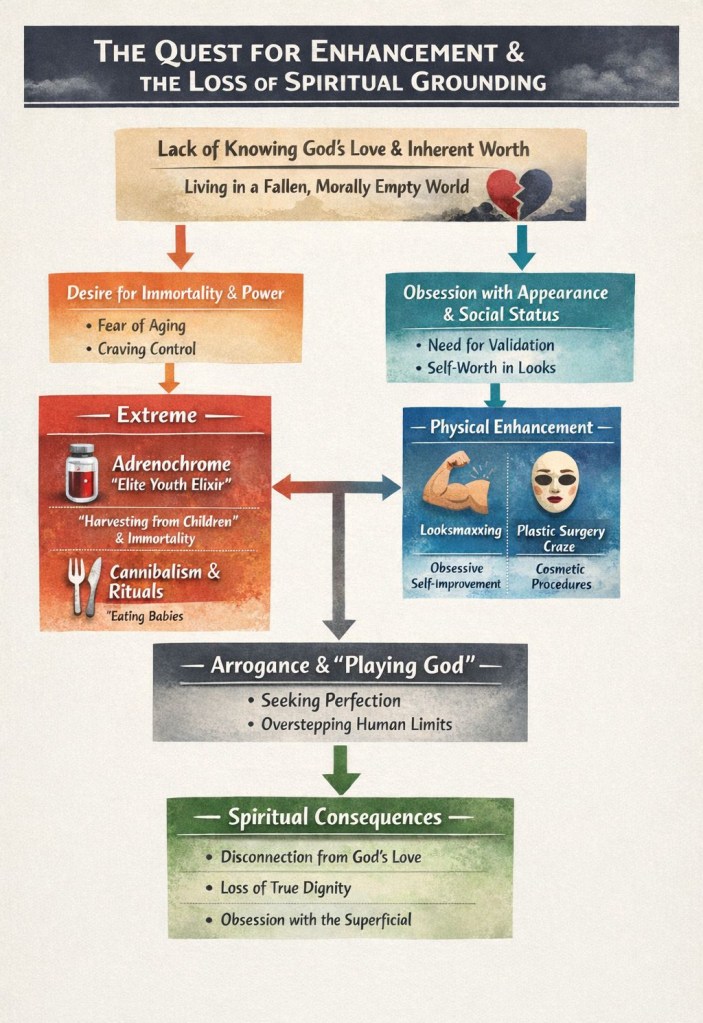
The Cost of Playing God: How Transhumanism, Vanity, and Modern Culture Are Shaping a One-World Agenda

In our modern era, humanity stands at a crossroads. Science and technology now offer possibilities once confined to science fiction — genetic editing, longevity research, neural enhancement, cosmetic transformation, artificial intelligence, and even the dream of transcending biological limits. What was once impossible is now within reach.

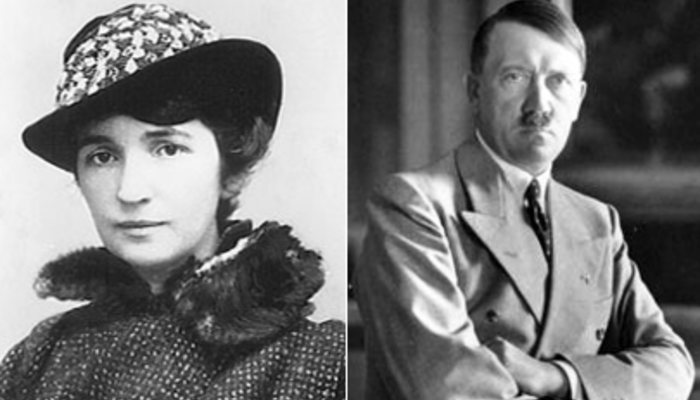
Across history, human beings have wrestled with the temptation to control, perfect, and redefine life itself. From the atrocities of the Nazi eugenics program — which sought to rank human worth by genetics — to today’s movements in transhumanism and extreme appearance culture, the underlying impulse remains the same: to determine value apart from the Creator, to overcome limits rather than receive them, to elevate human will above divine design.

This desire is not new. It is ancient. It is the impulse to “be like God” — not in holiness or love, but in authority over life itself.

At the heart of this cultural moment lies a crisis of identity. When human worth is no longer anchored in being created in the image of God, it becomes negotiable — measured by beauty, intelligence, productivity, longevity, or genetic advantage. The result is a generation pressured to optimize rather than receive, to compete rather than rest, to enhance rather than belong.

Scripture offers a radically different foundation:

“For you created my inmost being; you knit me together in my mother’s womb. I praise you because I am fearfully and wonderfully made.” — Psalm 139:13–14

“So God created mankind in his own image…” — Genesis 1:27

Human dignity is not earned. It is given. It is not engineered. It is bestowed. When this truth is forgotten, pride expands, control intensifies, and moral lines blur. But when identity is rooted in God’s love, technology becomes a tool rather than a master, enhancement becomes stewardship rather than rebellion, and human life remains sacred rather than commodified.

The following seven signs reveal how transhumanism, looksmaxxing, and the “playing God” mentality reflect a deeper spiritual disconnection — and why rediscovering our identity in God is the only foundation strong enough to withstand the pressures of a self-optimizing age.

1. Transhumanism and the Pursuit of Human Enhancement

Transhumanism is perhaps the most radical expression of humanity’s desire to reshape itself, overcome natural limits, and achieve perfection through science and technology. It is a movement that envisions a future where humans can radically enhance intelligence, physical ability, and longevity. Artificial intelligence, neural implants, gene editing, and cybernetic integration are no longer just theoretical; they are actively being researched and developed.

Brain-computer interfaces and neural implants could one day allow direct communication with machines or even memory enhancement. Genetic editing tools like CRISPR could prevent certain diseases — but they also tempt humans to select traits for “enhancement” rather than healing. Cybernetic limbs and synthetic organs offer incredible restoration, but also blur the line between human and machine, raising questions about identity and dignity.

While the possibilities are staggering, the spiritual and moral implications are profound. Transhumanism represents more than just science — it reflects the human heart’s deep longing to control life, transcend limitation, and define value on our own terms. The danger arises when enhancement is pursued not for healing, restoration, or stewardship, but to satisfy pride, vanity, or fear of mortality.

Technological marvels can be used for restoration and good, but they can also become instruments of deception when the enemy masks pride and self-exaltation as innovation or progress. What seems like human advancement can subtly lead hearts away from God.

Scripture reminds us of the dangers of this kind of pride:

Proverbs 16:18: “Pride goes before destruction, a haughty spirit before a fall.”

Genesis 3:5: “For God knows that when you eat from it your eyes will be opened, and you will be like God, knowing good and evil.”

Even with the most advanced technologies at our disposal, we are reminded that true human dignity and purpose are given by God, not defined by our abilities or enhancements.

2. Historical Lessons: Eugenics and the Nazi Regime

History offers chilling proof of what can happen when humanity attempts to redefine worth apart from God. The eugenics programs of the early 20th century, culminating in the atrocities of the Nazi regime, sought to engineer a “perfect” human race, eliminating those deemed genetically or physically unworthy. Millions of lives were devalued, and millions more destroyed.

Early 20th-century eugenics encouraged forced sterilizations in multiple countries, aiming to remove “undesirable” traits. Nazi Germany’s obsession with racial purity led to mass extermination and dehumanization, showing the catastrophic consequences of attempting to play God.

History reveals how the enemy works through human ambition, turning the desire for improvement into cruelty, oppression, and death. Those in power, deceived by pride and ideology, sought to play God — a timeless strategy of the enemy.

These events are more than lessons in politics or science — they are stark warnings about the spiritual consequences of pride and rebellion. Attempts to assume God’s role in determining value, life, and death lead inevitably to cruelty, injustice, and moral collapse.

Today, modern parallels are clear: abortion, euthanasia, extreme cosmetic enhancement, social media-driven appearance obsession, and radical life-extension experiments reflect the same human desire to control life apart from God.

Scripture makes the opposite clear:

Genesis 1:27: “So God created mankind in his own image, in the image of God he created them; male and female he created them.”

Psalm 139:13–14: “For you created my inmost being; you knit me together in my mother’s womb. I praise you because I am fearfully and wonderfully made.”

Every human life carries intrinsic worth. Attempts to assign value based on appearance, intelligence, or genetic traits reflect arrogance and a fundamental misunderstanding of God’s design. Modern enhancement pursuits echo these ancient desires to control and “perfect” humanity, but history reminds us of the tragic cost when human pride dominates divine instruction.

3. Obsession with Youth, Looks, and Appearance

Powerful individuals and groups often leverage social media, influencers, and cultural trends to shape society according to ideological agendas, subtly grooming the population to accept values and behaviors aligned with their vision. This manipulation is part of a spiritual battle, as Scripture reminds us:

“For we do not fight against flesh and blood, but against the rulers, against the authorities, against the powers of this dark world and against the spiritual forces of evil in the heavenly realms.” — Ephesians 6:12

Modern society amplifies the desire to look perfect, maintain youth, and command social approval. Social media platforms, fashion, fitness culture, and the booming cosmetic surgery industry create a world where appearance becomes an identity marker. Terms like “looksmaxxing” describe deliberate efforts to optimize attractiveness, from fitness and diet to grooming and fashion, and the cosmetic surgery industry makes these ideals increasingly attainable.

Procedures like rhinoplasty, Botox, or lip fillers normalize extreme focus on appearance. Fitness influencers and social media create constant comparison pressure, teaching people to measure worth externally. This can lead to obsessive behavior, mental health challenges, and spiritual distraction from God’s truth of inherent value.

Even the pursuit of beauty can become a tool of deception. The enemy entices hearts to measure worth by fleeting appearances, masking vanity and dissatisfaction as self-care, confidence, or empowerment.

While taking care of one’s body is not inherently wrong, these behaviors become spiritually dangerous when they replace recognition of intrinsic worth. The Bible teaches that external perfection is fleeting, but the heart reflects true worth:

1 Samuel 16:7: “The Lord does not look at the things people look at. People look at the outward appearance, but the Lord looks at the heart.”

Proverbs 31:30: “Charm is deceptive, and beauty is fleeting; but a person who fears the Lord is to be praised.”

Obsession with appearance is not simply vanity — it is a symptom of a deeper spiritual hunger for validation, control, and meaning.

4. The Pursuit of Longevity and Control

Beyond looks, many modern pursuits focus on extending life, preserving youth, and mastering the human body. Anti-aging medicine, regenerative therapies, extreme fitness regimens, and even ideas like adrenochrome as an elixir of vitality reveal the depth of human anxiety about mortality.

Regenerative medicine — stem cell therapies, organ regeneration, and gene therapy — aims to repair or replace damaged tissues, offering a glimpse at life extension. Anti-aging interventions and experimental pharmaceuticals, all promise to slow the aging process, but they can foster obsession and fear of the natural life cycle.

Fear of death and the desire to extend life beyond God’s design can also be exploited by the enemy. Even when pursuits appear noble — seeking health or longevity — they can become channels of deception when pride and fear drive the heart.

These pursuits are not inherently wrong when aimed at restoration or health, but they become spiritually dangerous when driven by fear of death, pride, or a refusal to accept the natural boundaries of life.

The Bible reminds us that life is a gift, not a possession to manipulate at will:

Job 12:10: “In his hand is the life of every creature and the breath of all mankind.”

Ecclesiastes 3:1–2: “There is a time for everything, and a season for every activity under the heavens… a time to be born and a time to die.”

True peace comes not from controlling life, but from trusting in God’s wisdom, timing, and care.

5. Spiritual Implications of Obsession and Arrogance

The enemy thrives when humans forget their God-given worth. He disguises pride, obsession, and the desire to surpass God’s design as ambition, success, or enlightenment, leading hearts into emptiness and moral compromise.

When people forget that their value comes from God, they often seek meaning in external achievements, appearance, or technological mastery.

This can manifest as:

Pride and arrogance, believing humans can surpass God’s design.

Obsessive focus on perfection, whether in appearance, intellect, or lifespan.

Emotional emptiness, feeling dissatisfied even after achieving worldly success.

Moral compromise, prioritizing self-interest over love, stewardship, and the care of others.

Historical examples, like the Nazi pursuit of “racial perfection,” illustrate how obsession and arrogance can lead to destruction on a massive scale. Modern parallels include extreme cosmetic procedures, abortion, euthanasia, social media pressures, and life extension experiments that ignore moral and spiritual consequences. Technological enhancement, when pursued without ethical or spiritual discernment, reflects a human heart seeking control over life itself rather than acknowledging God’s sovereignty.

Scripture reminds us that human worth is intrinsic, given by God, and not contingent on external measures:

Ephesians 2:10: “For we are God’s handiwork, created in Christ Jesus to do good works, which God prepared in advance for us to do.”

James 4:6: “God opposes the proud but gives grace to the humble.”

Security, identity, and purpose are found not in controlling life or chasing perfection, but in embracing God’s design with humility, gratitude, and love for others.

6. Integrating Knowledge, Enhancement, and Stewardship

Modern technologies and health innovations can serve humanity, but they require discernment, humility, and moral responsibility.

Genetic and technological enhancements can restore function, prevent disease, or improve quality of life — but they should never be pursued to glorify self or assert control over life itself. Cosmetic and lifestyle interventions can provide confidence or repair, yet obsession with appearance reflects spiritual misalignment if it becomes the primary source of self-worth. Radical life extension goals must be tempered by respect for God’s natural boundaries and the spiritual reality of mortality.

Discernment is key because the enemy often disguises self-aggrandizement as innovation or stewardship. Humility, obedience, and alignment with God’s design guard against this deception. Stewardship involves using gifts, knowledge, and technology responsibly — for healing, restoration, and service, not for prideful perfection or dominion over life. True advancement aligns with God’s purpose, not human ambition.

7. Lessons from History, Scripture, and Modern Culture

Modern culture reflects timeless human struggles: pride, obsession, fear of mortality, and desire for perfection.

Historical warnings like the Nazi eugenics program show the catastrophic consequences of attempting to determine worth apart from God. Modern trends — transhumanism, cosmetic obsession, anti-aging interventions, abortion, euthanasia, social media influence, and life-extension experiments — echo the same prideful desire to control life.

Scripture provides the guiding principle: true worth is intrinsic, life is a gift, and fulfillment comes from alignment with God, not external perfection:

Psalm 139:14: “I praise you because I am fearfully and wonderfully made.”

Proverbs 3:5–6: “Trust in the Lord with all your heart and lean not on your own understanding; in all your ways submit to him, and he will make your paths straight.”

Security, identity, and purpose are found not in controlling life or chasing perfection, but in embracing God’s design with humility, gratitude, and love for others. Modern obsessions, whether through technological enhancement, cosmetic trends, or social media influence, reflect ancient pride and rebellion against God. Yet His truth offers a timeless refuge, reminding us that intrinsic worth is found in His image, not human-imposed standards.

—-—————-

*** Photo by Cottonbro Studio at Pexels

One Human Race: The Biblical, Scientific, and Historical Truth About Human Diversity

For centuries, societies have divided humanity into different “races” based on skin color, facial features, and other physical traits. However, both science and the Bible confirm that there is only one human race, and that racial divisions are artificial constructs created by societies, not biological realities.

The concept of race, as it is understood today, is a relatively modern idea. Ancient cultures primarily identified people by nation, language, or tribe, not by skin color or physical characteristics. The division of humanity into racial categories arose in later centuries, particularly during the Age of Exploration, the Transatlantic Slave Trade, and European colonialism, as a way to justify social hierarchies and inequalities. These divisions were not based on biblical teaching or scientific reality but were constructed to classify, separate, and control people groups for economic and political gain.

In this article, we will explore the biblical, scientific, and historical evidence that supports the truth: all humans are part of the same family, with differences being only ethnic and cultural—not racial.

1. The Biblical Perspective: One Blood, One Race

A. All Humans Descend from Adam and Eve

The Bible teaches that all people, regardless of their ethnic background, originate from one man and one woman—Adam and Eve. This means that all humans are part of a single, unified family, and there is no scriptural foundation for racial divisions.

Genesis 1:26-27 (God Creates Humanity in His Image)

“Then God said, ‘Let Us make man in Our image, according to Our likeness; let them have dominion over the fish of the sea, over the birds of the air, and over the cattle, over all the earth and over every creeping thing that creeps on the earth.’ So God created man in His own image; in the image of God He created him; male and female He created them.”

This passage is foundational for understanding human unity. Every human being bears God’s image, meaning that no ethnic group is superior or inferior. When we are told that humans are created in the image of God, it establishes that all people have inherent dignity and worth, regardless of skin color or other physical traits. This truth was radical in ancient times, as many societies at that time viewed their own people as superior to others based on ethnicity or physical characteristics. But the Bible’s declaration that all humans reflect God’s image shatters such ideas of superiority or inferiority.

Genesis 3:20 (Eve, the Mother of All Living)

“And Adam called his wife’s name Eve, because she was the mother of all living.”

This verse reinforces the concept of one human family. All of humanity, regardless of ethnic background or physical differences, can trace its origins to Adam and Eve. There is no basis in the Bible for seeing different ethnic groups as separate “races” with inherent differences. Rather, they are branches of one family tree.

B. The Table of Nations and the Spread of Ethnic Groups

After Noah’s flood, humanity repopulated through Noah’s three sons: Shem, Ham, and Japheth (Genesis 10). These descendants spread across the earth, and it is often said that the groups of people who came from these sons are the ancestors of modern nations. Some traditions suggest:

  • Shem’s descendants became the Middle Eastern and Semitic peoples (Jews, Arabs, Assyrians).
  • Ham’s descendants spread to parts of Africa and the Middle East.
  • Japheth’s descendants migrated to Europe and parts of Asia.

But it’s important to note that the Bible never says that these sons became different races—only that they populated different regions and developed unique cultures and languages. The differences we see today are the result of geographic migration, adaptation to climates, and cultural development—not separate racial origins. As people moved to different parts of the world, they adapted to their environments, which led to variations like skin color, hair texture, and other physical traits. These are ethnic distinctions—not separate races.

C. Acts 17:26 – One Blood, All Nations

Acts 17:26

“And He has made from one blood every nation of men to dwell on all the face of the earth, and has determined their preappointed times and the boundaries of their dwellings.”

In this passage, Paul is addressing the Athenians and emphasizing that God created one common ancestor for all human beings, and from that one blood came all the nations of the earth. The term “one blood” is incredibly significant—all humans share the same basic genetic makeup, regardless of their geographic location or ethnic group. There is no biblical support for the notion of multiple races. Instead, humanity is unified by a common origin and ancestry.

D. The Curse of Ham: A Misused Doctrine

One of the most harmful misinterpretations of the Bible concerning race involves the curse of Ham. Some have claimed that the curse placed on Ham’s son, Canaan, means that the descendants of Ham, particularly African people, are cursed with dark skin. This interpretation is wrong and has been used to justify slavery and racism, but the Bible does not say this.

Genesis 9:25-27

“Then he said: ‘Cursed be Canaan; a servant of servants He shall be to his brethren.’ And he said: ‘Blessed be the Lord, the God of Shem, and may Canaan be his servant. May God enlarge Japheth, and may he dwell in the tents of Shem; and may Canaan be his servant.’”

  • The curse was on Canaan, not on all of Ham’s descendants.
  • There is no mention of skin color or race in this passage. The curse refers to the subjugation of the Canaanite people (not a specific “race”) and was fulfilled in historical events, such as the Israelites conquering the Canaanite lands.
  • Misinterpreting this curse as relating to race has caused much harm throughout history, especially in justifying slavery and apartheid. The Bible never links skin color with sin or curse, and using it to justify racism is both biblically and historically inaccurate.

2. The Scientific Perspective: Genetics Proves One Human Race

A. The Human Genome Project: 99.9% Identical DNA

One of the most profound scientific studies, the Human Genome Project, concluded that all humans share 99.9% of their DNA. The differences we observe—skin color, facial features, and other genetic variations—are part of that small 0.1%. These minor differences do not justify separating humans into different “races.”

Dr. J. Craig Venter (Human Genome Project Scientist)

“Race has no genetic or scientific basis.”

This statement reflects the findings of the project. Genetic research shows that race is a social construct with no basis in our biology. Human genetic variation exists, but it does not divide neatly into the categories that traditional concepts of race have proposed.

Why Do People Look Different?

The physical differences we see today, such as skin color, are the result of adaptation to environmental factors over time, not the result of fundamentally different races.

  • People in hot, sunny climates (such as in Africa and parts of Southeast Asia) developed darker skin to protect themselves from the harmful effects of UV radiation.
  • People in colder, less sunny regions (like Europe and northern Asia) developed lighter skin to better absorb sunlight for Vitamin D synthesis.

These adaptations occurred over many generations and in response to environmental pressures, not because different “races” were created. The differences are ethnic and environmental rather than racial.

B. Anthropology: No Biological Race Categories

Scientists agree that humans are all one species, Homo sapiens, with variations in traits that result from both genetic adaptation and cultural evolution. Modern anthropology no longer classifies humans into “races” but instead focuses on ethnic and cultural diversity, acknowledging that the idea of race is a social construct, not a biological reality.

Dr. John H. Relethford (Biological Anthropologist)

“The idea of race is a cultural, not a biological, reality.”

This means that while there are ethnic groups with distinct cultural, linguistic, and physical traits, these groups do not correspond to separate biological races. Humans share a common ancestry, and what we identify as different “races” are merely groups of people with different ethnic backgrounds and adaptations.


3. The Historical Perspective: The Invention of Race

A. Ancient Civilizations Saw Ethnic Differences, Not Races

In ancient times, people identified themselves by nation, tribe, and language, not by physical characteristics like skin color. For instance, the Hebrews (in the Bible) referred to their neighbors by their nationality (Egyptians, Canaanites, etc.), and these distinctions were based on cultural identity, not race. The concept of “race” did not exist in the ancient world in the way we think of it today.

B. The Creation of Racial Categories

1, The Age of Exploration (1400s–1700s): As European explorers began to travel and make contact with different parts of the world, they started classifying people based on observable physical differences, such as skin color, hair texture, and facial features. This process led to the creation of the idea of “races”—distinct categories of people based on these differences. The colonization of Africa, the Americas, and parts of Asia further solidified these classifications as European colonizers often justified their domination over indigenous peoples through the supposed inferiority of non-European “races.”

2.The Scientific Racism Movement (1700s–1800s): During the 18th and 19th centuries, scientists like Carl Linnaeus and Georges-Louis Leclerc, Comte de Buffon began to attempt categorizing humans into different “races.” Linnaeus, for example, divided humans into four races based on geographic location and physical traits: Europeans (white), Asians (yellow), Africans (black), and Native Americans (red). This artificial classification system laid the groundwork for later racist ideologies, including the belief in the inherent superiority of white Europeans and the inferiority of other races.

3. The 20th Century and the Rise of Modern Genetics: As science advanced, especially in the fields of genetics and anthropology, it became increasingly clear that the concept of race had no biological basis. By the mid-20th century, the Human Genome Project revealed that all humans are overwhelmingly similar in their genetic makeup, debunking the notion of separate biological races. Modern anthropologists and geneticists now emphasize cultural, linguistic, and ethnic differences rather than racial distinctions.

4. The Abolition of Racial Classifications in Scientific Communities: By the late 20th century, many geneticists, biologists, and anthropologists rejected the concept of race as a scientific term, recognizing it as a social construct that perpetuates harmful stereotypes, inequality, and division among people.


4. Common Objections & Misconceptions: Addressing the Challenges to the Unity of Humanity

While the idea of one human race is increasingly recognized, misconceptions and objections persist. Here, we address some common arguments against the unity of humanity and explain why they are not biblically or scientifically accurate.

A. “The Bible talks about different races, so race must exist.”

One of the most common misconceptions is the belief that the Bible talks about separate races. As we have explored, the Bible uses terms like “nations,” “tribes,” “peoples,” and “languages” to describe the diversity of humanity, but never divides people into races. In fact, the New Testament makes it clear that God’s ultimate plan is to unite all people, regardless of ethnicity. In Revelation 7:9, we see a vision of the eternal kingdom where people from every tribe, tongue, and nation are worshiping together before the throne of God. This speaks to the unity of humanity, not its division into races.

Revelation 7:9

“After these things I looked, and behold, a great multitude which no one could number, of all nations, tribes, peoples, and tongues, standing before the throne and before the Lamb, clothed with white robes, with palm branches in their hands.”

This verse supports the idea that people from all ethnicities and backgrounds will be united in Christ, worshiping together as one people, transcending any earthly divisions. The biblical message is one of unity and reconciliation.

B. “If we’re all one race, why do people look different?”

This is a valid question, and the answer lies in genetics and environmental adaptation. As humans migrated from the Garden of Eden to different parts of the world, they faced varying climates, diets, and environmental factors. Over time, these factors led to differences in skin color, hair texture, body shape, and other physical traits as a result of natural selection. However, these differences do not constitute separate races—they are ethnic distinctions within the same human species.

For example, melanin is the pigment responsible for skin color. Populations that lived in areas with high UV radiation, like near the equator, developed darker skin to protect themselves from sun damage. Conversely, populations in areas with low UV radiation, like northern Europe, developed lighter skin to better absorb sunlight and produce vitamin D. These are adaptations to environment, not evidence of separate human races.

C. “But the curse of Canaan proves that some people are inferior.”

As already discussed, the curse of Ham has been misinterpreted for centuries. The curse was not on Ham or his descendants as a whole, but specifically on Canaan, the son of Ham. Furthermore, there is no mention of skin color or race in this passage. This curse was fulfilled in the conquest of the Canaanite people by the Israelites in the Old Testament and has no theological connection to modern racial distinctions.

Genesis 9:25-27

“Cursed be Canaan; a servant of servants He shall be to his brethren. And he said: ‘Blessed be the Lord, the God of Shem, and may Canaan be his servant. May God enlarge Japheth, and may he dwell in the tents of Shem; and may Canaan be his servant.'”

The Bible never associates the curse with any particular physical characteristic, and certainly not with skin color. Using this curse to justify racial prejudice or inferiority is a profound misinterpretation of Scripture.


5. Conclusion: The Unity of Humanity in God’s Eyes

The concept of race as we know it today is a relatively recent invention and has no basis in Scripture or biology. Both the Bible and modern science affirm that all humans are part of the same species, created in the image of God, with only cultural, ethnic, and environmental differences. From a biblical perspective, God created one humanity, and He desires the reconciliation of all people, regardless of their background or ethnicity. Racial distinctions—whether based on skin color, facial features, or other superficial traits—are artificial and should not be used to divide humanity.

In God’s kingdom, there is no room for racial superiority or inferiority, as all nations, tribes, and tongues will stand before Him in worship, united as one people. Our differences, rather than separating us, should be celebrated as part of God’s beautiful, diverse creation. It is our shared humanity, created by God, that binds us together and makes us one race: the human race.


6. Further Reading & References

Here are some resources for further study on the unity of humanity, the concept of race, and the biblical and scientific perspectives on human diversity:

Books:

  1. “One Blood: Parting Words to the Church on Race, Culture, and the Church” by Ken Ham
  2. “Is God a Racist?: The Bible and the Problem of Race” by William P. Brown
  3. “The Human Story: Our Evolution from Prehistoric Ancestors to Today” by Peter J. Ucko and Robert L. C. S. Smith

Articles:

  1. “The Myth of Race” by Dr. C. R. Wright – A detailed scientific exploration of race and ethnicity.
  2. “Race and the Bible” by Dr. Tony Evans – A biblical perspective on human unity.

Websites:

  1. Answers in Genesis (answersingenesis.org) – Offers in-depth articles and resources on race and the Bible.
  2. The Genetic Literacy Project (geneticliteracyproject.org) – Covers the science of genetics and debunks racial myths.

Bible Passages to Study:

  • Genesis 1:26-27 – Humans are made in God’s image.
  • Genesis 9:25-27 – The curse of Canaan and its misinterpretation.
  • Acts 17:26 – We are all from one blood.
  • Revelation 7:9 – Every tribe, tongue, and nation worshiping together.

————-

** Read Article: Made in God’s Image – A Radical Truth in a Confused World / Photo by Ann Tarazevich at Pexels