
Bible Study
This transcript is an adaptation from Pastor Warren Wiersbe’s sermon – a Bible study on the Book of Acts featured on BBN Radio called “3 Events from Chapter 28.” I have transcribed the passage for you.
In this part of the sermon, Warren Wiersbe expounds Paul the apostle in Rome, imprisoned with much liberty, ministering to his Jewish brothers in the synagogues, using the Scriptures to show them that prophecy had been fulfilled, as his ordained mission and passion was to preach to the Jews and the gentiles about the Messiah Jesus Christ.
Here is the passage:
The second event that took place was Paul’s ministry to the Jews. He hadn’t been there very long until he said, “I want to talk to leaders of all the synagogues in Rome.” Now history tells us there were eleven big synagogues in Rome, and the Jewish people were favoured by the Roman people, the Jewish religion was an acceptable religion to the Roman people. And so Paul called together the leaders of these synagogues. He said, “men I want to meet with your representatives and spend a whole day with you, telling you what God wants you to know.”
Now Paul had a great burden for his people Israel, there were already gentile churches in Rome, but these gentile Christians had not begun to witness to the Jewish people. It’s rather interesting Paul was the missionary to the gentiles, you know when he came to Rome, he had a great burden to meet the Jewish people, but this was Paul’s policy, “for I am not ashamed of the Gospel of Christ,” he wrote, “it is the power of God unto salvation, to the Jew first.” Now most of us gathered here today in Moody Church, here in Chicago, are gentiles, and yet we wouldn’t be here were it not for the Jews.
Throughout the New Testament you are going to find this principle, to the Jew first. When Jesus came, He came unto His own, to His own world and His own people. He said to His disciples early in His ministry, “now don’t go to the Samaritans, and don’t go to the gentiles, go to the lost sheep of Israel,” and when my Lord ministered on this Earth, He ministered to the Jew first. When the apostles began their ministries after Pentecost, it was to the Jew first. In Acts chapter 2 through to Acts chapter 7, it’s the Jew first, and only the Jew, then in Acts chapter 7 they stoned Stephen, and rejected the Word of God, then the gospel began to go to Samaria, and then the gentiles and then to the uttermost parts of the Earth, but it was to the Jew first.
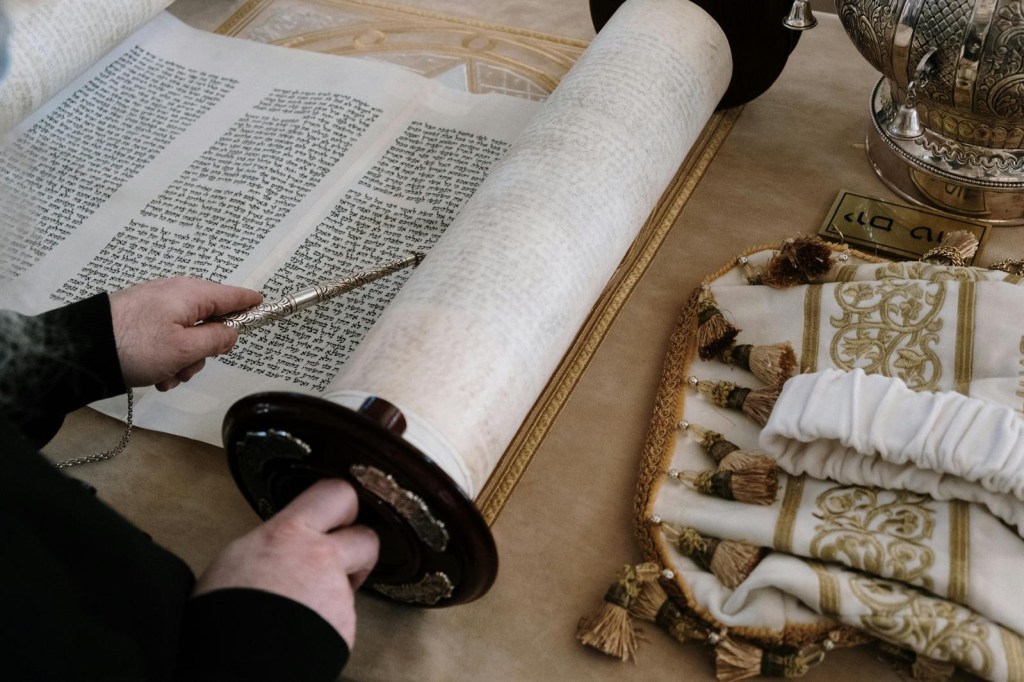
When Paul went to a city, he went to the Jew first. You see the Jews had been a privileged people, to whom much is given, much is going to be required. They had the law and the prophets, they had the Word of God, and Paul would step into the synagogue and tell them that this Word of God, this Old Testament scripture talked about the Lord Jesus, and that’s what he did with those Jewish people in the city of Rome. He gathered them together, all day they had a meeting. There was a roman soldier there, the only interruption was that every 4 hours a different soldier came in and got chained to Paul. Many of these soldiers got saved listening to Paul preach to other people. Paul met with them early in the morning. He said, “now you be sure to bring your Bibles with you, and they did. They had their Old Testament Scriptures, their scrolls. Paul said, “I want to start back in Genesis and I’m going to go through the entire Old Testament, I want to talk to you about, the hope of Isreal.”
“Oh,” they said, “there’s no hope for Isreal. We’ll just gather together by ourselves and maintain our traditions.”
“No,” said Paul, “the hope of Israel is the resurrection of Jesus Christ, the Messiah,” all through the Book of Acts, you find Paul saying this, “the hope of Israel is the resurrection of Jesus Christ.” And he started in Genesis chapter 3, verse 15. He said, “do you remember this promise that Moses wrote, that the seed of the woman is going to conquer the seed of the serpent? Now who is the seed of the woman?”
And they said, “Well this is the Messiah, we’ve known this all our lives.”
“Ah,” he said, “where did Messiah come from?”
“Well,” they said, “from Abraham. God called Abraham and said through him, all nations will be blessed.”
“Abraham, Isaac, Jacob, yes! But Jacob had twelve sons, which of his sons is going to give us Messiah?”
They said, “well that’s easy, Judah. We’re told that the scepter comes from Judah.”
“Oh, but Judah has many families,” said Paul, “now which of the families?”
“Why the family of David, the Messiah is the Son of David.”
“How is He going to come?” said Paul.
“He’s going to be born of the virgin.”
“Where is He going to be born?”
“Why, He is to be born in Bethlehem, Micah tells us that!”
And then Paul leaned over and said, “do you know that all of these prophecies have been fulfilled.”
And they looked at each other, and they looked at Paul, they said, “we didn’t know that. We’ve heard of this new sect called, Christians… it’s spoken against every place we go.”
He said, “this Christ, fulfills these prophecies.” And Paul begun to explain, how that Jesus was born of the virgin Mary, just as Isaiah 7:14 said He would be, that He was born in Bethlehem, just like Micah said He would be. That He was of the family of David, just the way the scriptures said He would be. And he went right down the line, verse after verse.
They said, “Ah, but we hear that this Jesus was crucified. Surely our Messiah is not going to be crucified.”
And Paul said, “have you never read psalm 22?”
And they turned to psalm 22 and began to read, “My God, My God, why hast thou forsaken Me? They pierced My hands and My feet.” Paul said, “I have talked to people who where there when that happened, and that’s exactly what happened when Jesus was crucified. He said look at Isaiah chapter 53.”
And they turned over to Isaiah 53, “for He was wounded for our transgressions, He was bruised for our iniquities.” Paul said, “if this is not Jesus, who is it?”
And the Word of God tells us that half of this crowd believed and became Christians, and the other half chose not to accept it. So at least 5, possibly 6 of the synagogues that were in Rome became Christian synagogues.
The patience of God. You see God had been patient with the Jewish nation, down through the years. As the people begun to leave, Paul said, “before you go, I want to quote a scripture for you.” He goes back to Isaiah chapter 6, Isaiah said, “how do I minister, what’s going to happen?”
“Oh,” He said, “You’re going to preach! They are going to hear, but they won’t hear. They’re going to see, but they won’t see, their hearts are getting fat, and calloused, and hard.”
Interestingly enough these verses from Isaiah verses, 6,9 and 10, are found several times in the Bible. They’re found in Isaiah chapter 6, Matthew 13, in Mark, in Luke, in John, here in Acts, and also in Romans. Seven times, God quotes this passage, referring to what happens to people when they reject the Word of God.
Now listen, God had spoken to the Jewish people, God had given them His Word, God had sent His messengers, and what did the people do? Their ears became deaf, their eyes became blind, their hearts became heavy, and they would not believe and be converted. I wonder if this is not happened to some people here at Moody church. There are those of you who have been hearing the Word of God, you’ve been seeing what God has been doing in the lives of other people, but your hearts have not responded to Jesus Christ. What happened? “Oh, you say, I go to church, I listen to the radio,” that’s wonderful, wonderful… “I even read my Bible occasionally!” That’s fine but unless we open the heart to Jesus Christ, you know what happens, we start hearing but we don’t hear, we grow spiritually blind. And our hearts get calloused and cold, and I want to warn you my friend, against a hard heart. It happened to these people; it can happen to you!
Oh, the patience of God. All through the years, God had been patient with His people Israel, and many did not accept the message. Paul then said that if some did not receive this message, it would now also be shared more widely with the Gentiles. The principle remained: to the Jew first, in responsibility, in revelation, and in accountability. For to whom much is given, much will be required.
Salvation Message
Truth number three: the grace of God. We have learned about God’s faithfulness and patience. Many Jewish people understood their relationship with God primarily through the Law as it had been taught to them. Some thought, “If I do this, and do that, and don’t do this, and don’t do that, God will accept me.”
But the Word of God says there is no difference between Jew or Gentile. All have sinned and come short of the glory of God. “The same Lord is rich unto all who call upon Him. For whosoever shall call upon the name of the Lord shall be saved.”
Paul didn’t go around preaching against the social evils of his day; he simply won people to Christ. When the church began to grow, the same Savior that Paul offered in Rome is offered to us today. In Jesus Christ, there is forgiveness, wisdom, joy, and life eternal. No one is a slave to sin when they trust Him.
The Lord Jesus Christ was crucified for you, buried, and arose again. He is alive today, speaking to your heart through His Holy Spirit. He offers you everything you need to enjoy life, and when life ends, eternal blessings in heaven.
If you reject Him, the pleasures of this life are temporary, and you risk eternal separation from God, a place Scripture calls the Second Death. But if you trust Christ, He will give you all you need to live a life of purpose and hope.
As Paul wrote, “For whosoever shall call upon the name of the Lord shall be saved.” God’s grace is sufficient, His patience is ongoing, and His offer of salvation is open to anyone who calls upon Jesus today.
Editor’s Note
This message reflects events recorded in the Acts of the Apostles and describes specific responses in Paul’s time. It is not a statement about all Jewish people, and Christians affirm that God remains faithful to His promises to Israel. As it is written: “For the gifts and calling of God are irrevocable.” (Romans 11:29).
The heart of the message is simple: Jesus Christ came to save sinners, no matter who you are, Jew or gentile. He lived a perfect life, died on the cross for our sins, and rose again, offering forgiveness and eternal life to all who repent of their sins and trust Him. Salvation is a turning from sin and a turning toward Christ. If you have not yet placed your faith in Jesus, you can call on Him today—He promises that “whosoever shall call upon the name of the Lord shall be saved.”
—————-
** Photo by cottonbro studio at Pexels


